Basic Math Skills Comparison Worksheets for Ages 4-5
3 filtered results
-
From - To
Introduce your little learners to the world of numbers with our Basic Math Skills Comparison Worksheets for ages 4-5. Designed to make early math engaging, these printable worksheets help children explore concepts like greater than, less than, and equal to through fun activities and games. By comparing objects, sizes, and quantities, kids develop fundamental math skills that set the stage for future learning. Ideal for preschool and kindergarten students, these worksheets support cognitive development, boost confidence, and make math exciting. Start your child's math journey with Kids Academy's expertly crafted, age-appropriate resources.
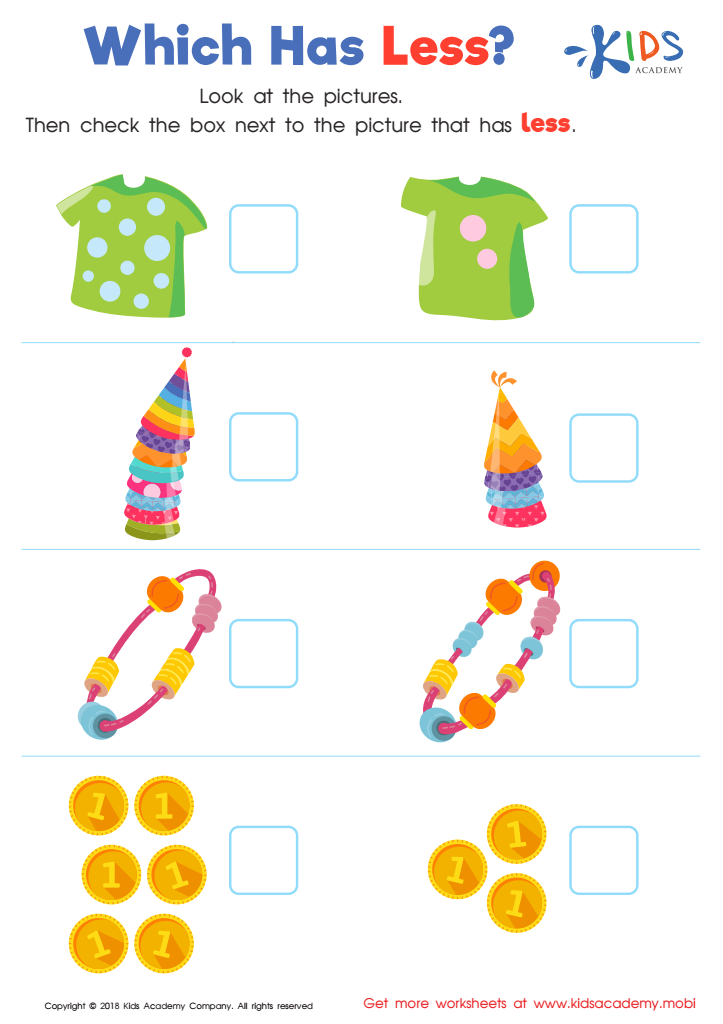
Which Has Less? Worksheet
 Assign to My Students
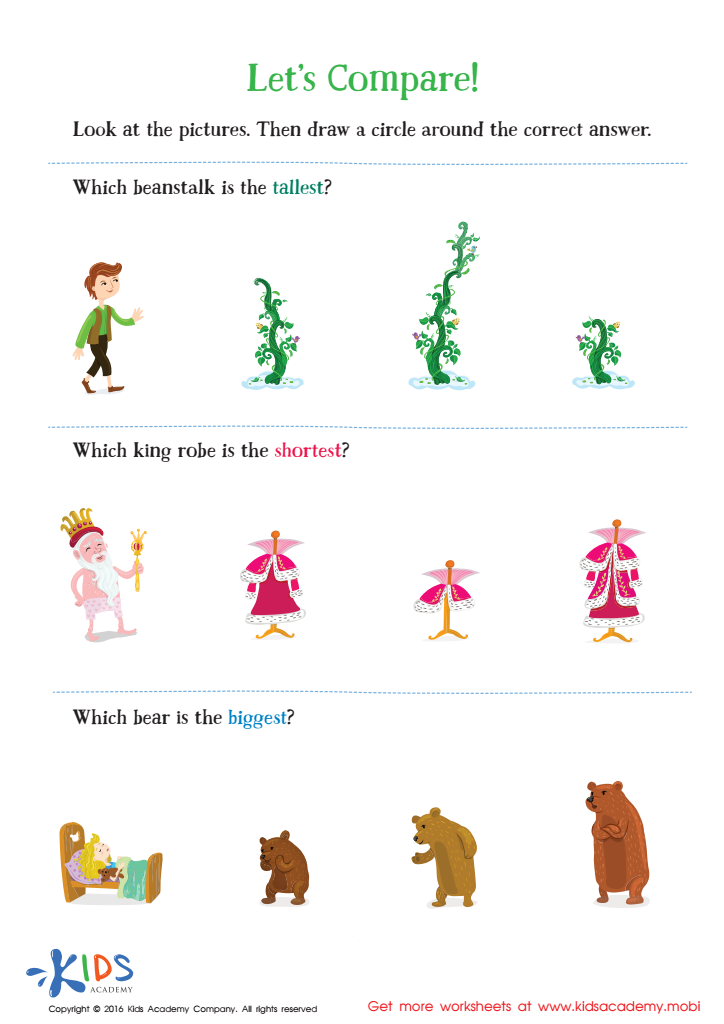
Fairy Tale Worksheet: Let's Compare
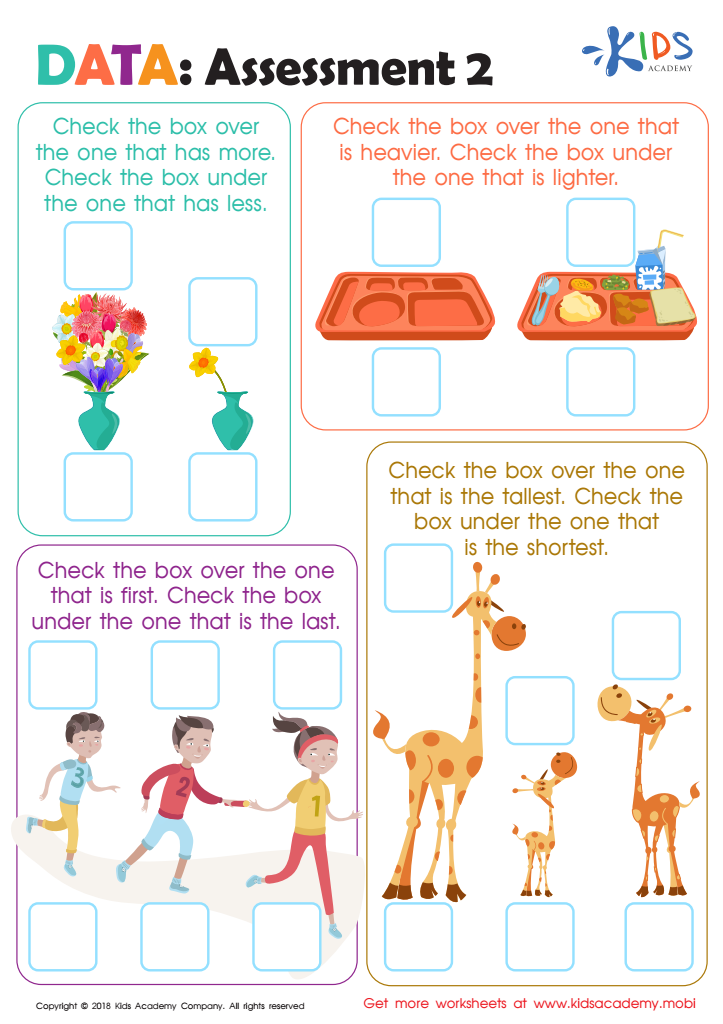
Data: Assessment 2 Worksheet







Basic math skills are crucial for young children, particularly those aged 4-5, as they lay the foundation for future academic success. At this early developmental stage, children are rapidly absorbing information and developing cognitive abilities that will shape their academic journey. Parents and teachers should prioritize these skills for several compelling reasons.
First, early math proficiency is a strong predictor of later academic achievement, not only in mathematics but across subjects. Concepts like counting, recognizing numbers, and understanding basic shapes and patterns build a framework for complex problem-solving skills. When children grasp these concepts early, they face fewer hurdles as they progress to more advanced topics.
Additionally, mastering basic math fosters confidence and a positive attitude toward learning. When children experience success, they become more enthusiastic and engaged, which promotes a lifelong love of learning. Without this foundational knowledge, children might struggle with self-esteem and develop anxiety around math, which can impact their overall academic experience.
Moreover, comparative assessments help identify individual strengths and weaknesses. Early detection allows teachers and parents to provide targeted support, ensuring that no child falls behind. Ultimately, caring about basic math skills at ages 4-5 equips children with the necessary tools to thrive academically and develop into well-rounded, confident learners.








