Counting practice Numbers Worksheets for Ages 4-5 - Page 2
28 filtered results
-
From - To
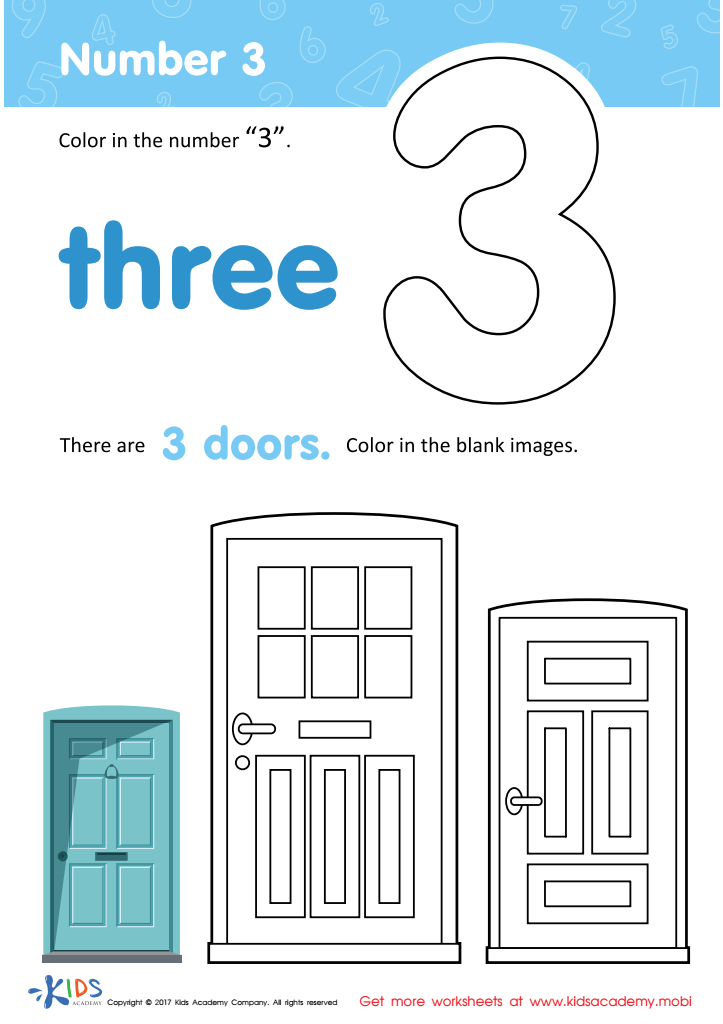
Number 3 Worksheet
 Assign to My Students
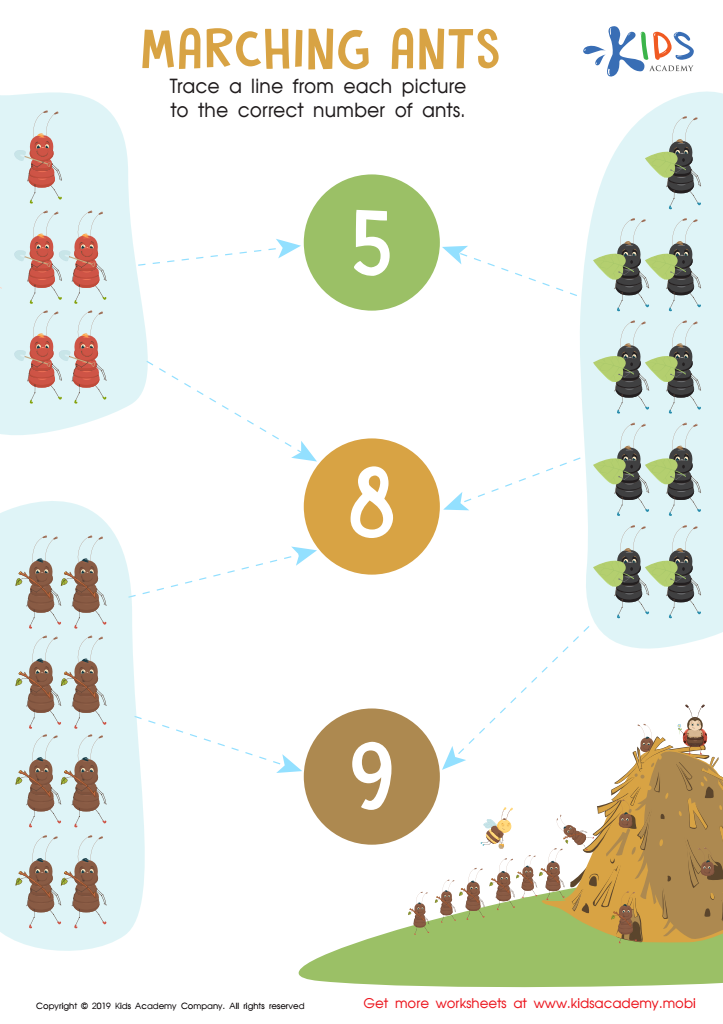
Marching Ants Worksheet

Counting on the City Skyline: Dot-to-Dot Worksheet
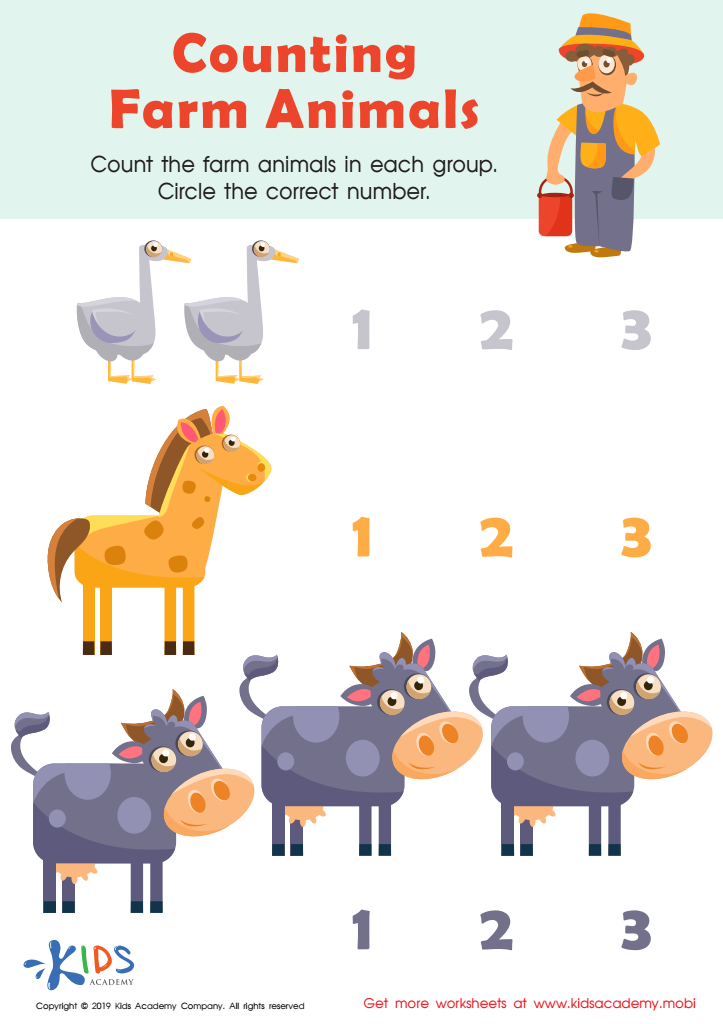
Counting Farm Animals Worksheet








Counting practice is a fundamental skill for children ages 4-5, laying the groundwork for future mathematical understanding and logic. At this age, children are naturally curious and eager to learn, making it an ideal time to boost their numerical abilities. Engaging in counting activities helps children recognize numbers, develop one-to-one correspondence, and understand quantity concepts, which are crucial for arithmetic and problem-solving skills.
Parents and teachers should care because early numeracy is linked to academic success in later years. Counting practice not only enhances mathematical skills but also develops cognitive abilities, such as memory and concentration. Additionally, counting can be seamlessly integrated into daily activities—whether it’s counting toys, snacks, or steps. This real-world application reinforces learning and makes it enjoyable.
Furthermore, positive early experiences with numbers can reduce math anxiety in the future, fostering confidence in tackling more complex mathematical concepts. When children experience success in counting, they build the belief that they can succeed in math, opening doors to higher-level Math skills later on. Therefore, nurturing counting skills during this critical developmental stage is essential for parents and teachers, fueling children's enthusiasm for learning and establishing a solid foundation for their educational journey.








