
Basic math comprehension Math Worksheets for Ages 4-5
4 filtered results
Difficulty Level
Grade
Age
-
From - To
Subject
Activity
Standards
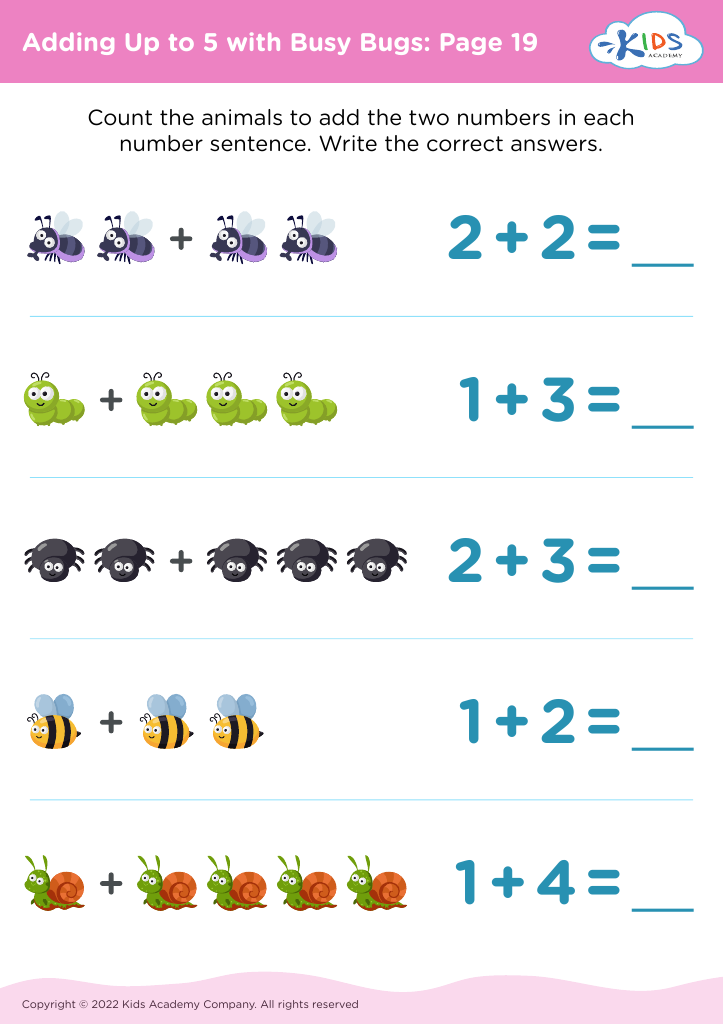
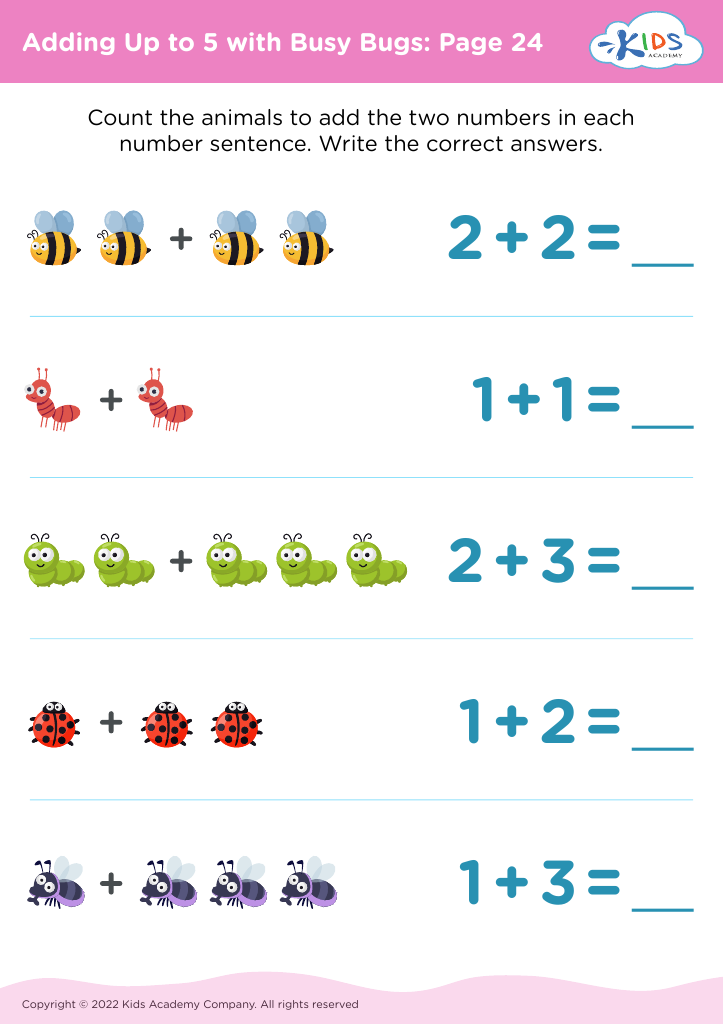
Introduce your child to the world of numbers with our Basic Math Comprehension Worksheets for Ages 4-5. These engaging and colorful worksheets are designed to help young learners build essential math skills, such as counting, number recognition, basic addition, and subtraction. Perfect for preschoolers and kindergarteners, these activities make learning fun and interactive. Whether at home or in the classroom, our carefully crafted worksheets will lay a strong mathematical foundation for your child. Explore our wide selection of free printable sheets at Kids Academy and watch your child’s confidence grow with each completed exercise!
Favorites
With answer key
Interactive
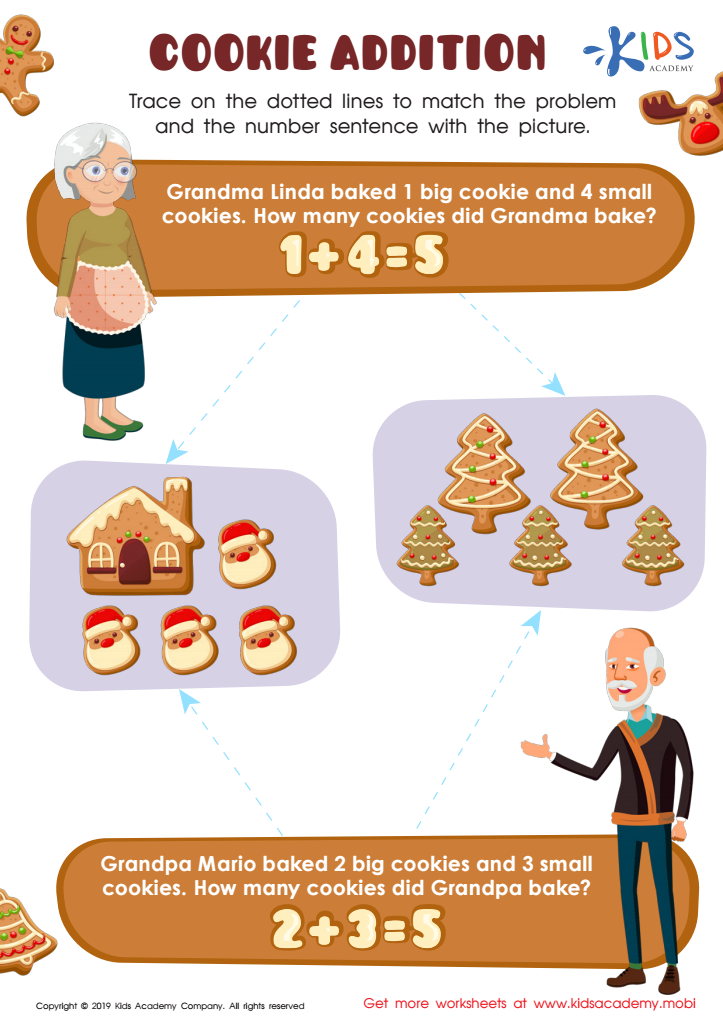
Cookie Addition Worksheet
Let your kids have fun identifying pictures in their worksheet. Read word sentences to them and help them turn them into number problems. Then, get them to trace the lines to match the problem and the number sentence with the picture. They’ll love it, especially if they love cookies!
 Assign to My Students
Cookie Addition Worksheet
Worksheet
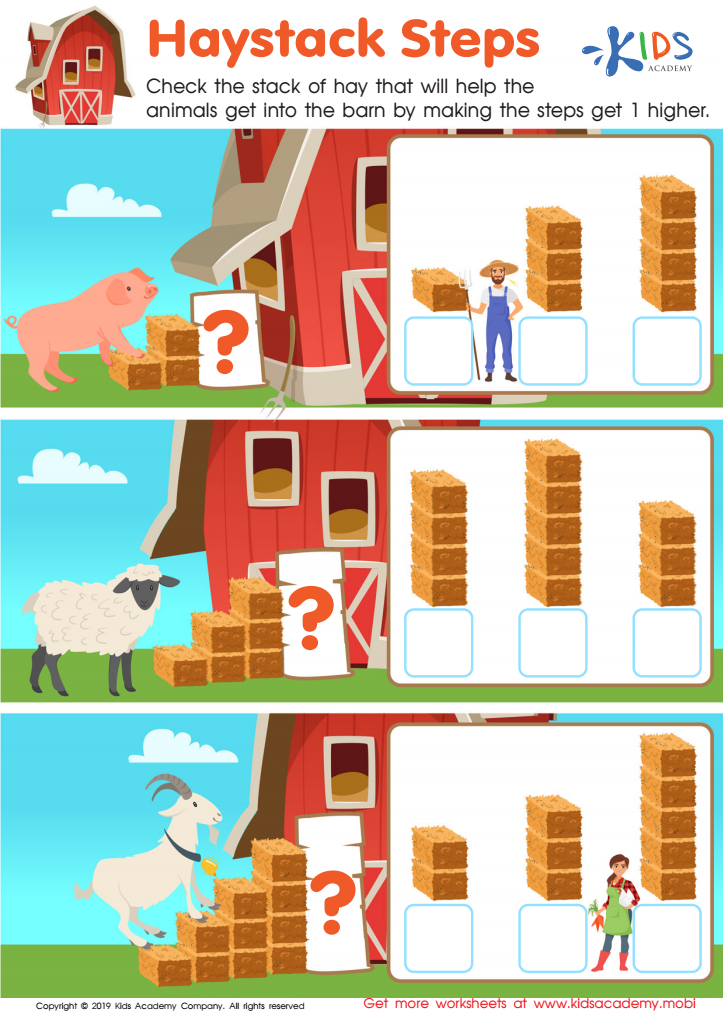
Haystack Steps Worksheet
Have your kids ever visited a farm? What activities and sights did they enjoy? Farmers are essential to our lives, growing food and providing us with dairy and eggs. In this worksheet, a farmer has made a haystack for his animals to climb into the barn. Ask your kids to add an extra layer to the stack to make the climb easier.
Haystack Steps Worksheet
Worksheet
Join Kids Academy for Free
Who is primarily going to use this learning content?







Basic math comprehension at ages 4-5 is foundational for future academic success and practical life skills. Parents and teachers should prioritize this early educational stage because it establishes critical numeracy skills, such as counting, recognizing numbers, basic addition, and subtraction. Early math skills are strongly linked to higher academic achievement, not just in mathematics but across all subjects. Understanding number concepts and relationships helps children develop logical thinking, problem-solving abilities, and analytical skills essential for everyday tasks.
Moreover, early math comprehension fosters confidence and a positive attitude towards learning, which can influence their overall educational journey. Involving children in fun, hands-on activities like counting objects or simple games makes learning engaging and effective, promoting a love for math from an early age. Early intervention can also identify potential learning disabilities or challenges, allowing for prompt support and tailored teaching strategies.
By building a robust foundation in basic math, parents, and teachers prepare children for more complex mathematical concepts they'll encounter later. Mathematics is not just about numbers; it teaches discipline, order, and methodical problem-solving, equipping children with the tools they need to navigate the world both academically and in daily life.








