Understanding sequencing Math Worksheets for Ages 4-5
4 filtered results
-
From - To
Welcome to our Understanding Sequencing Math Worksheets for Ages 4-5! These engaging worksheets are designed to help young learners grasp the concept of sequencing through fun and interactive activities. Tailored specifically for early childhood education, our worksheets encourage children to organize events, follow patterns, and enhance problem-solving skills. By incorporating colorful visuals and age-appropriate challenges, we aim to make learning enjoyable and effective. Perfect for both classroom settings and at-home practice, these resources will support your child's mathematical foundation, fostering critical thinking and logical reasoning. Visit us today to download and inspire your little ones with the joy of sequencing!
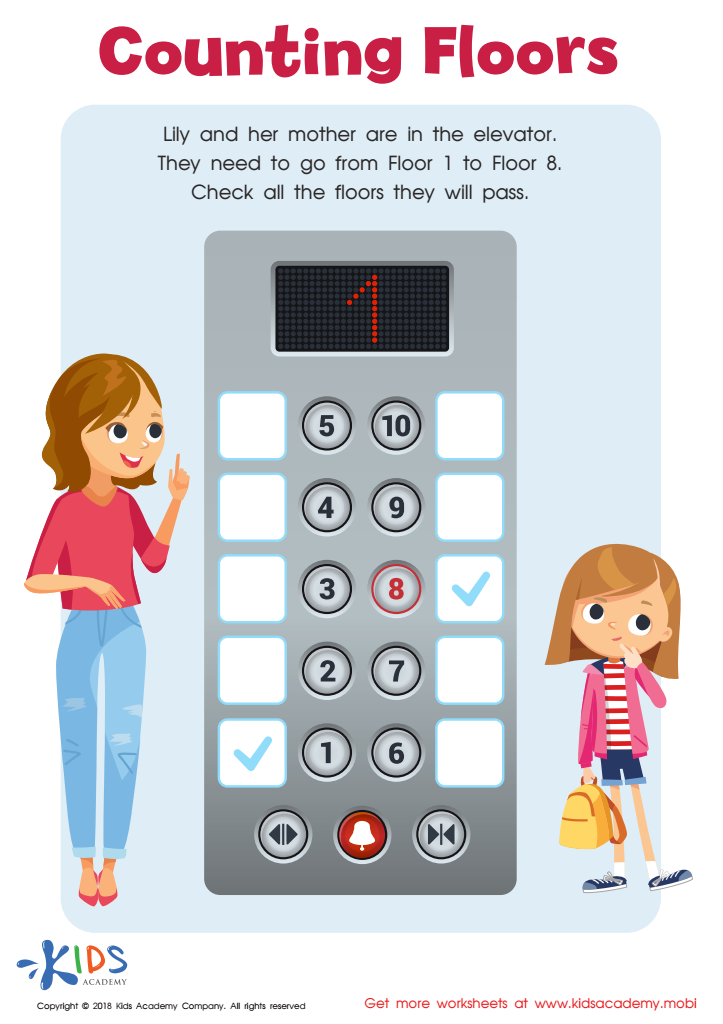
Counting Floors Worksheet
 Assign to My Students

One More Jumps In Worksheet
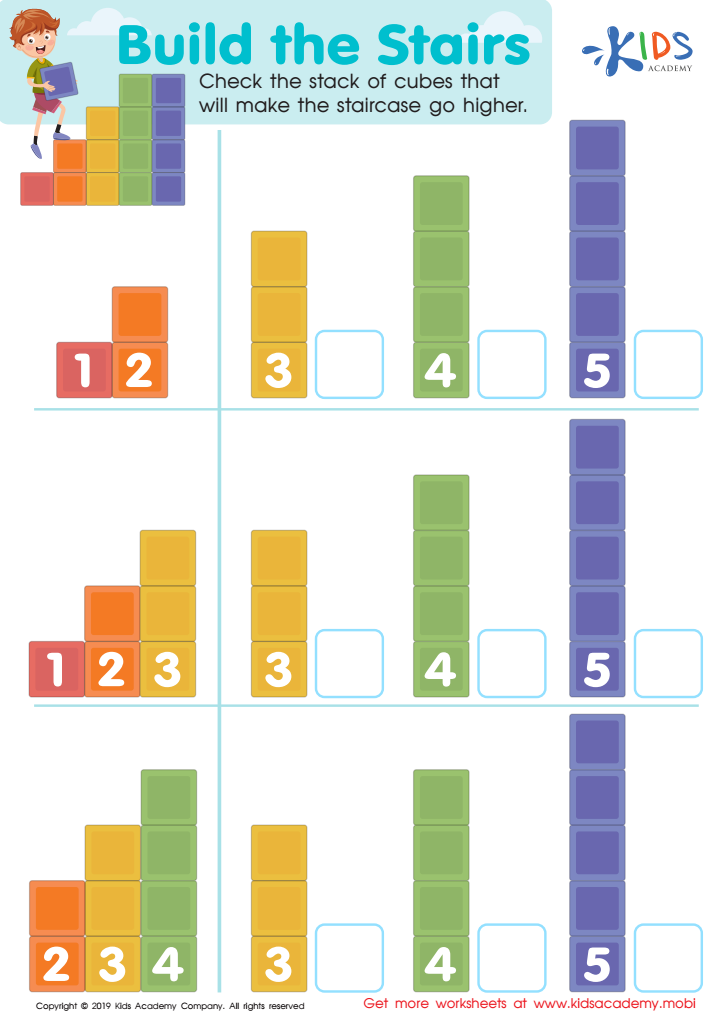
Build the Stairs Worksheet
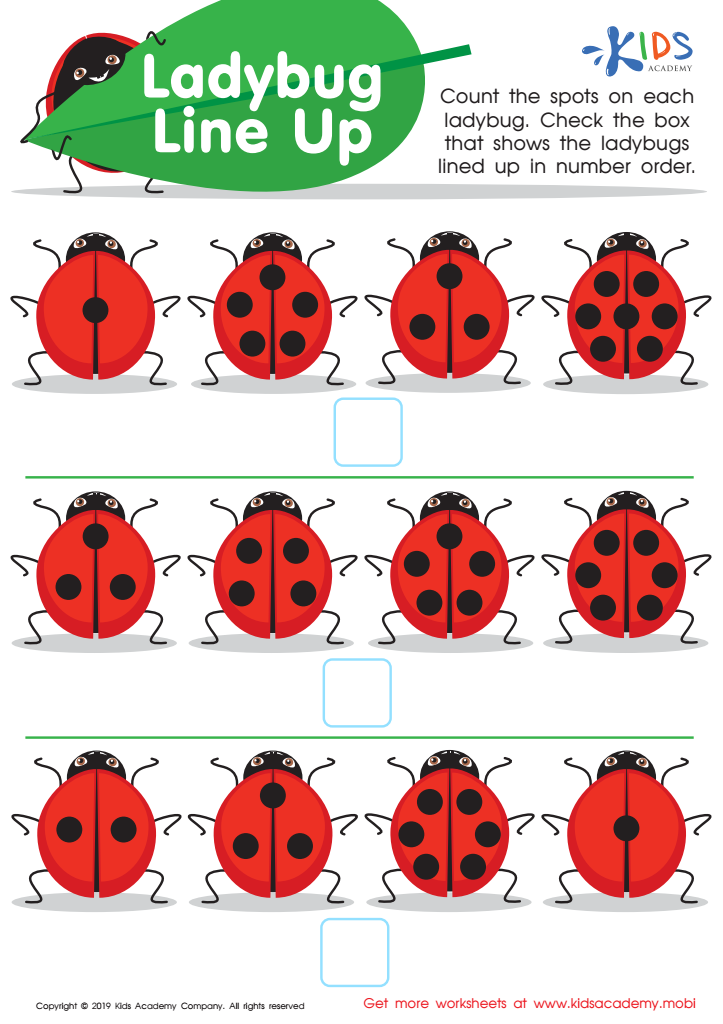
Ladybug Line Up Worksheet








Understanding sequencing in mathematics is crucial for children aged 4-5, laying a strong foundation for their future learning. At this age, children begin to recognize patterns and the order of events, which are essential skills not only in math but also in everyday life. When parents and teachers focus on counting, recognizing patterns, and understanding routines, they help children develop critical thinking abilities that enhance problem-solving skills.
Moreover, sequencing helps children understand the relationships between numbers and their role in operations such as addition and subtraction. For example, when children learn to count in order, they begin to grasp the concept that adding one more number increases the total value. This early understanding of sequencing will support their skills as they tackle more complex math in later grades.
Additionally, an emphasis on sequencing promotes cognitive development. It helps children build memory, enhance literacy skills through narrative understanding, and nurture organizational abilities. When parents and teachers engage in activities like storytelling with a clear sequence or playful games that encourage pattern recognition, they create an enriching learning environment that supports a child's overall intellectual growth. Ultimately, fostering these skills early prepares children to become confident learners and critical thinkers in the future.








