Matching skills Matching Worksheets for Ages 4-5
6 filtered results
-
From - To
Enhance your child's matching skills with our engaging matching worksheets designed specifically for ages 4-5. These fun and interactive printable worksheets feature colorful illustrations that capture young learners' attention and make learning enjoyable. By practicing matching items, children develop critical cognitive skills, including visual discrimination, memory retention, and concentration. Ideal for home or classroom use, our matching worksheets provide a perfect opportunity for early learners to reinforce their understanding of shapes, animals, colors, and more. Give your little ones an invaluable head start in their educational journey with our thoughtfully curated matching activities that foster both learning and play!
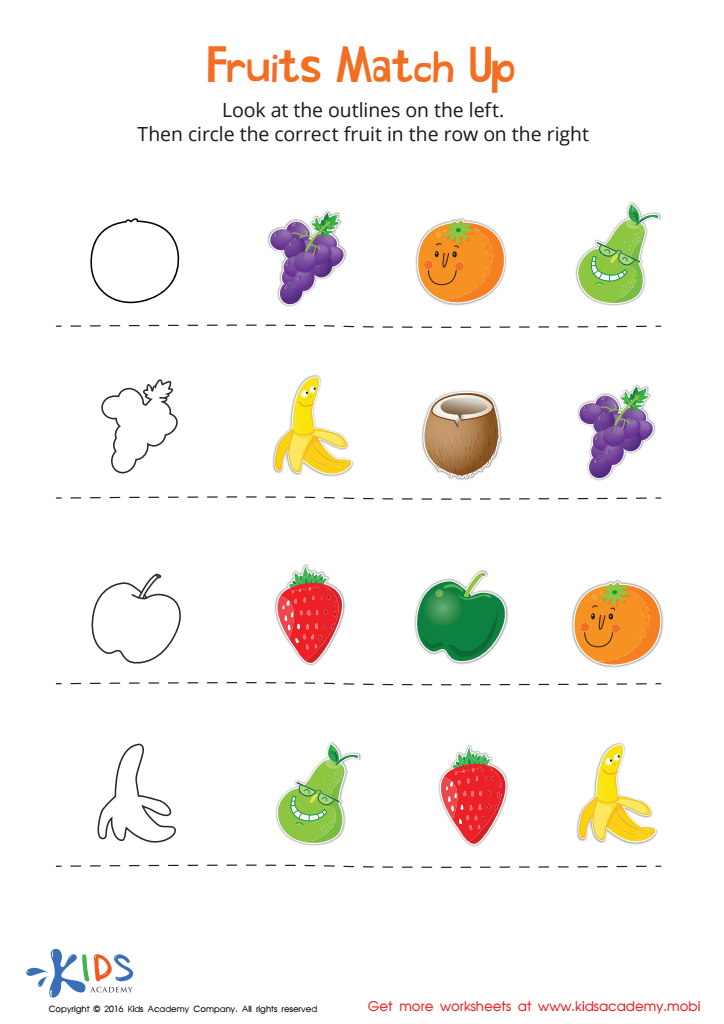
Fruits Match Up Worksheet
 Assign to My Students
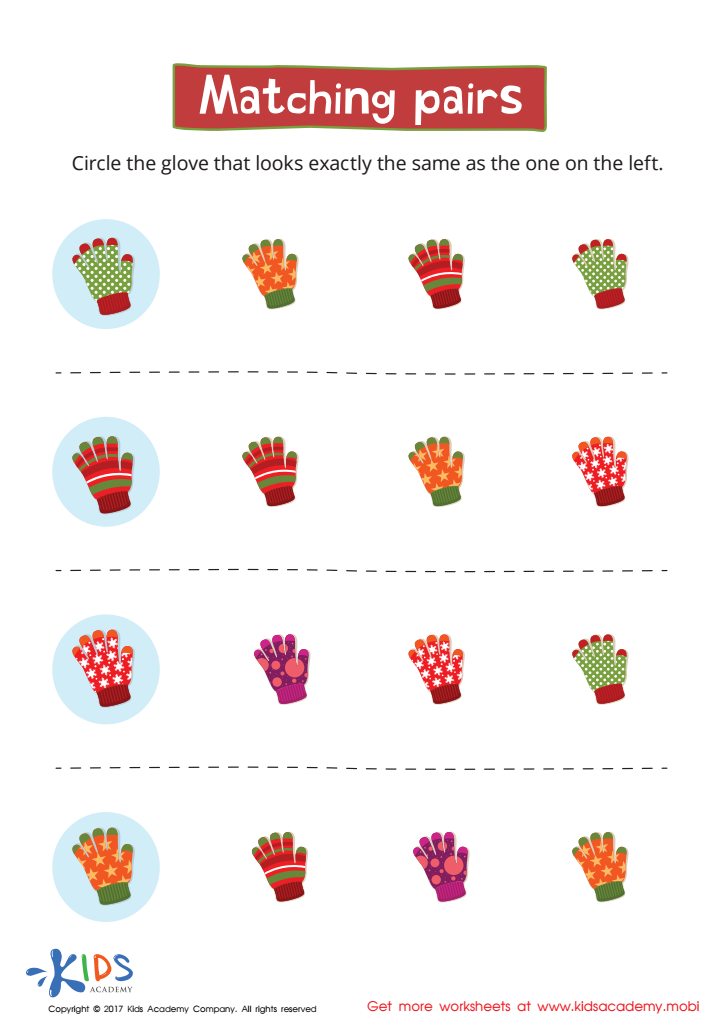
Matching: Matching Pairs Worksheet
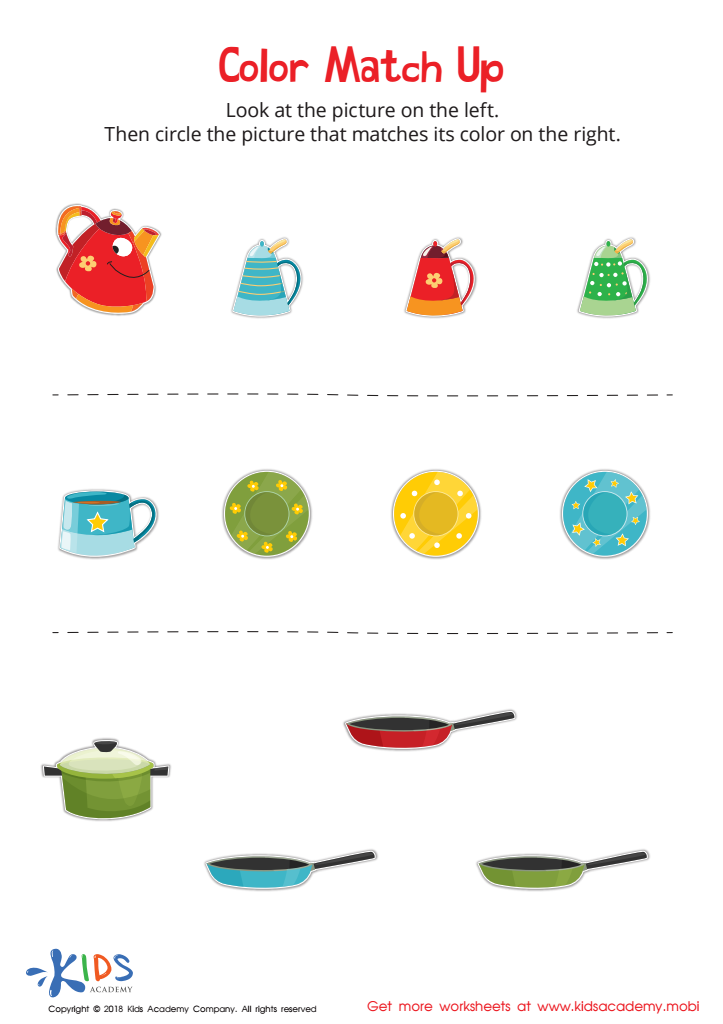
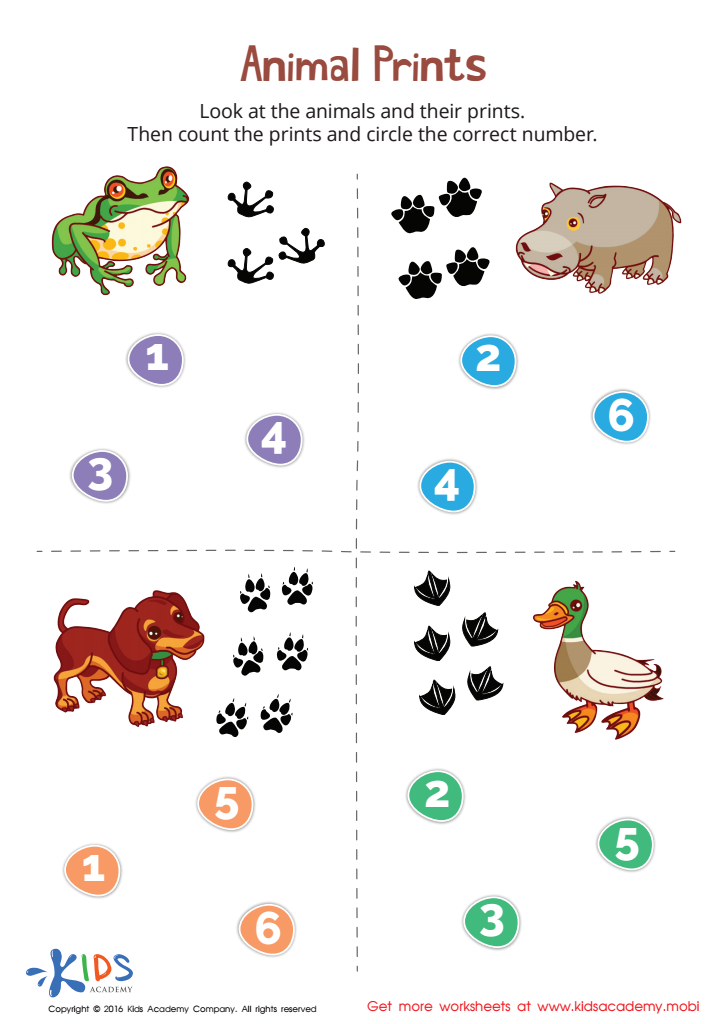
Animal Prints Match-Up Worksheet
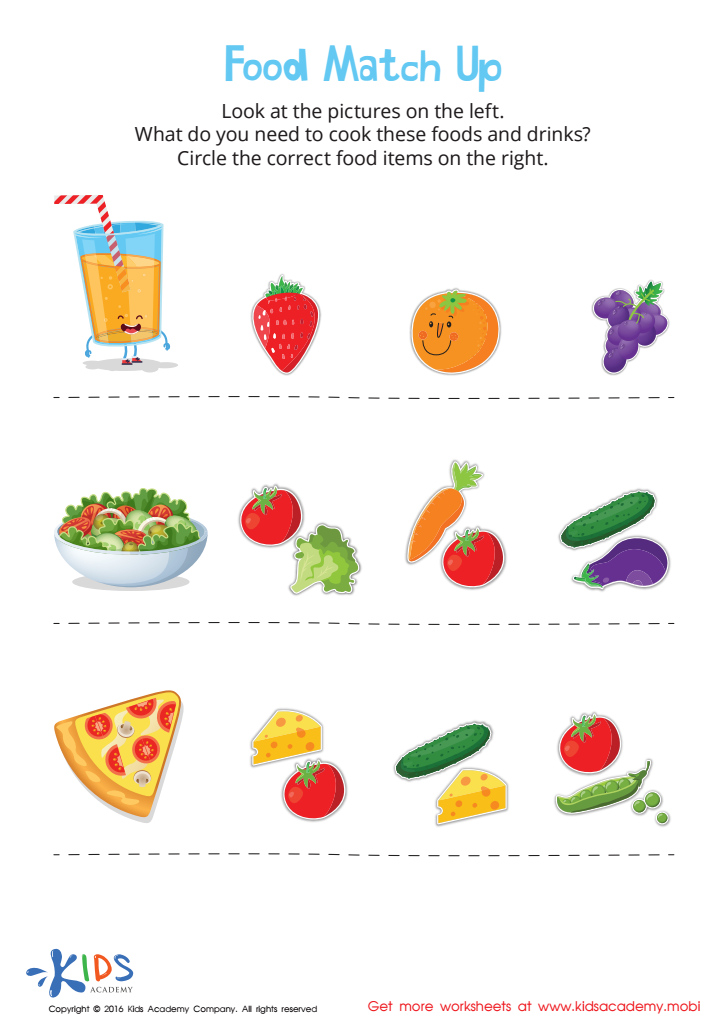
Food Match Up Worksheet
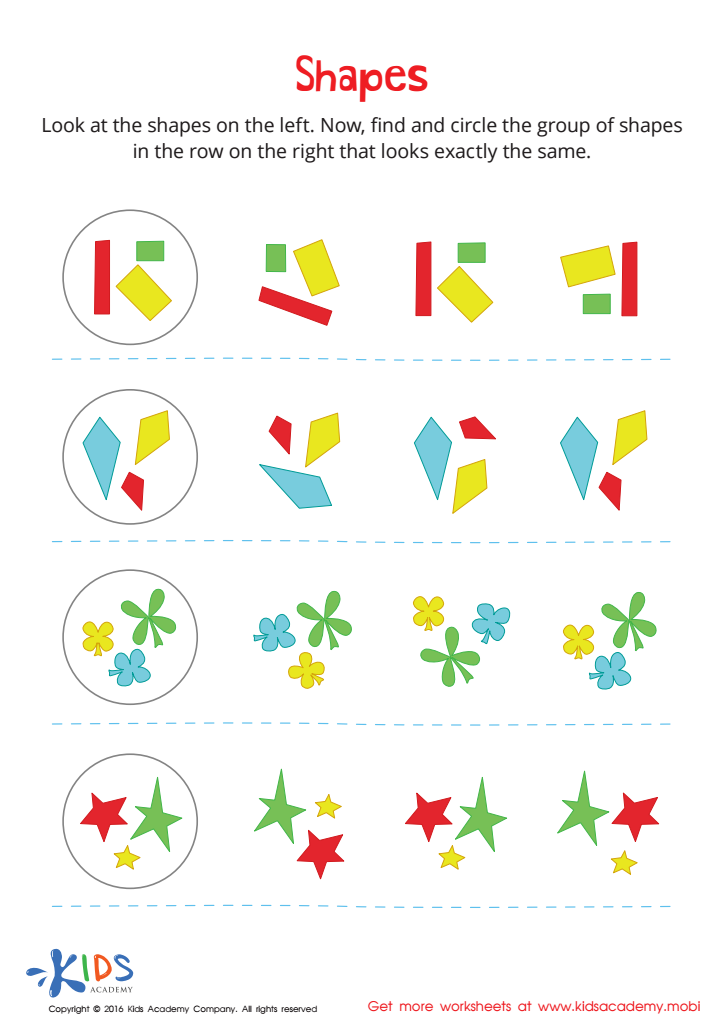
Shapes Worksheet







Matching skills are fundamental to cognitive development in children aged 4-5. At this critical age, kids learn to discern similarities and differences, which enhances their problem-solving abilities. Parents and teachers should prioritize matching skills because they lay the groundwork for more complex concepts such as sorting, categorization, and pattern recognition, which are essential in early academic learning.
Developing matching skills also boosts a child's memory and attention span, narrowing their cognitive focus. Through matching activities, children improve their fine motor skills and learn to work with shapes, colors, and textures, which supports their sensory development. Furthermore, these skills are useful in both structured and free play settings, where children engage in social interactions, enhancing their communication abilities.
Parents can incorporate everyday matching activities, like playing card games, while teachers can include matching games in their lesson plans. By fostering these skills, adults can create a playful and engaging learning environment, ultimately setting a strong foundational base for future academic success. Overall, recognizing and nurturing matching skills in young children is crucial for their holistic development, fostering critical thinking and facilitating a readiness for more advanced learning experiences in school.








