Problem-Solving Skills Sorting Worksheets for Ages 4-5
4 filtered results
-
From - To
Enhance your child's problem-solving abilities with our engaging Sorting Worksheets designed specifically for ages 4-5. These worksheets promote critical thinking by encouraging kids to categorize and sort various fun characters and objects. Through interactive activities, little learners will develop essential skills, such as recognition, comparison, and decision-making. Our problem-solving resources provide colorful visuals and age-appropriate challenges to captivate young minds while fostering cognitive growth. Perfect for home or classroom use, these worksheets not only make learning enjoyable but also lay a strong foundation for future success in mathematics and everyday situations. Start nurturing your child's problem-solving skills today!
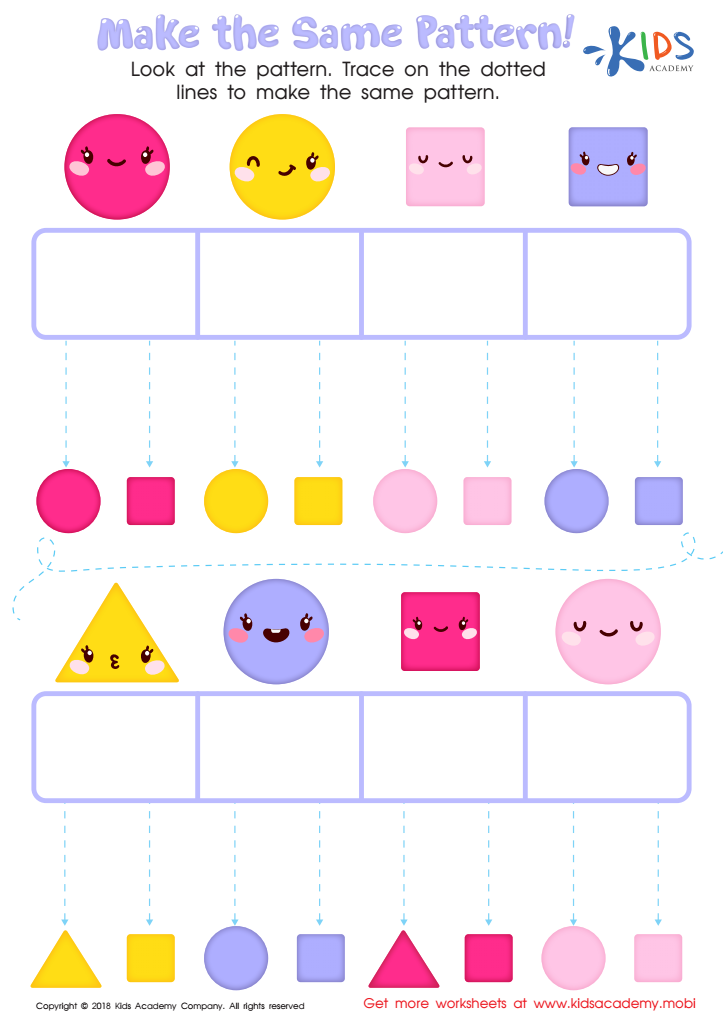
Make the Same Pattern Worksheet
 Assign to My Students
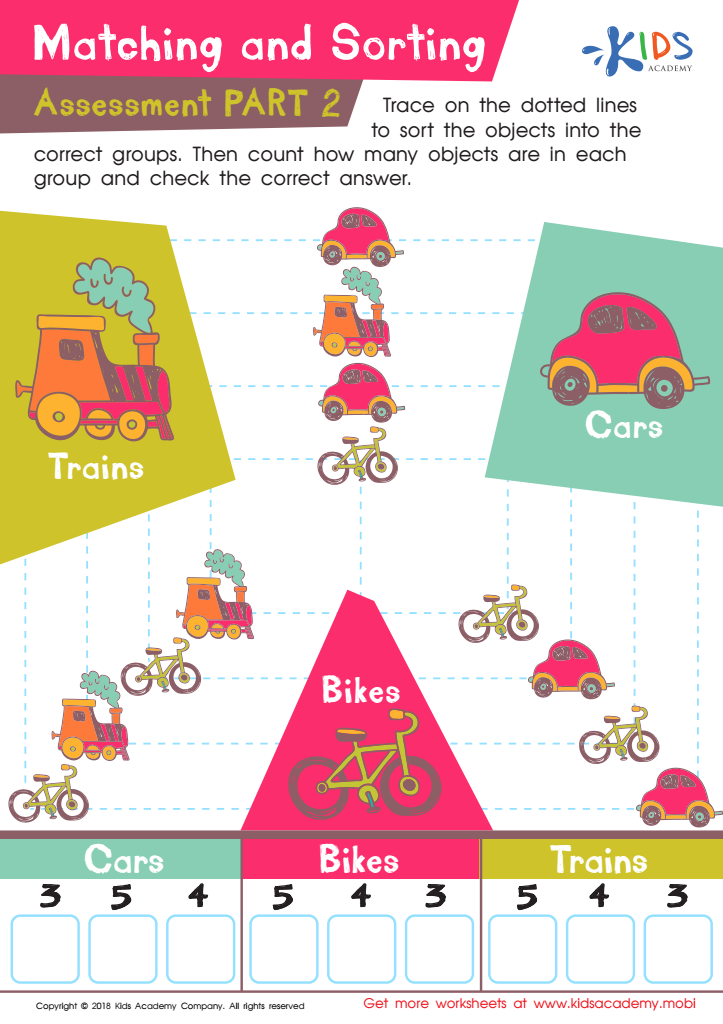
Matching and Sorting for Kindergarten: Assessment 2 Worksheet
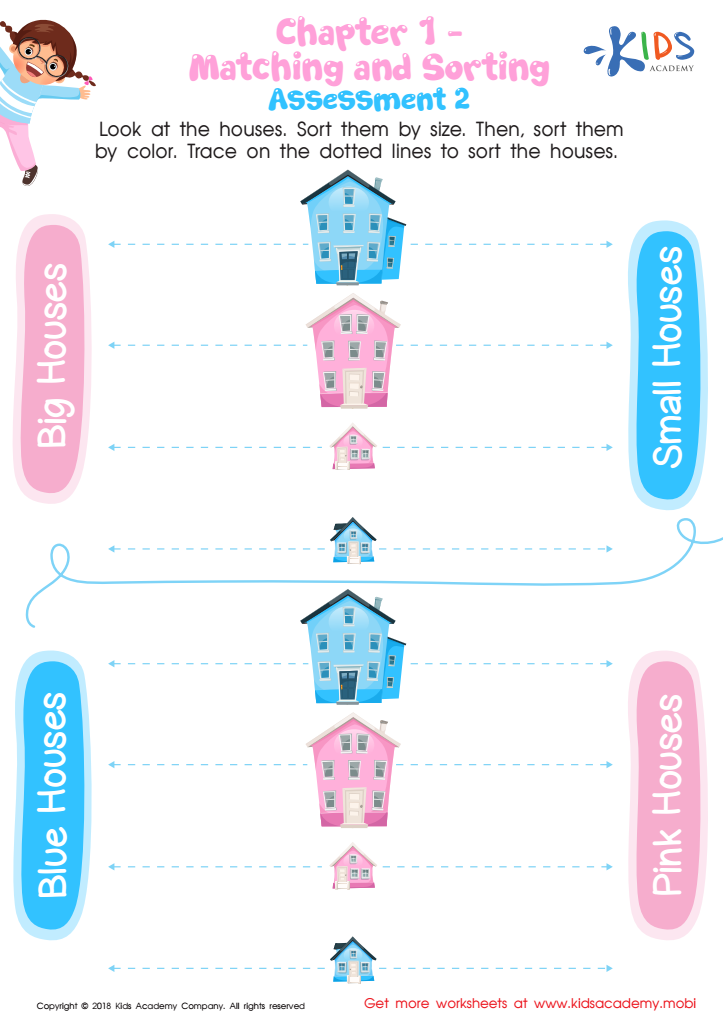
Matching and Sorting for Preschool: Assessment 2 Worksheet
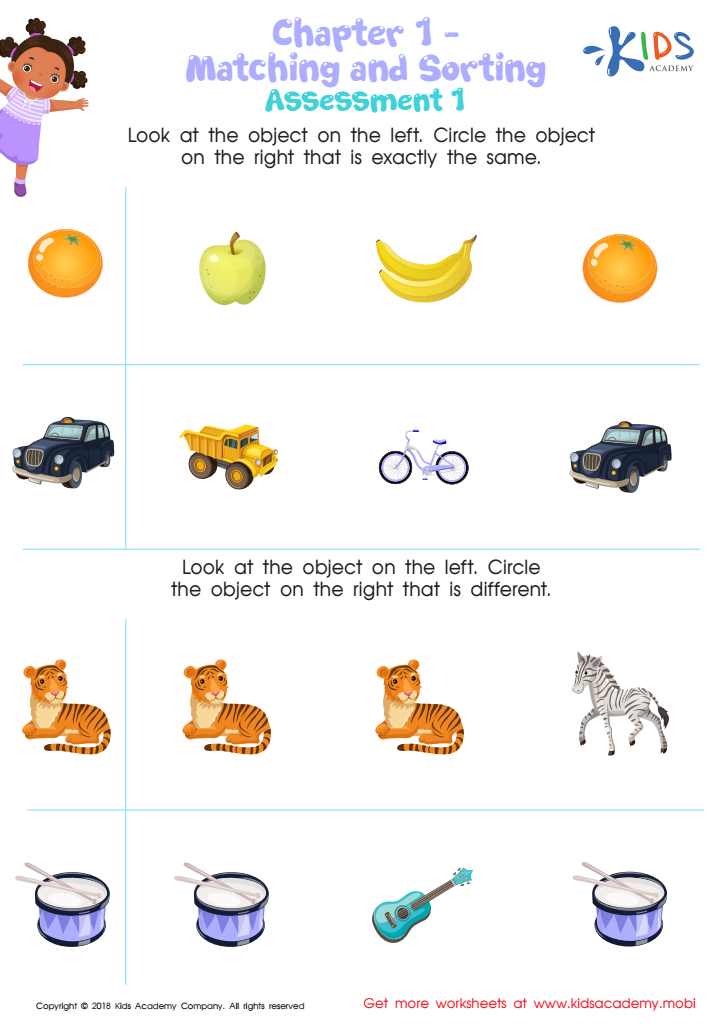
Matching and Sorting for Preschool: Assessment 1 Worksheet








Problem-solving skills are crucial for young children aged 4-5 as they form the cornerstone of critical thinking, creativity, and resilience. By introducing sorting activities, parents and teachers can effectively foster these essential skills, helping children learn to categorize objects based on various attributes, such as color, size, shape, or function.
Engaging in sorting tasks encourages children to make connections between different items, promoting cognitive development and enhancing their ability to recognize patterns. This foundational skill not only aids in mathematics, where categorization often plays a crucial role, but also helps children navigate social situations by sorting peers based on interests or preferences.
Moreover, sorting activities present opportunities for children to articulate their reasoning, enhancing their communication skills. When caregivers and educators facilitate discussions about why certain objects are sorted together, children can develop their language abilities expressively and appreciatively.
Additionally, sorting tasks instill a sense of order and organization in children. By learning how to categorize and manage objects, they cultivate a sense of independence and responsibility.
In summary, problem-solving skills through sorting help young children build cognitive foundations, enhance communication, and develop emotional intelligence, making it a vital focus for parents and teachers during these formative years.








