Logical thinking Reading Worksheets for Ages 4-5
5 filtered results
-
From - To
Boost your child's critical thinking with our engaging Logical Thinking Reading Worksheets designed for ages 4-5. At Kids Academy, we offer a variety of printable activities tailored to develop young learners' reading and analytical skills. Each worksheet encourages children to think logically while practicing reading comprehension, pattern recognition, and problem-solving. Perfect for early readers, our fun and educational resources help build a strong foundation for future academic success. Visit us to explore our extensive collection and give your child a head start in logical reasoning and literacy skills.
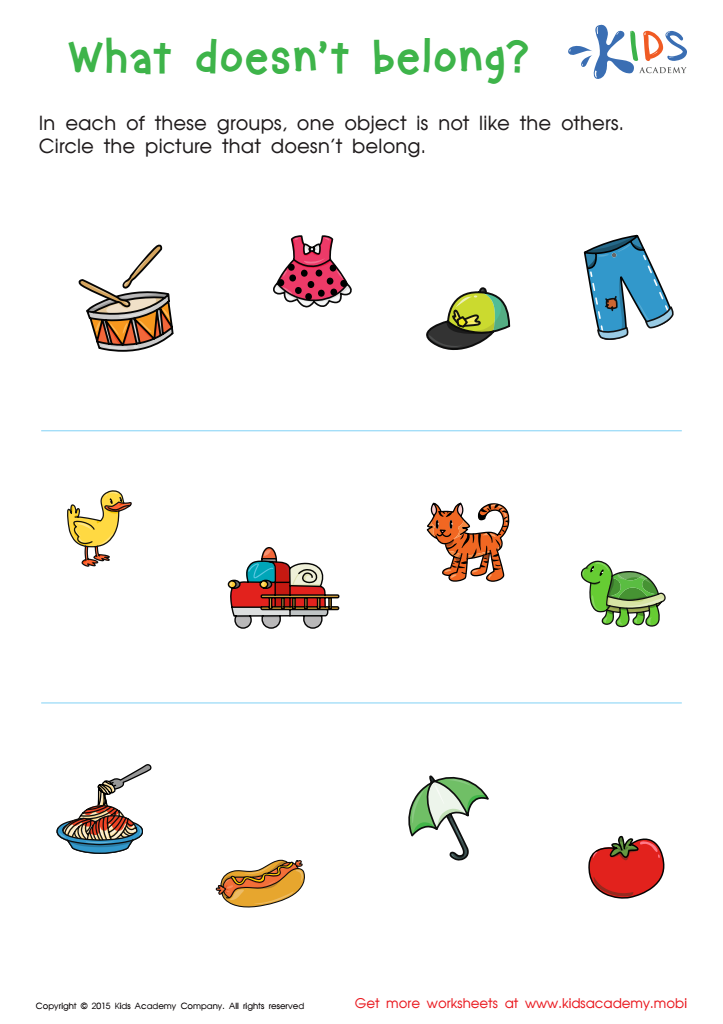
First Words: What Doesn't Belong Worksheet
 Assign to My Students
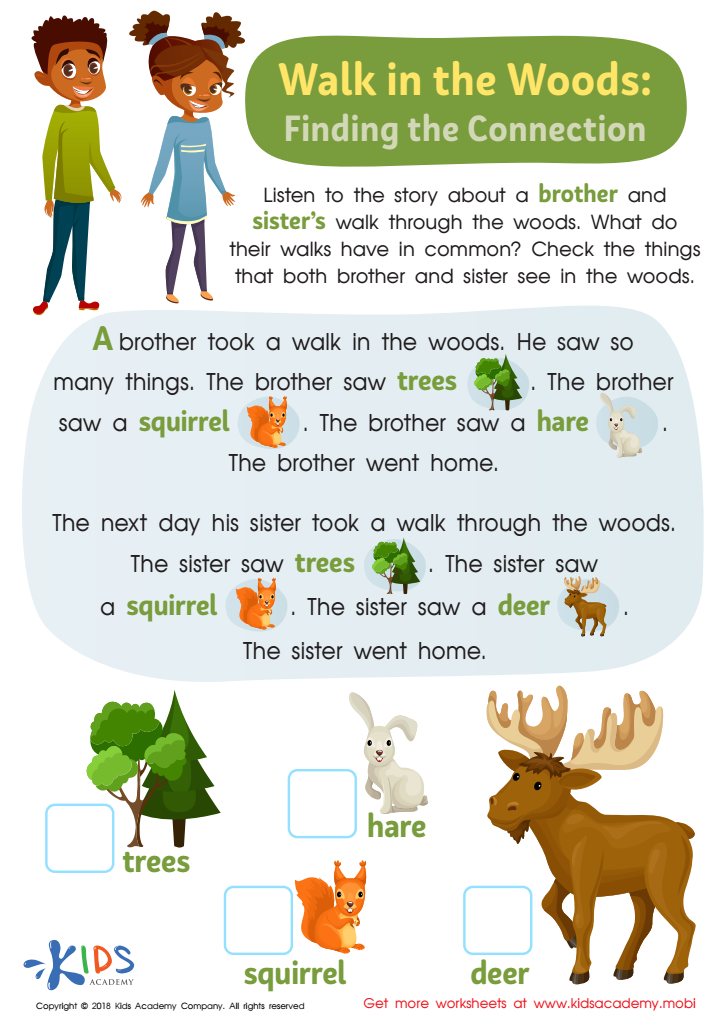
Walk In the Woods: Finding Connections Worksheet
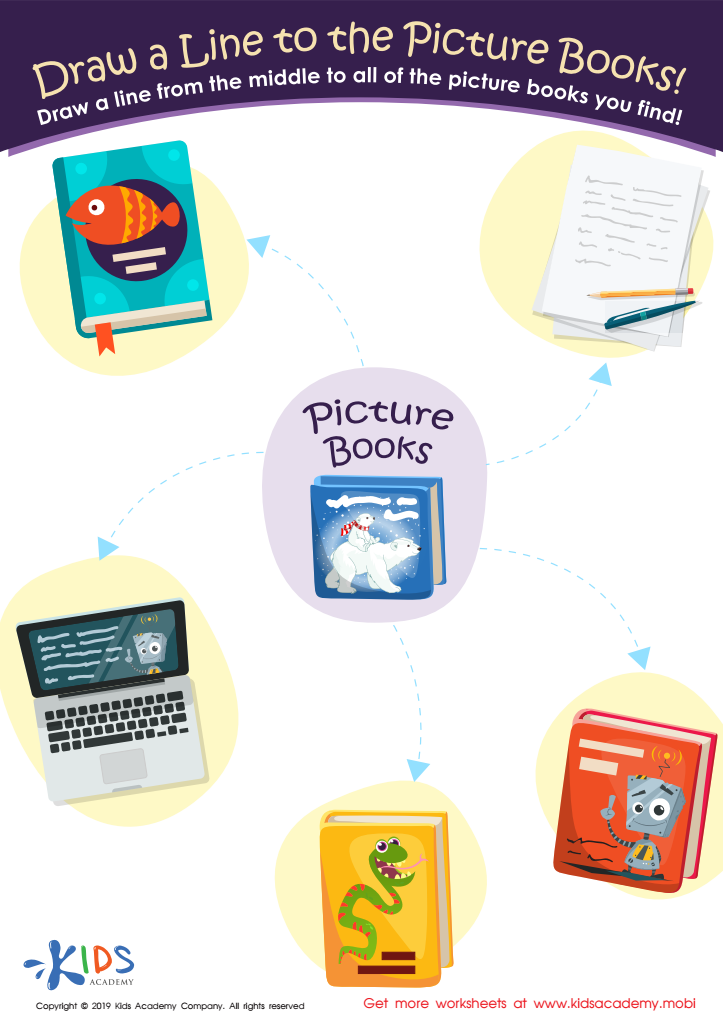
Draw a Line to the Picture Books Worksheet
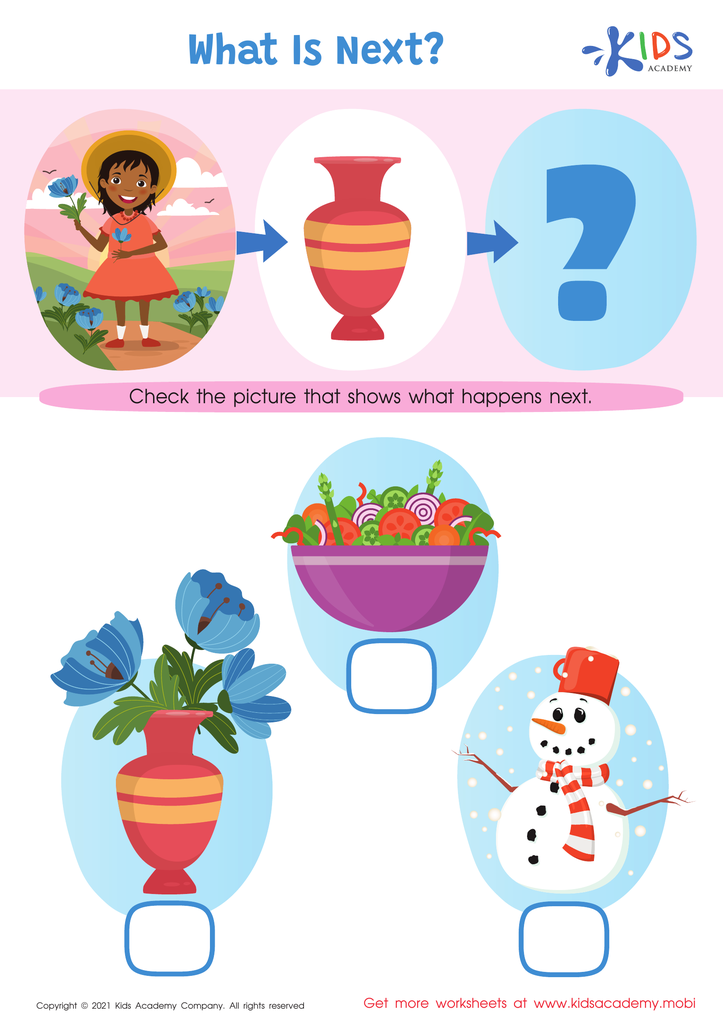
What is Next? Worksheet






Logical thinking in reading is crucial for young children, particularly those aged 4-5, as it sets the foundation for their cognitive development and future academic success. At this age, children's brains are highly receptive and malleable. Introducing them to logical thinking in reading helps them develop critical problem-solving skills, understand cause-and-effect relationships, and make connections between different concepts.
Parents and teachers should care about fostering these skills because they translate directly into better comprehension and analytical abilities. When children engage in logical thinking exercises while reading, they learn to predict outcomes, sequence events, and discern patterns, all of which are essential skills for higher-level thinking in subjects like math and science.
Moreover, early exposure to logical thinking prepares children for structured learning environments. It promotes attention to detail and enhances memory retention, which are valuable in a classroom setting. For teachers, incorporating logical thinking into reading activities can make lessons more interactive and enjoyable, thereby fostering a love for reading and learning in general.
Ultimately, by encouraging logical thinking in reading from a young age, parents and teachers are not just preparing children for academic achievement but also equipping them with lifelong cognitive tools that will aid them in everyday problem solving and decision-making.








