Filters

6 filtered results

Clear all filters
Favorites
With answer key
Interactive

6 filtered results

Difficulty Level

Grade


Discover our engaging Counting Skills Science Worksheets designed for ages 4-5! Perfect for early learners, these printable activities seamlessly blend science and math, helping children understand the world around them. Each worksheet focuses on fundamental counting skills while introducing scientific concepts through interactive exercises. Created by educational experts, our meticulously crafted worksheets foster curiosity, pattern recognition, and logical thinking. Ideal for both classroom and at-home learning, these resources make foundational education enjoyable and effective. Equip your little ones with the essential skills they need to succeed in both math and science. Explore, download, and start learning today!

Check out this FREE Trial Lesson on Science for age 4-5!

Identify Categories with a Given Count

Favorites
With answer key
Interactive
  • 4-5
  • Counting skills
  • Science
Parts of the Body Worksheet

Robot Printable

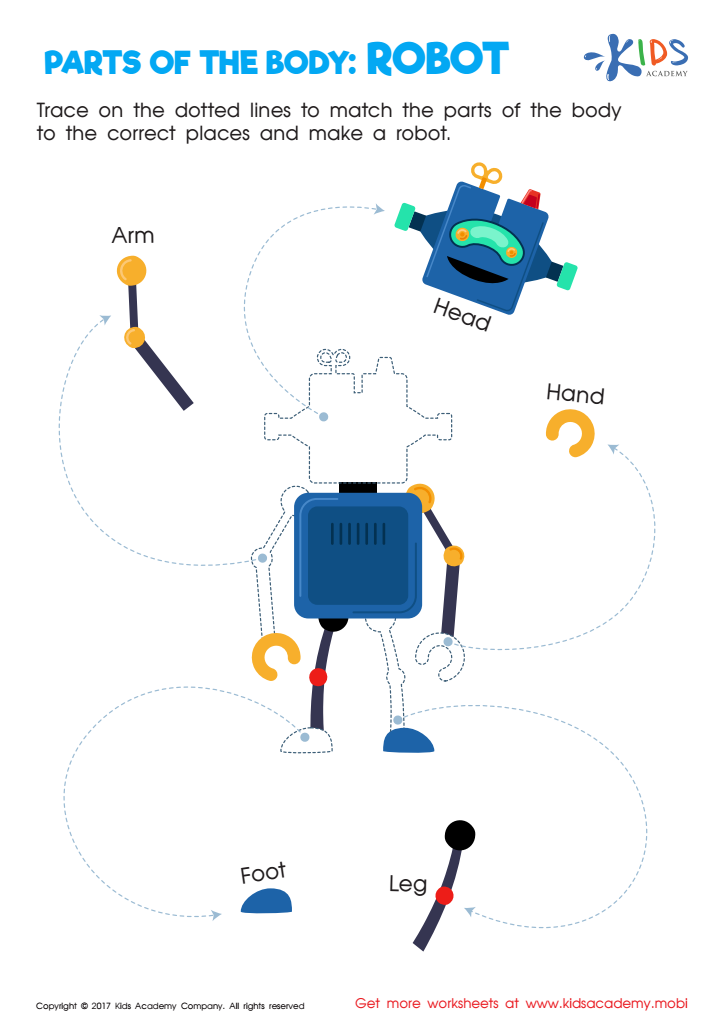
Introduce your child to a fun robot and help her hone her matching skills with this parts of the body worksheet! Your child will trace dotted lines to match the robot's body parts to the right place, helping her focus, use abstract thinking and reason better. This worksheet is sure to get your child excited and help her build essential skills for future success!
Robot Printable
Worksheet
Sort and Count to the Moon Worksheet

Sort and Count to the Moon Worksheet

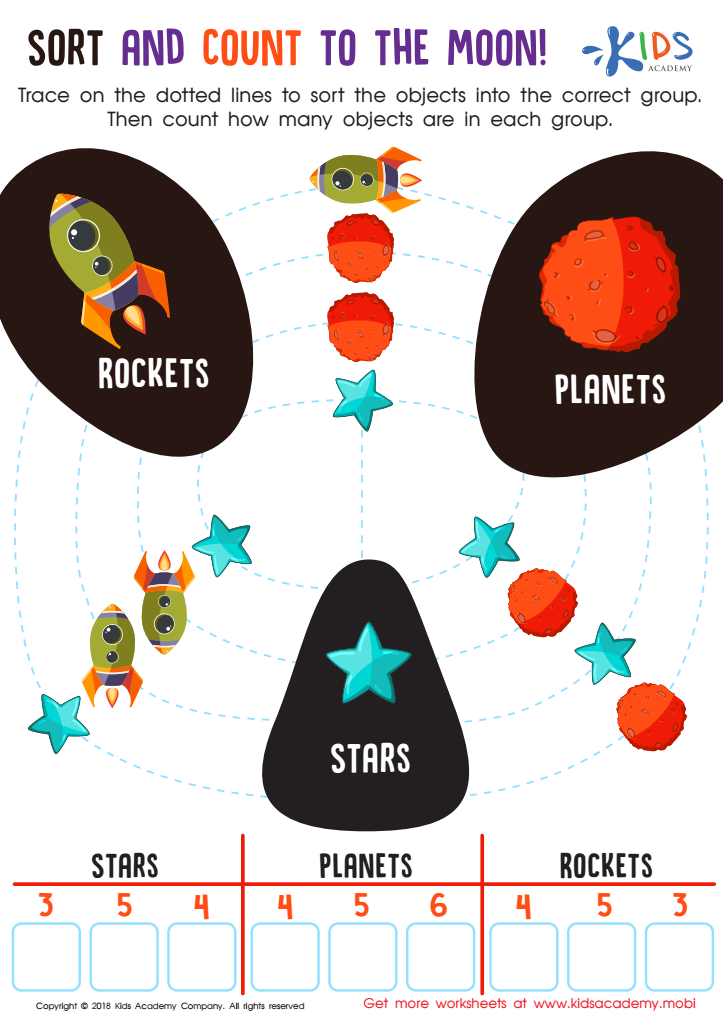
Little space explorers will love counting, sorting and strengthening number sense with this galactic worksheet! They'll use traceable lines to sort pictures of stars, planets and rockets into categories according to properties. After sorting, they'll count each item and fill in the boxes. Bold pictures make it fun and build critical thinking skills.
Sort and Count to the Moon Worksheet
Worksheet
African Wildlife Giraffe Worksheet

African Wildlife: Giraffe Worksheet
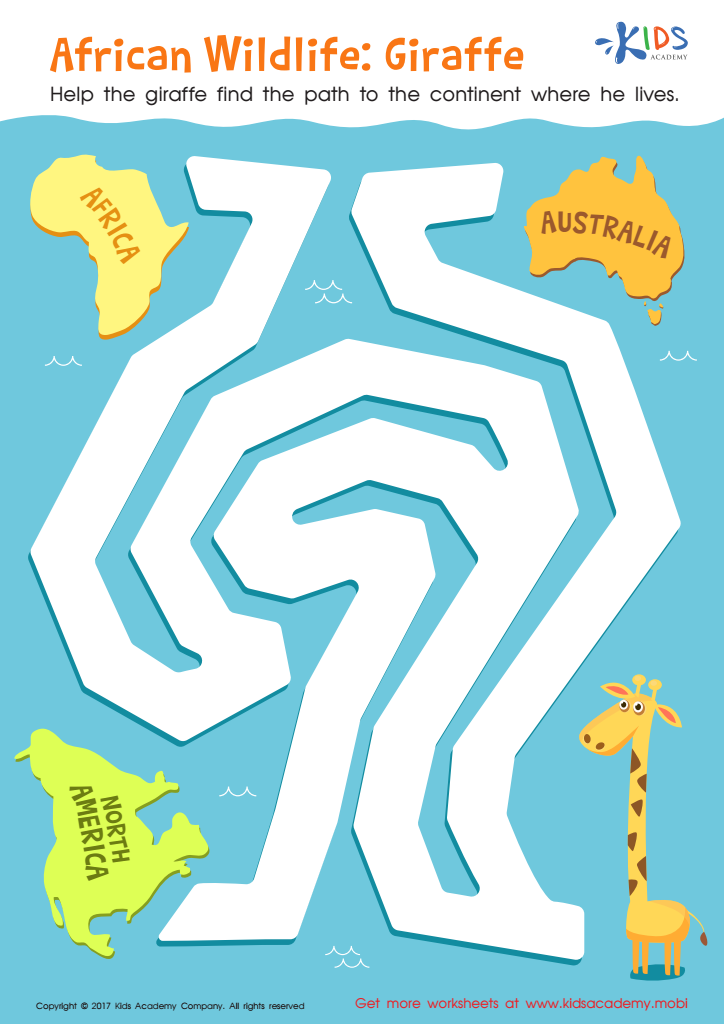
Help the giraffe get home! This African wildlife giraffe worksheet will boost your child's logical reasoning skills while they complete a maze to help the giraffe navigate choppy waters. Learn about different continents and their unique climates, practice problem solving and expand knowledge of the world and its habitats. Perfect for inspiring little learners!
African Wildlife: Giraffe Worksheet
Worksheet
Earth's Systems: Assessment 2

Earth's Systems: Assessment 2

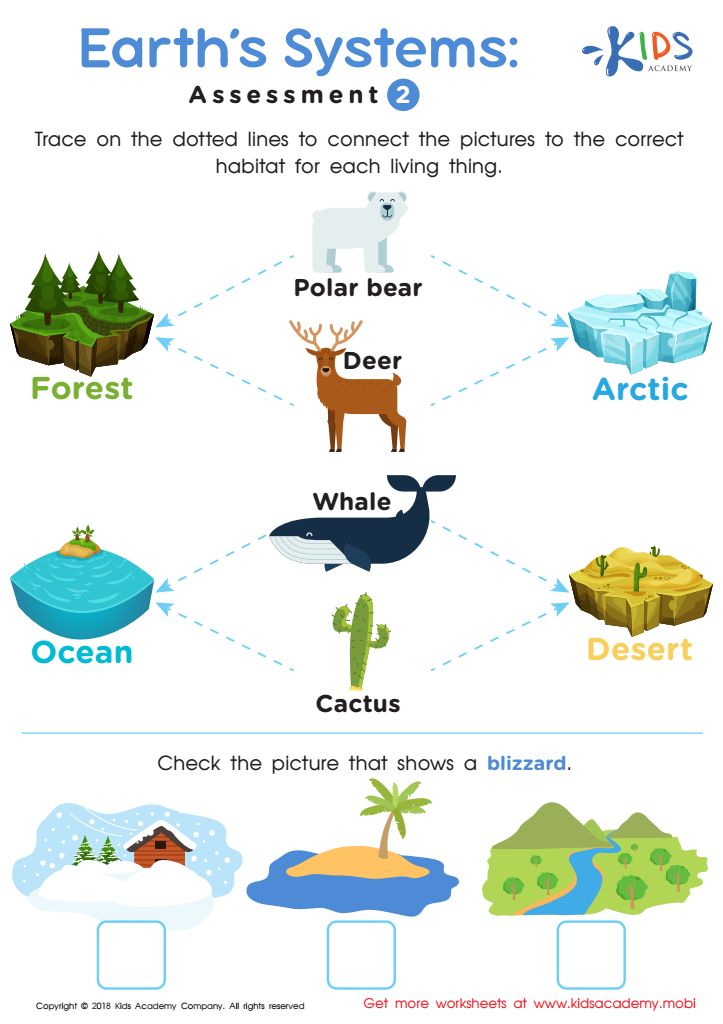
Kids will love this free printable worksheet to assess their knowledge of habitats and the living creatures found in them. They'll trace the dotted lines to connect the pictures of plants and animals to their respective habitat and identify the type of weather depicted. No, polar bears don't live in the ocean, but they do like to swim in icy waters! With this fun activity, your little learner will master earth science basics.
Earth's Systems: Assessment 2
Worksheet
Ten in the Bed Worksheet

Ten in the Bed Worksheet

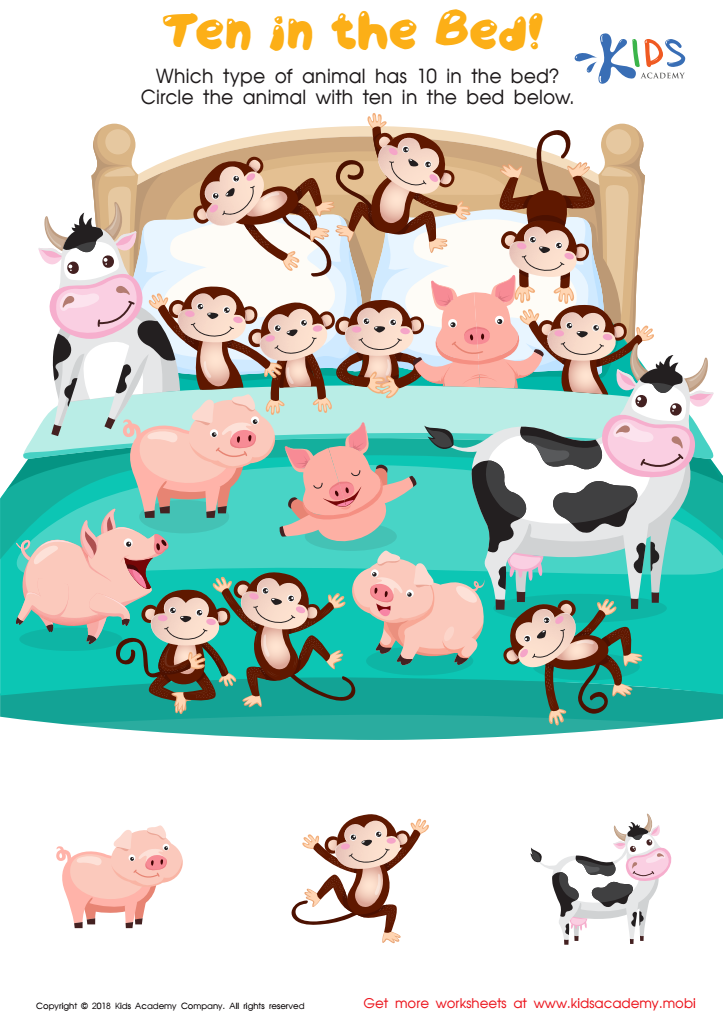
This fun worksheet has your kids counting and sorting friendly animal faces in a bed of ten! It's a great way for them to practice their mental math skills, like adding and multiplying more efficiently. Plus, it brings a new meaning to the classic song "Monkeys Jumping on the Bed"!
Ten in the Bed Worksheet
Worksheet
Find 5 Worksheet
Find 5 Worksheet

Find 5 Worksheet

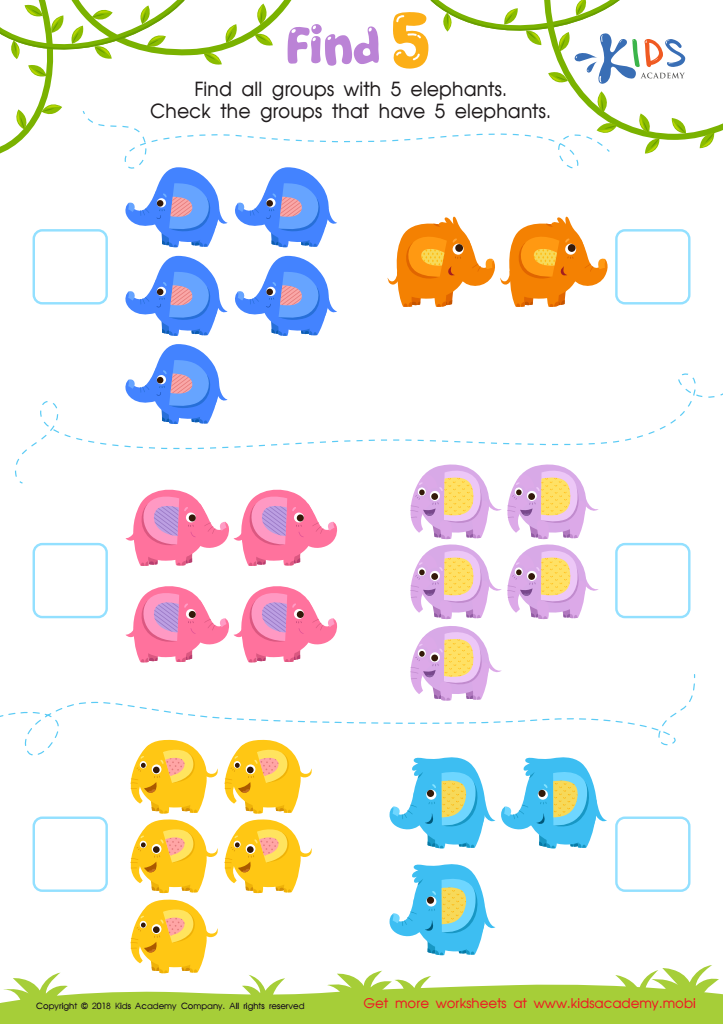
Kids will love these cheery elephants that help them discover grouping and counting by fives. It's a great way to start learning addition and multiplication, while also developing fine motor skills. Download the free PDF and let the fun begin.
Find 5 Worksheet
Worksheet


Counting skills for children aged 4-5 form the bedrock of their future academic success and practical life skills. At this crucial developmental stage, fostering counting proficiency not only enhances mathematical abilities but also lays the groundwork for broader cognitive development. By engaging in counting activities, children learn to recognize numbers, sequence them properly, and understand concepts such as quantity, order, and basic operations like addition and subtraction.

These skills transcend the realm of academics; they are essential for daily tasks, such as understanding time, measuring ingredients while cooking, or managing money. Importantly, early counting activities stimulate fine motor skills, memory, and concentration, fostering an overall improvement in their learning capability.

Teachers and parents play a pivotal role in nurturing these skills through playful, engaging, and practical activities. Integrating counting games, puzzles, and real-life scenarios into a child’s daily routine can make learning enjoyable and seamlessly continuous. As children master counting, they gain a sense of achievement and confidence that can positively influence their attitude toward learning in general. Therefore, prioritizing counting skills at this formative age molds confident, capable, and well-rounded individuals poised for lifelong success.