Plant identification Science Worksheets for Ages 4-5
3 filtered results
-
From - To
Discover the joy of learning with our Plant Identification Science Worksheets designed specifically for ages 4-5! These engaging, colorful worksheets introduce young learners to the fascinating world of plants, helping them recognize and name various species in a fun and interactive way. Each worksheet is crafted to enhance observation skills and promote curiosity about nature, allowing children to explore leaves, flowers, and trees. Ideal for home or classroom use, our resources foster early scientific thinking and enrich your child's understanding of the environment. Encourage your little botanists to dive into the wonders of plant life and nurture a lifelong love of nature!
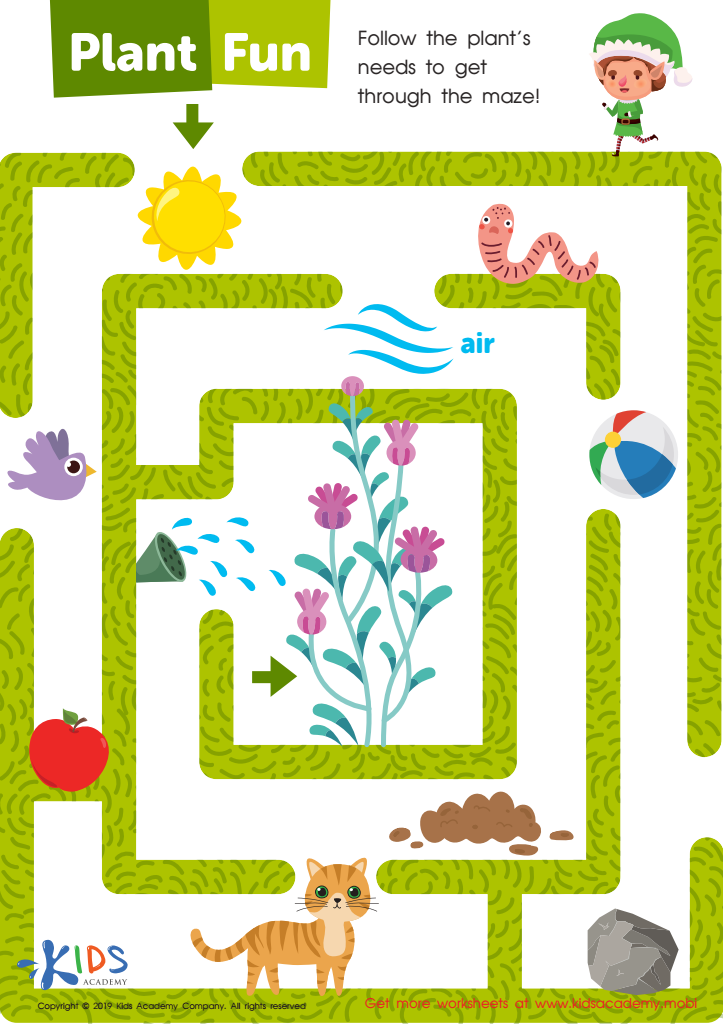
Plant Fun Worksheet
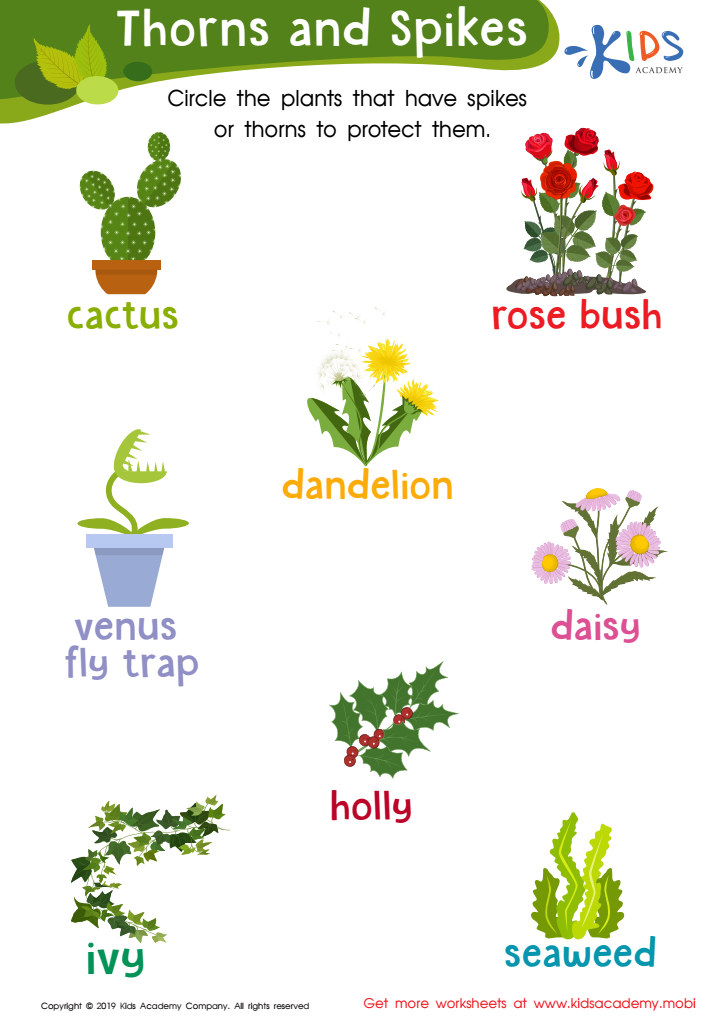
Thorns and Spikes Worksheet
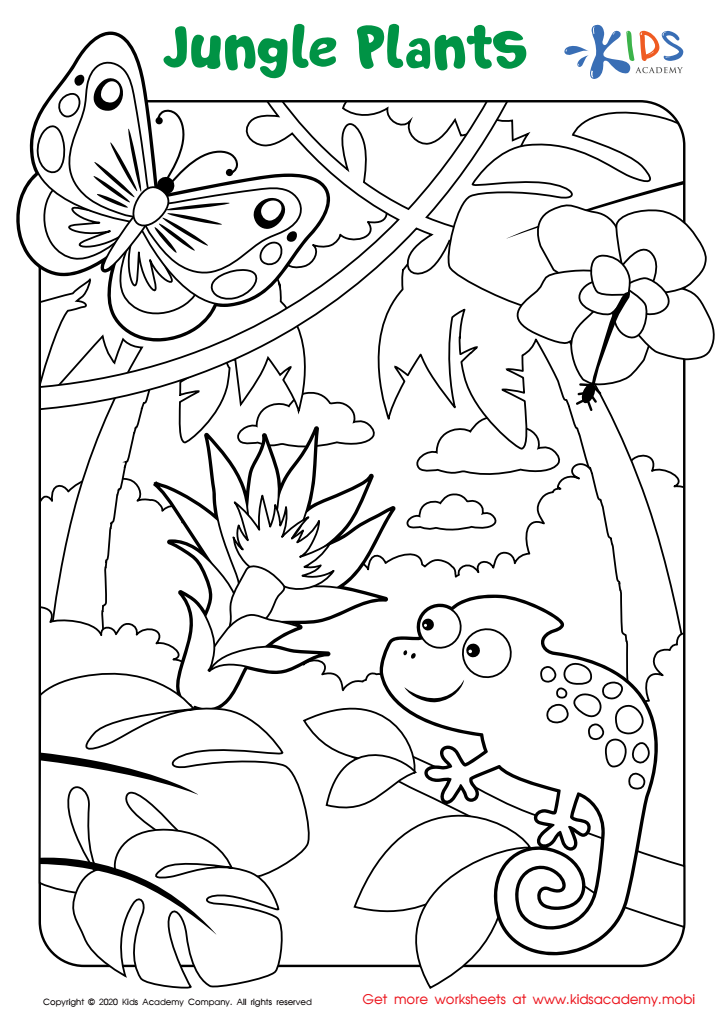
Jungle Plants Worksheet
 Assign to My Students







Plant identification science is a crucial aspect of early education, particularly for children aged 4-5. At this stage, children's innate curiosity about the natural world is at its peak. Engaging them in plant identification fosters a deeper understanding of nature, enhancing their observational skills and promoting exploration.
Understanding various plants helps young learners appreciate biodiversity, which builds a foundation for environmental awareness and respect for living organisms. By recognizing different plants, children can learn about the role each type plays in the ecosystem, such as providing oxygen, food, and habitat for various creatures.
Moreover, plant identification nurtures language development through new vocabulary and observational language skills as children describe shapes, colors, and sizes. Activities like nature walks can support gross motor skills and promote health through outdoor play, which is vital for early development.
Additionally, plant identification can spark imaginative play and creative expression, as children may create stories or art inspired by the flora around them. Overall, teaching young children about plants cultivates a profound connection with nature, driving curiosity and encouraging lifelong learning about the environment. This foundational knowledge can shape their attitudes toward conservation and sustainability as they grow.







