Shape Recognition Science Worksheets for Ages 4-5
3 filtered results
-
From - To
Discover our engaging Shape Recognition Science Worksheets designed specifically for children aged 4-5! These fun and interactive resources help young learners identify, classify, and explore various shapes in an exciting way. Each worksheet combines colorful illustrations and simple activities that promote hands-on learning. Children will develop crucial cognitive and motor skills as they match shapes, complete puzzles, and engage in creative tasks. Perfect for at-home learning or classroom use, our worksheets align with early education guidelines to foster a love of science and math. Ignite your child's curiosity about the world around them and enhance their understanding of shapes today!
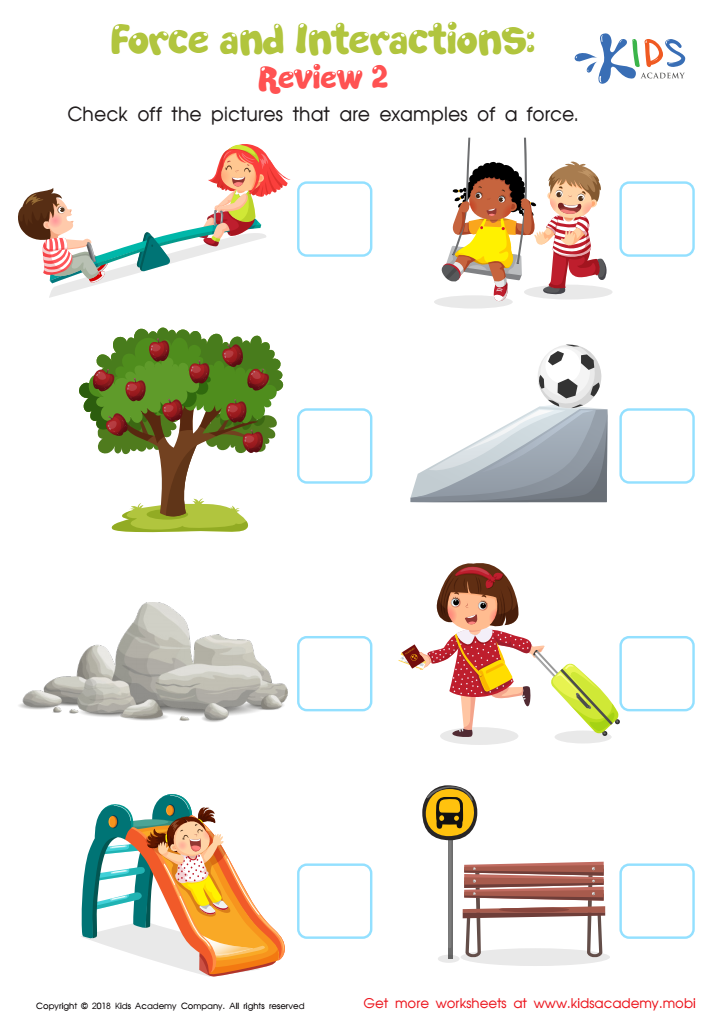
Force and Interactions: Review 2 Worksheet
 Assign to My Students
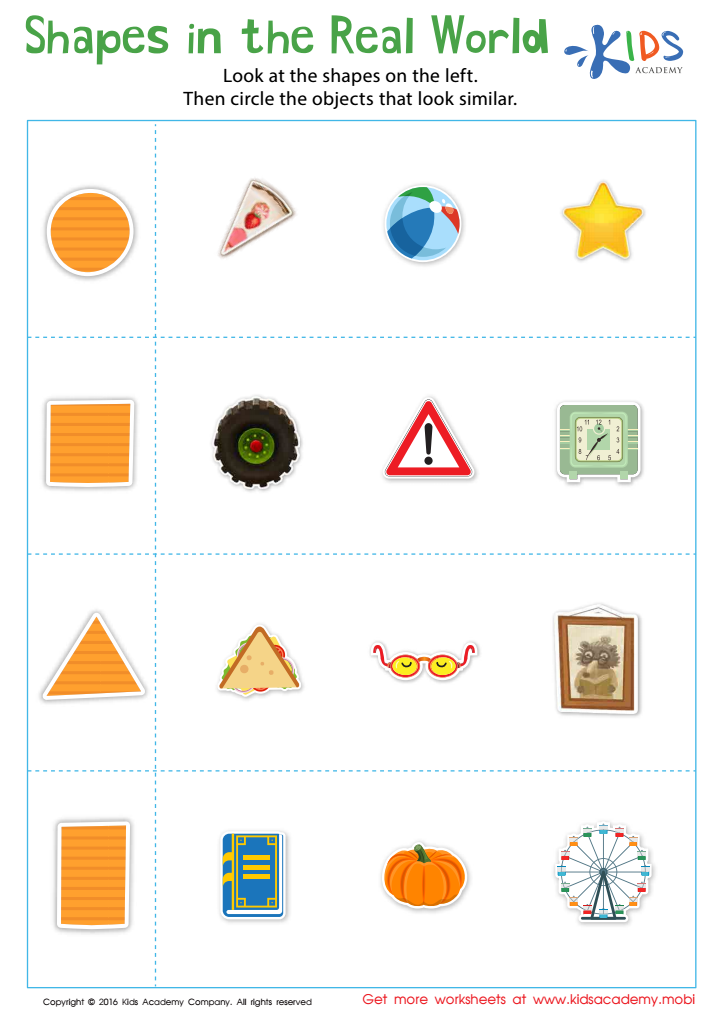
Shapes in the Real World Worksheet
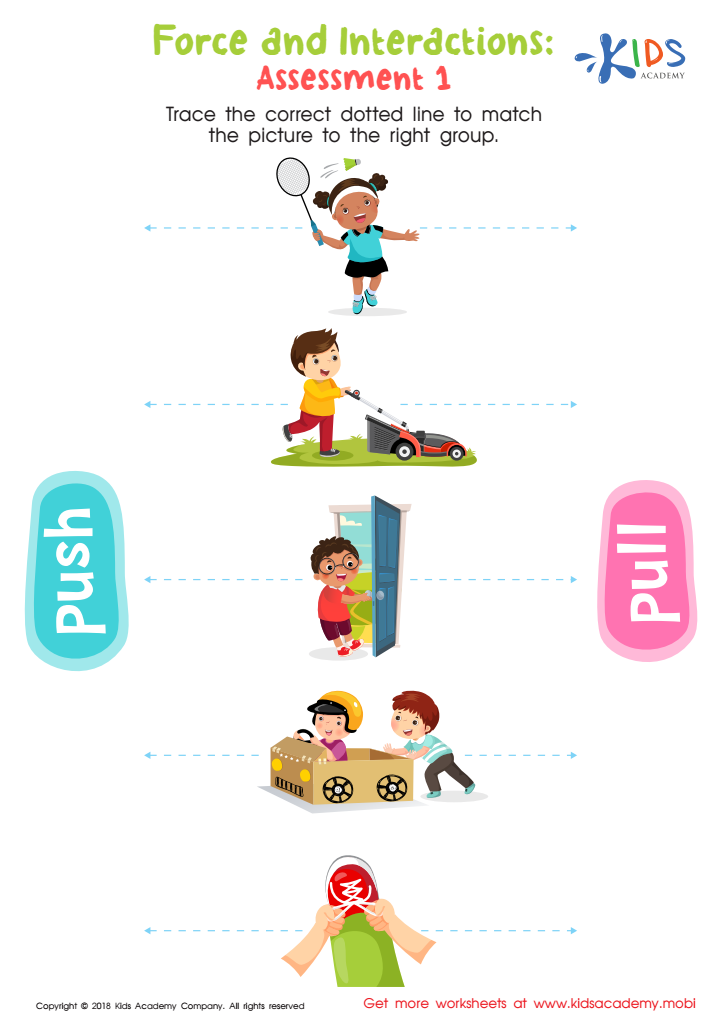
Force and Interactions: Assessment 2 Worksheet








Shape recognition is a fundamental cognitive skill that plays a crucial role in early childhood development, particularly for children ages 4-5. Understanding shapes lays the groundwork for various mathematical concepts, enhancing children's analytical thinking and problem-solving abilities. Recognizing and categorizing shapes helps children develop spatial awareness, which is essential for everyday tasks, from navigating their environment to understanding complex relationships.
In addition, shape recognition supports language development as children learn to communicate their observations and describe their surroundings. Vocabulary related to shapes and spatial relationships grows significantly during this stage, enhancing their overall communication skills.
Moreover, shape recognition fosters creativity. When children experiment with shapes through activities like building blocks or drawing, they explore their imagination and engage in expressive play. This form of learning encourages critical thinking and innovation.
For parents and teachers, engaging children in shape recognition activities can be both fun and educational, creating a positive learning environment. By emphasizing the importance of shapes in daily life and through enjoyable learning experiences, caregivers can significantly contribute to children's early cognitive, physical, and social development—and help lay the foundation for lifelong learning.







