Understanding directions Science Worksheets for Ages 4-5
3 filtered results
-
From - To
Discover our engaging Understanding Directions Science Worksheets designed specifically for children aged 4-5. These worksheets help young learners grasp essential concepts of directionality through fun and interactive activities. Children will explore vocabulary related to left, right, above, and below while fostering critical thinking and spatial awareness skills. Each worksheet is crafted to maintain interest and encourage hands-on learning, making science exciting at an early age. Perfect for preschool classrooms or home learning, these materials promote active learning and coordination. Empower your child's curiosity and understanding of their environment by downloading our Understanding Directions Science Worksheets today!
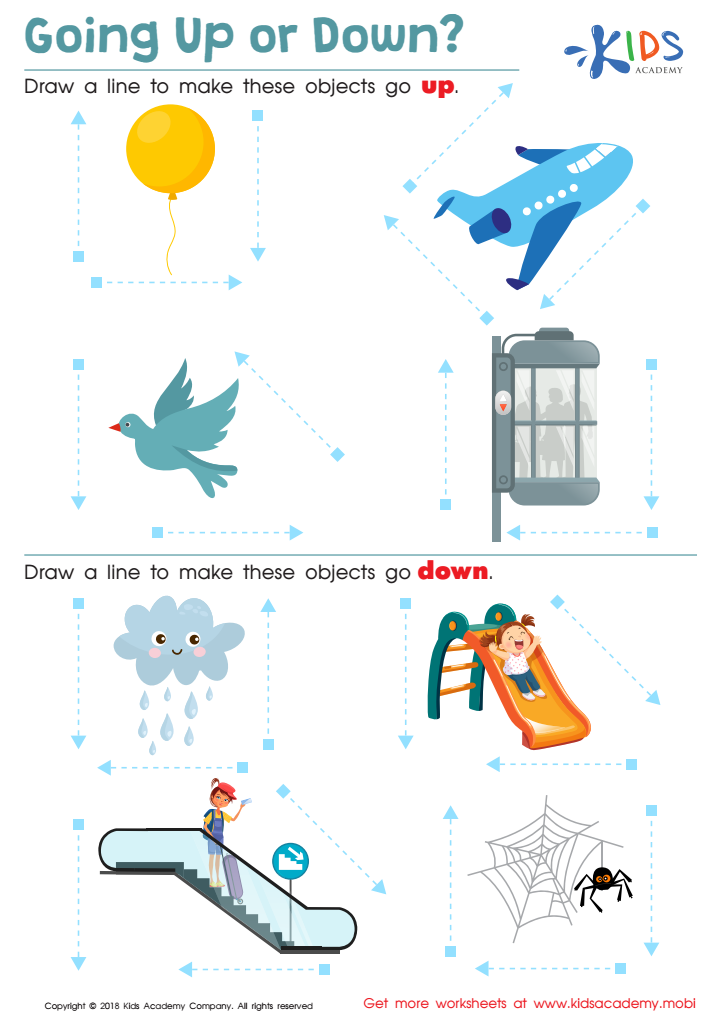
Going up or Down? Worksheet
 Assign to My Students
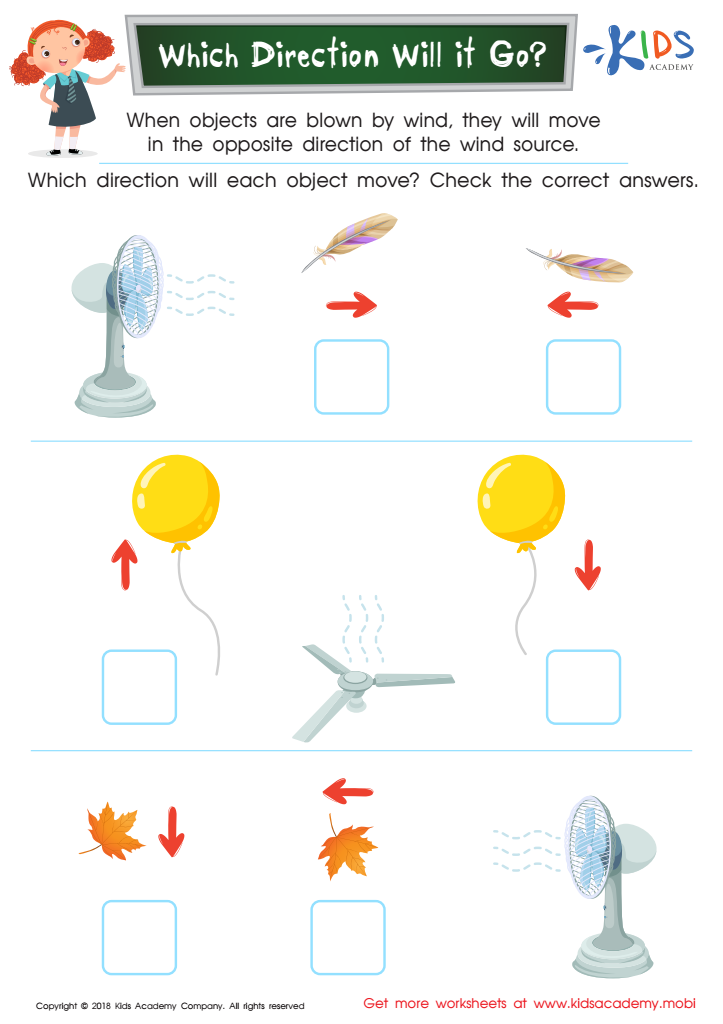
Which Direction Will it Go? Worksheet
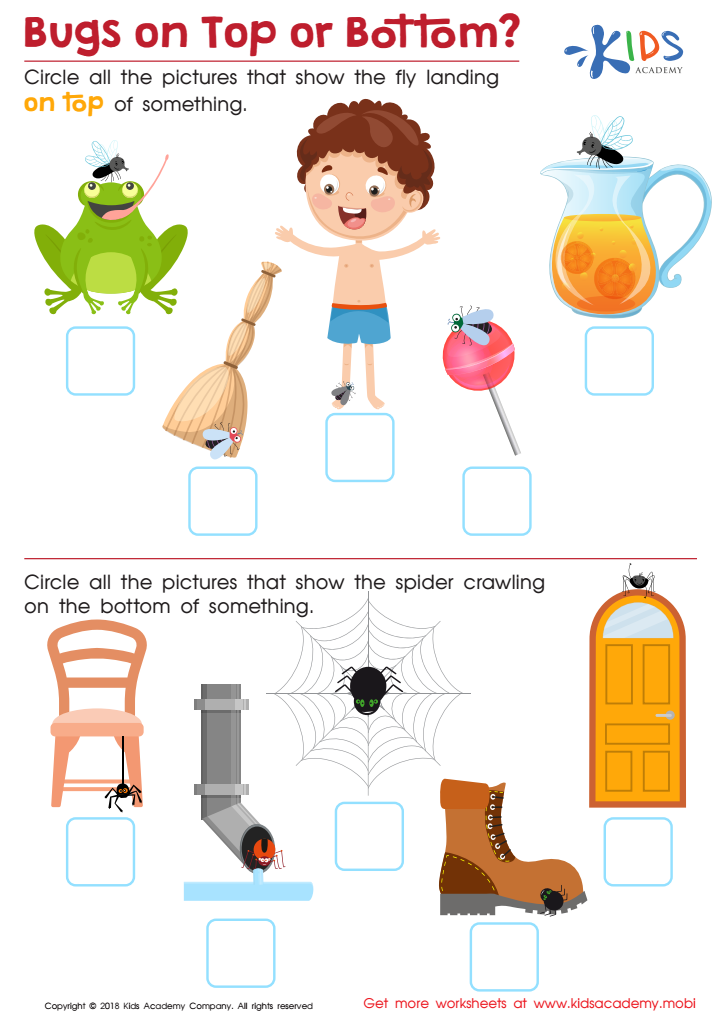
Bugs on Top or Bottom? Worksheet






Understanding directions is a fundamental skill that supports a child's growth and development, particularly in science education for ages 4-5. At this stage, children are naturally curious and eager to explore the world around them. By teaching them how to understand directions, parents and teachers can enhance this curiosity, guiding children in their scientific discoveries.
Firstly, understanding directions fosters critical thinking. As children learn to follow instructions in experiments or when observing nature, they begin to process and analyze information, laying the groundwork for future problem-solving skills. Additionally, following directions promotes safety during science activities, which is essential for ensuring a secure learning environment.
Moreover, experiential learning is crucial at this age. When children follow directions, they engage in hands-on activities that make science concepts more tangible and understandable. This not only reinforces learning but also encourages collaboration, as they often work with peers to carry out tasks.
Ultimately, nurturing a child's ability to understand directions in science helps them develop essential skills like listening, focus, and patience. By investing time in this area, parents and teachers create a strong foundation for lifelong learning and a deeper appreciation for science in the broader context of the world around them.







