Weather Vocabulary Science Worksheets for Ages 4-5
3 filtered results
-
From - To
Enhance your child's understanding of weather with our engaging Weather Vocabulary Science Worksheets tailored for ages 4-5! These printable worksheets from Kids Academy introduce young learners to essential weather-related terms through fun and interactive activities. Children will build a strong vocabulary foundation while distinguishing between sunny, rainy, cloudy, and snowy conditions. Perfect for early grade teachers and homeschooling parents, these worksheets blend visual aids with simple exercises to make learning fun. Foster a love for science and nature with creative worksheets that captivate and educate your budding meteorologists. Download today and watch their curiosity grow!
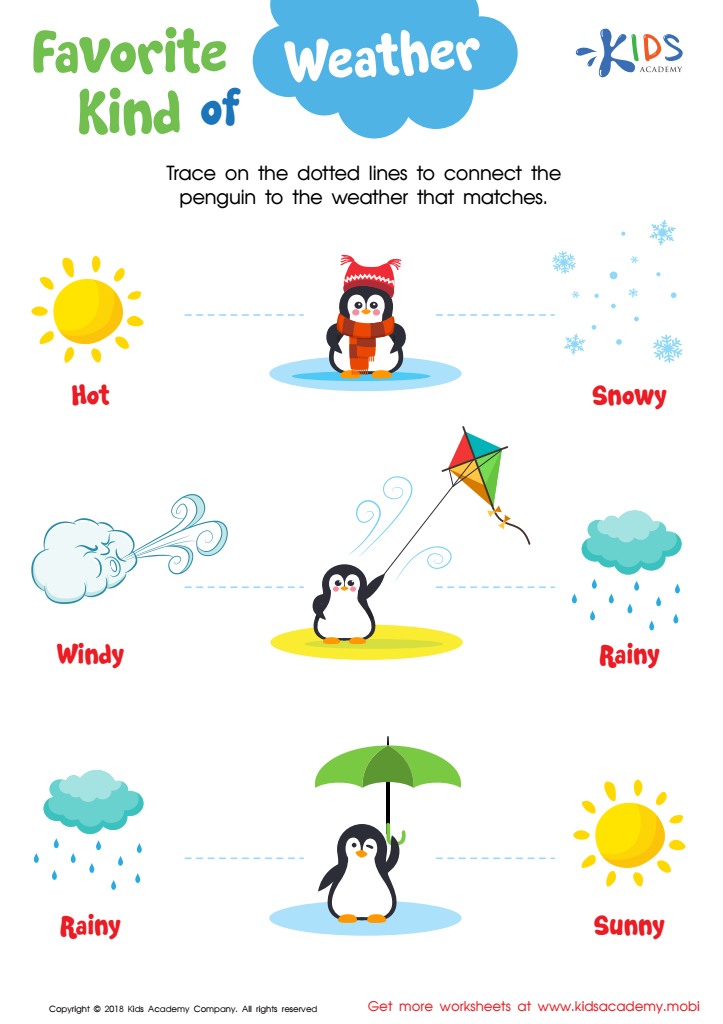
Favorite Kind of Weather Worksheet
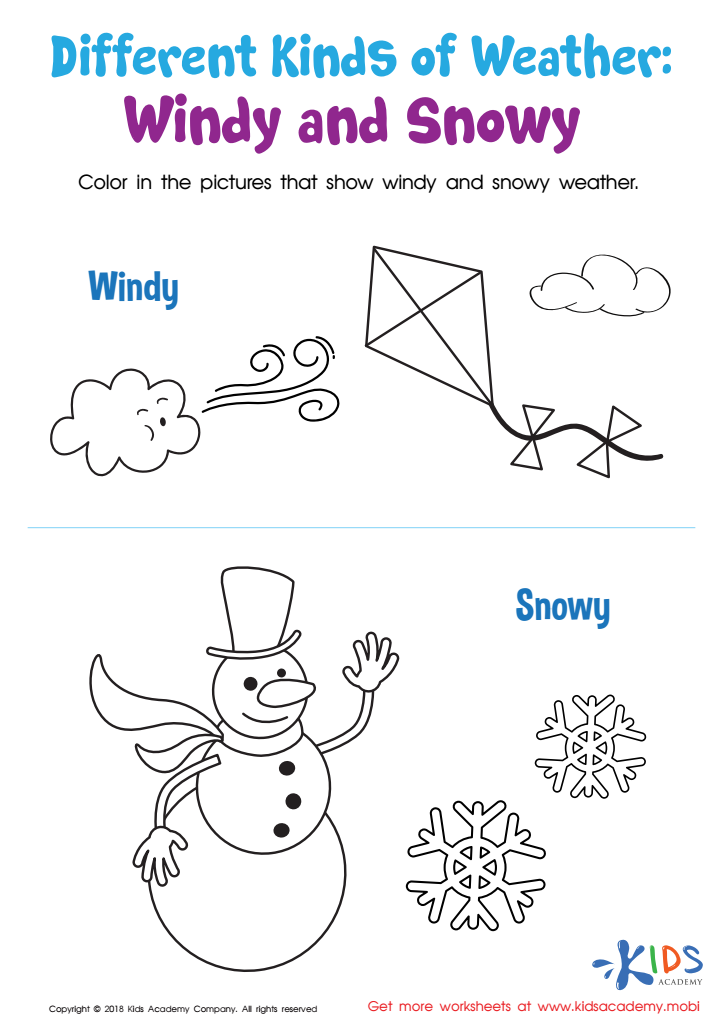
Different Kinds of Weather: Windy and Snowy Worksheet
 Assign to My Students








Parents and teachers should care about introducing weather vocabulary to children ages 4-5 because early exposure to scientific concepts lays a strong foundation for future learning. At this developmental stage, children's brains are highly receptive to new information, and introducing them to weather terminology enhances their cognitive, language, and observational skills. Understanding basics like “sunny,” “rainy,” “cloudy,” and “windy” not only enriches their vocabulary but also helps them express their experiences and surroundings more accurately.
Moreover, weather is an omnipresent phenomenon that impacts daily life, making it a practical and engaging topic for young minds. Discussing weather conditions can spark curiosity, leading to questions and explorations that develop critical thinking. Weather-related activities, such as creating simple weather charts or dressing weather dolls, make learning interactive and fun, thereby increasing retention.
Lastly, having weather vocabulary is instrumental for safety. Knowing terms like “stormy” or “lightning” helps children understand and respond appropriately to weather warnings. Educating young children about weather also fosters an early appreciation for nature and environmental stewardship. Overall, incorporating weather vocabulary into early childhood education provides a comprehensive approach to learning that benefits cognitive development, practical life skills, and emotional intelligence.







