Color Identification Social Studies Worksheets for Ages 4-5
3 filtered results
-
From - To
Introduce your little learners to the vibrant world of Color Identification Social Studies Worksheets designed specifically for ages 4-5! These engaging worksheets help children enhance their understanding of colors while exploring basic social studies concepts. With fun illustrations and interactive activities, kids will identify colors in various social contexts, reinforcing their critical thinking and observation skills. Perfect for classroom settings or at-home learning, our worksheets encourage creativity and curiosity about the world around them. Download and print these colorful resources to make learning an enjoyable adventure in early childhood education! Ignite a passion for discovery in your child's formative years today!

Fireman Worksheet
 Assign to My Students
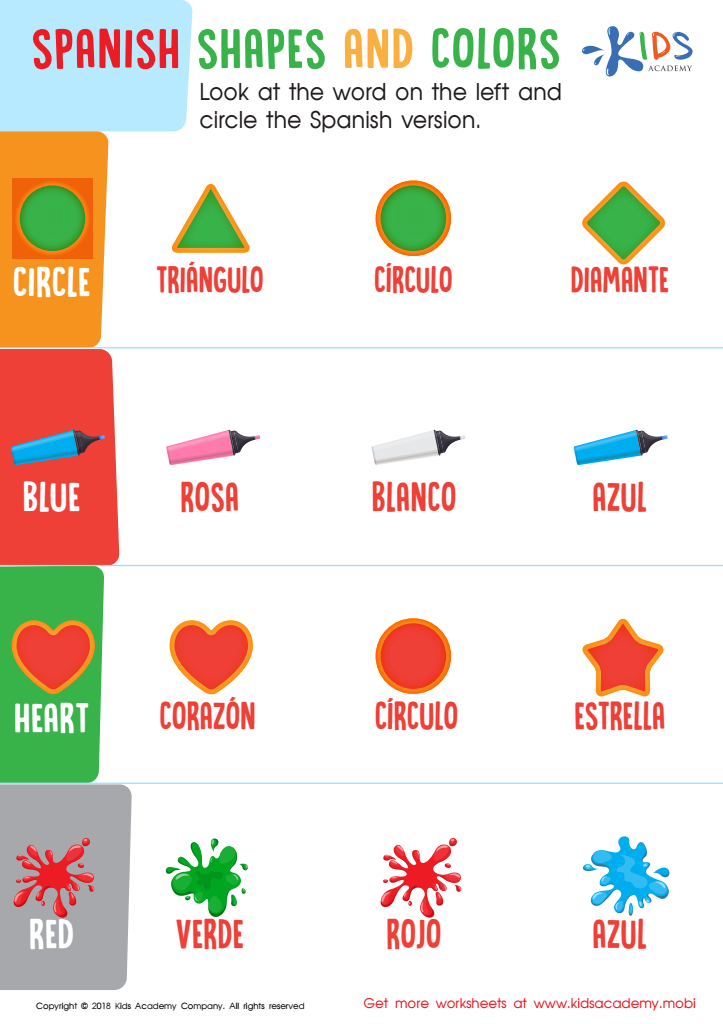
Spanish Shapes and Colors Worksheet

Playground Worksheet








Understanding color identification is crucial for children aged 4-5, as it plays a significant role in their cognitive and social development. For parents and teachers, fostering this skill supports early learning and prepares children for more complex concepts later on. Color identification enhances children's observational skills, promotes language development through vocabulary expansion, and provides a foundation for critical thinking.
In Social Studies, recognizing colors can help children engage with their environment, identifying colors in different cultural contexts, such as flags, traditional clothing, and everyday objects. This awareness promotes curiosity about diversity and encourages discussions about the significance of color in various cultures.
Moreover, color identification can facilitate social interactions. Children learn to share and express their preferences about colors, which helps in building friendships and inclusive play. When adults take the time to encourage color discussions, they can foster a sense of community and understanding among peers.
In summary, engaging children in color identification within Social Studies not only enhances their academic abilities but also nurtures social skills and cultural awareness, making it a vital component of early childhood education that parents and teachers should prioritize.