Shape Recognition Social Studies Worksheets for Ages 4-5
3 filtered results
-
From - To
Discover our engaging Shape Recognition Social Studies Worksheets designed specifically for children aged 4-5! These fun and interactive resources introduce young learners to essential social studies concepts while enhancing their shape identification skills. Each worksheet provides colorful visuals and relatable scenarios, making learning enjoyable and effective. Through various activities, kids will explore shapes in their environment, promoting critical thinking and observation skills. Perfect for both classroom settings and home learning, our worksheets foster curiosity and provide a foundation for understanding the world around them. Start your child's learning journey today with our exceptional shape recognition worksheets!
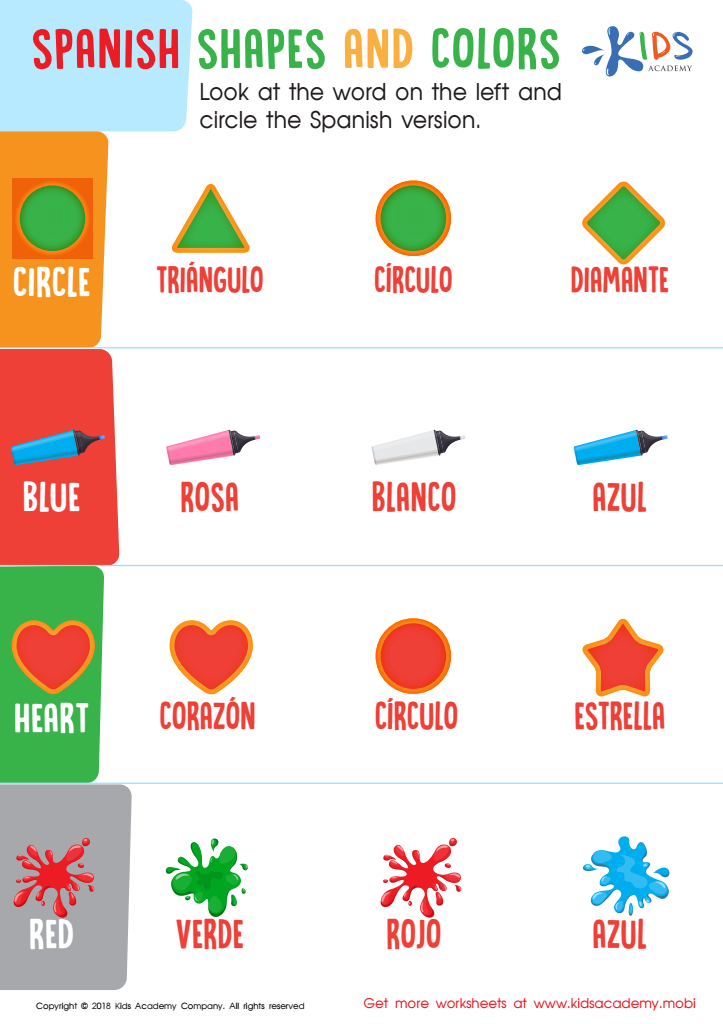
Spanish Shapes and Colors Worksheet
 Assign to My Students

Let's Check! Assessment Worksheet
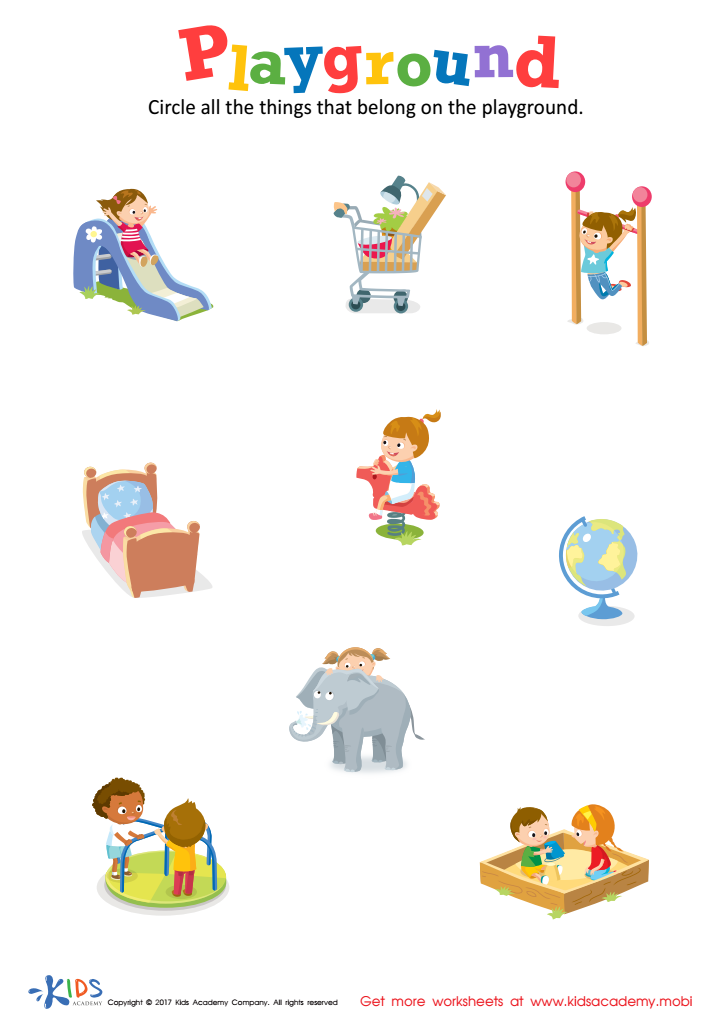
Playground Worksheet








Shape recognition is a foundational skill that plays a crucial role in the cognitive development of children aged 4-5. For parents and teachers, understanding the importance of incorporating this concept into social studies is vital for several reasons.
Firstly, shape recognition enhances spatial awareness and visual perception, skills integral not only in mathematics but also in everyday life, such as navigating environments or understanding diagrams. When children learn to identify and categorize shapes, they develop critical thinking skills that allow them to make connections across various subjects, including science and art.
Moreover, shape recognition activities promote social interaction, as children often work together in groups to complete engaging hands-on tasks. This collaboration fosters communication skills and teamwork, essential components in a child's social development.
In the context of social studies, learning about shapes within their cultural and environmental context enriches children's understanding of the world around them. For example, they can explore architectural shapes in their community or the geometric patterns in cultural art.
Overall, integrating shape recognition into the curriculum not only supports academic growth but also nurtures essential life skills in young learners, making it a critical focus for parents and educators alike.