Vocabulary Building Social Studies Worksheets for Ages 4-5
4 filtered results
-
From - To
Help your child develop essential language skills with our "Vocabulary Building Social Studies Worksheets" designed for ages 4-5. These engaging and educational worksheets focus on enhancing young learners' social studies terminology through fun activities, colorful illustrations, and interactive exercises. Perfect for home or school use, they provide a strong foundation in social studies while boosting vocabulary comprehension and usage. Tailored to spark curiosity and interest in the world around them, our worksheets encourage young minds to explore and understand their community, culture, and environment. Equip your preschooler with the tools for successful early learning with Kids Academy's expertly crafted resources.
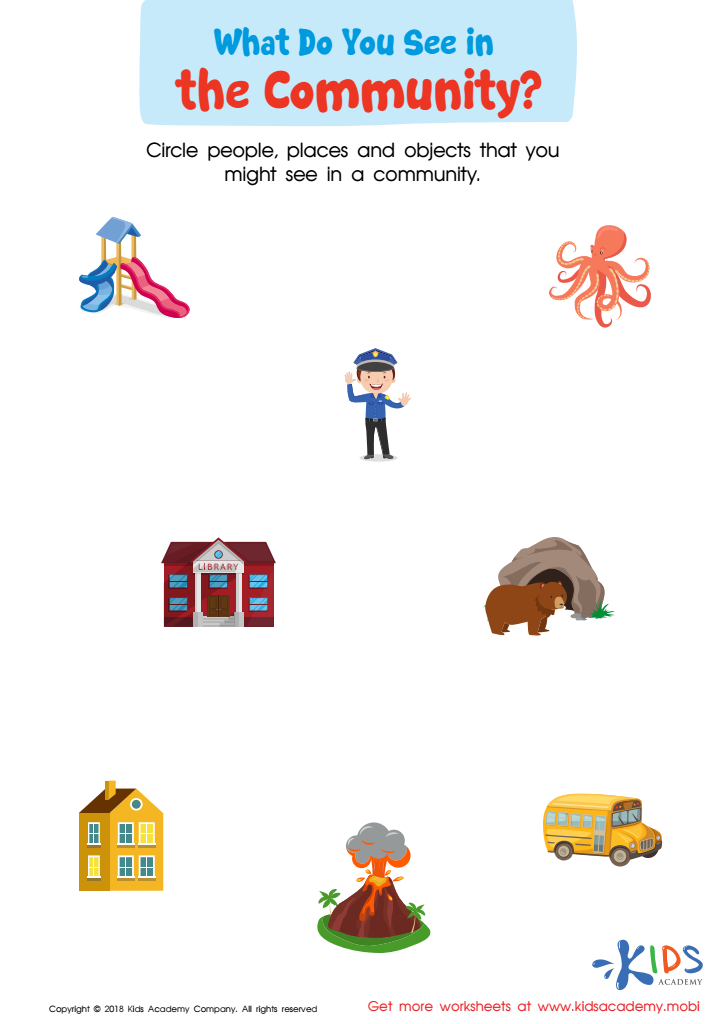
What Do You See in the Community Worksheet
 Assign to My Students
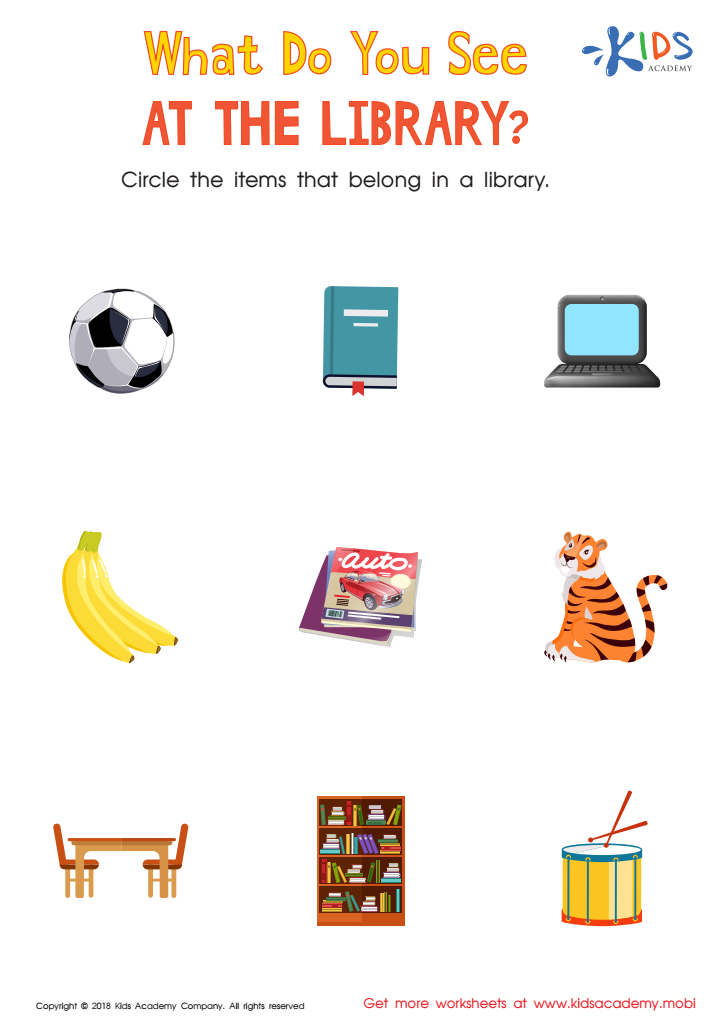
What Do you See at the Library? Worksheet
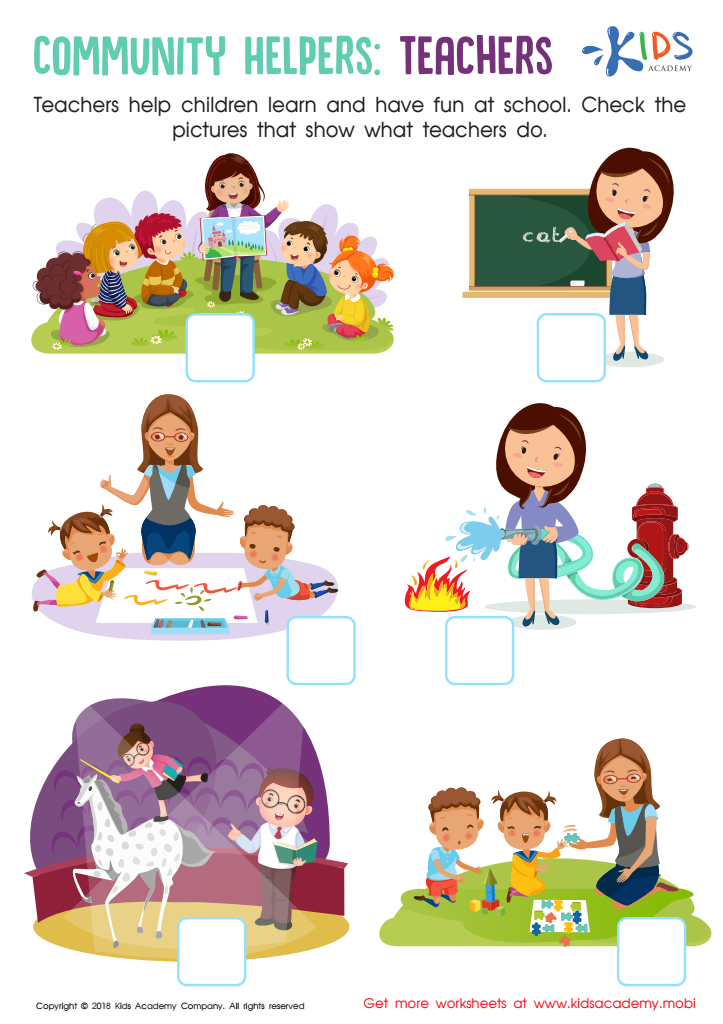
Teachers Community Helpers Worksheet
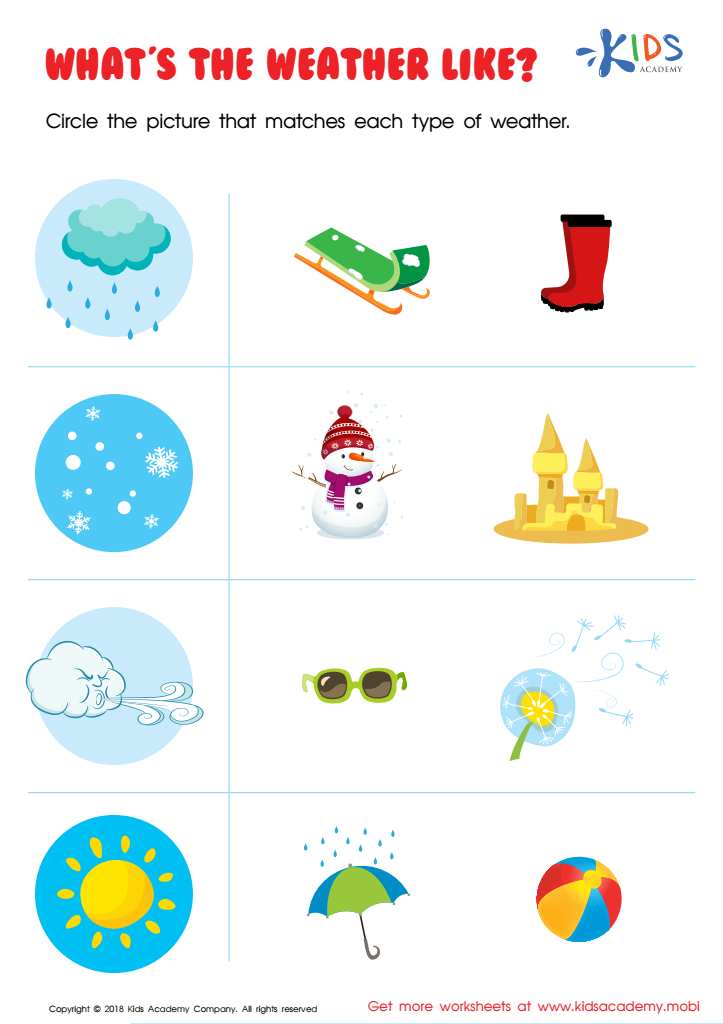
What's the Weather Like? Worksheet








Parents and teachers should care deeply about vocabulary building in social studies for children aged 4-5 as it serves as a foundational element for lifelong learning and intellectual development. At this age, children's brains are highly receptive to new information, making it the optimal time to introduce them to a broad range of vocabulary. Strengthening social studies vocabulary helps in developing a child's understanding of the world around them, including concepts of time, community, culture, and geography.
For instance, terms like "past," "present," "map," "neighborhood," and "tradition" form the basis of understanding more complex ideas later. A rich social studies vocabulary aids not just in comprehension, but also in the ability to communicate effectively, ask informed questions, and engage in discussions. Moreover, language skills acquired during these formative years lay the groundwork for reading comprehension and academic success in later stages.
Engaging children in social studies vocabulary building can be achieved through interactive storytelling, discussions, visual aids, and hands-on activities. These methods make learning enjoyable and meaningful, fostering curiosity and a love for learning that can last a lifetime. Ultimately, investing efforts in this aspect of education at an early age empowers children to become well-rounded, informed, and engaged citizens.