
Basic arithmetic practice Worksheets for Ages 4-6
21 filtered results
Difficulty Level
Grade
Age
-
From - To
Subject
Activity
Standards
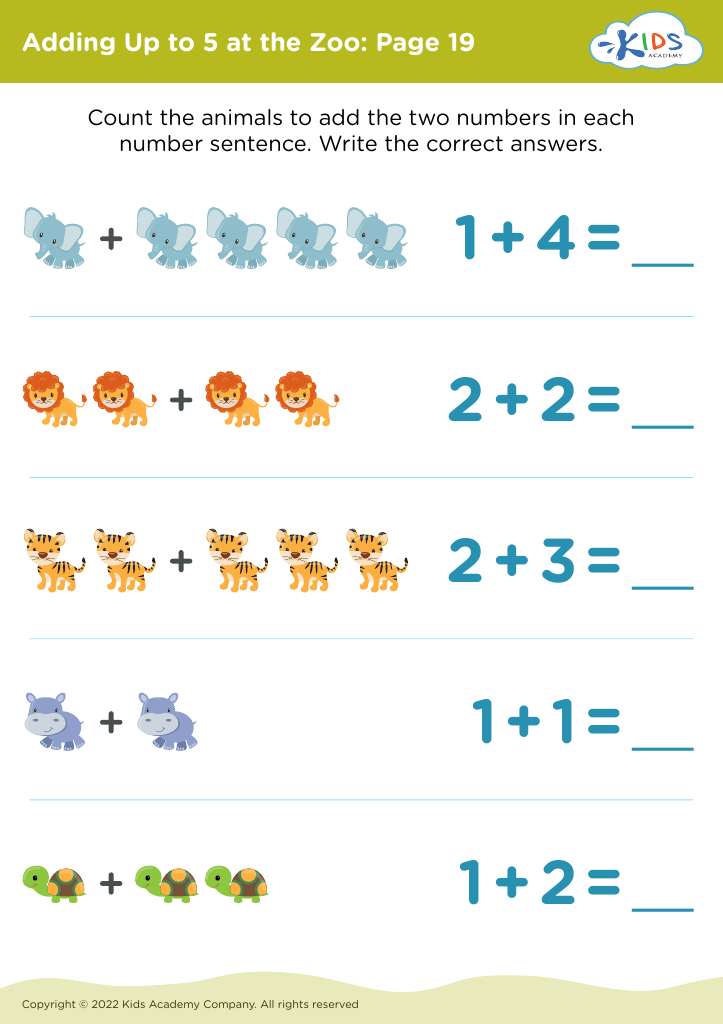
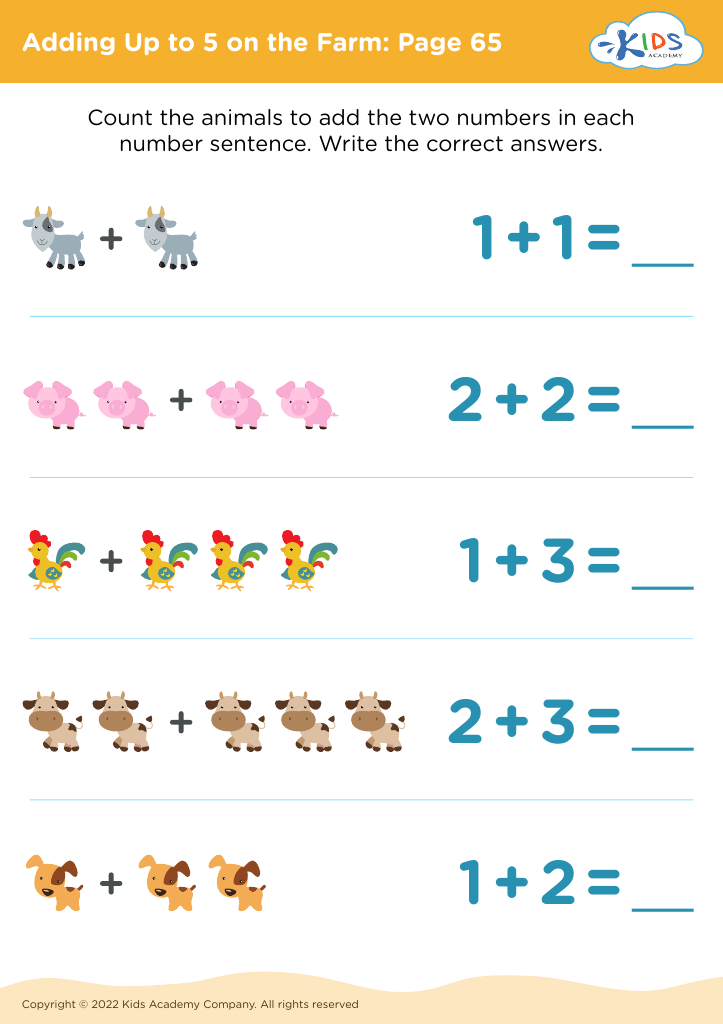
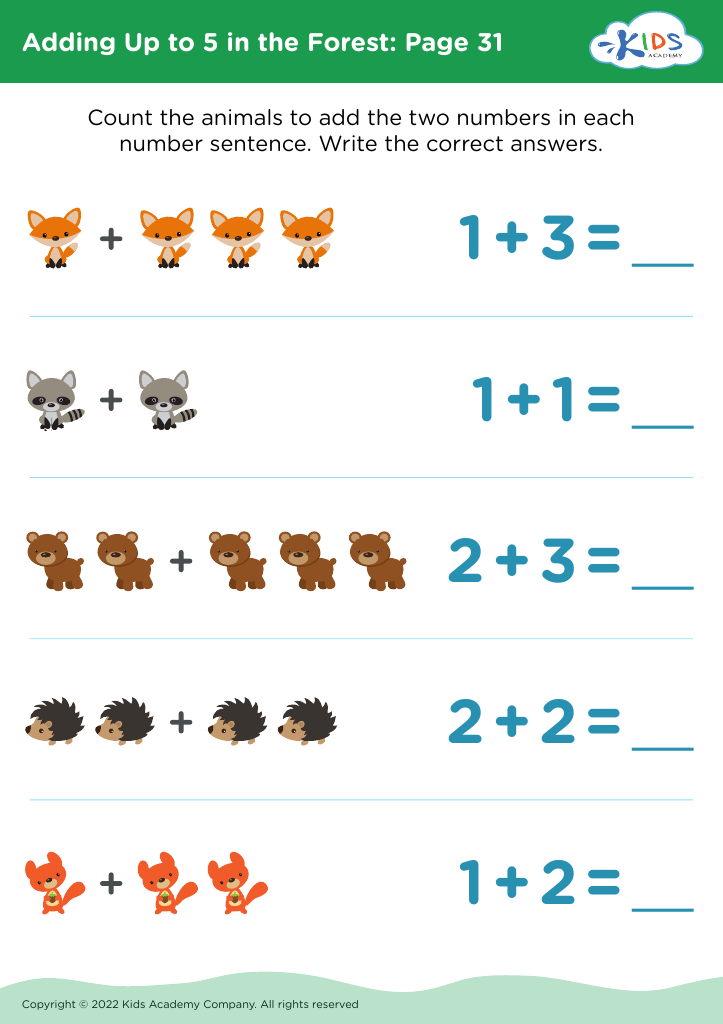
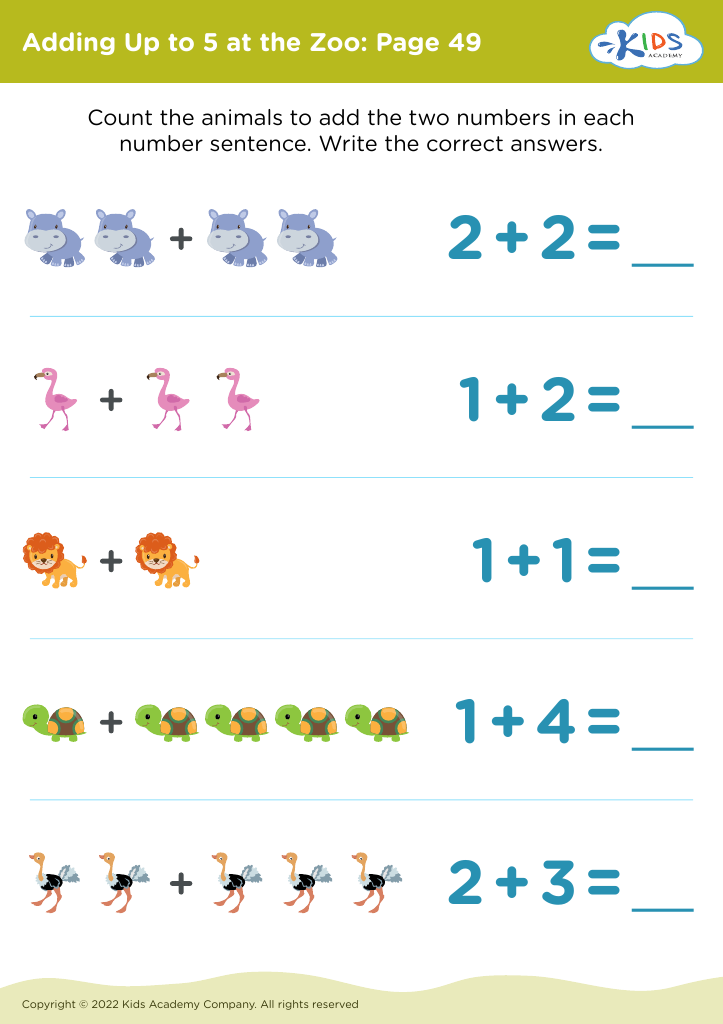
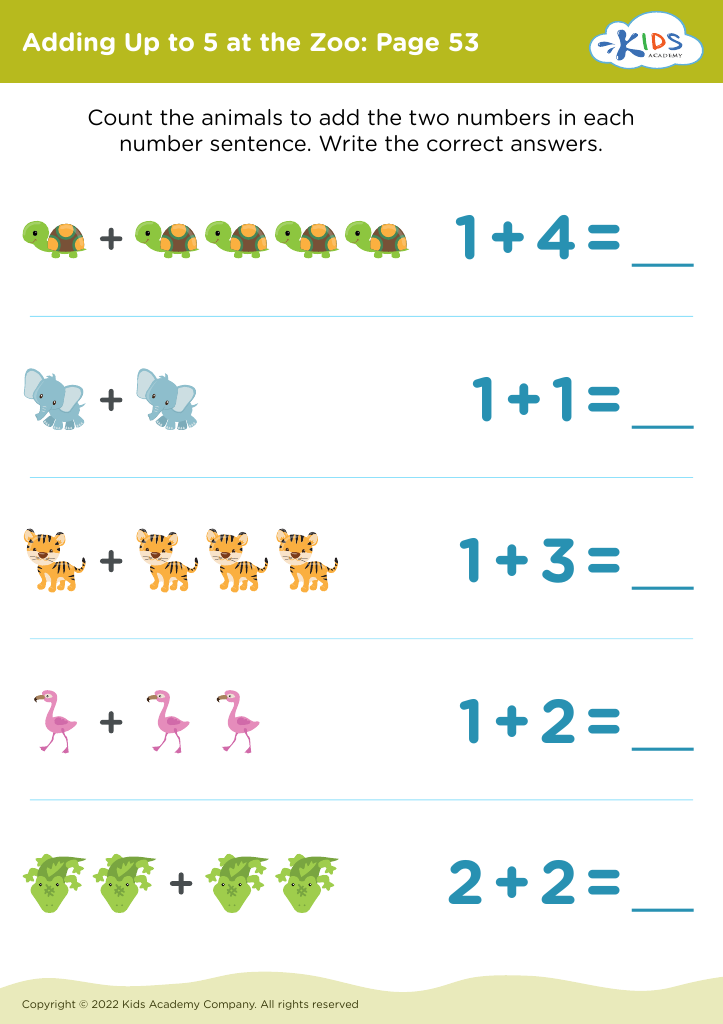
Welcome to our Basic Arithmetic Practice Worksheets designed specifically for children aged 4-6! These engaging worksheets help young learners build foundational math skills through fun and interactive exercises. With colorful illustrations and age-appropriate problems, kids will practice essential concepts such as addition and subtraction in a playful way. Each worksheet encourages hands-on learning, helping children recognize numbers and develop critical thinking. Ideal for both classroom and home use, our resources are perfect for reinforcing what kids learn while fostering a love for mathematics. Download our worksheets today and watch your little ones gain confidence as they embrace the world of arithmetic!
Favorites
With answer key
Interactive
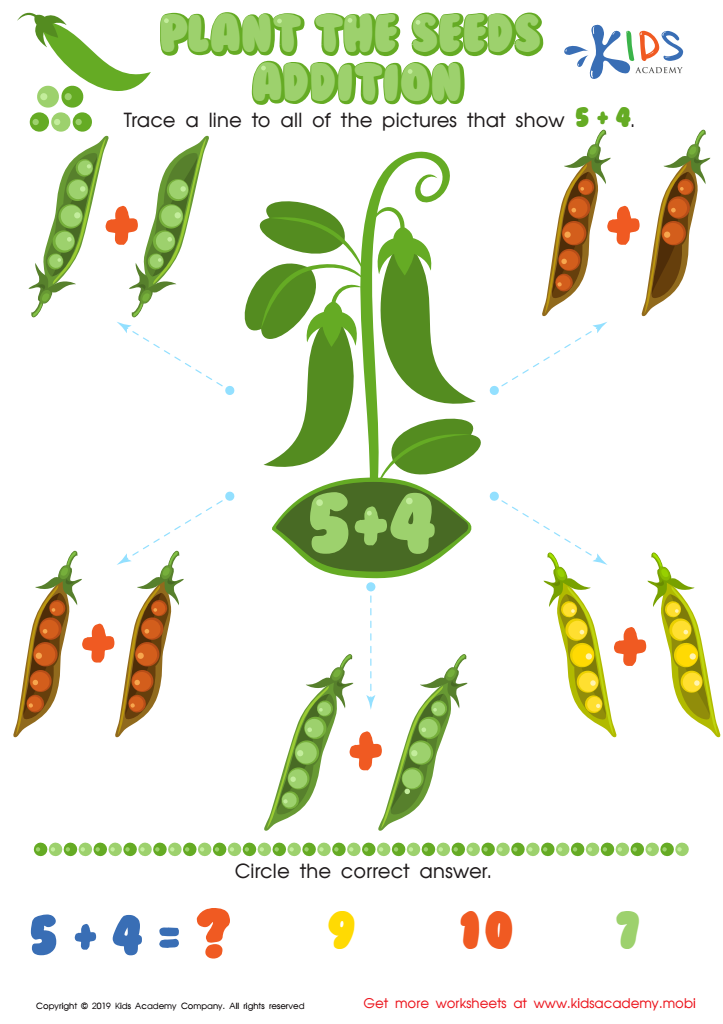
Plant the Seeds Addition Worksheet
This worksheet combines math and learning about plants. Ask kids to name their favorite plants and which ones they see the most. Have them trace a line to all pictures in the middle which show the equation 5+4. Enjoy the beauty of plants while introducing math skills!
 Assign to My Students
Plant the Seeds Addition Worksheet
Worksheet
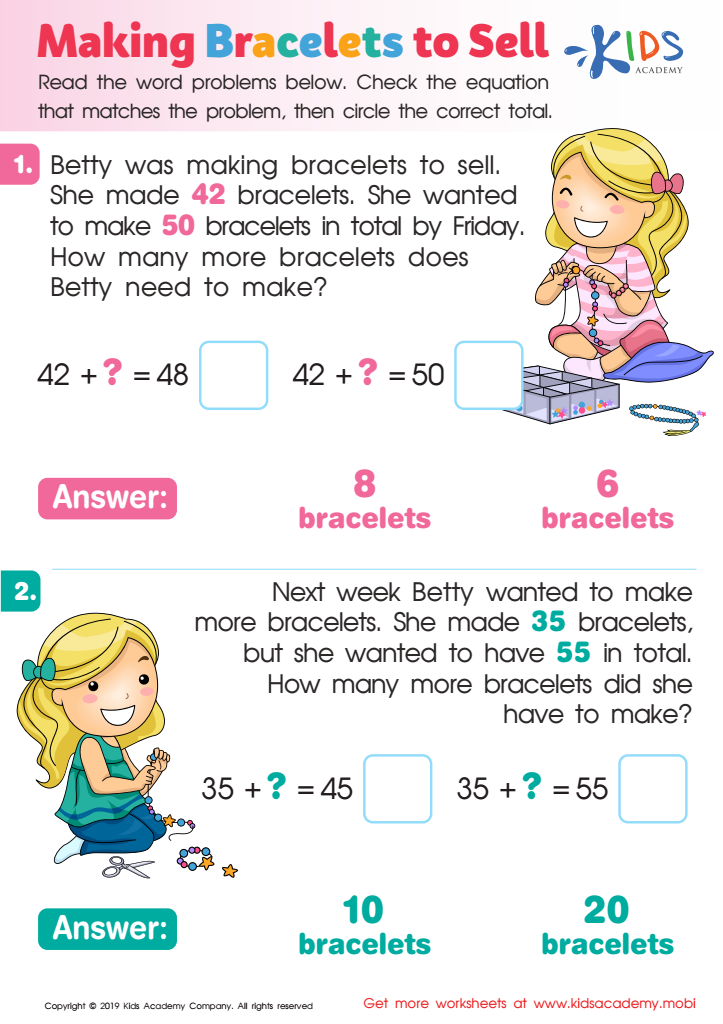
Making Bracelets to Sell Worksheet
Got kids who love crafting? This worksheet will be right up their alley! Let them use their creative and problem-solving skills to check equations and decide the correct total. It's just like making beads into a bracelet but on paper! Print out this downloadable PDF and get ready for a fun craft session.
Making Bracelets to Sell Worksheet
Worksheet
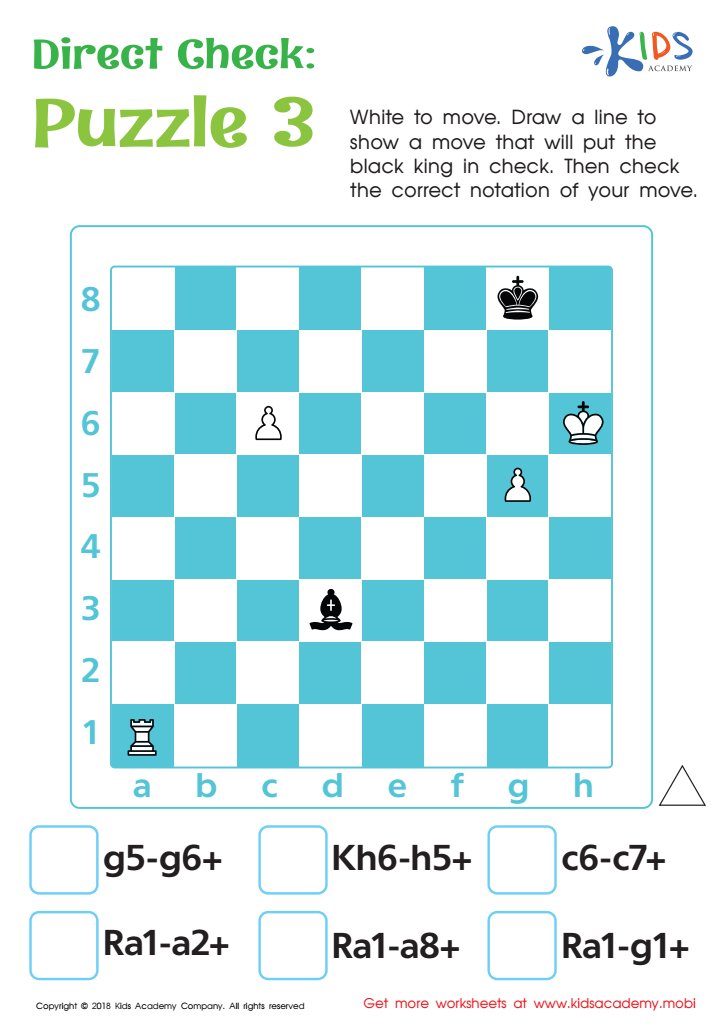
Direct Check: Puzzle 3 Worksheet
Chess is a great way to help your child develop their strategic, mathematical, and thinking skills. Test their understanding with this simple worksheet: they must get the black king in checkmate with white pieces, then select the notation that shows the correct move. See just how much progress they've made!
Direct Check: Puzzle 3 Worksheet
Worksheet
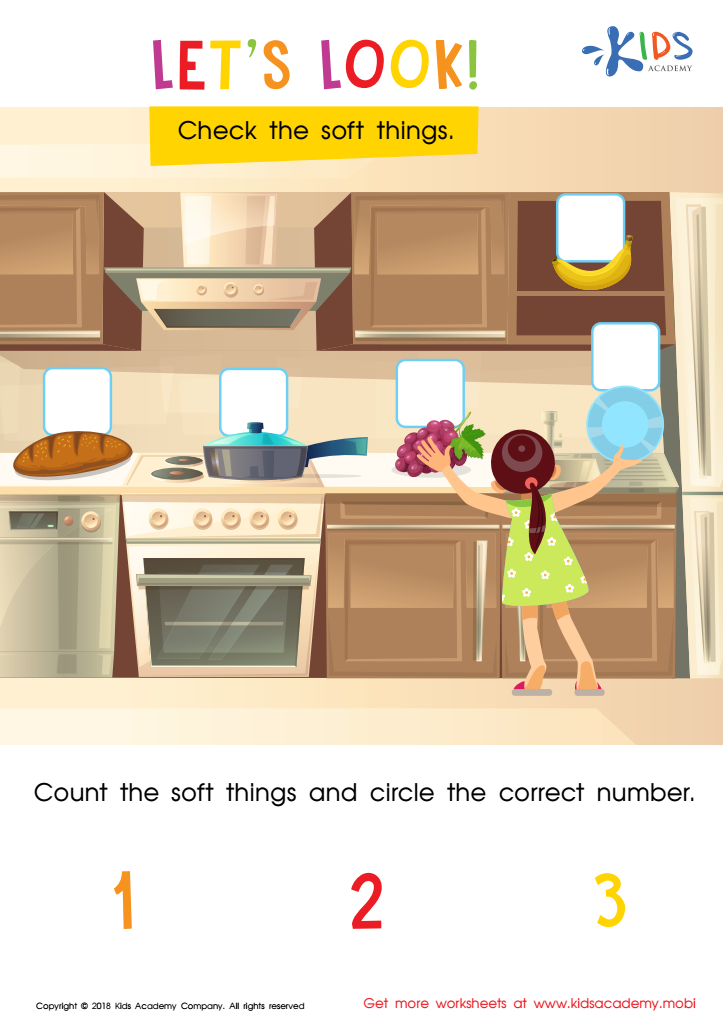
Let's Look! Assessment Worksheet
Have your child look at the picture in the printout and name the objects. Ask which ones are soft and hard and have them count the soft objects and circle the number. This worksheet will engage your child's thinking and teach them about texture.
Let's Look! Assessment Worksheet
Worksheet
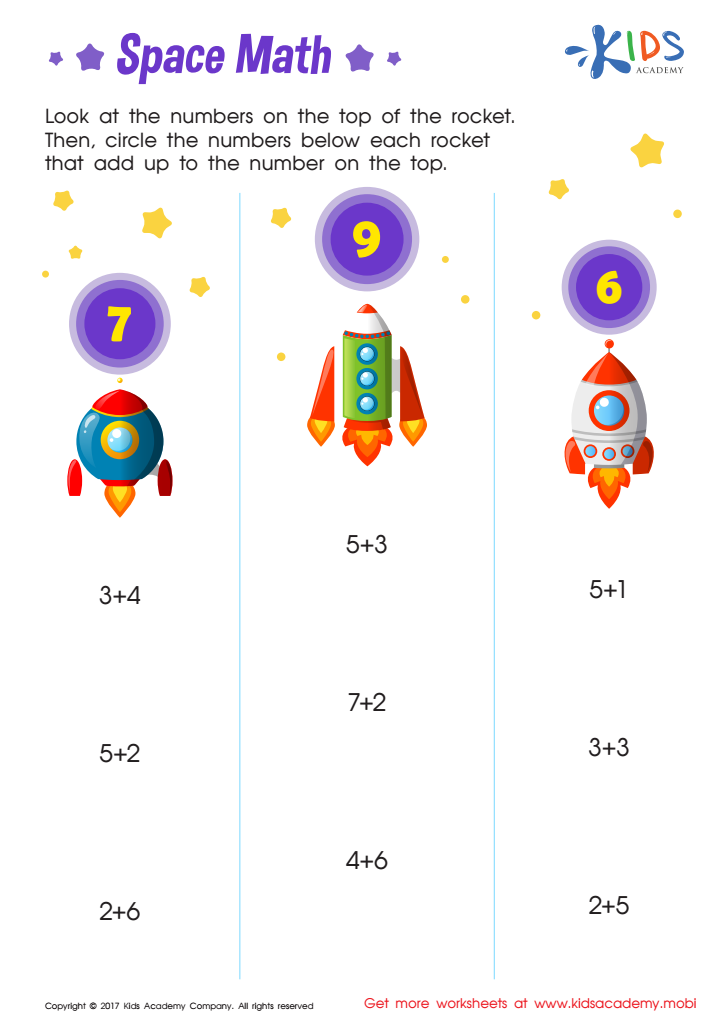
Addition: Space Math Worksheet
Fun and engaging space-themed practice with vivid pictures and matching numbers will make learning more meaningful. Take their math skills out of this galaxy today with Kids Academy!
Addition: Space Math Worksheet
Worksheet
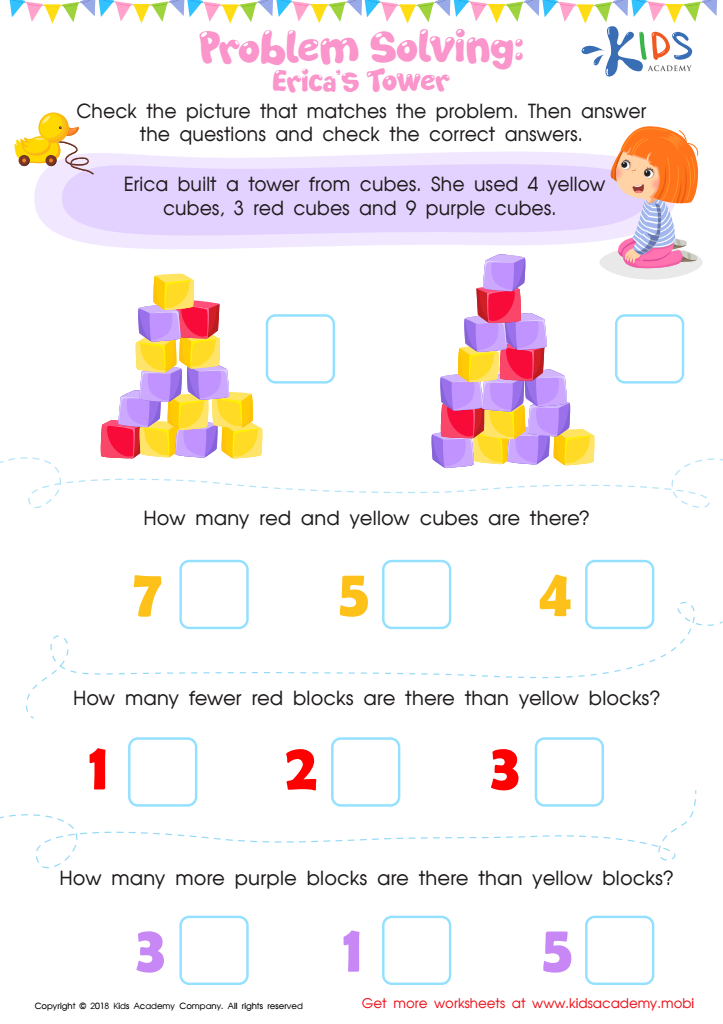
Problem Solving: Erica's Tower Worksheet
Sweet Erica needs your math student's help! Download the PDF worksheet and have your little math whiz read the word problems, match the pictures and solve basic addition/subtraction problems with two/three addends, minuends and subtrahends. They'll be having fun while strengthening their math fact skills!
Problem Solving: Erica's Tower Worksheet
Worksheet
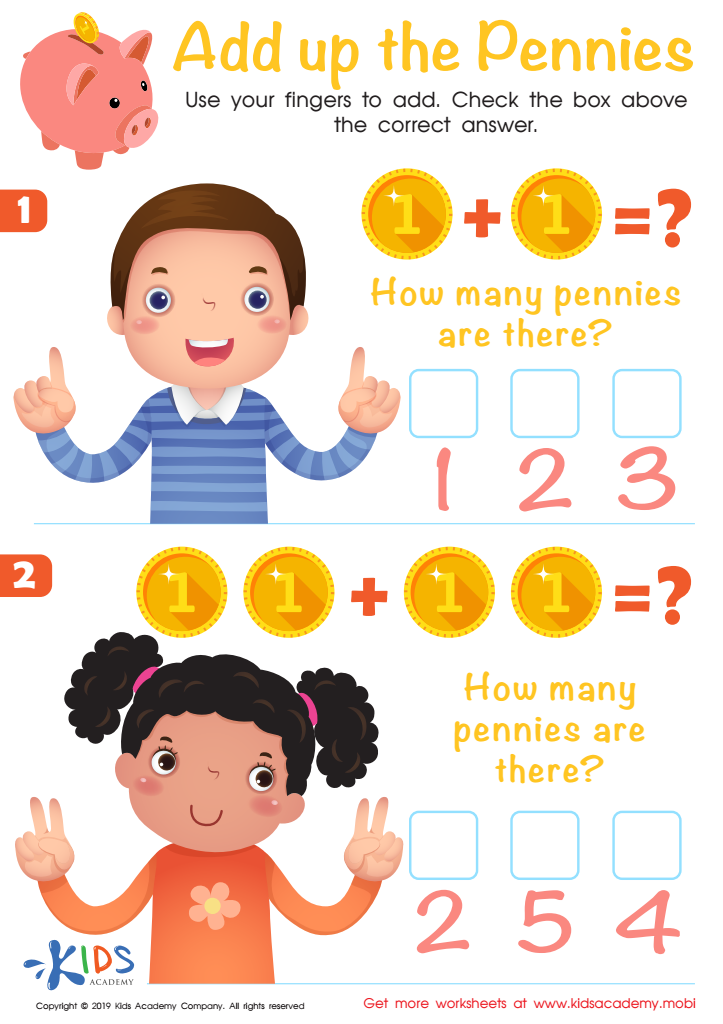
Add up the Pennies Worksheet
Help your kids ace their math skills with this simple worksheet! You can guide them to use their fingers to add numbers and then check the box above the correct answer. With practice and your support, they can become faster and better at adding numbers. No sweating required!
Add up the Pennies Worksheet
Worksheet
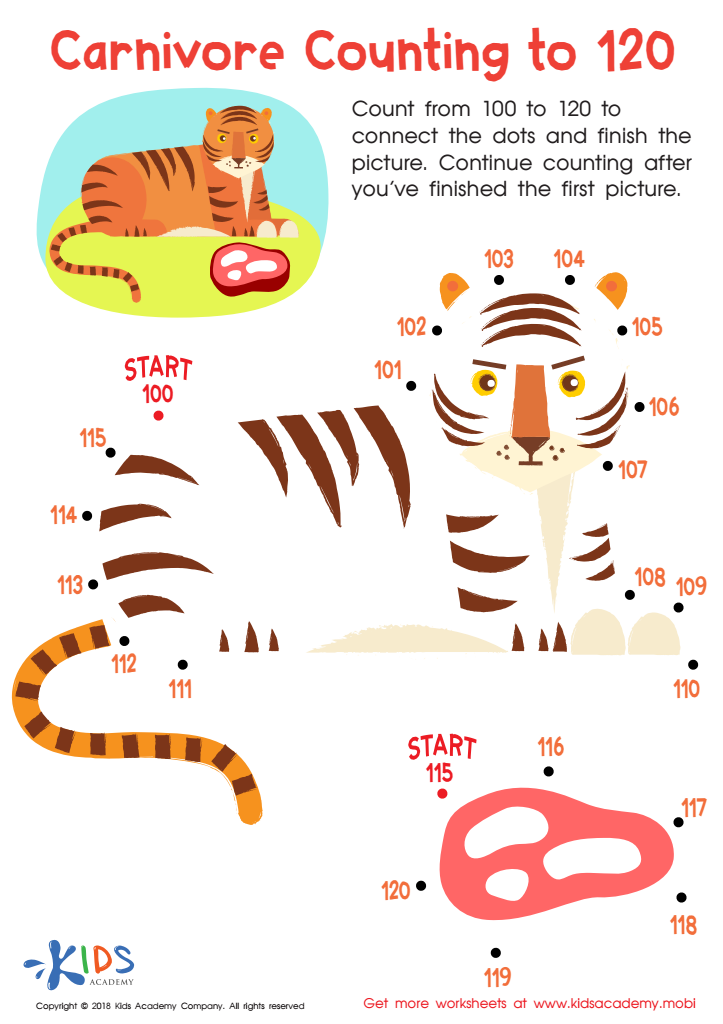
Carnivore Counting to 120 Worksheet
Ask your child to name some popular carnivores. Can they tell you what the animal in the worksheet is? A Tiger? Get them to count from 100 to 120 to connect the dots. After they finish the first picture, keep counting to help them practice!
Carnivore Counting to 120 Worksheet
Worksheet
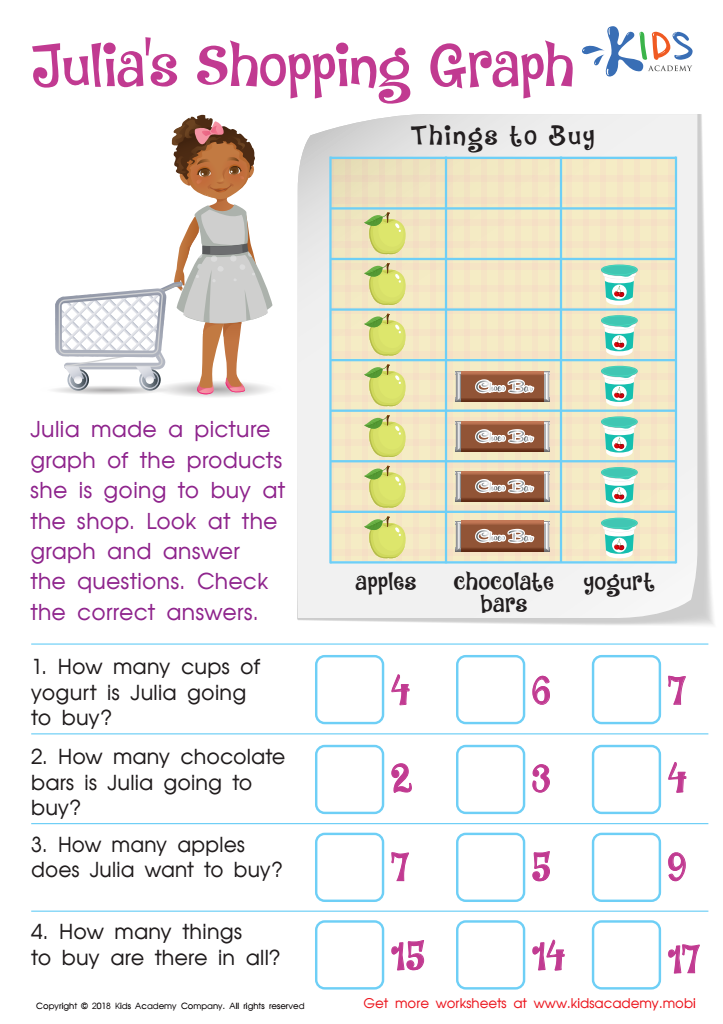
Julia's Shopping Graph Worksheet
This fun PDF worksheet provides little mathematicians with practice using pictographs. They will answer questions about Julia's graph, helping to assess their understanding of reading and interpreting data. Counting and choosing the correct answer is sure to be an enjoyable experience!
Julia's Shopping Graph Worksheet
Worksheet
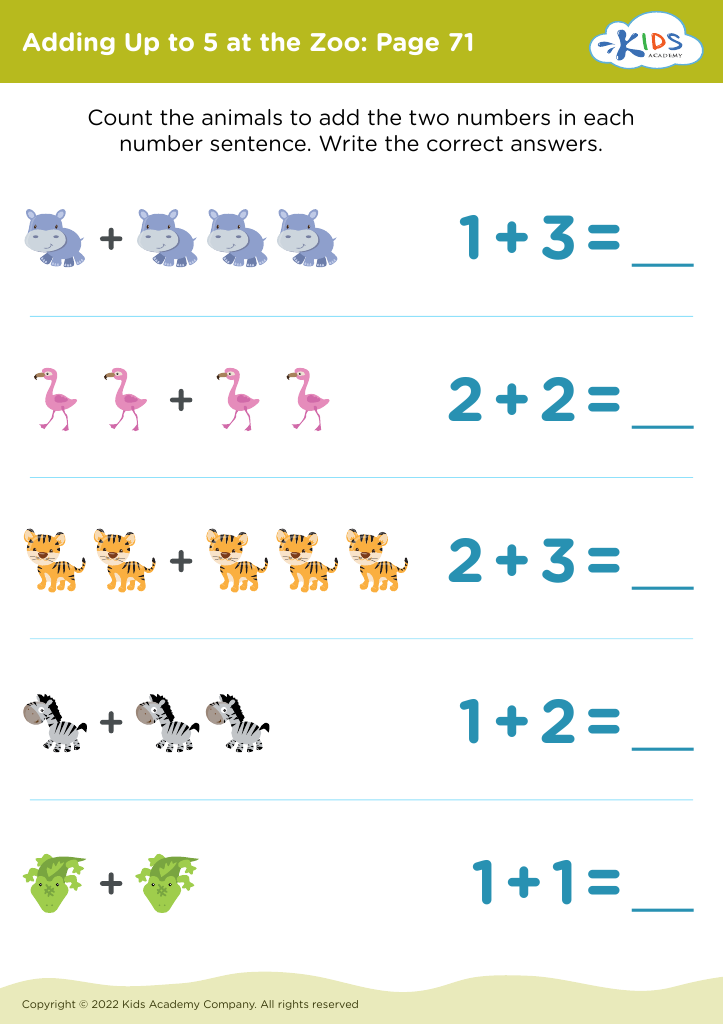
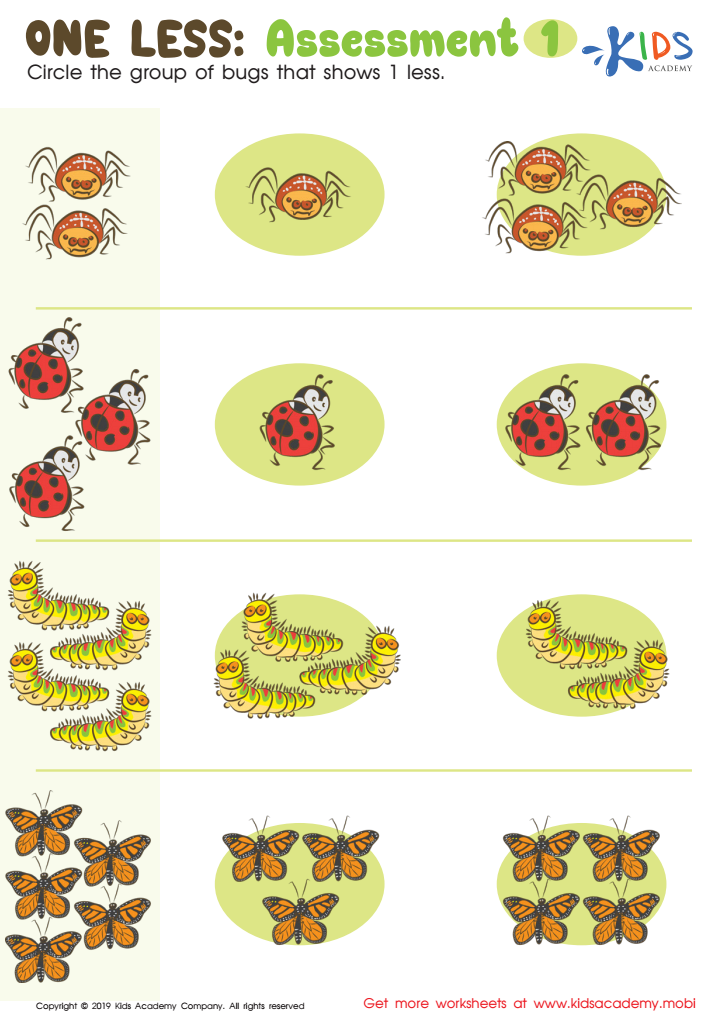
One Less: Assessment 1 Worksheet
Help your kids with counting using this worksheet that has pictures of bugs! There are four different bugs and insects. Show them each one and ask them to count, then circle the group that has 1 less than the previous group. Don't worry if your kids don't like bugs - it's just a picture!
One Less: Assessment 1 Worksheet
Worksheet
Join Kids Academy for Free
Who is primarily going to use this learning content?



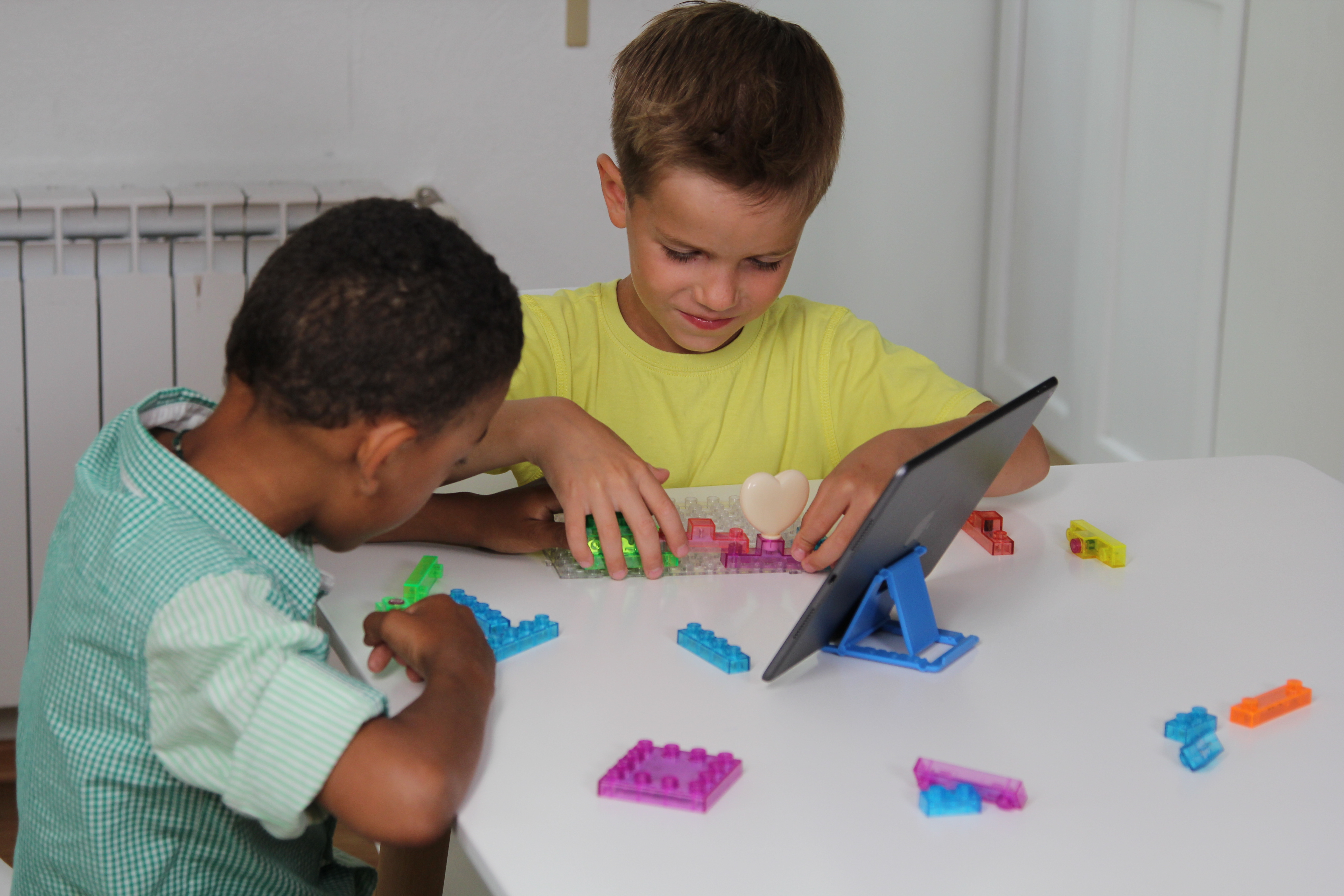


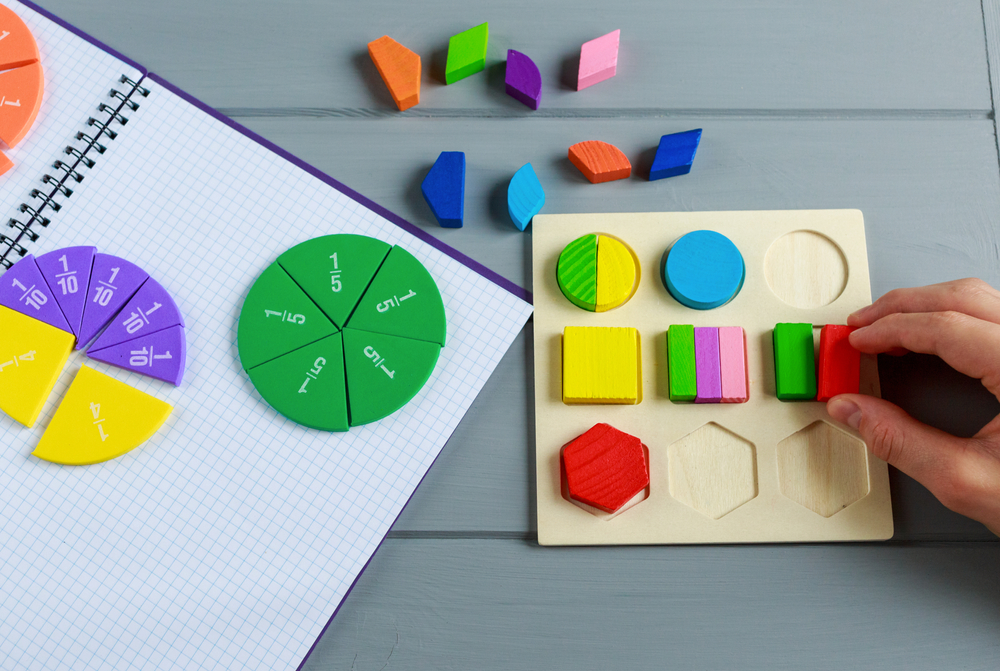

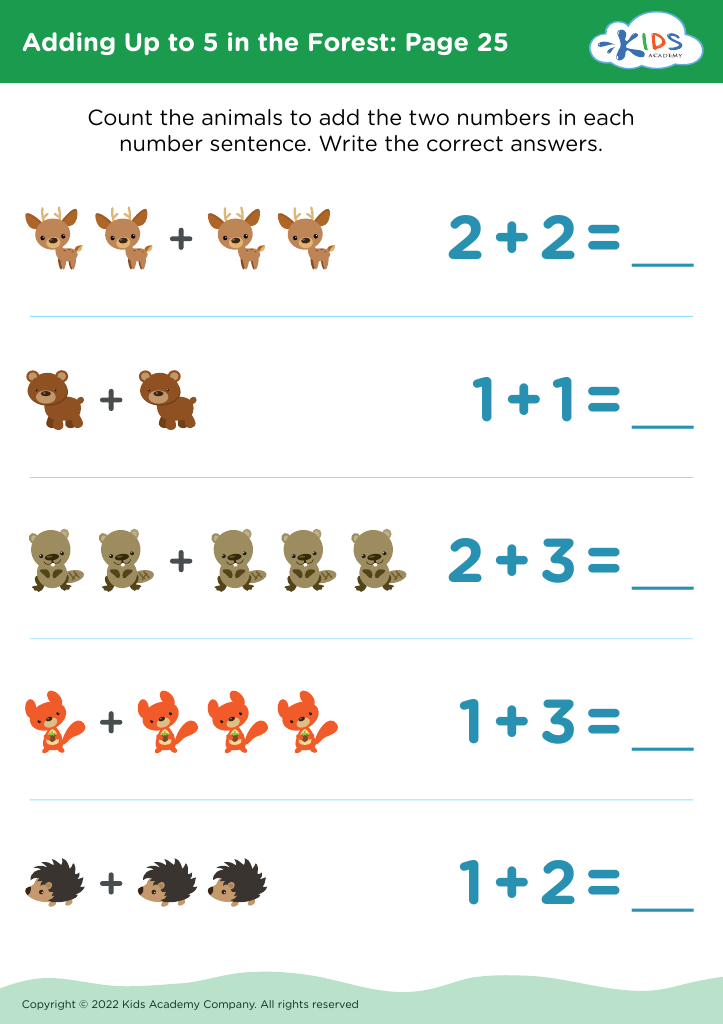
Basic arithmetic practice for children aged 4-6 is essential for several reasons. Firstly, this foundational stage is critical for cognitive development. Young children are naturally curious and eager to learn, making it an ideal time to introduce concepts like numbers, addition, and subtraction. Engaging in simple arithmetic activities enhances their problem-solving skills, critical thinking, and overall mathematical understanding.
Secondly, mastering basic arithmetic sets the groundwork for future mathematical learning. As children progress to more complex math, proficiency in basic skills is crucial for their confidence and success; gaps in understanding can lead to challenges in later grades.
Moreover, arithmetic practice at this age can also reinforce important life skills. It teaches children to recognize patterns, improve memory retention, and enhance spatial awareness. Furthermore, involving parents in this practice provides an opportunity for family bonding and lays the groundwork for a positive attitude towards education.
Lastly, integrating arithmetic into daily life—counting fruits, sharing snacks, or simple games—indicates to children that math is not just a subject in school but a vital part of everyday life. Therefore, by prioritizing basic arithmetic practice, parents and teachers can significantly contribute to a child’s readiness for school and lifelong learning.








