Filters

22 filtered results

Clear all filters
Favorites
With answer key
Interactive

22 filtered results

Difficulty Level

Grade


Discover our engaging Hand-eye Coordination Addition & Subtraction Worksheets designed specifically for children aged 4-6. These fun and interactive activities not only enhance essential math skills but also promote the development of hand-eye coordination. Each worksheet offers age-appropriate exercises that encourage young learners to practice simple addition and subtraction while improving their fine motor skills. Designed with vibrant illustrations and playful themes, our worksheets make learning enjoyable and effective. Perfect for parents and educators alike, these resources provide a structured yet fun way to support early math learning in preschoolers. Boost your child's confidence in math today!
Check out this FREE Trial Lesson on Addition & Subtraction for age 4-6!

Writing Number Sentences for Subtraction Picture Problems

Favorites
With answer key
Interactive
  • 4-6
  • Hand-eye Coordination
  • Addition & Subtraction
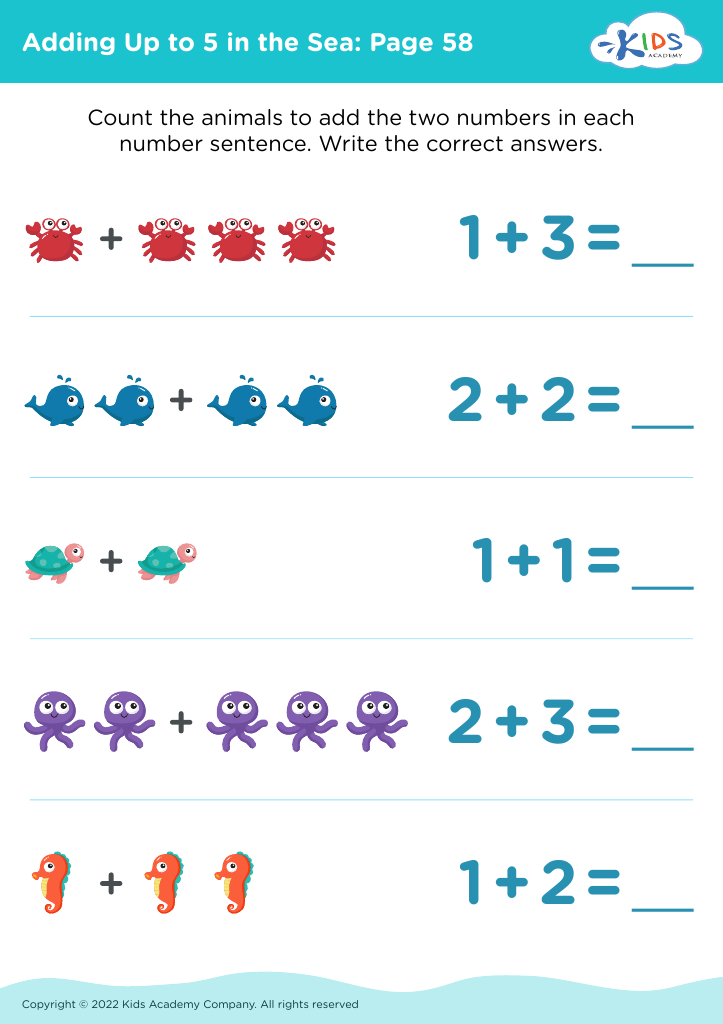
Adding Up to 5 in the Sea: Page 58
Worksheet
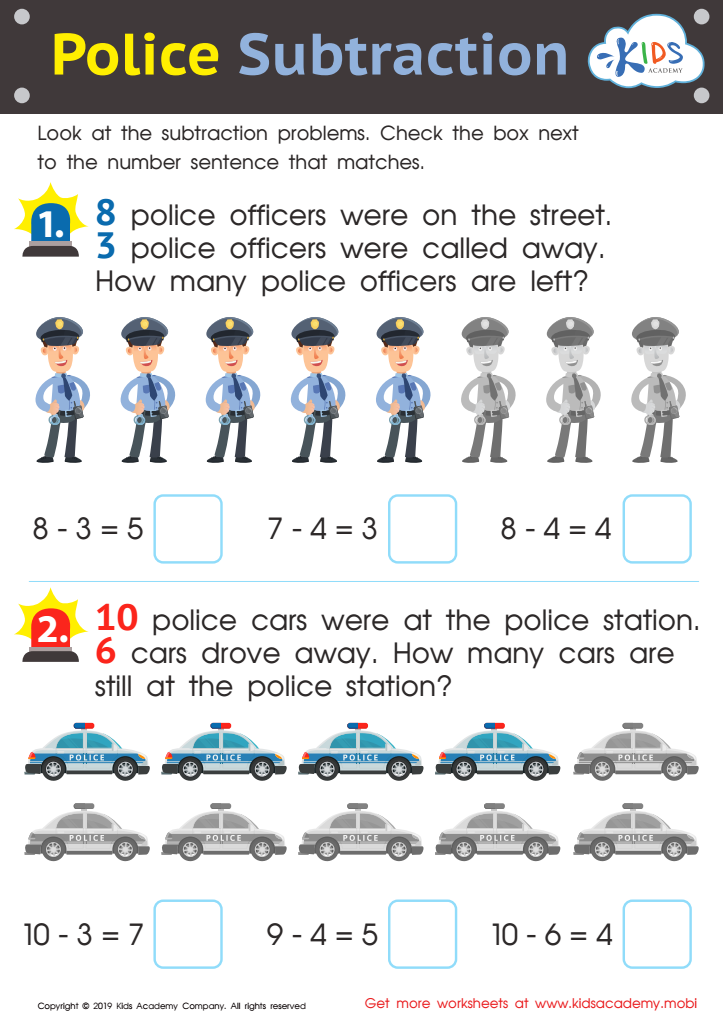
Police Subtraction Worksheet

Police Subtraction Worksheet

Police protect citizens and do more in the community. Kids can learn numbers with this math worksheet: two subtraction problems in the downloadable PDF. Read the problems with your kids, then check the box next to the number sentences that are correct.
Police Subtraction Worksheet
Worksheet
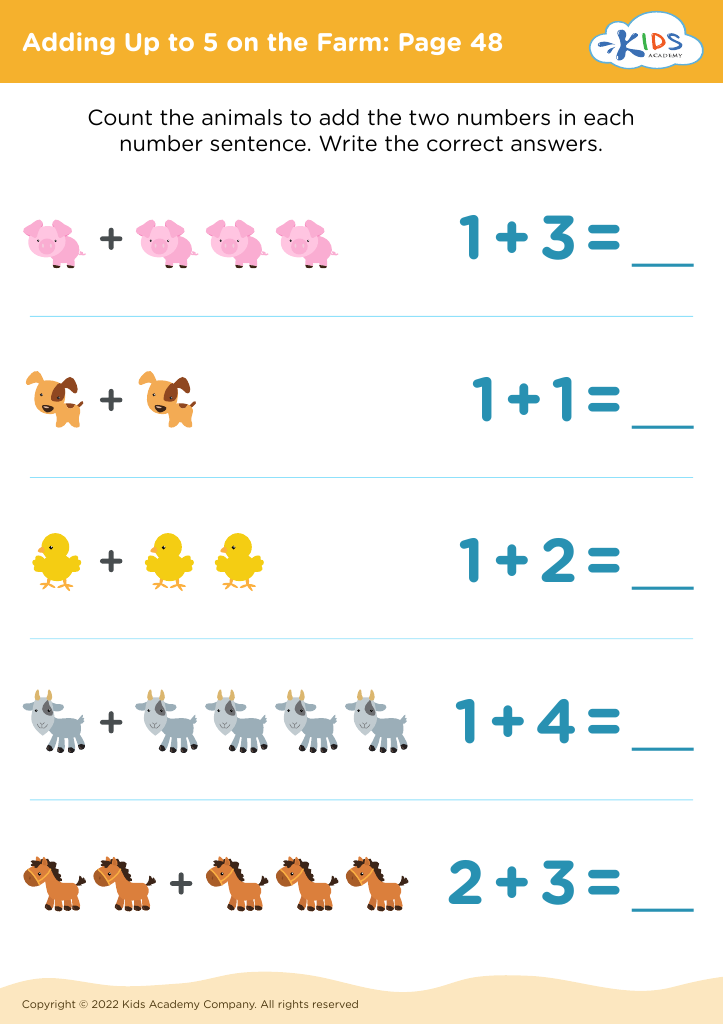
Adding Up to 5 on the Farm: Page 48
Worksheet
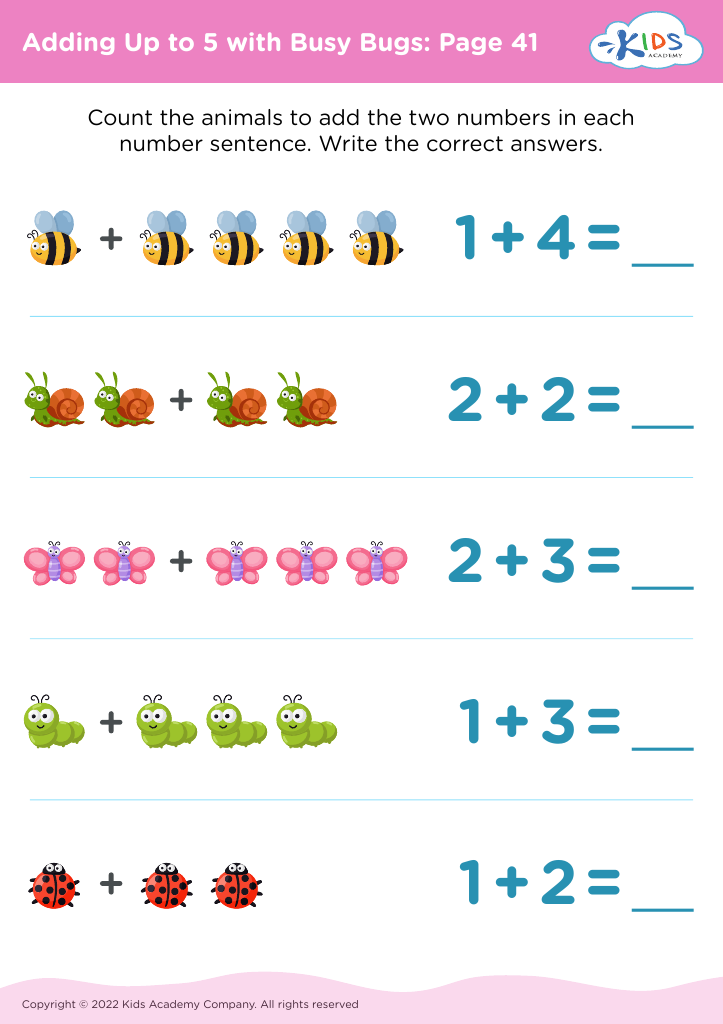
Adding Up to 5 with Busy Bugs: Page 41
Worksheet
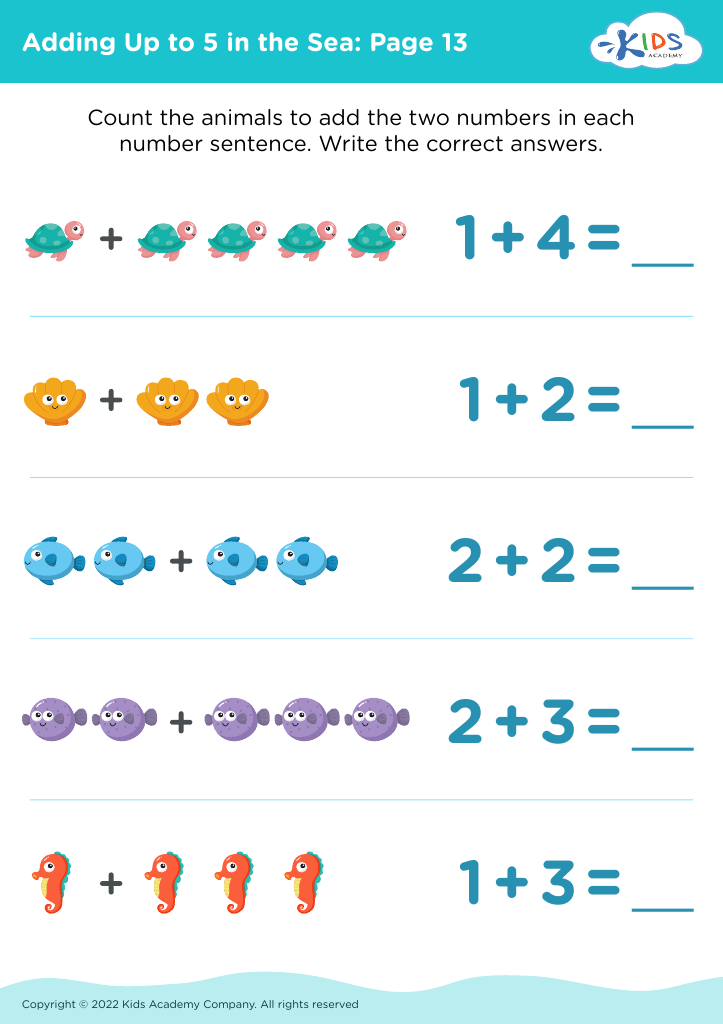
Adding Up to 5 in the Sea: Page 13
Worksheet
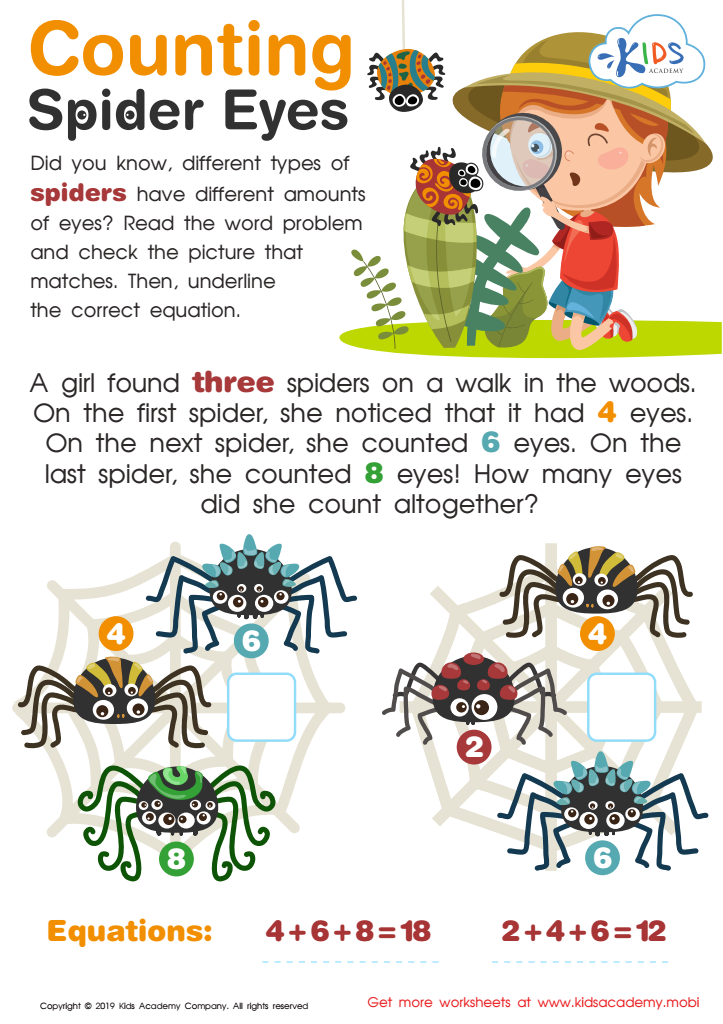
Counting Spider Eyes Worksheet

Counting Spider Eyes Worksheet

Did you know different spiders have different eye numbers? Kids will love learning this fact and solving the spider word problems on this free worksheet! Word problems promote a deeper understanding of the concept, plus they get to add up the spiders’ eyes while solving addition problems with more than one addend. Fun and math all in one!
Counting Spider Eyes Worksheet
Worksheet
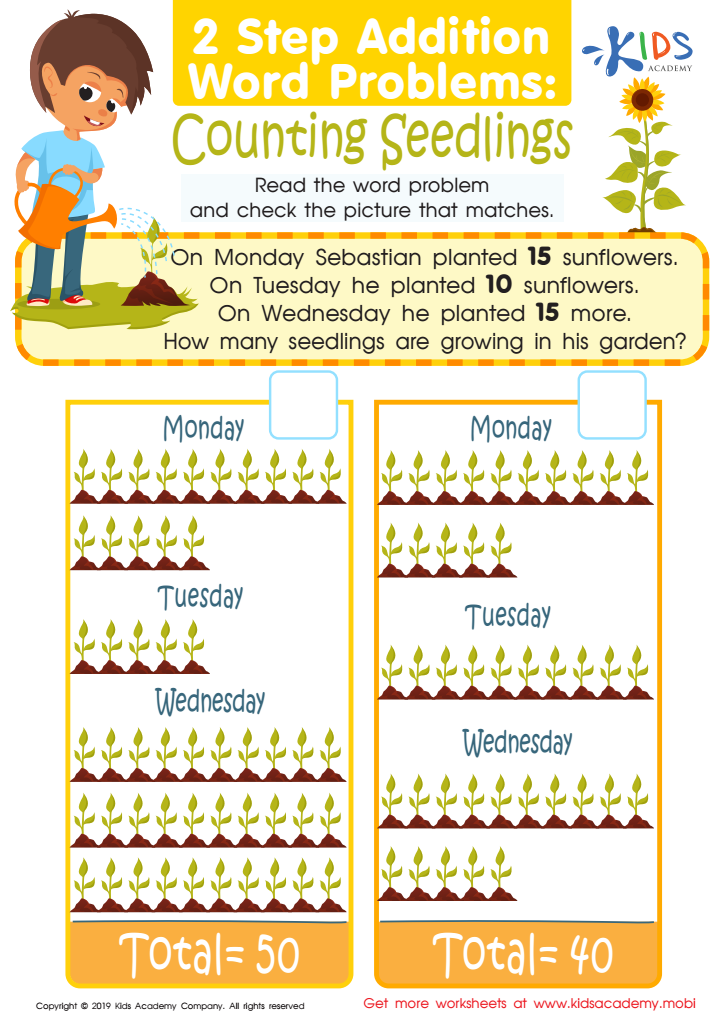
Counting Seedlings Worksheet
Counting Seedlings Worksheet
Understanding math word problems is key. Multiple steps can prove challenging - this free worksheet provides one-to-one picture representation to help kids solve multi-step addition word problems. Strengthen addition skills by choosing the matching picture to the answer.
Counting Seedlings Worksheet
Worksheet
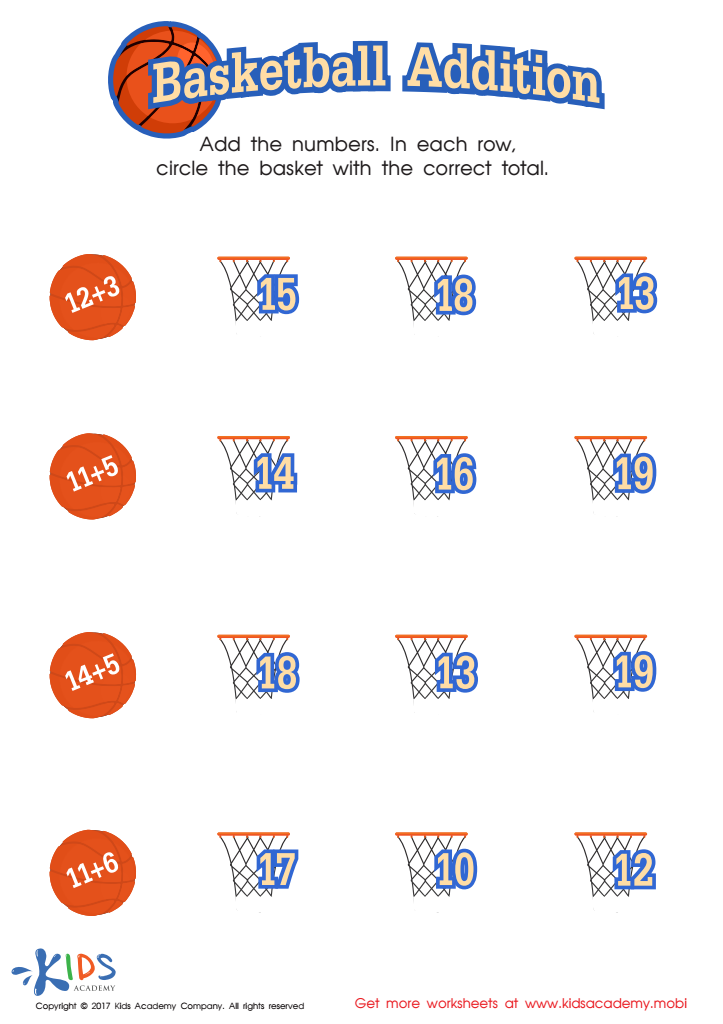
Basketball Addition Worksheet

Basketball Addition Worksheet

Basketball Addition Worksheet
Worksheet
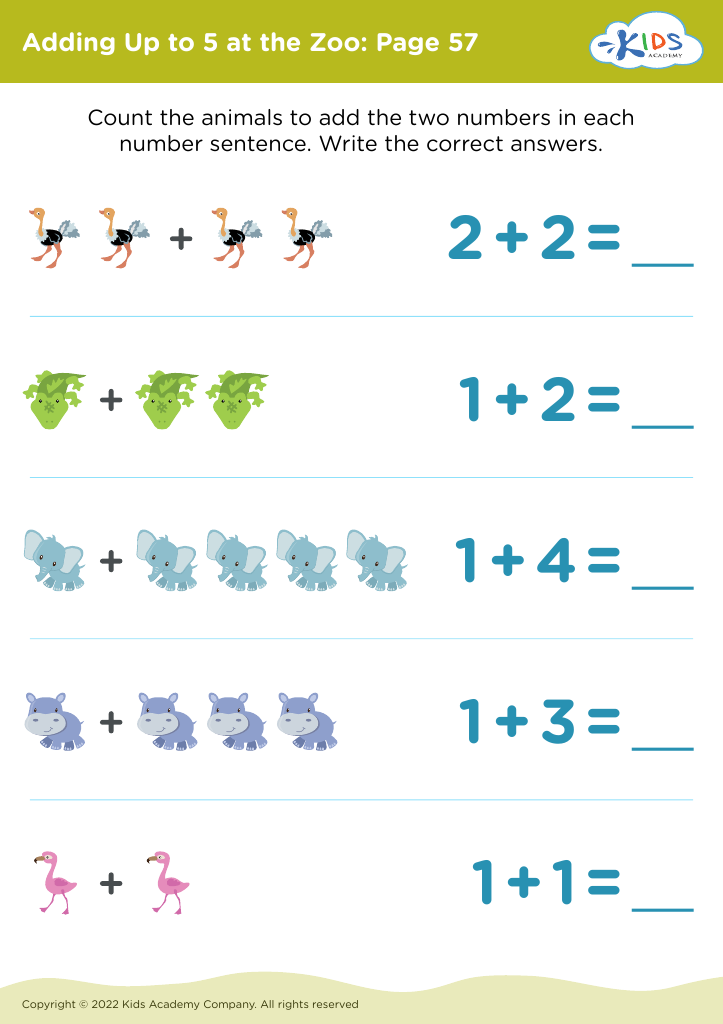
Adding Up to 5 at the Zoo: Page 57
Worksheet
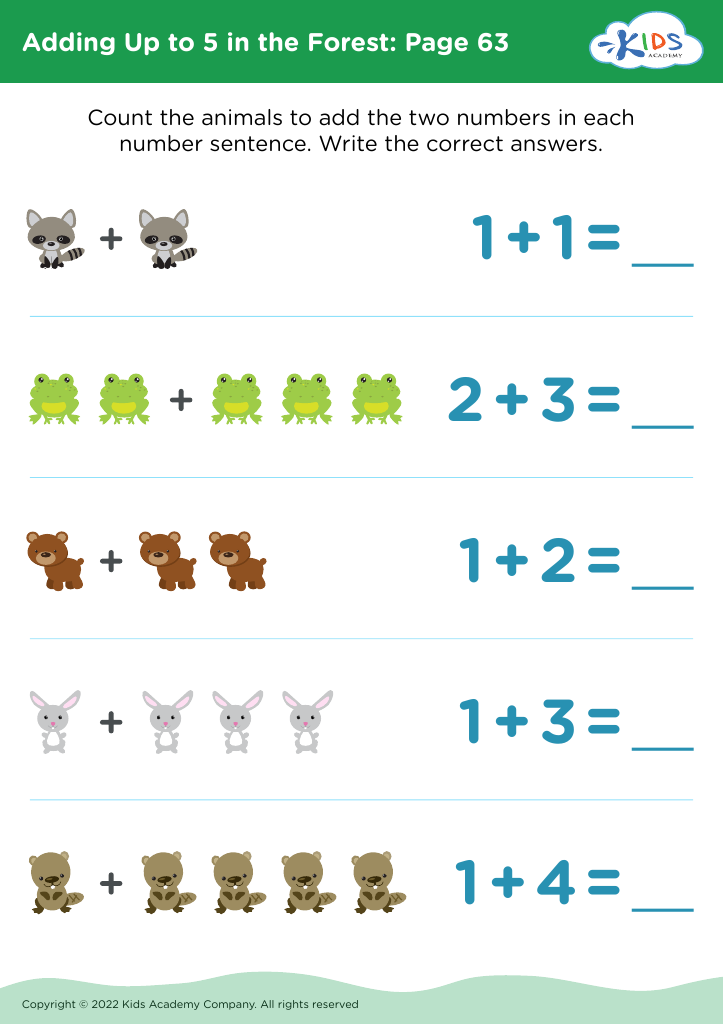
Adding Up to 5 in the Forest: Page 63
Worksheet
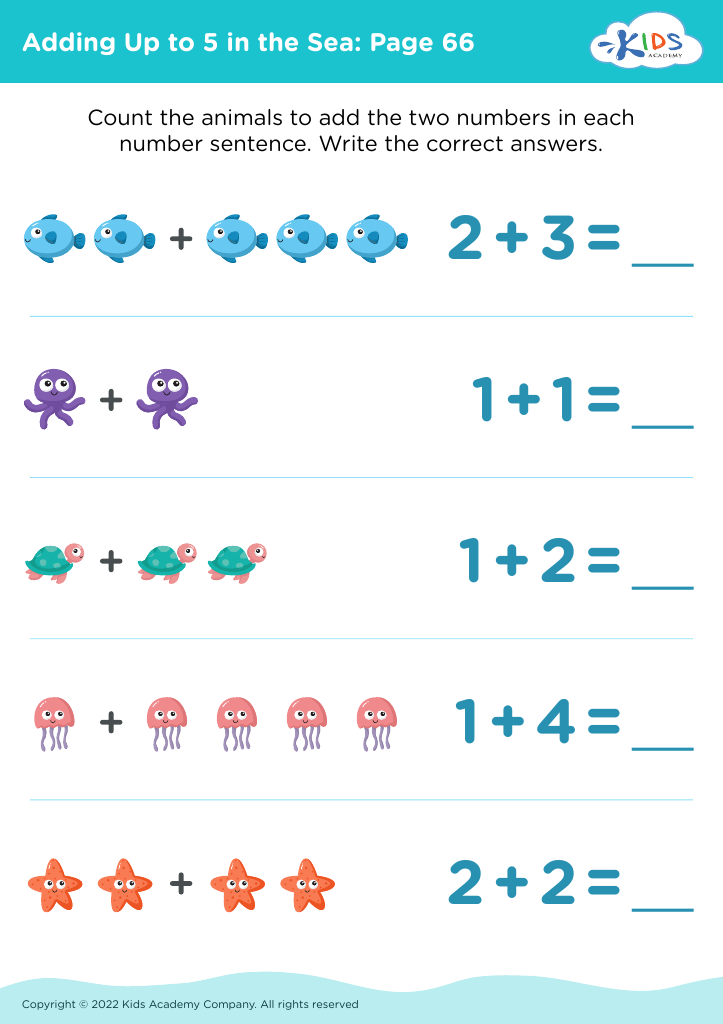
Adding Up to 5 in the Sea: Page 66
Worksheet
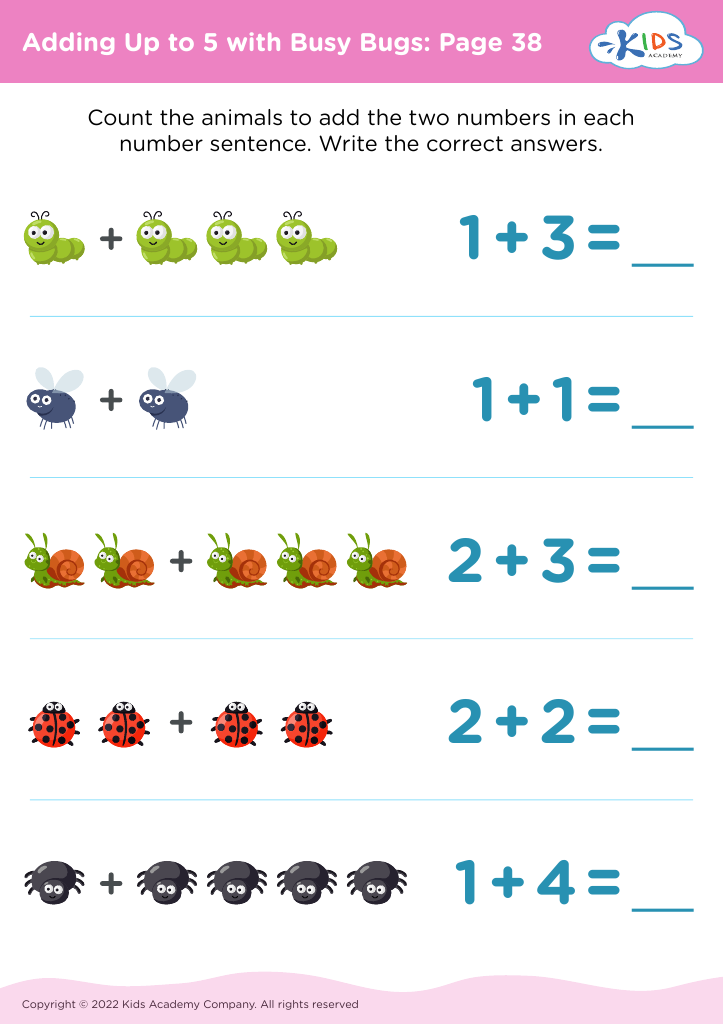
Adding Up to 5 with Busy Bugs: Page 38
Worksheet
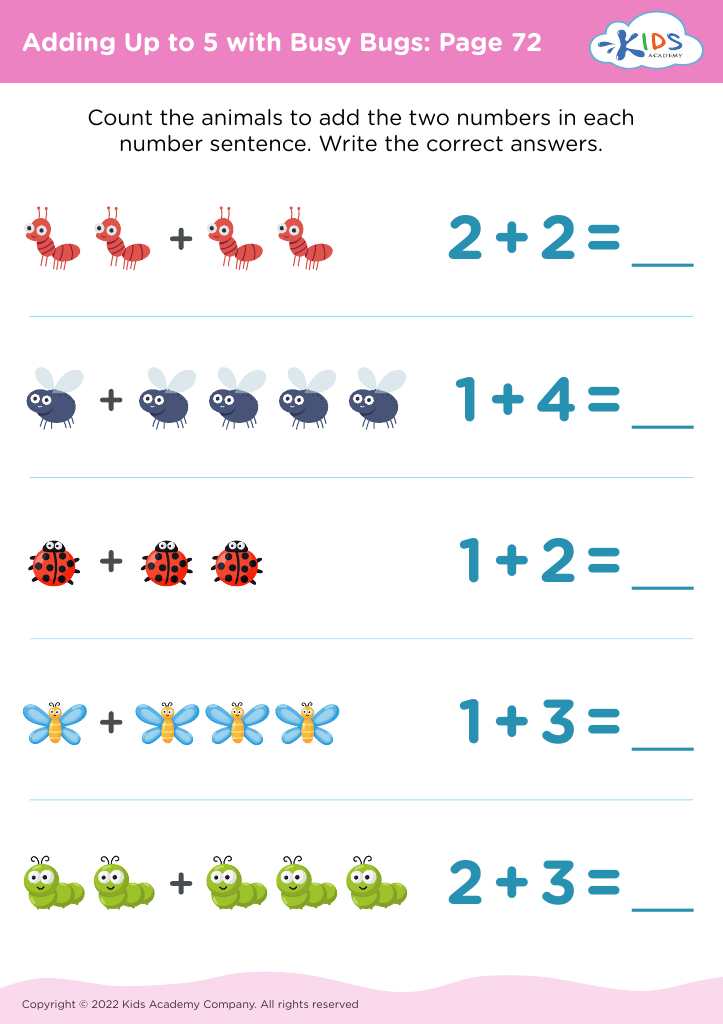
Adding Up to 5 with Busy Bugs: Page 72
Worksheet
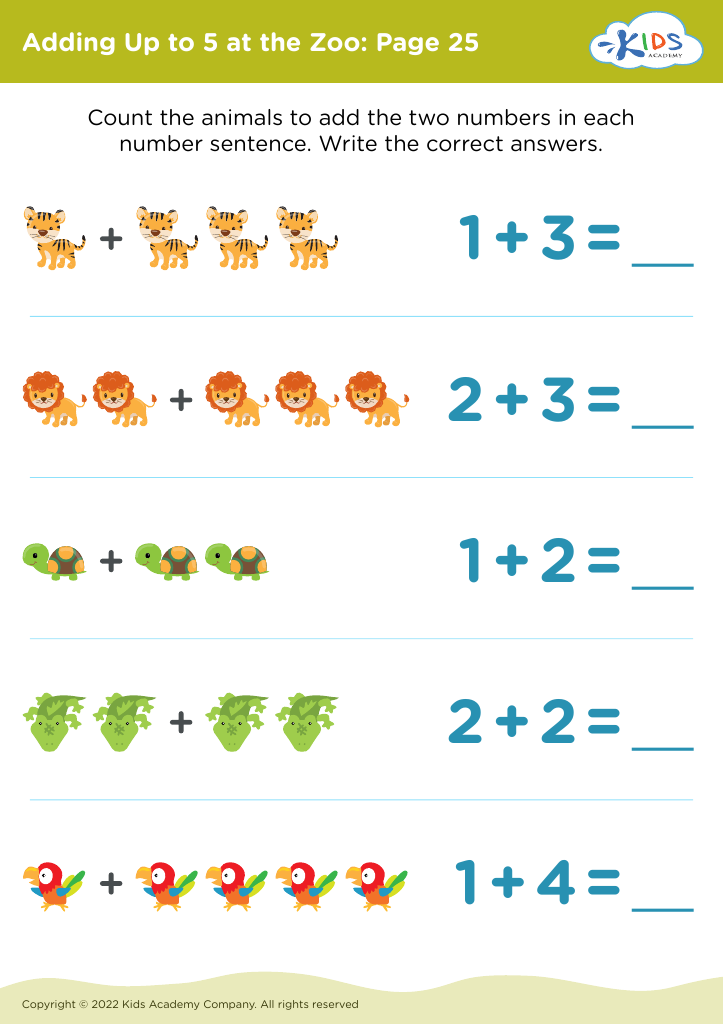
Adding Up to 5 at the Zoo: Page 25
Worksheet
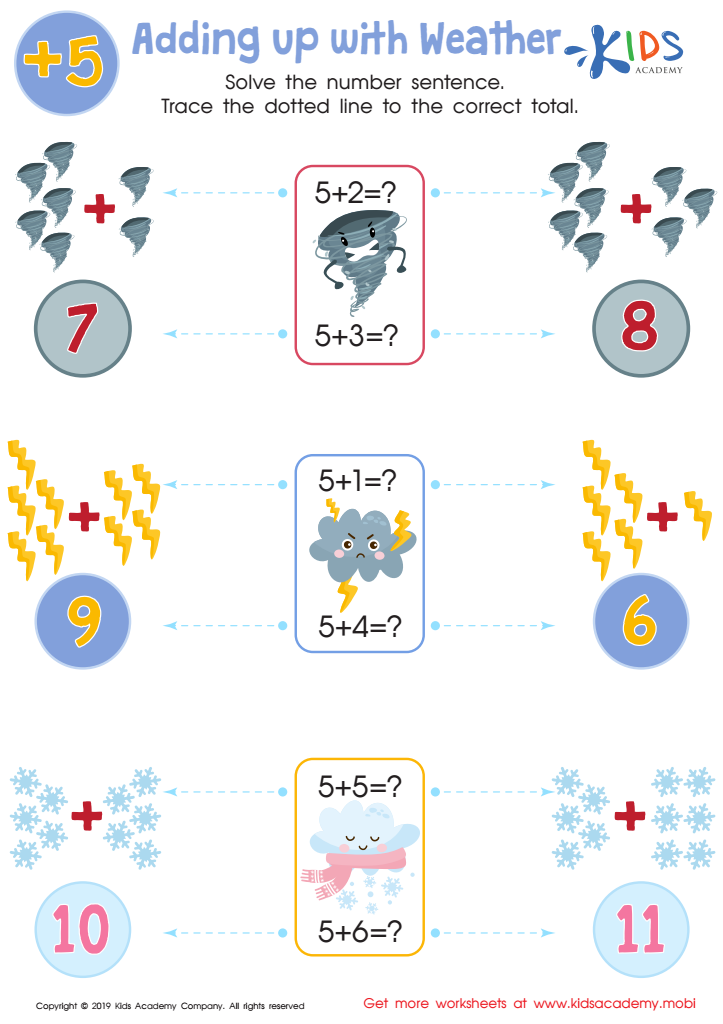
Adding up With Water Worksheet

Adding up With Water Worksheet

Ask your kids to name different kinds of weather and what it's like outside now. Then, help them solve the number sentences on the worksheet by tracing the dotted line to the correct total.
Adding up With Water Worksheet
Worksheet
Matching 3-2 Worksheet

Matching 3-2 Worksheet

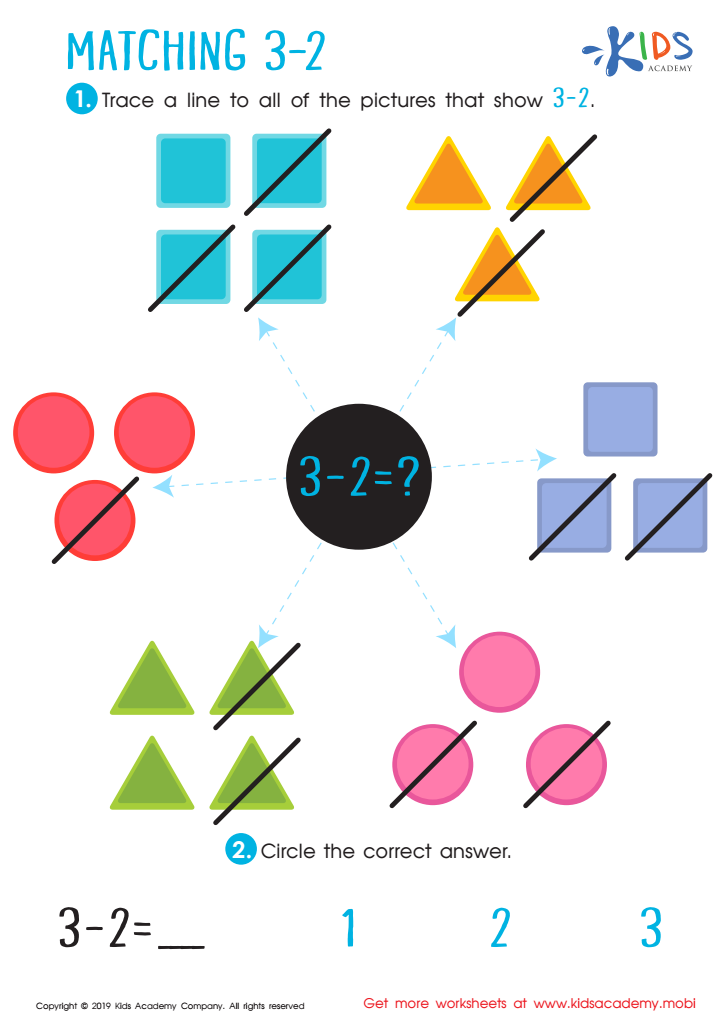
Subitizing is the ability to quickly identify sets of items without counting. It's a key skill for young learners to cultivate number sense. This worksheet takes it further, with 3-2=1 number sentences. Look at the sets of counters with slashes to decide which illustrate the sentence. Draw a line from the sentence in the middle to the right images to finish the page!
Matching 3-2 Worksheet
Worksheet
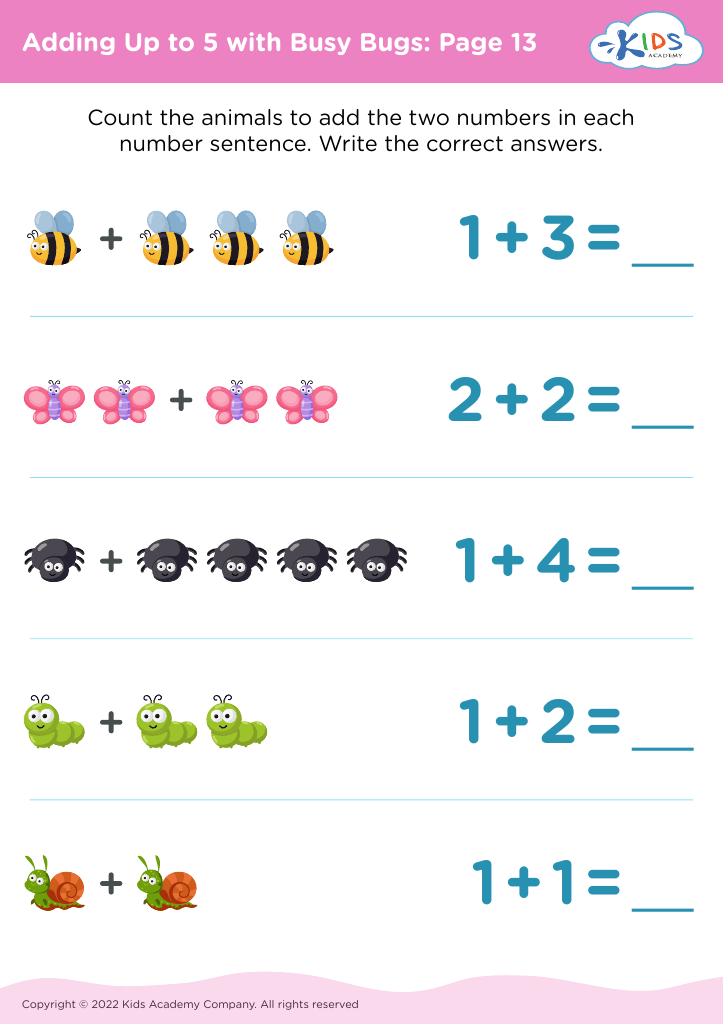
Adding Up to 5 with Busy Bugs: Page 13
Worksheet
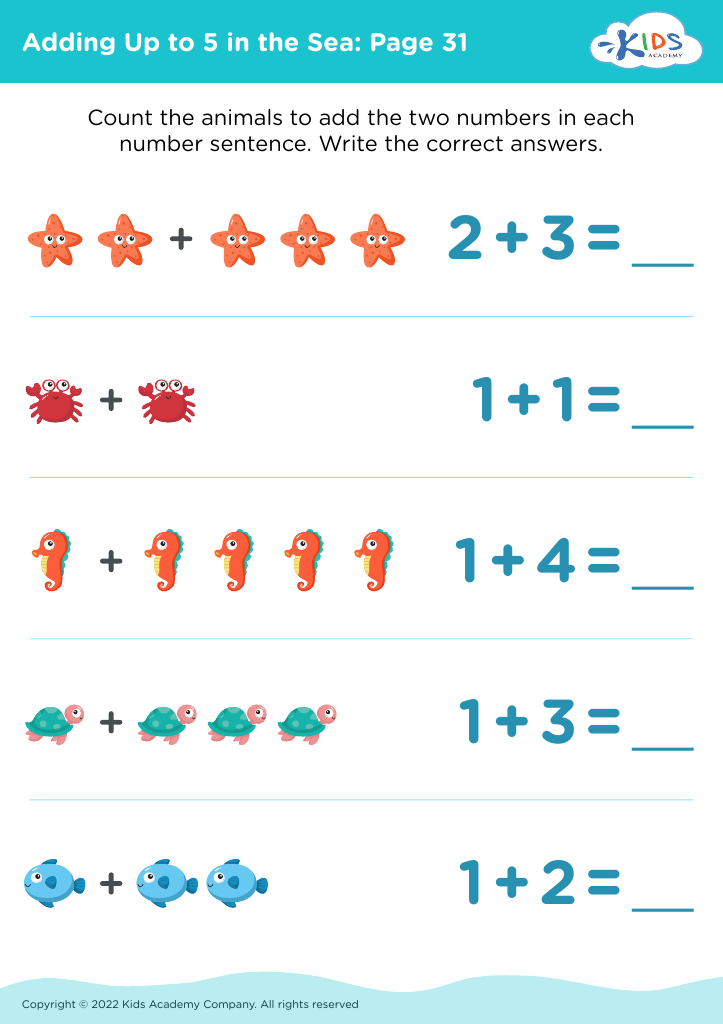
Adding Up to 5 in the Sea: Page 31
Worksheet
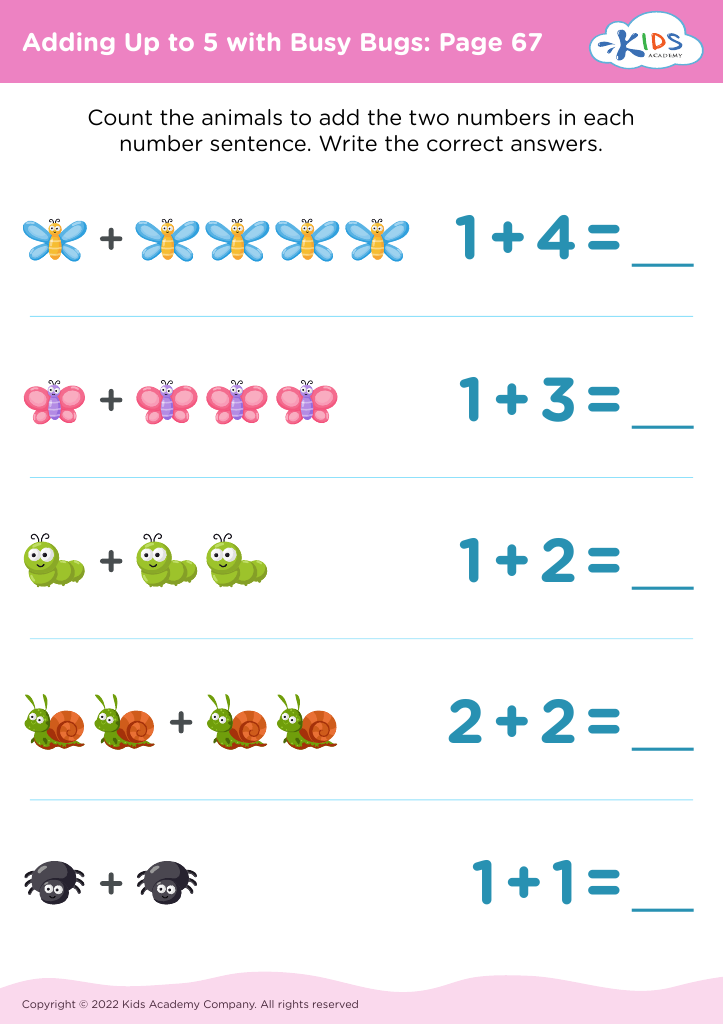
Adding Up to 5 with Busy Bugs: Page 67
Worksheet
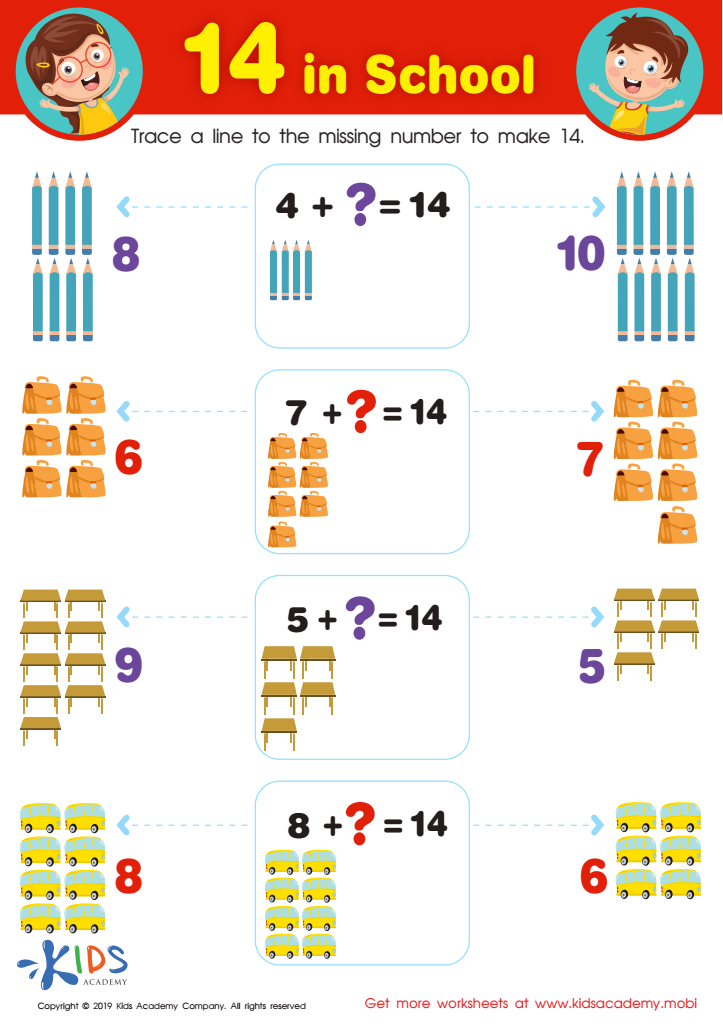
14 in School Worksheet


14 in School Worksheet

Remind your kids that adding different sets of numbers can give the same total (e.g. 2+3=5, 4+1=5). Ask them for more examples. Afterwards, work through the exercise. Help them count the objects and trace a line to the missing number that makes the total 14.
14 in School Worksheet
Worksheet
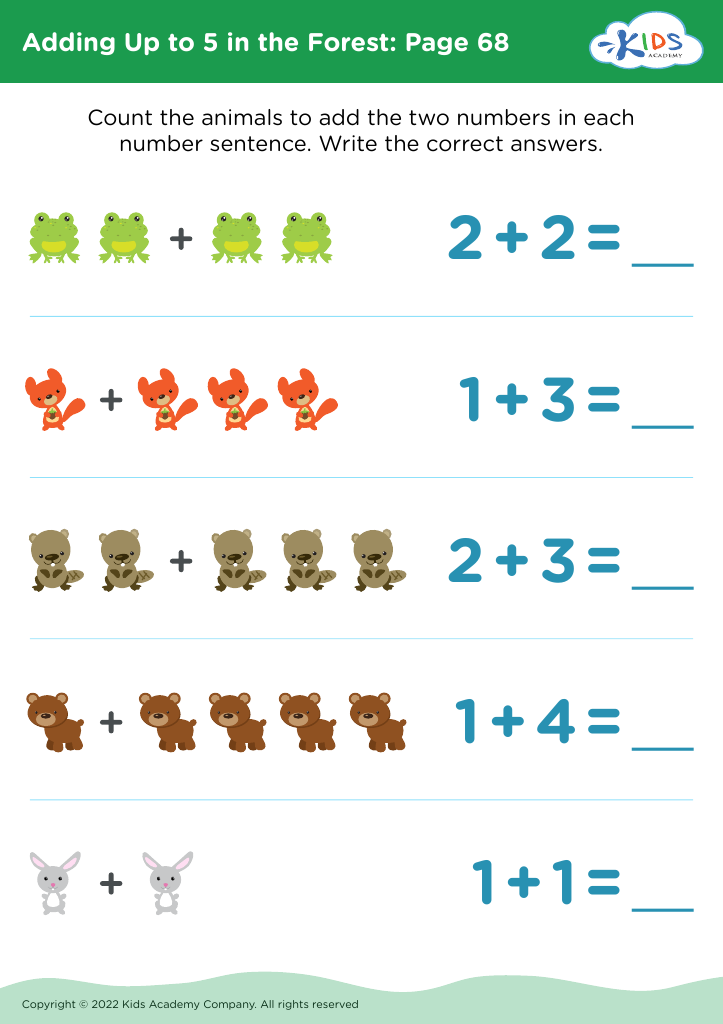
Adding Up to 5 in the Forest: Page 68
Worksheet
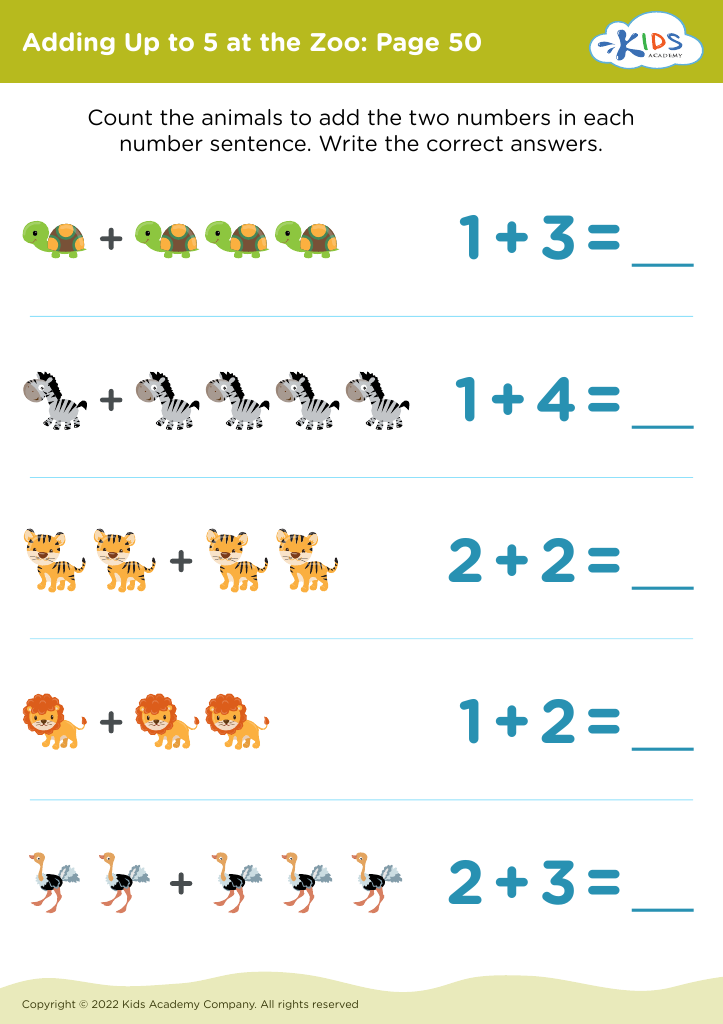
Adding Up to 5 at the Zoo: Page 50
Worksheet


Hand-eye coordination is a critical foundational skill that significantly impacts early learners' ability to engage in various tasks, particularly in mathematics. For children aged 4-6, improving hand-eye coordination through activities related to addition and subtraction is vital. This skill enhances their capacity to visually track movements and manipulate objects, which is essential not only for mathematical concepts but also for everyday tasks. For example, as they learn to recognize numbers and grasp counting methods, their ability to accurately point, manipulate, or move objects while solving math problems proves invaluable.

Moreover, teaching addition and subtraction using hands-on activities engages children both cognitively and physically, making learning more enjoyable and effective. When parents or teachers incorporate games or physical activities that involve counting blocks, beads, or even fingers, it fosters engagement and enhances fine motor skills alongside mathematical understanding.

Additionally, promoting hand-eye coordination at this young age contributes to boosts in confidence, critical thinking, and problem-solving abilities. Supporting these skills nurtures a child’s overall learning development and lays the groundwork for future academic success. Thus, it is essential for parents and teachers to prioritize hand-eye coordination activities tied to early math skills to facilitate holistic growth in children.