Filters

8 filtered results

Clear all filters
Favorites
With answer key
Interactive

8 filtered results

Difficulty Level

Grade


Discover engaging Shape Recognition Reading Worksheets designed for children aged 4-6! These colorful and interactive worksheets help young learners identify and understand basic shapes through fun activities, fostering early reading and comprehension skills. With captivating illustrations and relatable themes, the worksheets promote shape recognition while enhancing vocabulary and storytelling abilities. Ideal for home or classroom use, these resources encourage creativity and critical thinking. Whether your child is tracing, coloring, or matching shapes, they'll enjoy hands-on learning that sets the foundation for upcoming academic success. Begin their learning journey with our Shape Recognition Reading Worksheets today!

Check out this FREE Trial Lesson on Reading for age 4-6!

Illustrations in a Text

Favorites
With answer key
Interactive
  • 4-6
  • Shape Recognition
  • Reading
What Doesn’t Belong Worksheet for Preschool

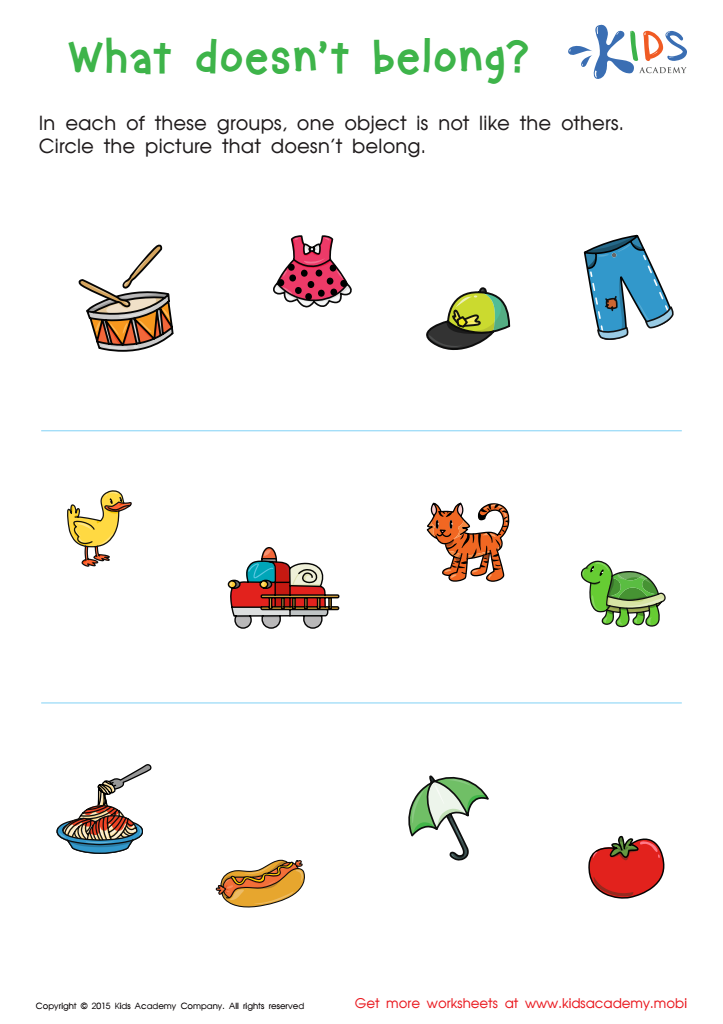
First Words: What Doesn't Belong Worksheet

Categorizing items is an important skill for little learners. Sorting and classifying objects helps kids make sense of the world. With this "what doesn't belong" worksheet, your child will practice problem-solving, strengthen categorization and improve logical reasoning skills. It's perfect for toddlers and preschoolers, with bright and exciting images giving their minds a challenging workout!
First Words: What Doesn't Belong Worksheet
Worksheet
Printable Tracing Lines for Toddlers

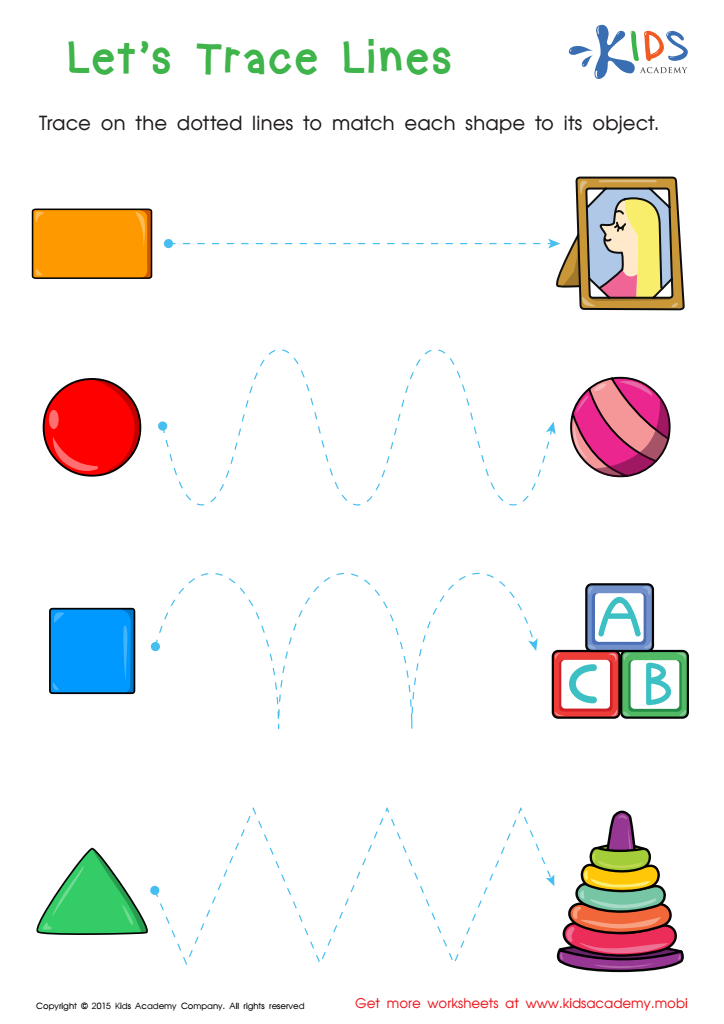
First Words: Let's Trace Lines Worksheet
Printable tracing lines for toddlers will provide your little one with the skills needed for future handwriting success. Proper grip, fine motor skills, and hand-to-eye coordination are key. Let's get their writing journey off to a great start!
First Words: Let's Trace Lines Worksheet
Worksheet
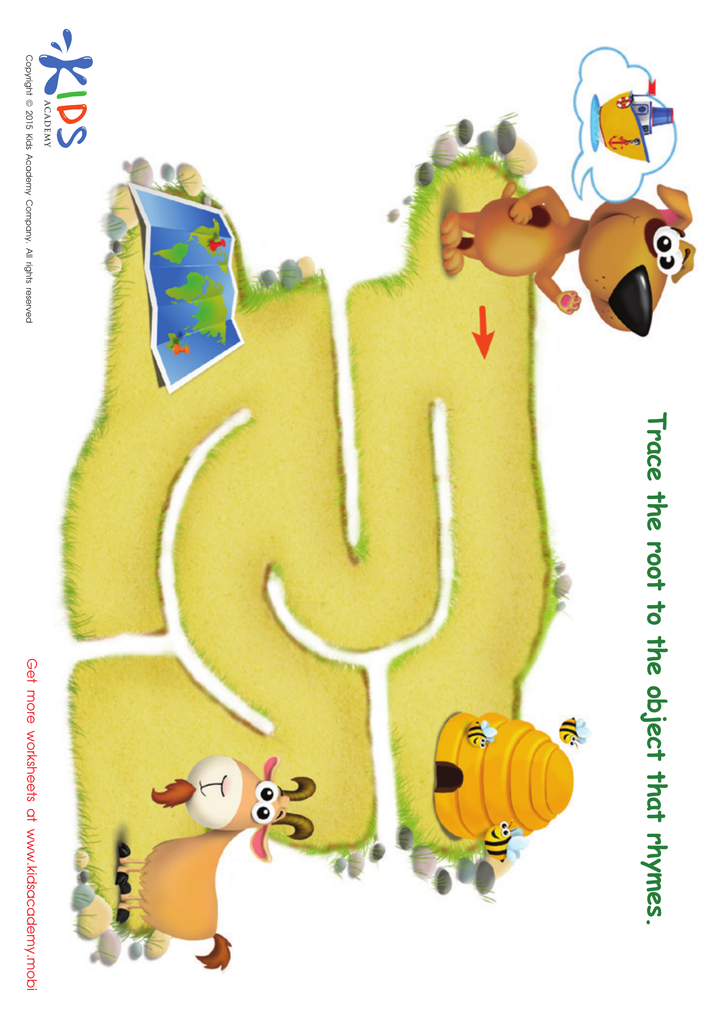
Rhyming Words PDF Worksheets, Boat

Boat Rhyming Words Worksheet

Help your preschooler complete the maze and rhyme with their favorite pooch! Draw a line from the dog to the matching item - is it a hive, a map or a goat? This fun activity lets them name the root words of pictures, and listen for rhymes to help them with phonics and reading.
Boat Rhyming Words Worksheet
Worksheet
What Matches the Picture? Worksheet

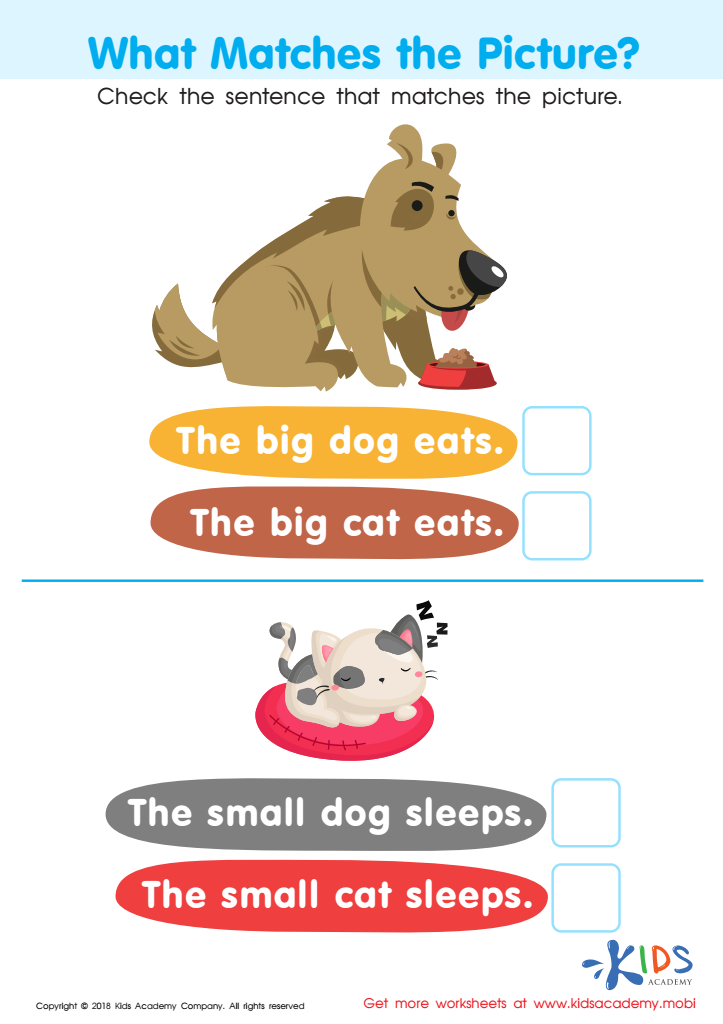
What Matches the Picture? Worksheet

Emerging readers can use pictures of cute pets and phrase repetition to match sentences to pics, building skills while having fun! It's a great way to bolster vocab and confidence, motivating them to keep reading.
What Matches the Picture? Worksheet
Worksheet
Take a Look - Part 1 Worksheet

Take a Look - Part 1 Worksheet

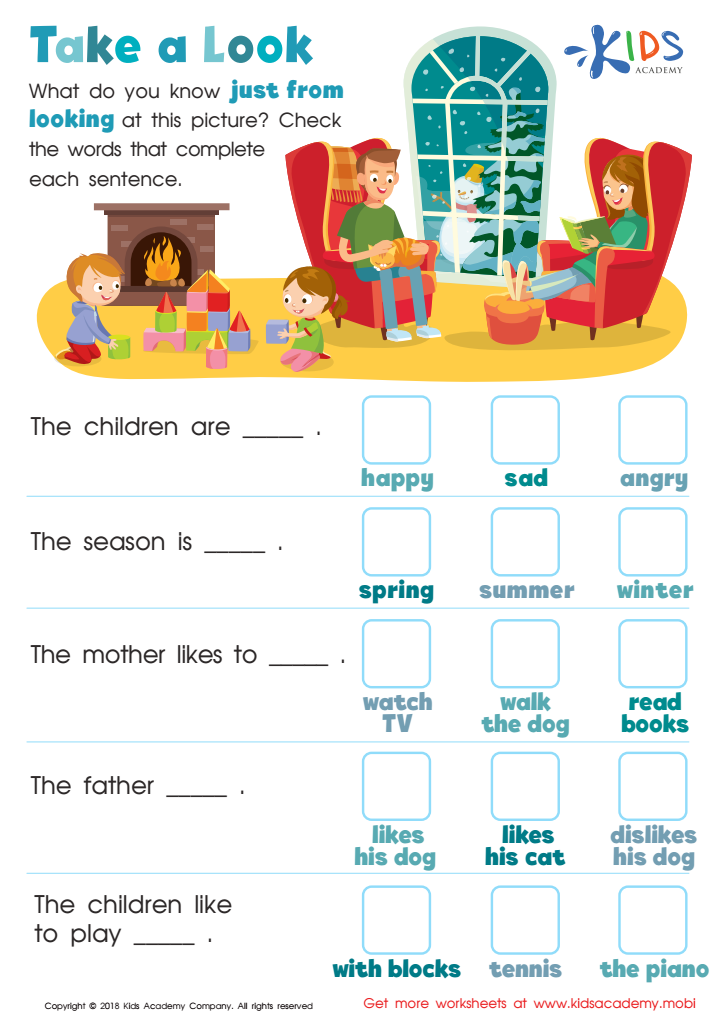
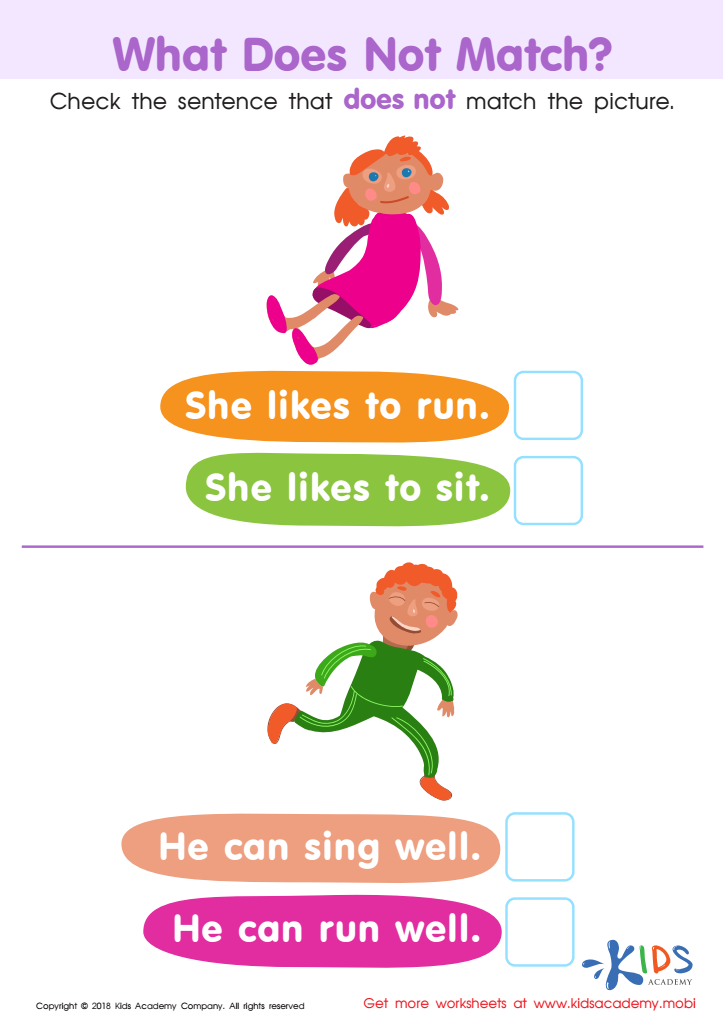
Young learners gain understanding when using picture clues when reading. Looking at illustrations can help students learn the meaning of key vocabulary when reading fiction or informational text. Ask your students to look at the worksheet and observe what they can learn from the picture. It's a great comprehension strategy for early readers.
Take a Look - Part 1 Worksheet
Worksheet
What Does Not Match? Worksheet
What Does Not Match? Worksheet

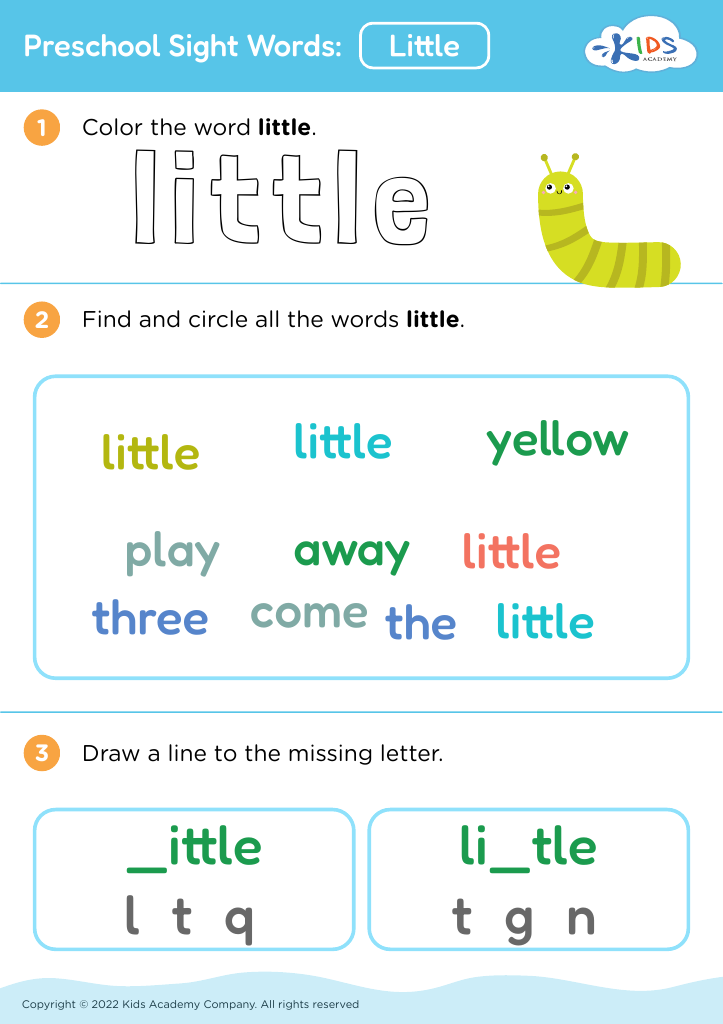
Emerging readers need to practice using visual cues and repetitive text. This colorful PDF provides them with an opportunity to look at pictures, use discrimination and discern which phrase does not match. It also enables them to gain familiarity with high-frequency words to aid decoding longer sentences.
What Does Not Match? Worksheet

Worksheet
Preschool Sight Words: Little

Preschool Sight Words: Little

Preschool Sight Words: Little
Worksheet
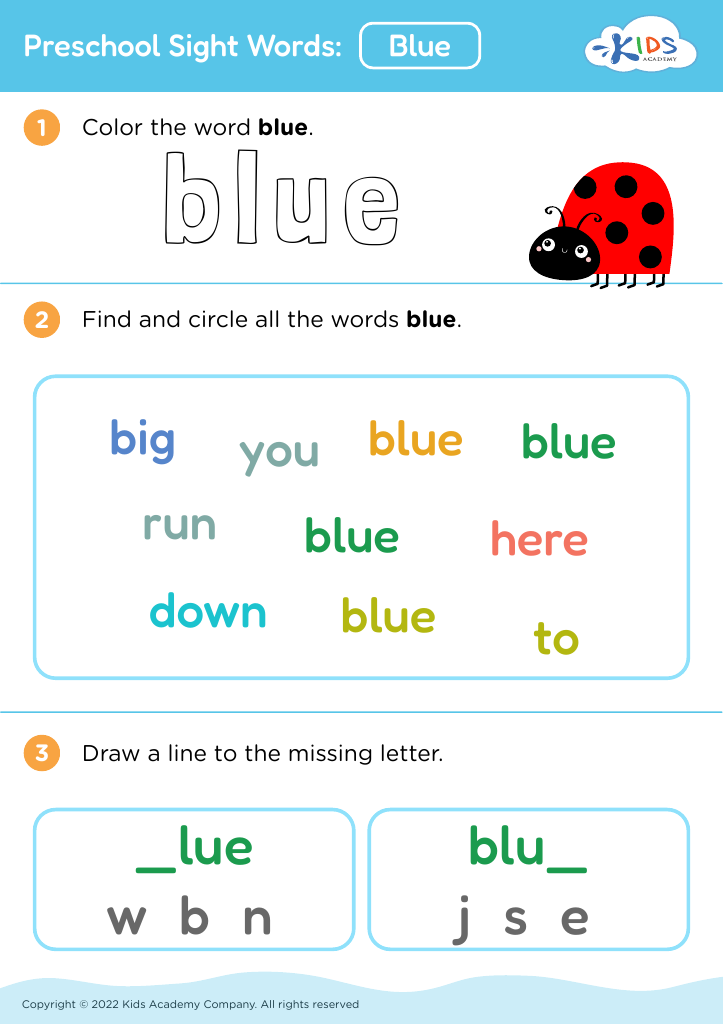
Preschool Sight Words: Blue

Preschool Sight Words: Blue

Preschool Sight Words: Blue
Worksheet


Shape recognition is a foundational skill for children aged 4-6, serving as a gateway to various aspects of their cognitive development. Parents and teachers should prioritize this skill because it enhances children's ability to organize and interpret their visual world, laying the groundwork for later academic learning. Recognizing shapes helps children in distinguishing letters and numbers, crucial for reading and math skills.

Moreover, shape recognition fosters critical thinking and problem-solving abilities. When children identify and categorize shapes, they learn to analyze attributes, make comparisons, and generalize information—essential skills in both everyday situations and academic contexts.

Engaging children in shape recognition activities boosts their spatial awareness, which is important for physical coordination and social skills as they navigate their environments. Learning through shapes can be fun and interactive, allowing for creative expression in art and design, thus promoting emotional development.

Additionally, encouraging shape recognition encourages positive parent-child or teacher-student interactions, creating supportive learning environments. This interaction allows adults to tailor their teaching methods to individual children's needs, ensuring a well-rounded approach to their early education. Overall, investing in shape recognition supports children's holistic development and prepares them for future learning challenges.