
Critical Thinking Science Worksheets for Ages 4-6
12 filtered results
Difficulty Level
Grade
Age
-
From - To
Subject
Activity
Standards
Discover our engaging Critical Thinking Science Worksheets designed specifically for children ages 4-6! These worksheets are crafted to enhance young minds through fun, interactive activities that encourage exploration, problem-solving, and curiosity. Each worksheet fosters essential critical thinking skills while introducing foundational science concepts, making learning both enjoyable and effective. From simple observation exercises to basic reasoning tasks, our resources provide the perfect balance of challenge and creativity. Ideal for home or classroom use, these printable materials support early learners in developing important cognitive skills essential for academic success. Encourage your child's love for science and critical thinking today!
Favorites
With answer key
Interactive
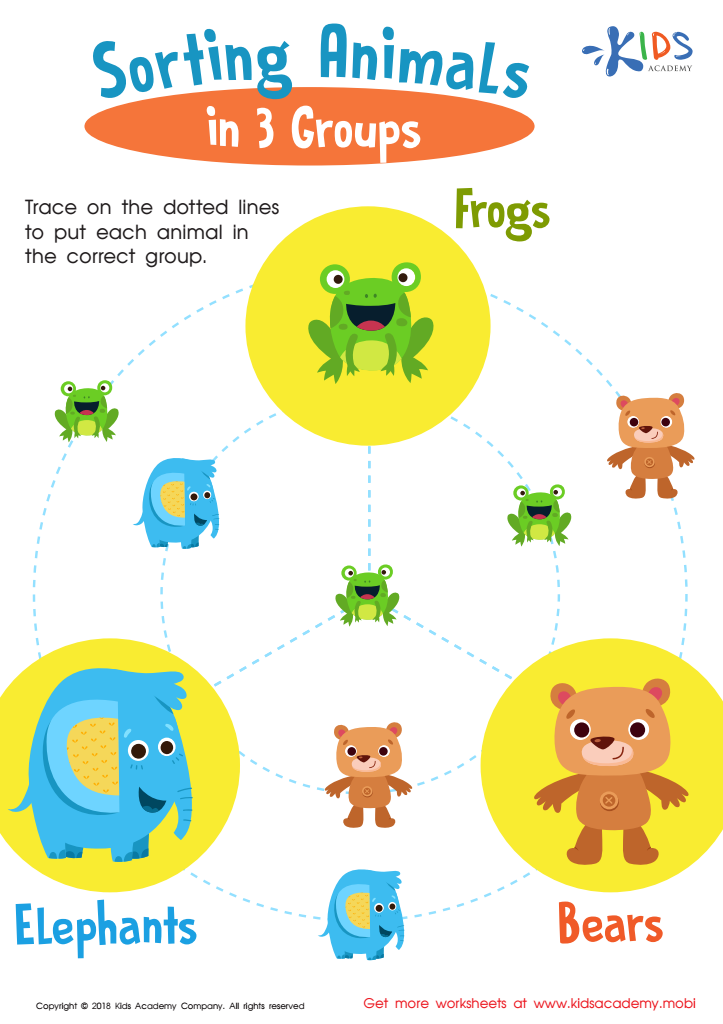
Sorting Animals in 3 Groups Worksheet
Let your kids practice and build skills for future Venn Diagrams with this PDF worksheet. They'll trace lines to match and group animals, and learn the differences and similarities of animals by categorizing with pictures and words. Plus, it's a great way to develop fine motor skills.
 Assign to My Students
Sorting Animals in 3 Groups Worksheet
Worksheet
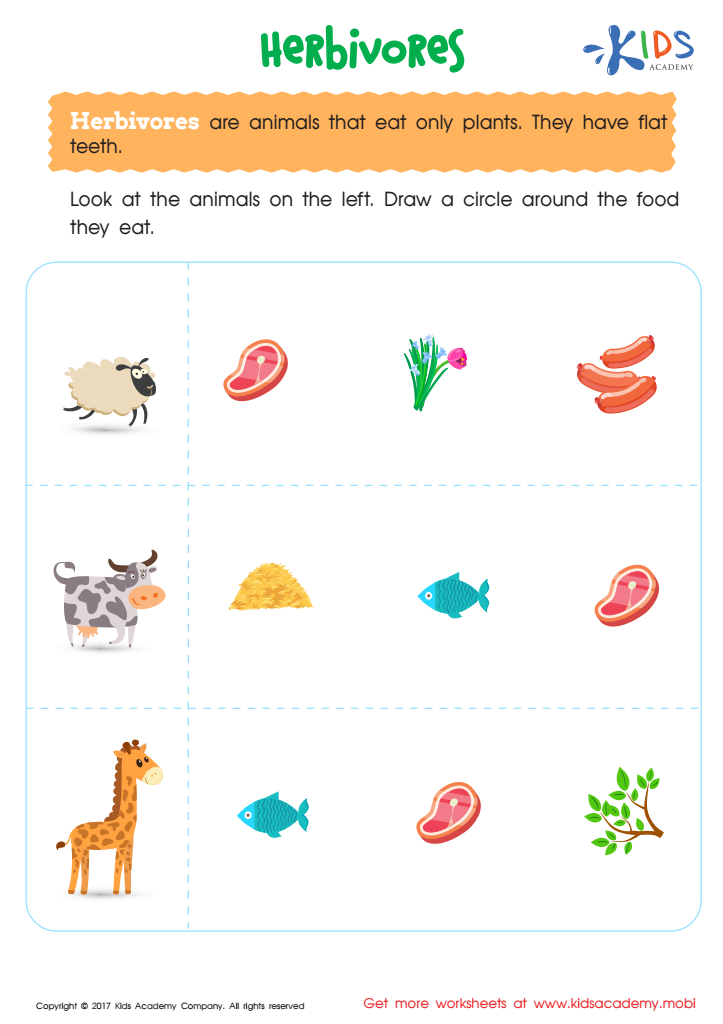
Herbivores Printable
Strengthen their vocab with these fascinating creatures, as they explore an intriguing aspect of beloved animals.
Herbivores Printable
Worksheet
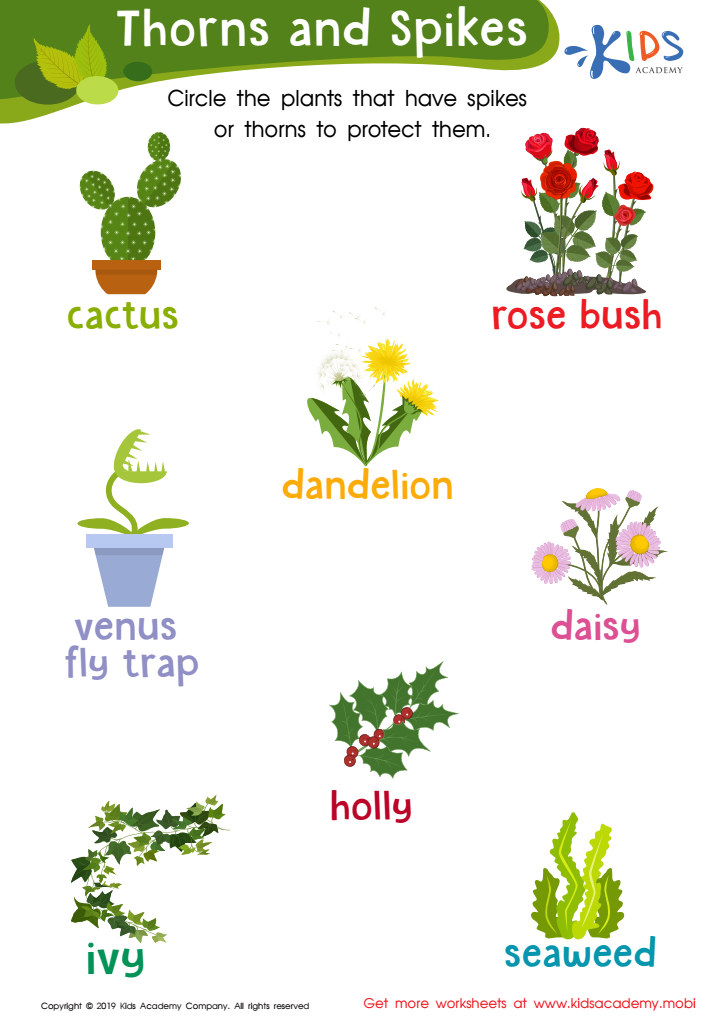
Thorns and Spikes Worksheet
Can your students name and identify the plants and flowers in this worksheet? Ask them to read out the names and circle the ones with spikes or thorns. Help them appreciate nature's beauty and understand how plants protect themselves.
Thorns and Spikes Worksheet
Worksheet
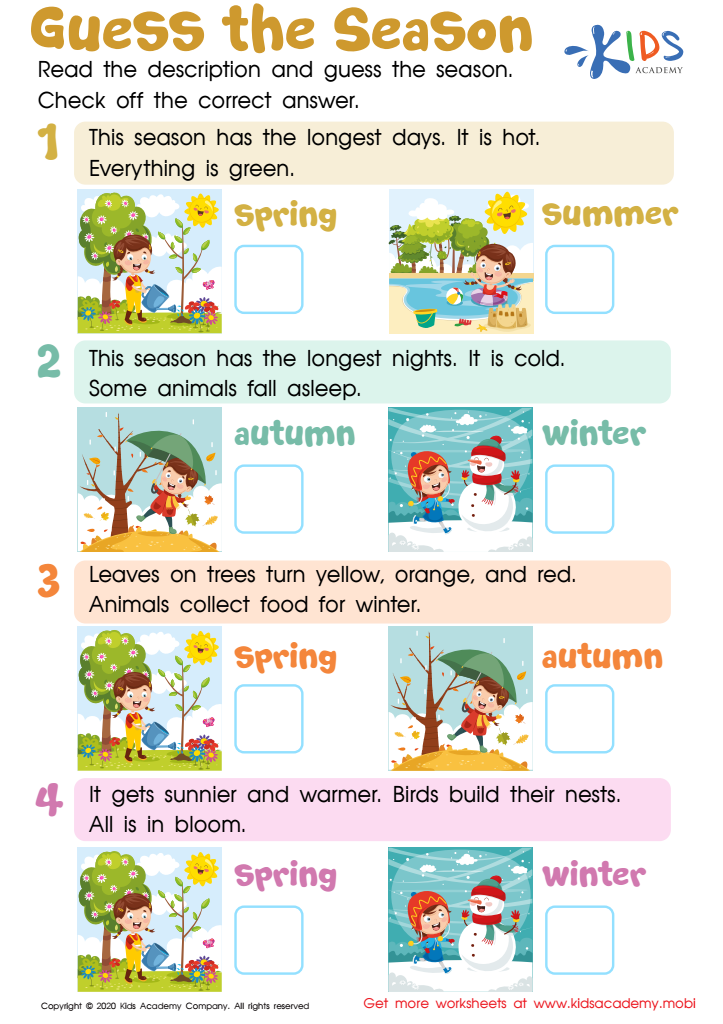
Guess the Season Worksheet
Winter and summer bring different weather! Help kids recognize the changes with this free Kids Academy PDF worksheet. Students read each description, look at the pictures, and check the box next to the season depicted. Make learning fun and easy with interactive activities.
Guess the Season Worksheet
Worksheet
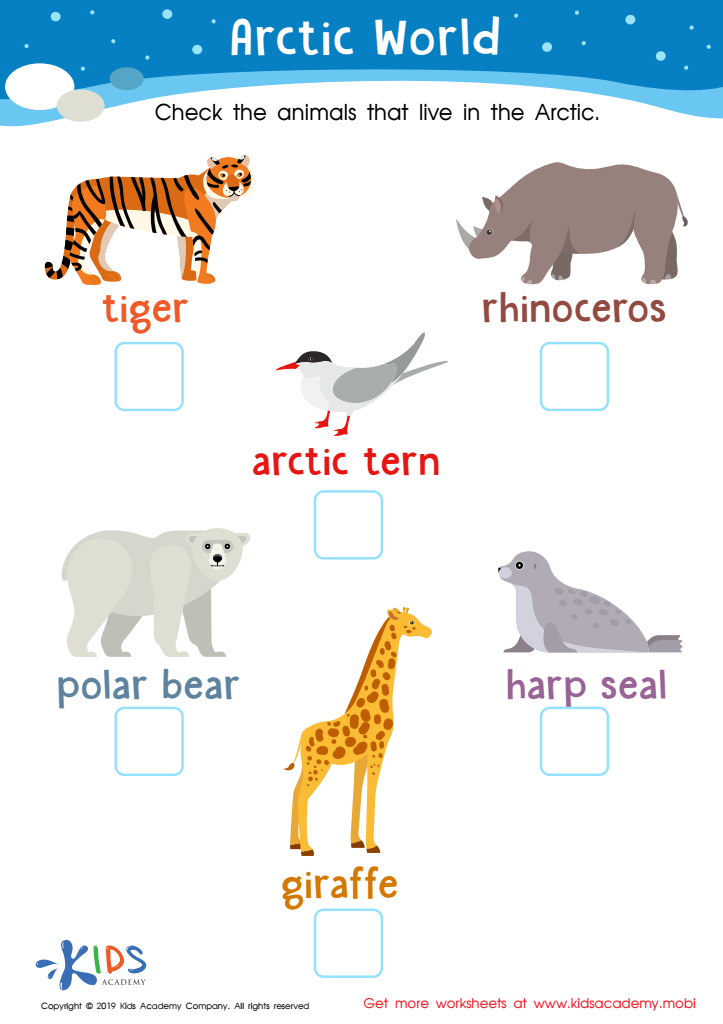
Arctic World Worksheet
Ask your students if they know where the Arctic is located and what lives there. If not, use a world atlas to show them. The Arctic is very cold and snow-covered; native animals have adapted to survive the harsh conditions. Look at the animals in the worksheet and help your students decide which ones live in the Arctic.
Arctic World Worksheet
Worksheet
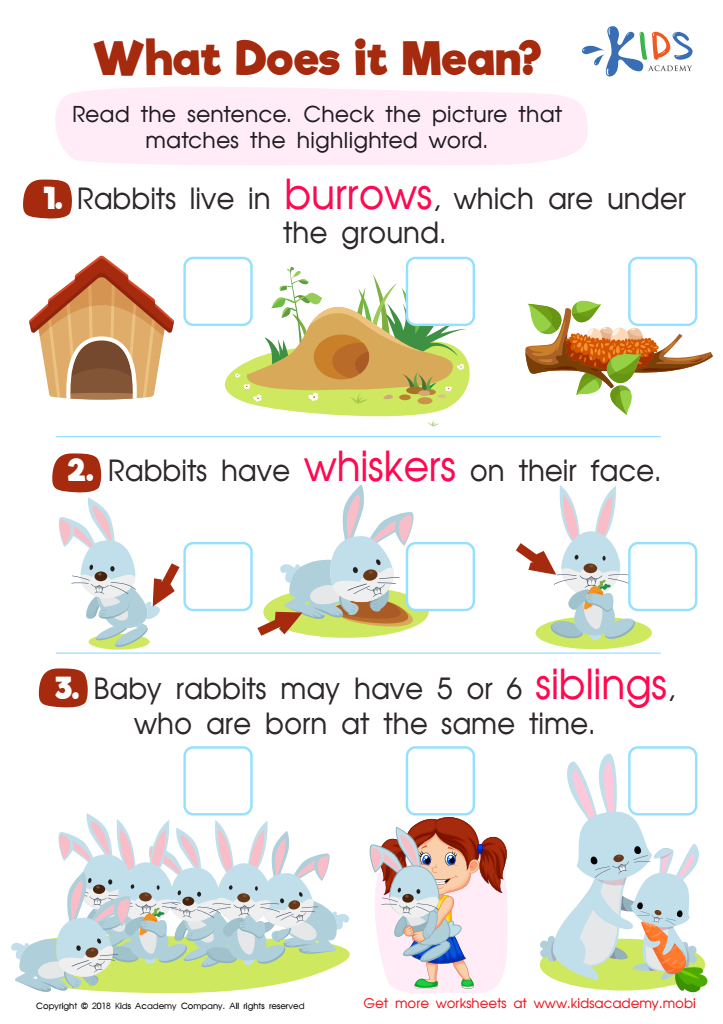
What Does It Mean? Worksheet
Teach your child to use context clues with this engaging Kids Academy worksheet. Read the sentences and find the pink-highlighted word. Use the other words in the sentence to figure out the meaning, then check the box next to the picture that represents it.
What Does It Mean? Worksheet
Worksheet
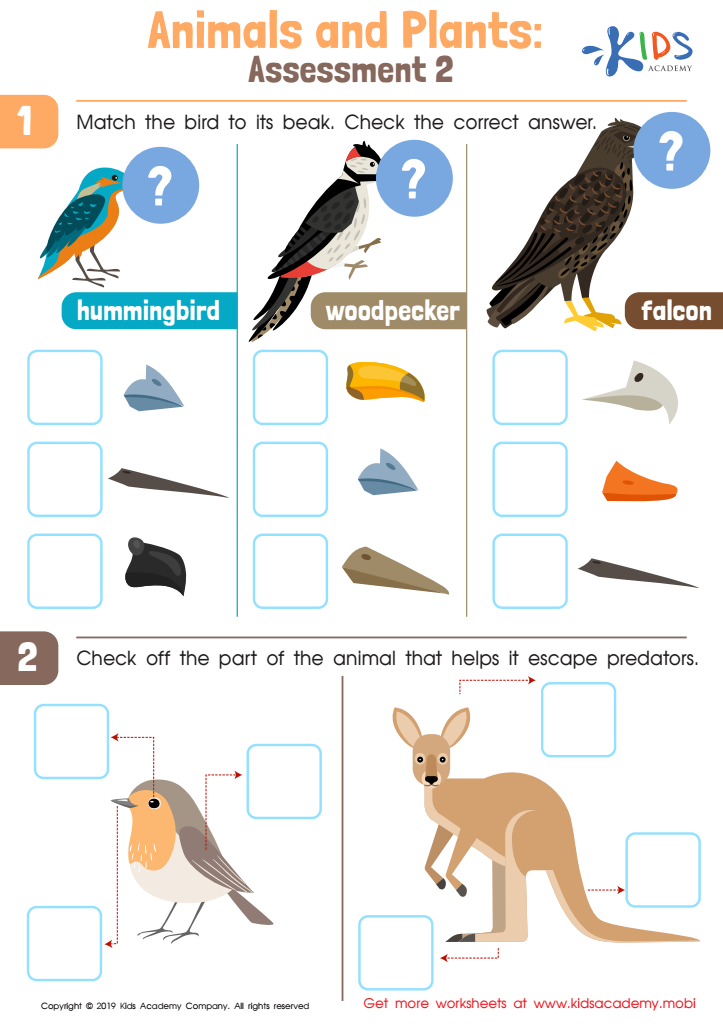
Animals and Plants: Assessment 2 Worksheet
This free PDF is ideal to quickly test your child's knowledge of animal adaptations. They'll select the right beak patterns for hummingbird, woodpecker and falcon, and identify which parts of animals help them escape predators. It's easy to assess your kid's understanding.
Animals and Plants: Assessment 2 Worksheet
Worksheet
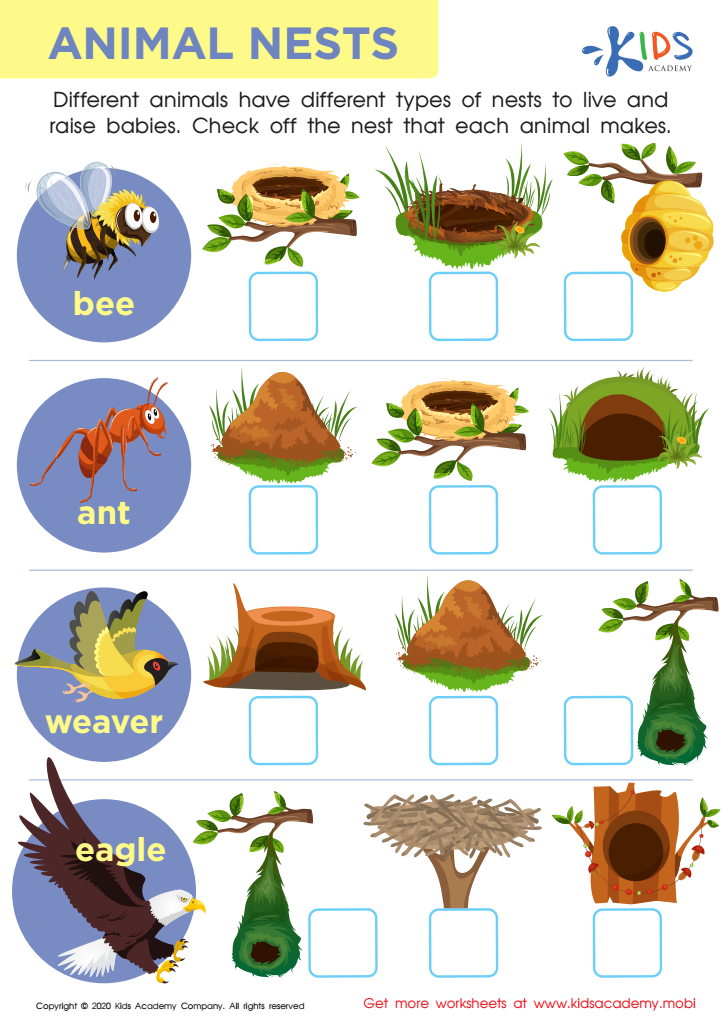
Animal Nests Worksheet
Animals need homes to sleep and stay safe. Look at the animal on the left and examine the nests and hives to the right. Check off the correct one for each animal to complete the worksheet! From birds to bees, it's a great way to show different types of homes animals make!
Animal Nests Worksheet
Worksheet
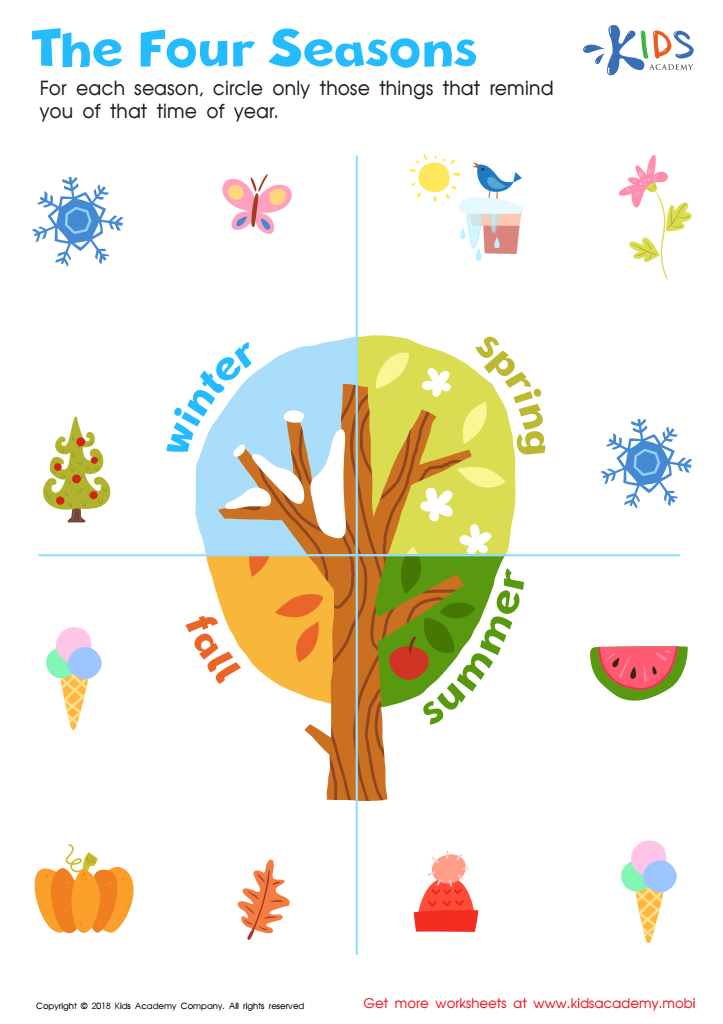
The Four Seasons Worksheet
Tell your child to circle things that remind them of each season. The tree has four squares, one for each season. Some things in each square match the season, others don't. Ask if any are out of place. Help them circle only items that remind them of that season.
The Four Seasons Worksheet
Worksheet
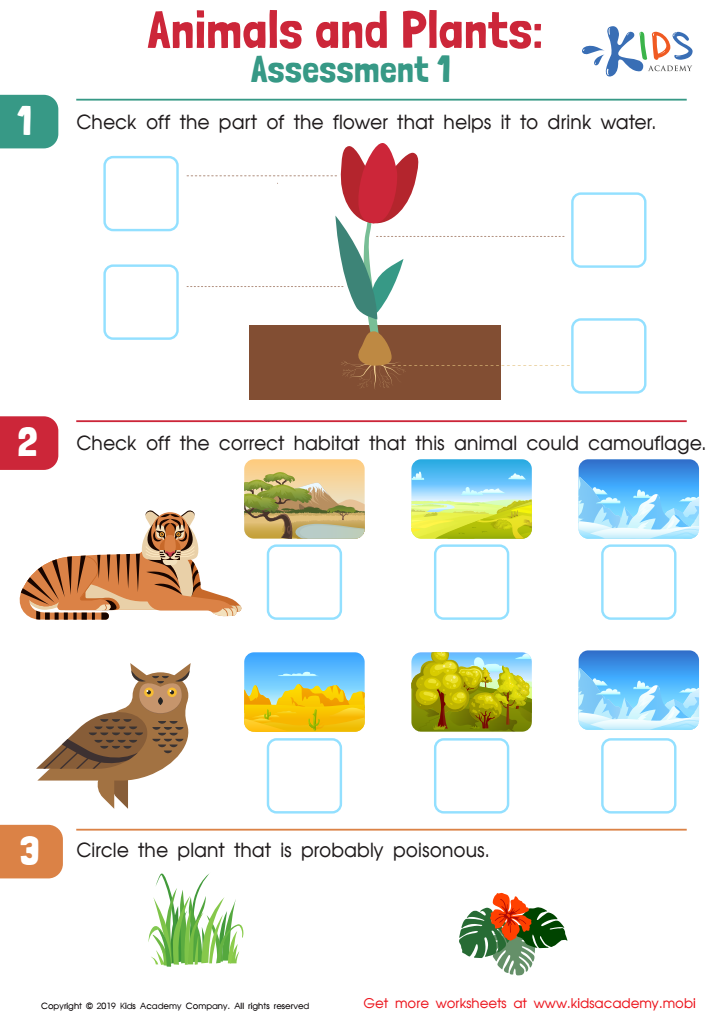
Animals and Plants: Assessment 1 Worksheet
Do you want to easily assess your child's understanding of basic science concepts? This colorful PDF offers a free opportunity for them to test their knowledge about parts of a flower, poisonous plants, animal habitats and more! Bright pictures make it fun and easy for you to see what they know.
Animals and Plants: Assessment 1 Worksheet
Worksheet
Join Kids Academy for Free
Who is primarily going to use this learning content?








Critical Thinking Science for young children aged 4-6 is essential for fostering curiosity and a love for learning. At this developmental stage, children are highly inquisitive and naturally explore the world around them. Encouraging critical thinking enhances their ability to ask questions, make observations, and draw conclusions, laying a strong foundation for scientific inquiry. Parents and teachers should care about this because it cultivates problem-solving skills and creative thinking, which are crucial for academic success and personal development.
Moreover, introducing critical thinking in science supports cognitive growth by encouraging children to use logic and reasoning. This empowers them to make connections between concepts, understand causality, and discern facts from misinformation — an invaluable skill in our modern, information-rich environment.
Additionally, early engagement in science can spark a lifelong interest in STEM (Science, Technology, Engineering, and Mathematics) fields, which are vital for future job markets. This foundational literacy promotes socio-emotional skills as children work collaboratively, allowing them to communicate ideas and embrace diverse perspectives. In fostering critical thinking science, parents and teachers not only prepare children academically but also equip them with the tools to navigate real-world challenges. Ultimately, nurturing inquisitive minds today shapes responsible, thoughtful citizens of tomorrow.







