Middle Vowel Worksheets for Ages 4-7
4 filtered results
-
From - To
Unlock your child's reading potential with our engaging Middle Vowel Worksheets for ages 4-7! Designed by education experts, these fun and colorful printables help young learners master vowel sounds in the middle of words, a crucial step in developing strong reading skills. Each worksheet is packed with interactive exercises and appealing illustrations to keep kids captivated while they practice. Perfect for classroom support or homeschool activities, these resources build phonemic awareness and boost confidence in budding readers. Give your little scholars the tools they need to succeed with our expertly crafted vowel worksheets today!
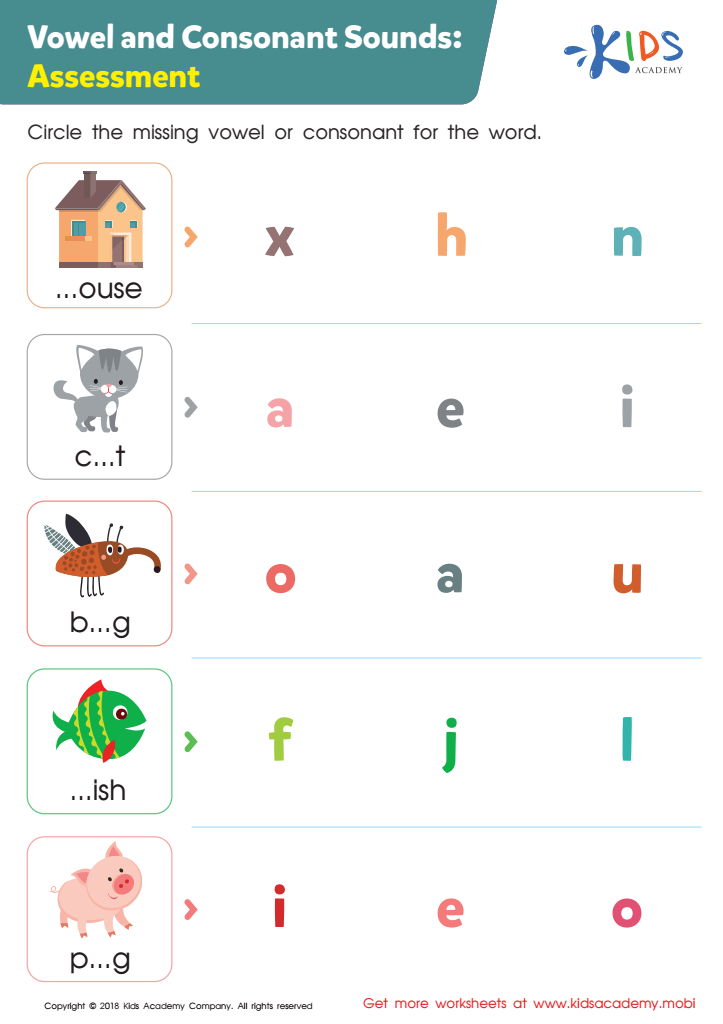
Vowel and Consonant Sounds: Assessment Worksheet
 Assign to My Students
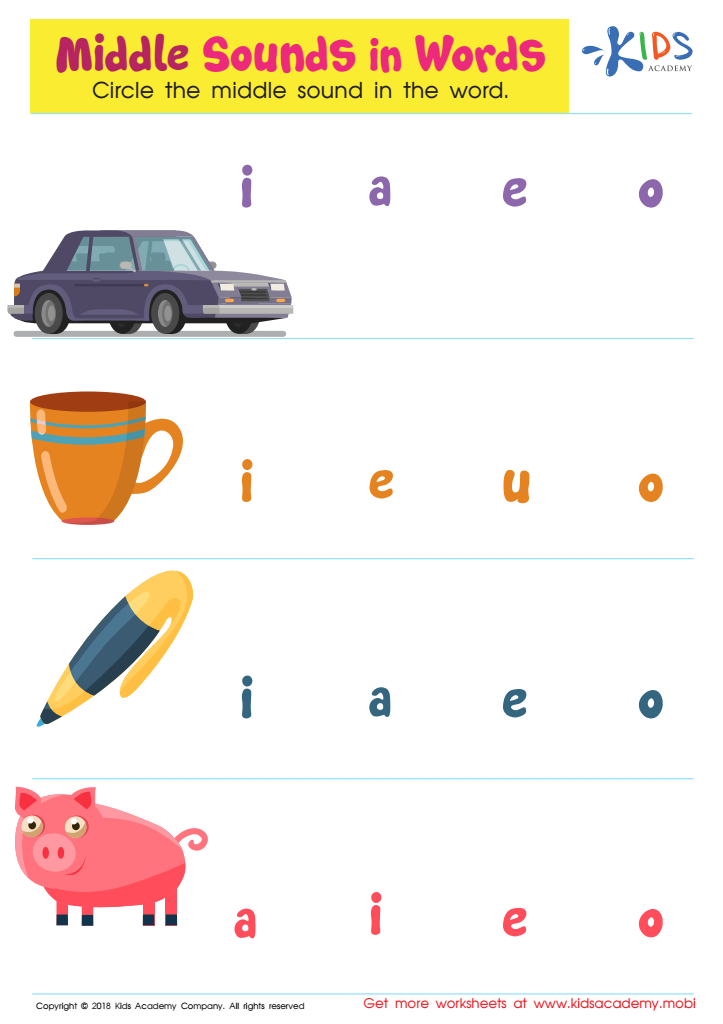
Middle Sounds in Words Worksheet
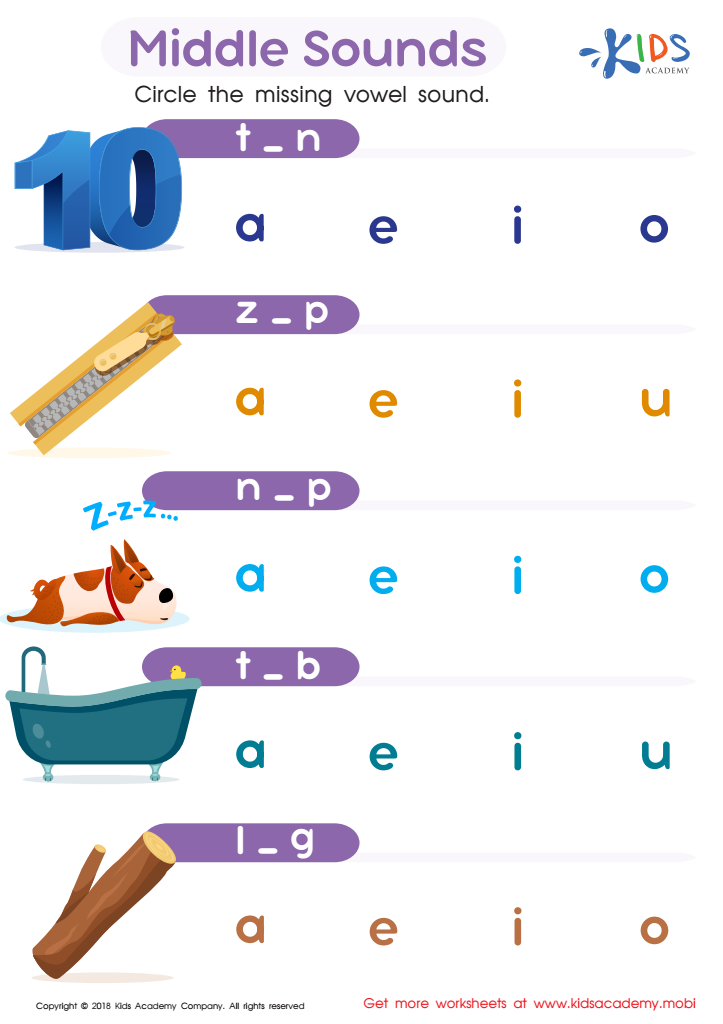
Middle Sounds Worksheet
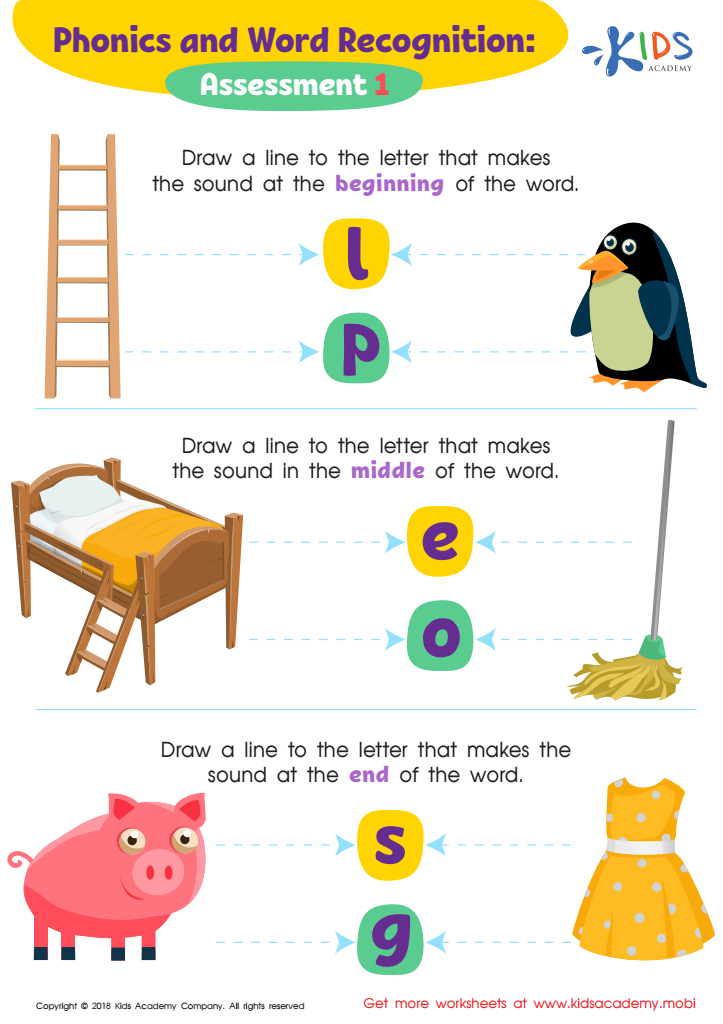
Phonics and Word Recognition: Assessment 1 ELA Worksheet



Caring about middle vowels for children aged 4-7 is crucial for several key reasons directly impacting their early reading and spelling skills. Middle vowels, the sounds that vowels make within the body of words (like "a" in "cat" or "e" in "hen"), are essential for decoding words phonetically. At this age, children's brains are particularly receptive to language acquisition, and understanding vowel sounds can considerably ease their journey towards fluent reading.
Supporting phonemic awareness—recognizing and manipulative individual sounds in spoken words—enhances overall literacy. If children can identify and pronounce middle vowels accurately, they'll improve in areas such as spelling, where vowels often serve as the make-or-break elements within words.
Moreover, comprehension is another vital aspect. If children struggle with middle vowels, their ability to decipher words accurately diminishes, leading to misunderstanding of reading material. Early proficiency shields them from potential learning gaps as they advance academically. Activities incorporating vowel sounds, like singing, storytelling, or word games, not only make learning more engaging but also help lock down these critical skills efficiently.
By focusing on middle vowels, parents and teachers lay a robust foundation for language development, potentially setting children up for years of academic success and a lifelong love of reading.