Upper & Lowercase Letters Worksheets for Ages 4-7 - Page 3
50 filtered results
-
From - To
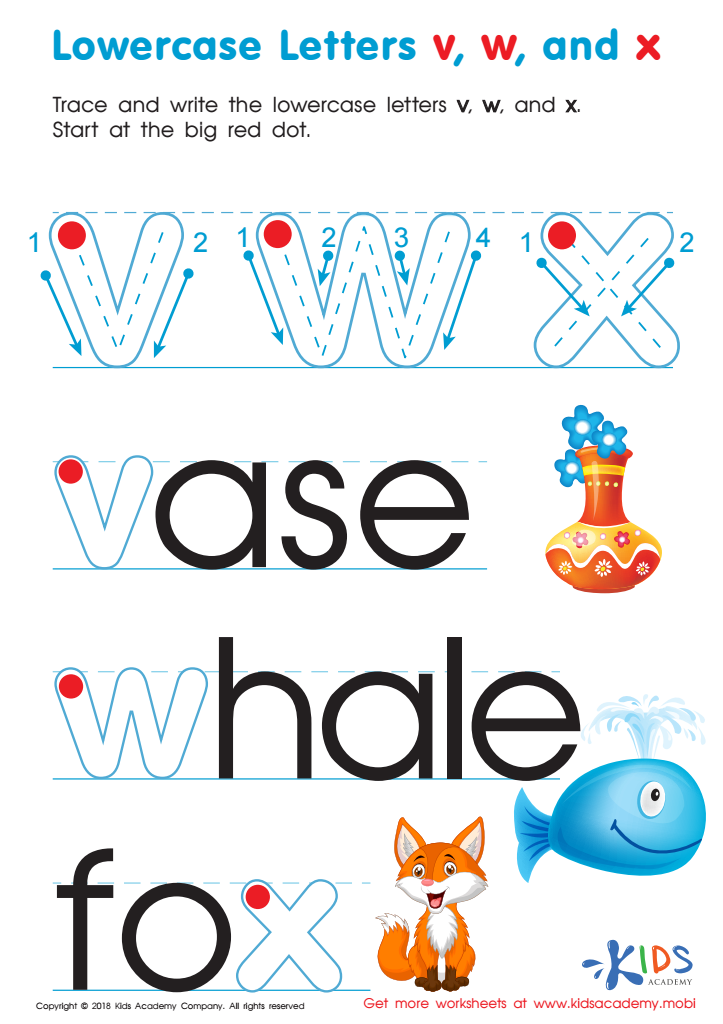
Lowercase Letters v w x Worksheet
 Assign to My Students

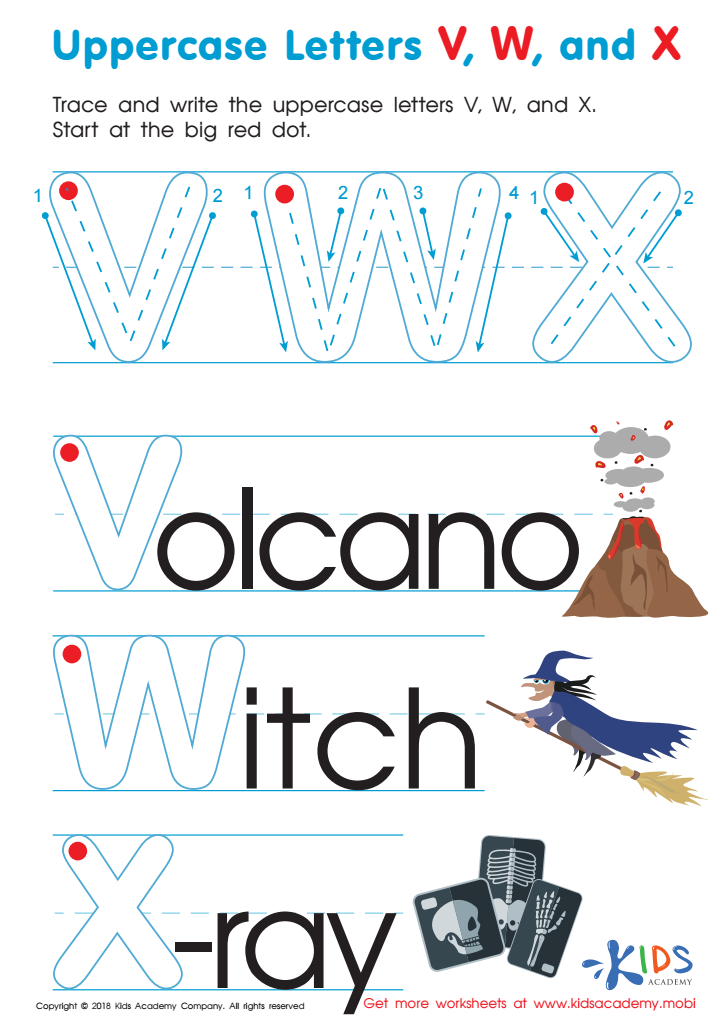
Uppercase Letters V, W, and X Worksheet






Understanding uppercase and lowercase letters is fundamental for children aged 4-7. This age group is critical for language acquisition and literacy development, making early recognition of letter forms essential.
Uppercase letters often signify the beginning of sentences and proper nouns, helping children to understand sentence structure and context. Familiarity with these letters enhances their reading comprehension skills and allows them to identify important words.
Lowercase letters, on the other hand, make up the bulk of written text. Children must learn to recognize and write these letters clearly, as they will encounter them much more frequently in everyday life—from reading labels and signs to writing their own names and messages.
Furthermore, understanding the relationship between uppercase and lowercase letters can foster phonemic awareness, contributing to better spelling and pronunciation skills. Promoting this knowledge also encourages curiosity and engagement in language activities.
By prioritizing uppercase and lowercase letter recognition, parents and teachers can lay a solid foundation for literacy. This nurtures children's confidence in reading and writing, essential skills that will benefit them throughout their educational journey and beyond.







