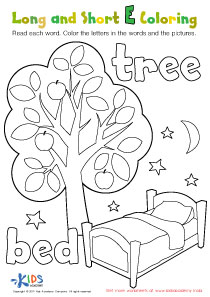
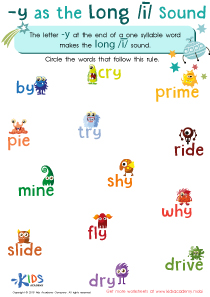
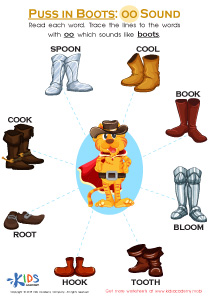
Vowel Digraphs Worksheets for Ages 4-7
3 filtered results
-
From - To
Discover our engaging Vowel Digraphs Worksheets designed for children ages 4-7! These fun and interactive activities help young learners recognize and understand vowel digraphs, such as "ai," "ea," and "ou," enhancing their reading and spelling skills. Each worksheet features colorful illustrations and age-appropriate exercises that make learning entertaining and effective. Perfect for classrooms or at-home practice, our resources support early literacy development and instill a love for reading. Explore our collection of printable worksheets, and watch your child gain confidence in their reading abilities while mastering vowel digraphs! Start their literacy journey today with imaginative and educational learning tools.
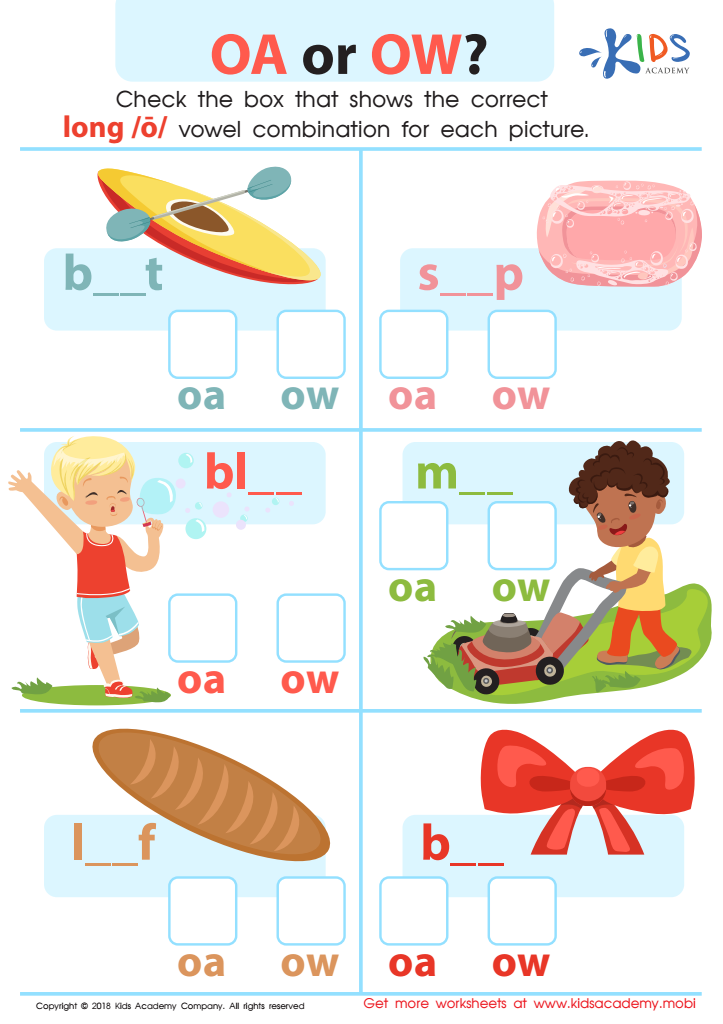
Reading: OA or OW Worksheet
 Assign to My Students
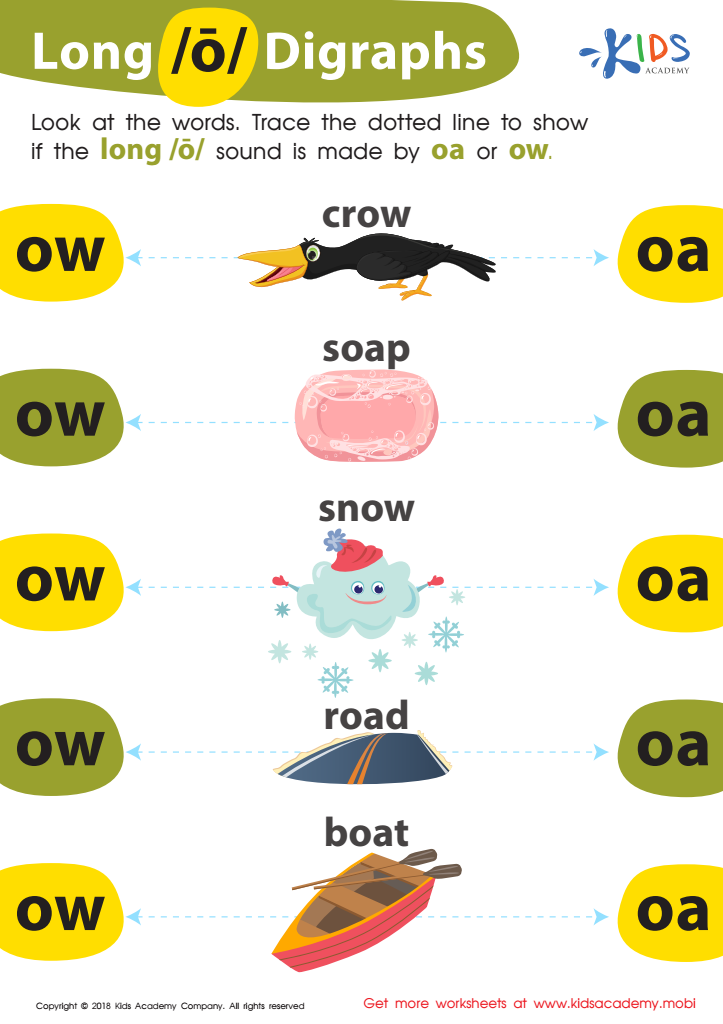
Reading: Long O Digraphs Worksheet
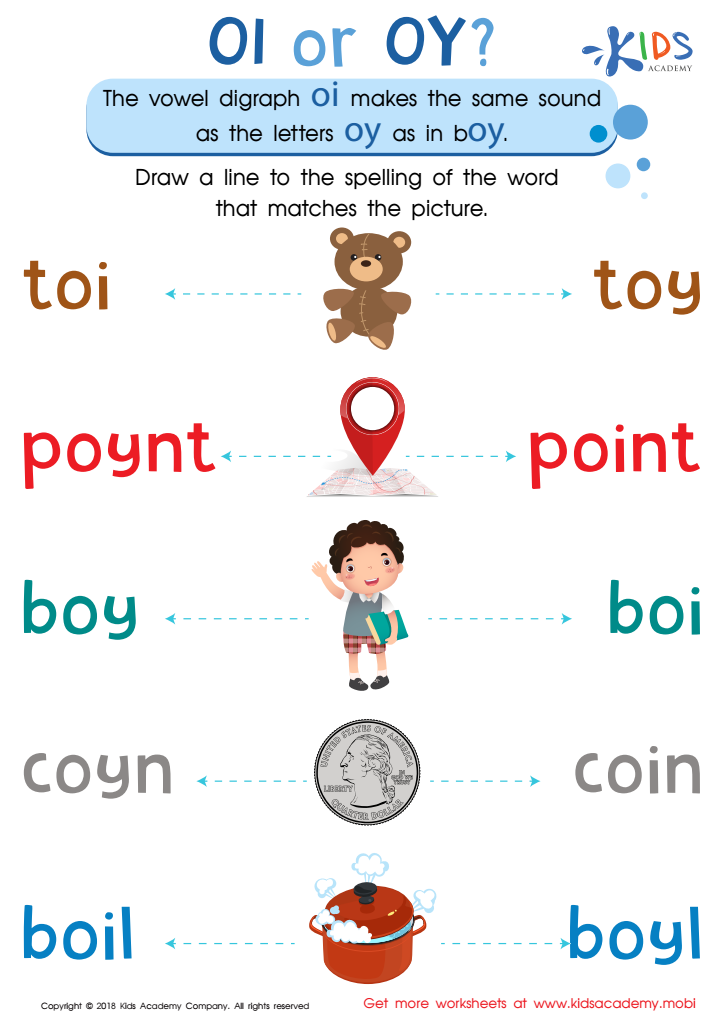
Reading: OI and OY Worksheet


Vowel digraphs, combinations of two vowels working together to create a single sound (such as "ea" in "leaf" or "ai" in "rain"), are essential for early literacy development in children aged 4-7. Understanding vowel digraphs not only enhances a child's reading skills but also bolsters their overall language competency. For parents and teachers, fostering recognition of vowel digraphs promotes phonemic awareness, the ability to identify and manipulate sounds in words.
As children learn to read, mastering these digraphs aids in decoding unfamiliar words, increasing their confidence and enthusiasm for reading. Since many words in the English language contain vowel digraphs, familiarity with them helps children build a rich vocabulary. Furthermore, recognizing digraphs streamlines the connection between phonics and written language, facilitating easier comprehension and fluency.
Moreover, a solid grasp of vowel digraphs enables children to tackle more complex texts earlier in their educational journey. By emphasizing vowel digraphs within the curriculum and at home, parents and teachers empower children to become proficient readers, improving their engagement with literature and enhancing critical thinking skills. Ultimately, understanding vowel digraphs lays a strong foundation for linguistic success and lifelong learning.