Filters

73 filtered results

Clear all filters
Favorites
With answer key
Interactive

73 filtered results

Difficulty Level

Grade


Subject

    Welcome to our "Adding Up to 100 Without Regrouping" worksheets, designed specifically for young learners aged 4 to 7. These educational resources provide a fun and engaging way for kids to practice their addition skills without the complexity of regrouping. Each worksheet features colorful visuals and age-appropriate exercises that help reinforce foundational math concepts. Our tasks encourage independent learning while building critical thinking and problem-solving abilities. With a focus on stimulating young minds, our worksheets are perfect for both classroom and at-home activities. Start your child’s math journey today and watch them gain confidence in adding up to 100 seamlessly!
    Check out this FREE Trial Lesson on Adding up to 100 Without Regrouping for age 4-7!

    Match Objects that Fit Together

    Favorites
    With answer key
    Interactive
    • 4-7
    • Adding up to 100 Without Regrouping
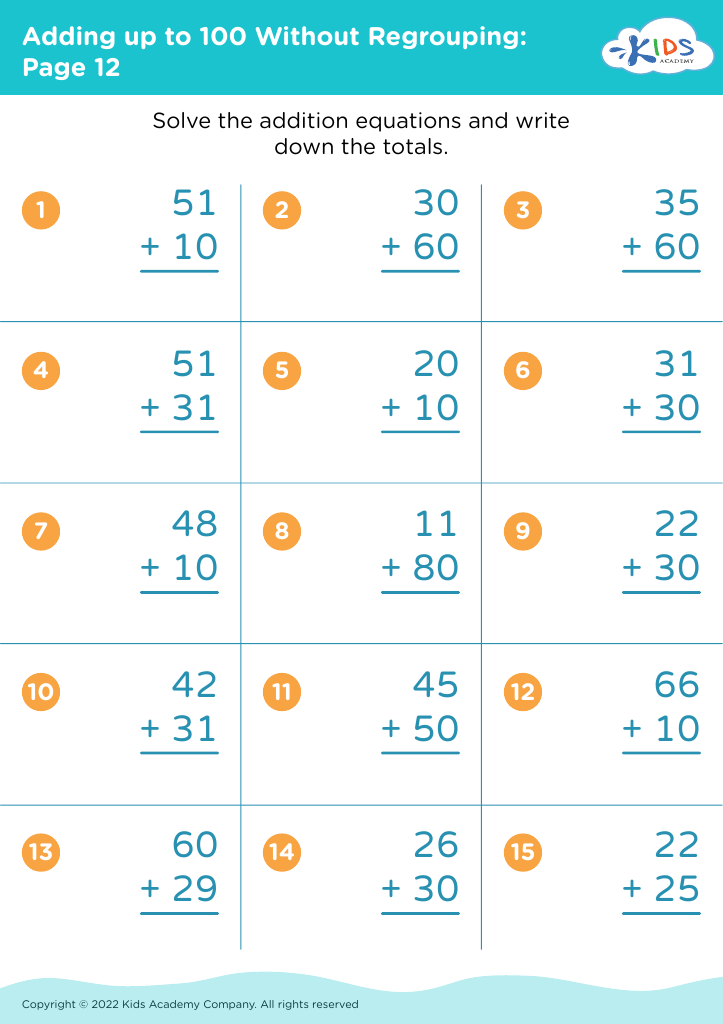
    Adding up to 100 Without Regrouping: Page 12
    Adding up to 100 Without Regrouping: Page 12
    Adding up to 100 Without Regrouping: Page 12
    Worksheet
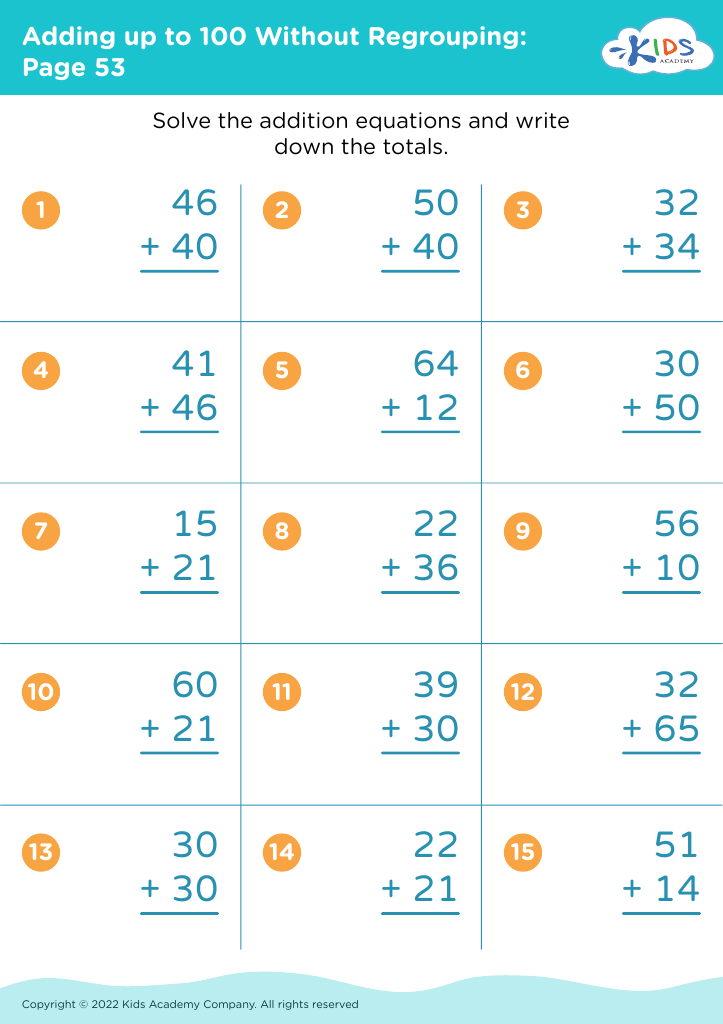
    Adding up to 100 Without Regrouping: Page 53
    Adding up to 100 Without Regrouping: Page 53
    Adding up to 100 Without Regrouping: Page 53
    Worksheet
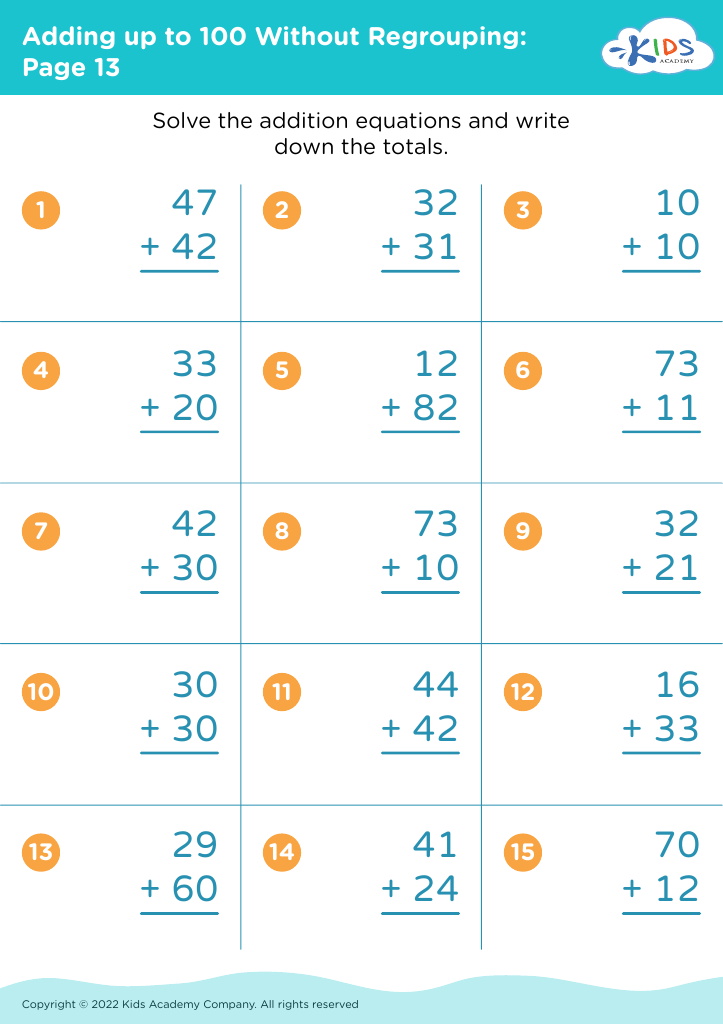
    Adding up to 100 Without Regrouping: Page 13
    Adding up to 100 Without Regrouping: Page 13
    Adding up to 100 Without Regrouping: Page 13
    Worksheet
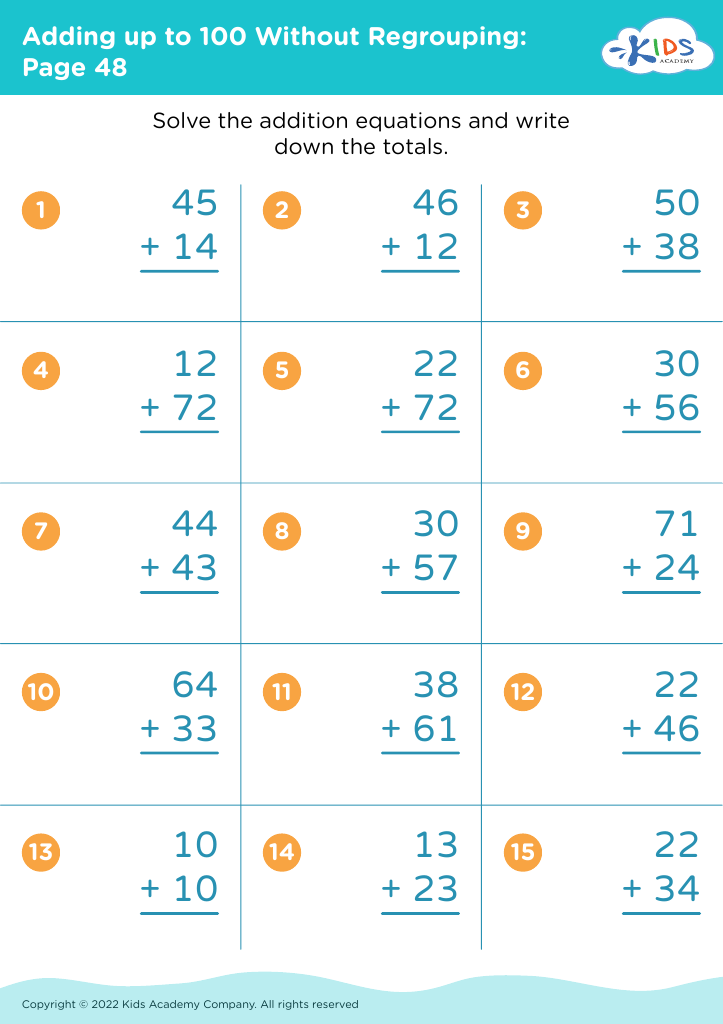
    Adding up to 100 Without Regrouping: Page 48
    Adding up to 100 Without Regrouping: Page 48
    Adding up to 100 Without Regrouping: Page 48
    Worksheet
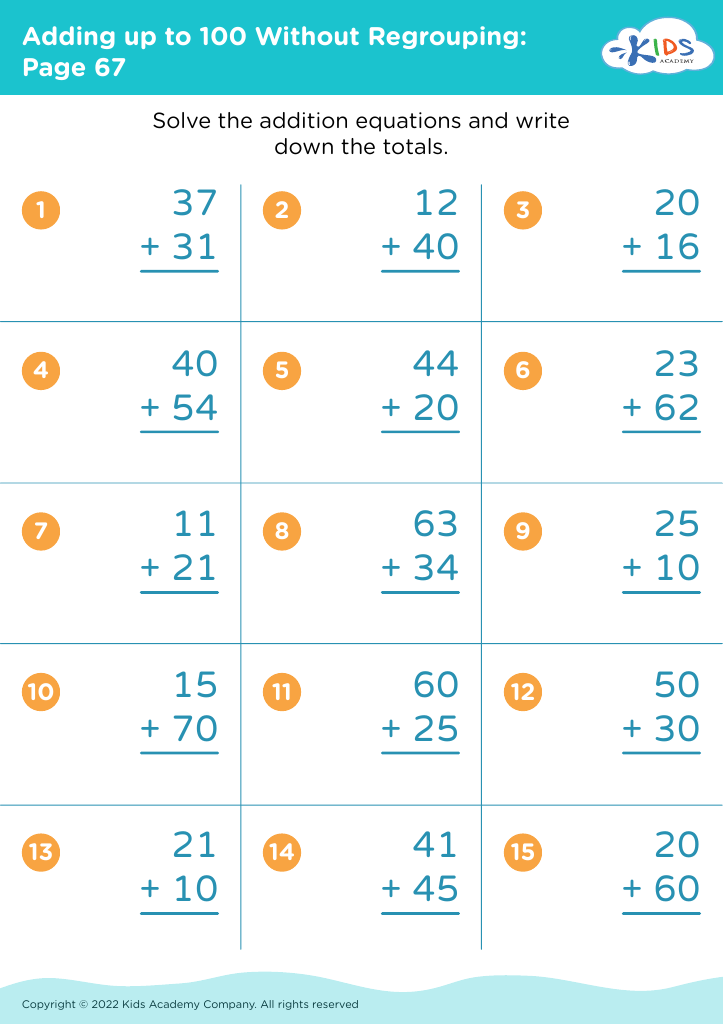
    Adding up to 100 Without Regrouping: Page 67
    Adding up to 100 Without Regrouping: Page 67
    Adding up to 100 Without Regrouping: Page 67
    Worksheet
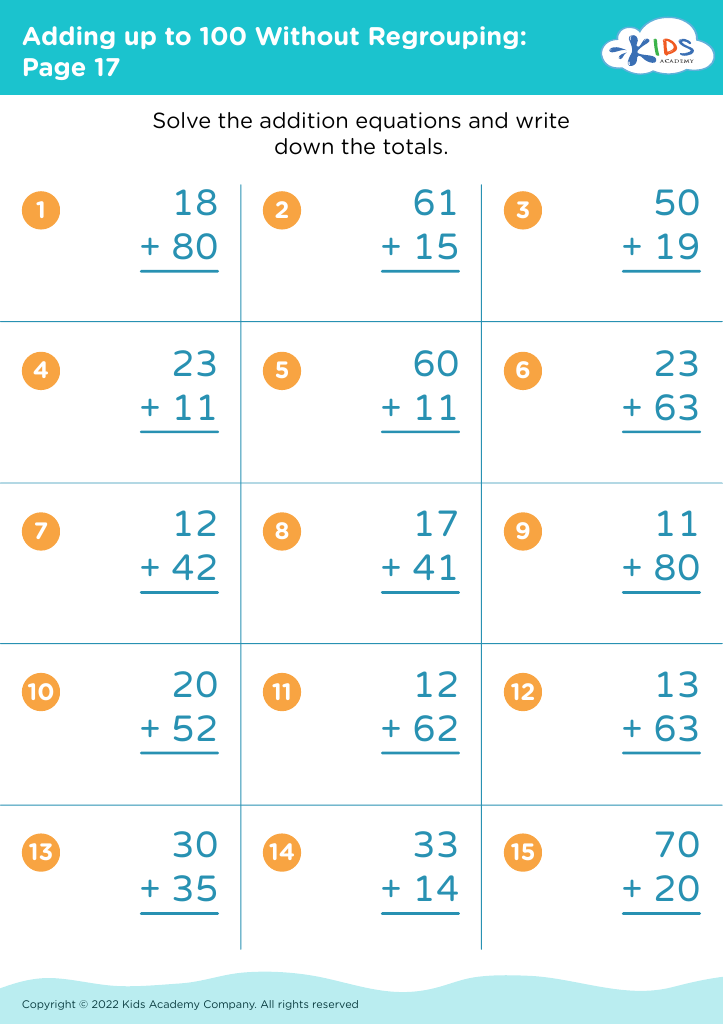
    Adding up to 100 Without Regrouping: Page 17
    Adding up to 100 Without Regrouping: Page 17
    Adding up to 100 Without Regrouping: Page 17
    Worksheet
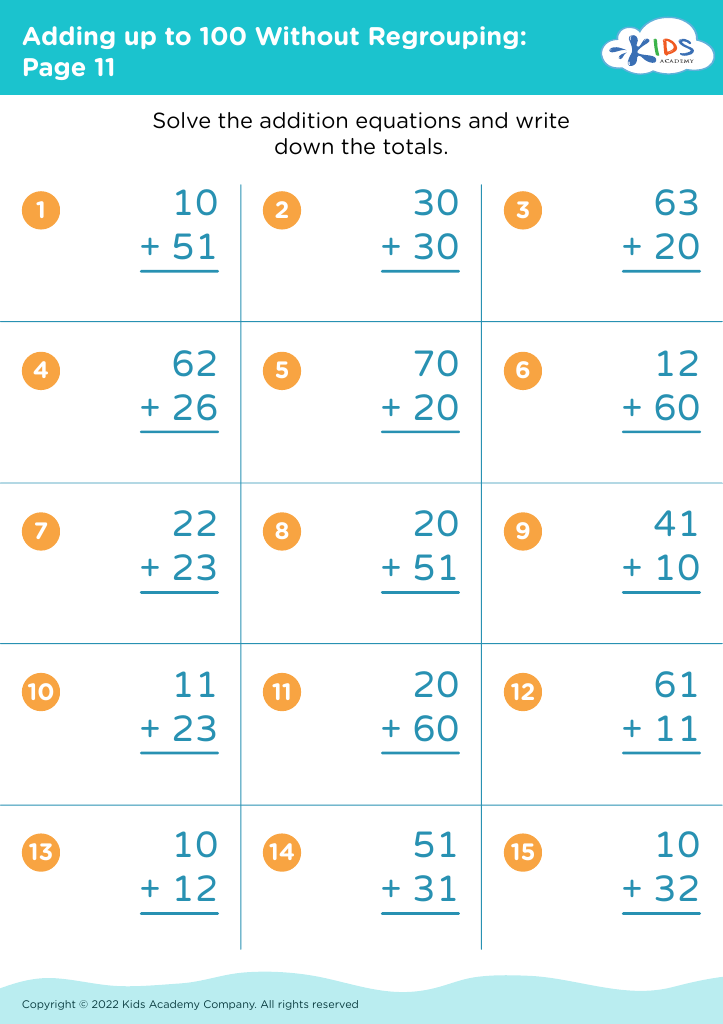
    Adding up to 100 Without Regrouping: Page 11
    Adding up to 100 Without Regrouping: Page 11
    Adding up to 100 Without Regrouping: Page 11
    Worksheet
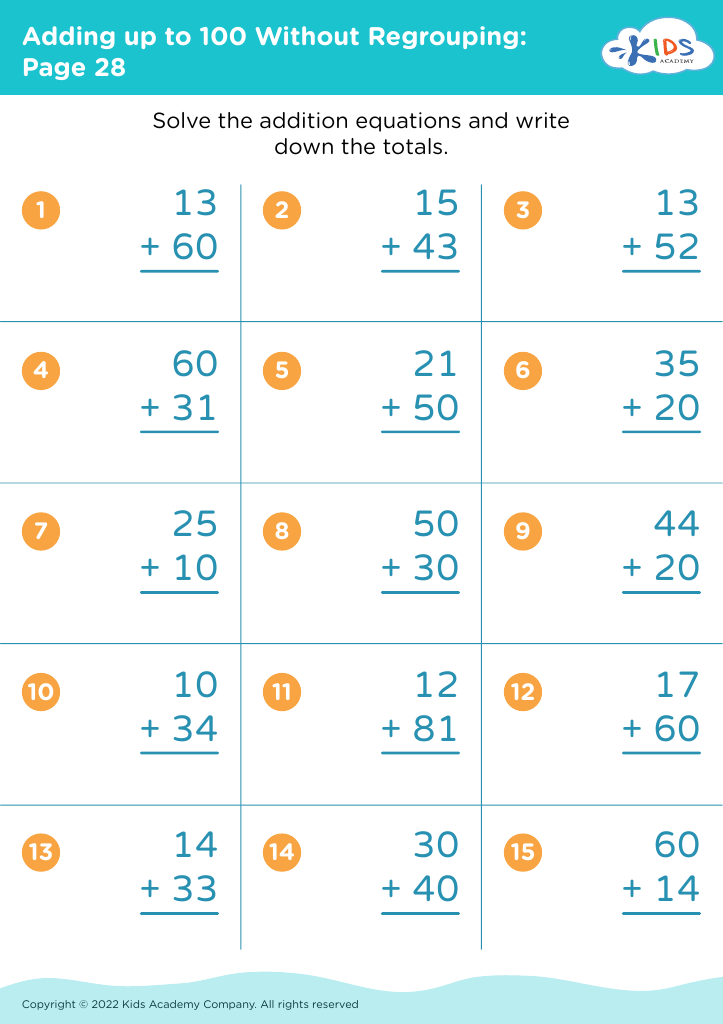
    Adding up to 100 Without Regrouping: Page 28
    Adding up to 100 Without Regrouping: Page 28
    Adding up to 100 Without Regrouping: Page 28
    Worksheet
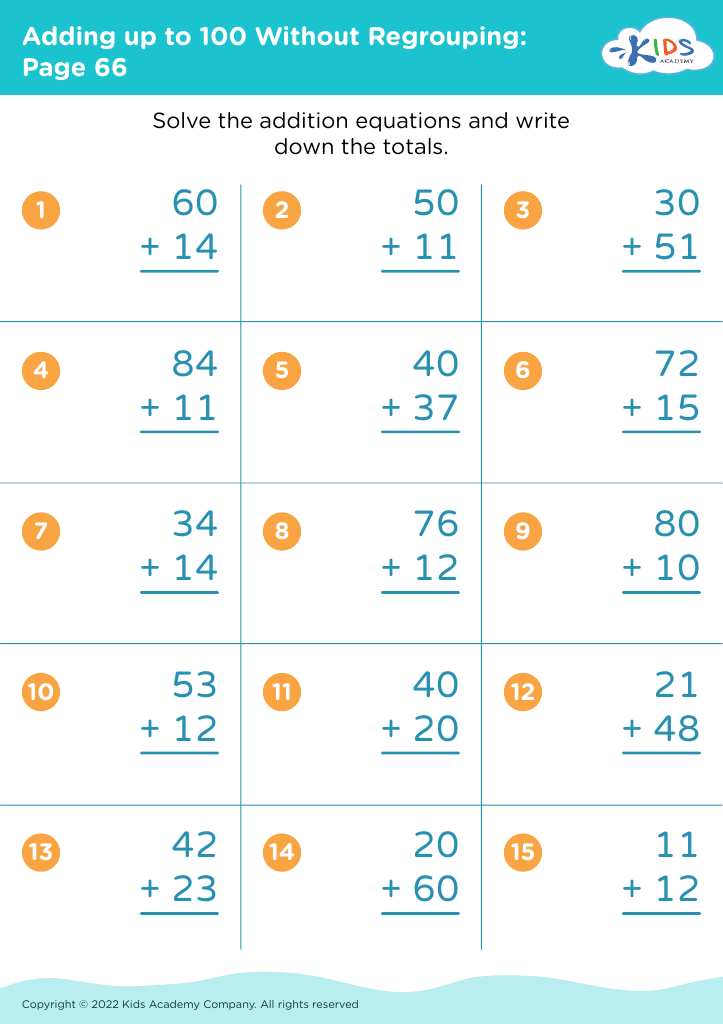
    Adding up to 100 Without Regrouping: Page 66
    Adding up to 100 Without Regrouping: Page 66
    Adding up to 100 Without Regrouping: Page 66
    Worksheet
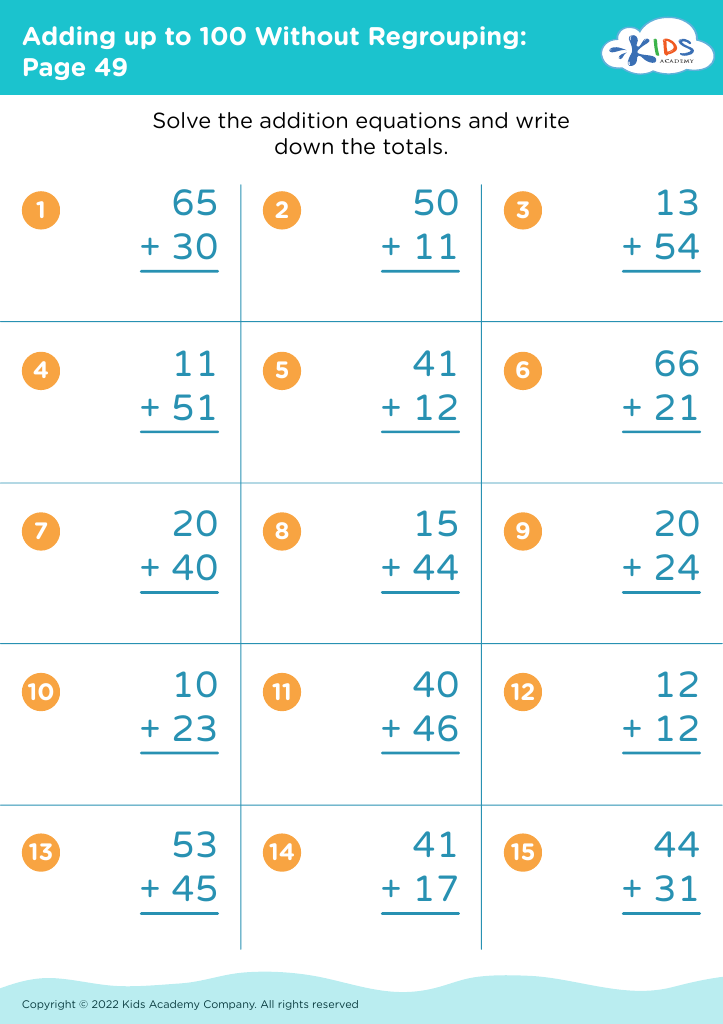
    Adding up to 100 Without Regrouping: Page 49
    Adding up to 100 Without Regrouping: Page 49
    Adding up to 100 Without Regrouping: Page 49
    Worksheet
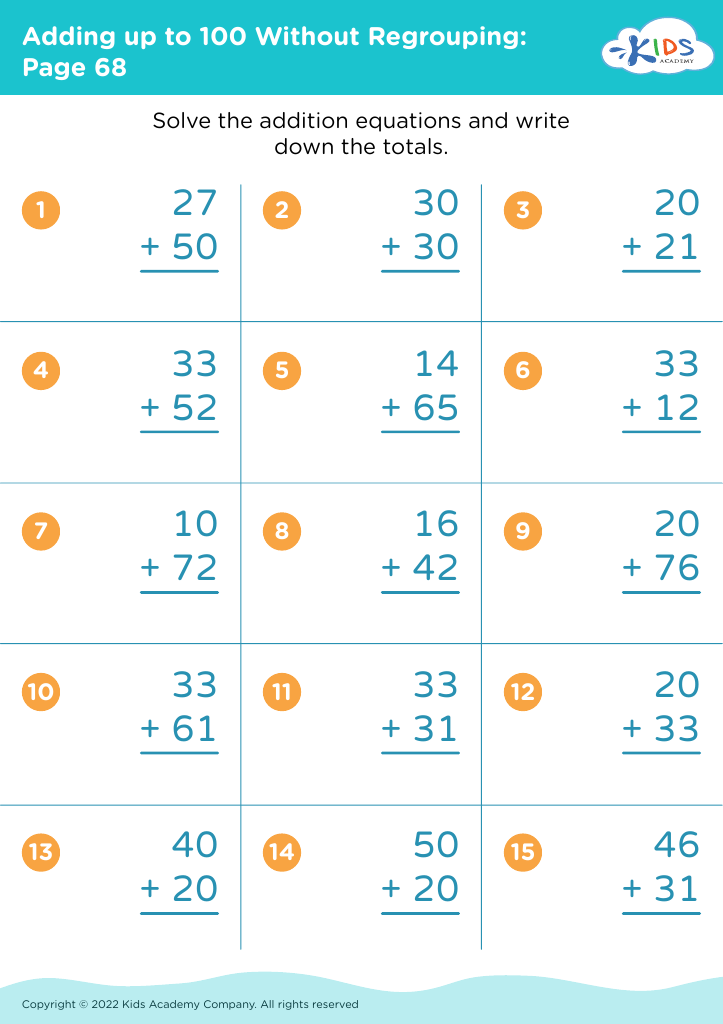
    Adding up to 100 Without Regrouping: Page 68
    Adding up to 100 Without Regrouping: Page 68
    Adding up to 100 Without Regrouping: Page 68
    Worksheet
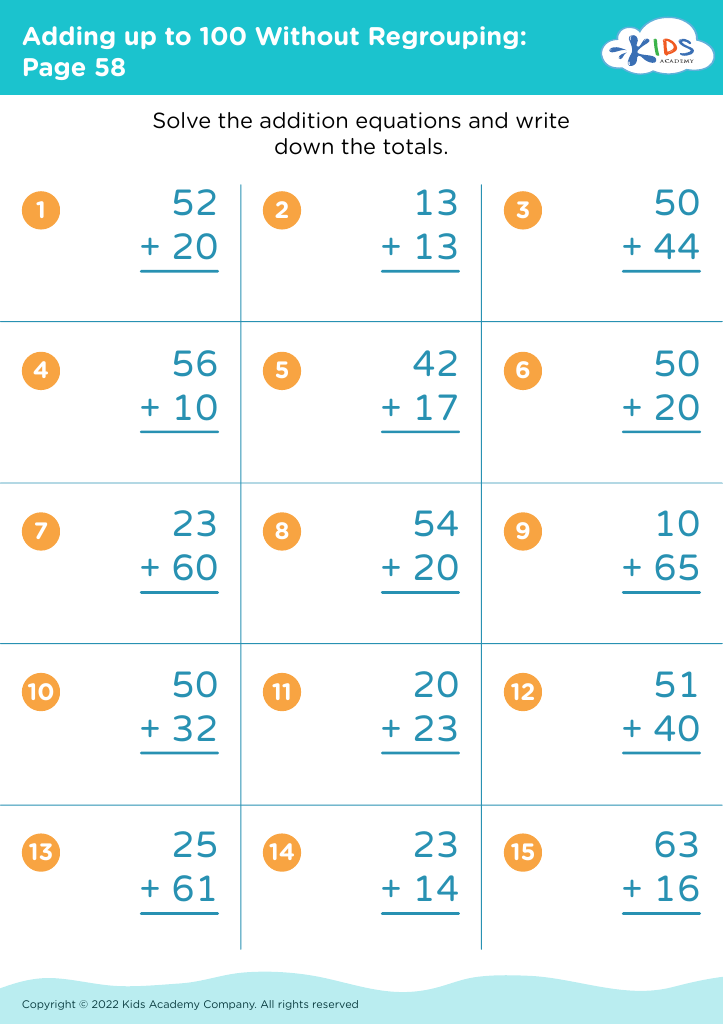
    Adding up to 100 Without Regrouping: Page 58
    Adding up to 100 Without Regrouping: Page 58
    Adding up to 100 Without Regrouping: Page 58
    Worksheet
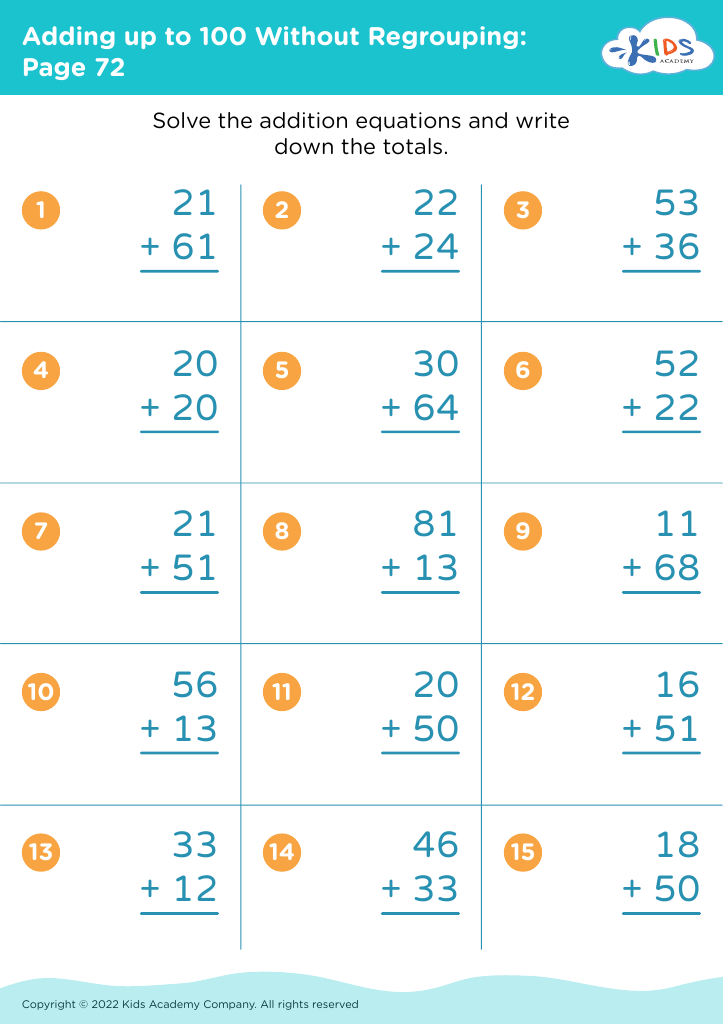
    Adding up to 100 Without Regrouping: Page 72
    Adding up to 100 Without Regrouping: Page 72
    Adding up to 100 Without Regrouping: Page 72
    Worksheet
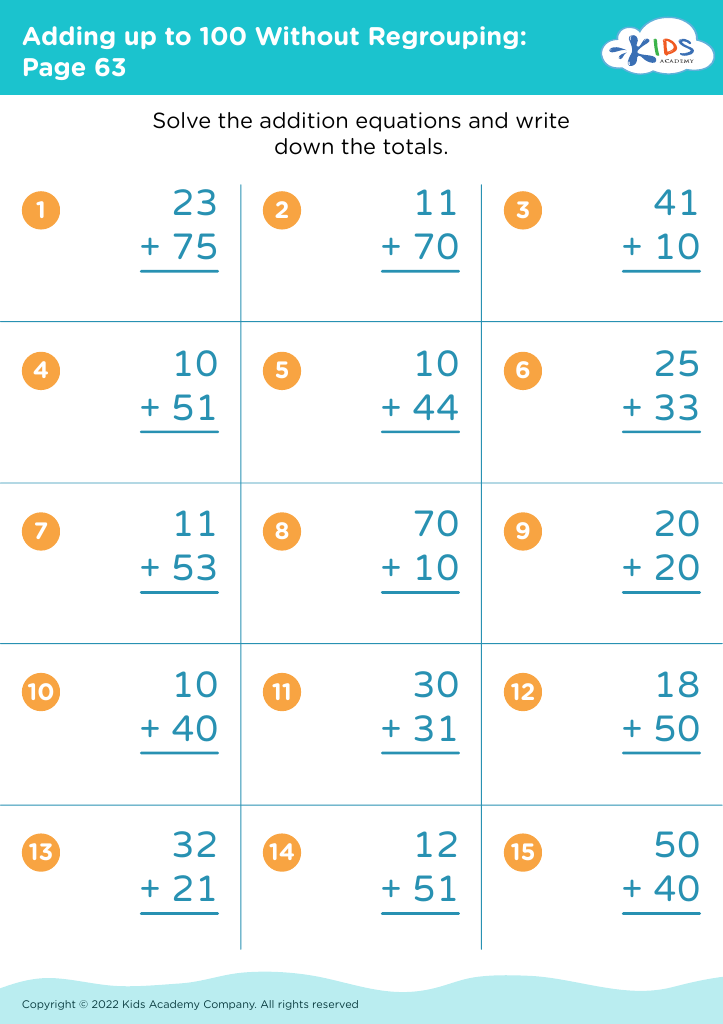
    Adding up to 100 Without Regrouping: Page 63
    Adding up to 100 Without Regrouping: Page 63
    Adding up to 100 Without Regrouping: Page 63
    Worksheet
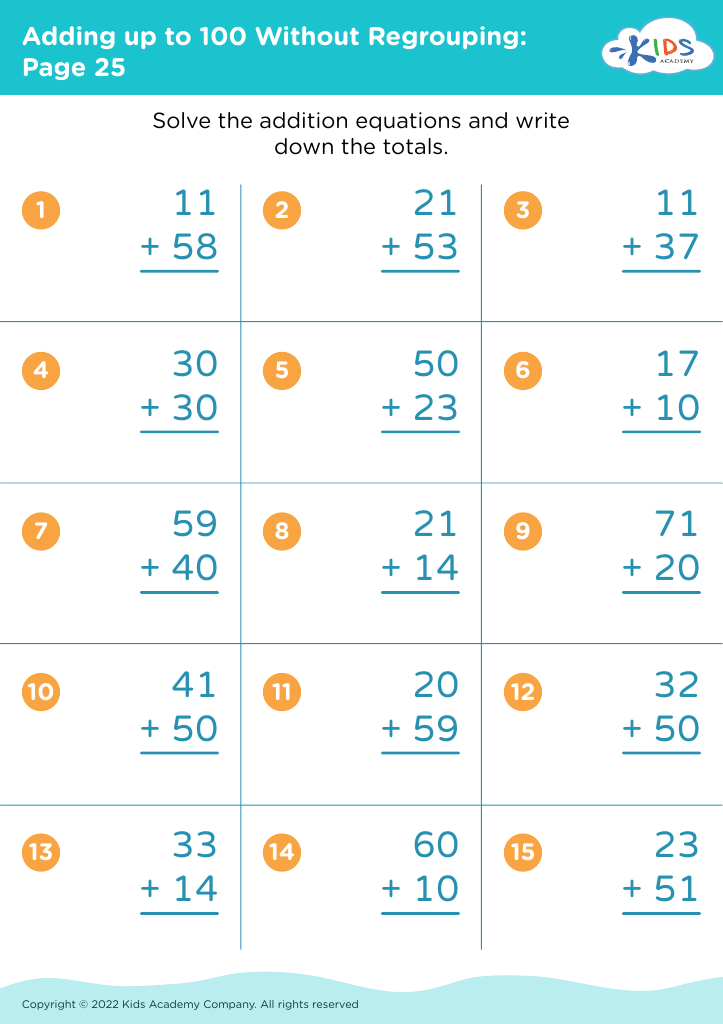
    Adding up to 100 Without Regrouping: Page 25
    Adding up to 100 Without Regrouping: Page 25
    Adding up to 100 Without Regrouping: Page 25
    Worksheet
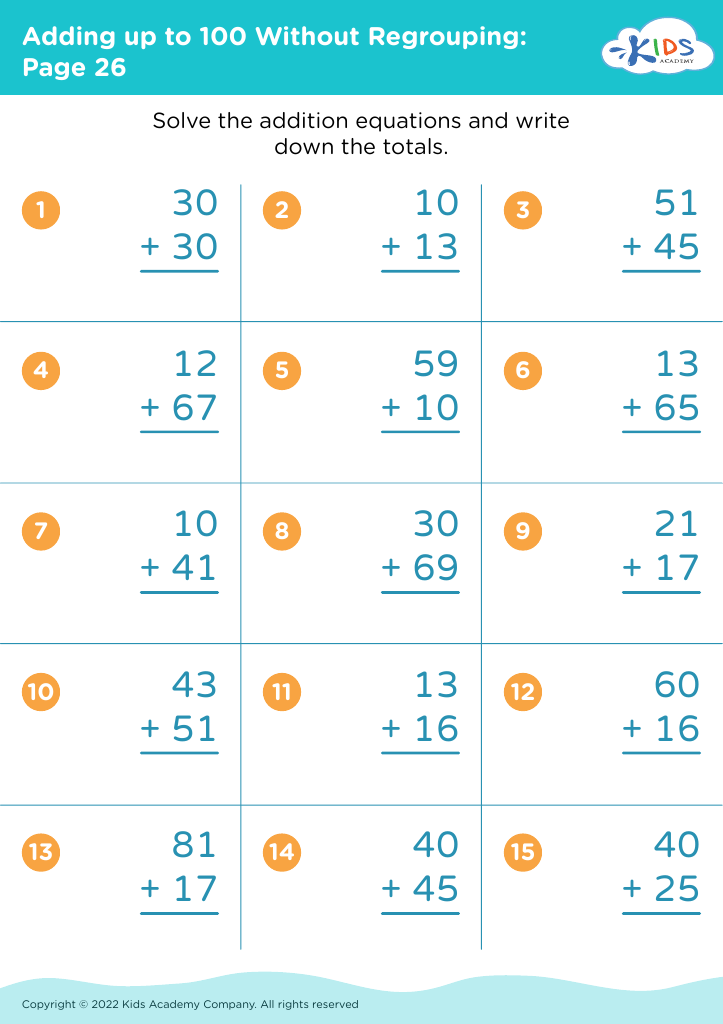
    Adding up to 100 Without Regrouping: Page 26
    Adding up to 100 Without Regrouping: Page 26
    Adding up to 100 Without Regrouping: Page 26
    Worksheet
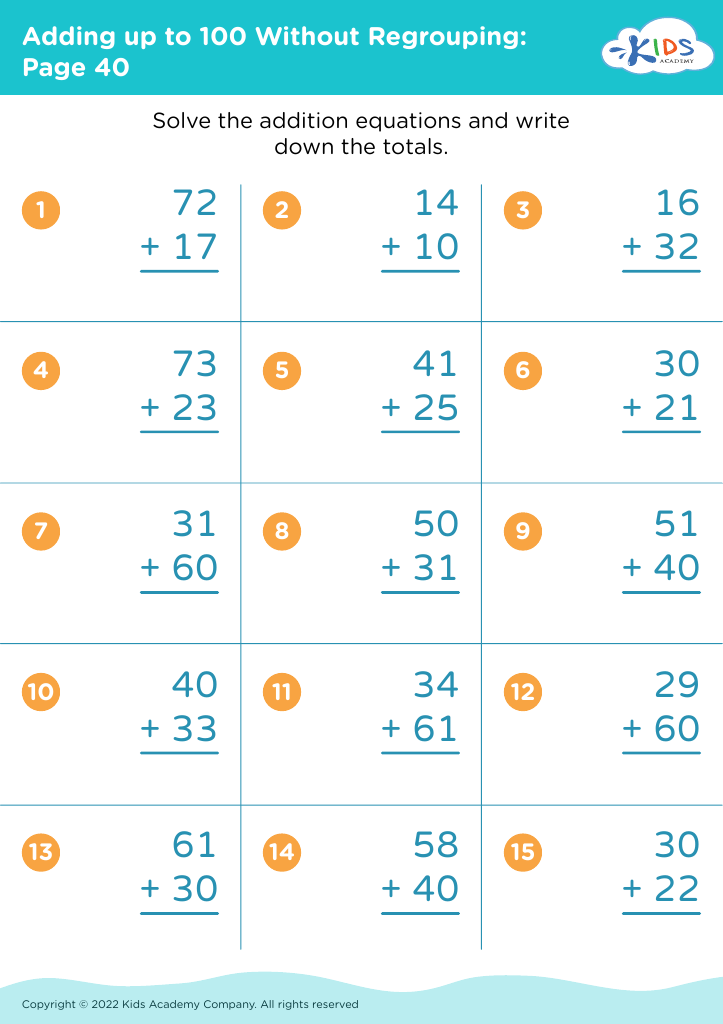
    Adding up to 100 Without Regrouping: Page 40
    Adding up to 100 Without Regrouping: Page 40
    Adding up to 100 Without Regrouping: Page 40
    Worksheet
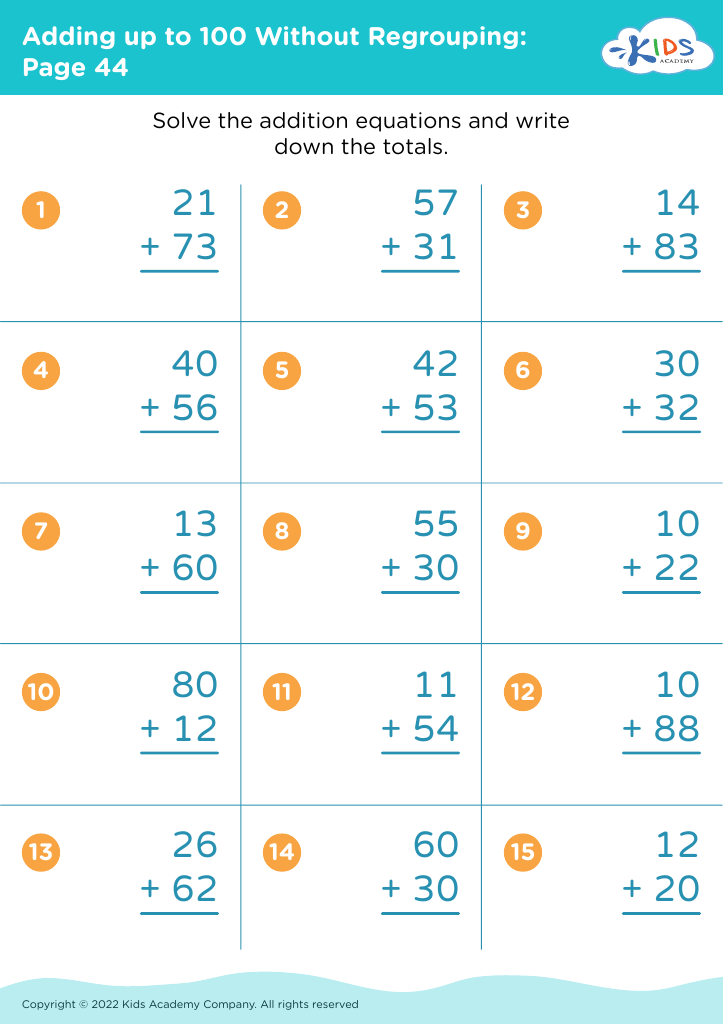
    Adding up to 100 Without Regrouping: Page 44
    Adding up to 100 Without Regrouping: Page 44
    Adding up to 100 Without Regrouping: Page 44
    Worksheet
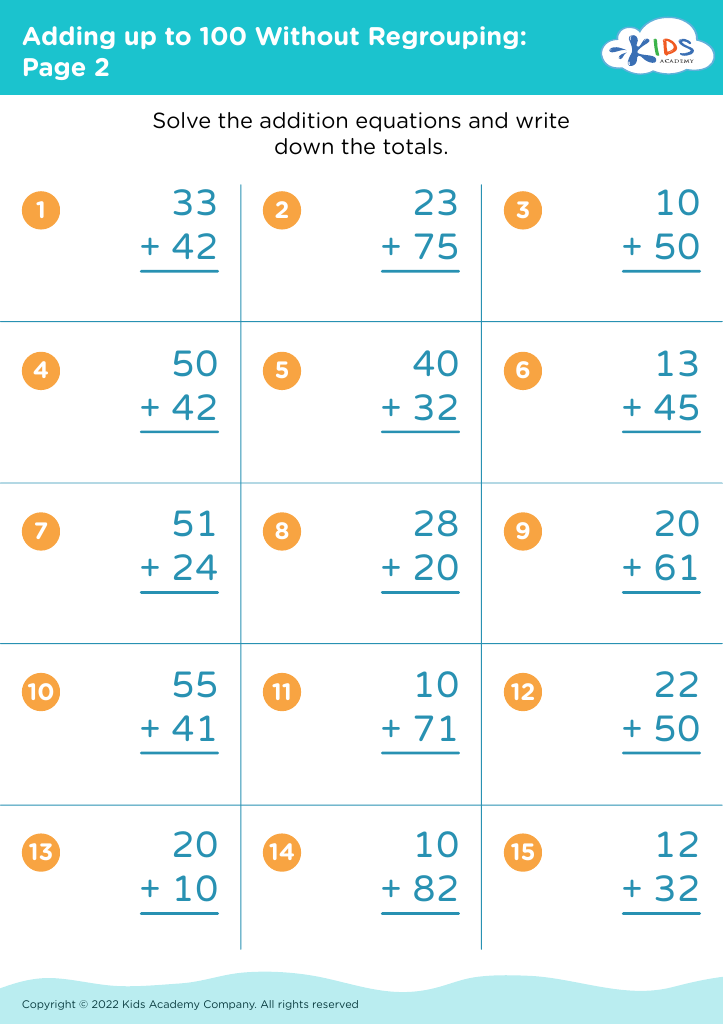
    Adding up to 100 Without Regrouping: Page 2
    Adding up to 100 Without Regrouping: Page 2
    Adding up to 100 Without Regrouping: Page 2
    Worksheet
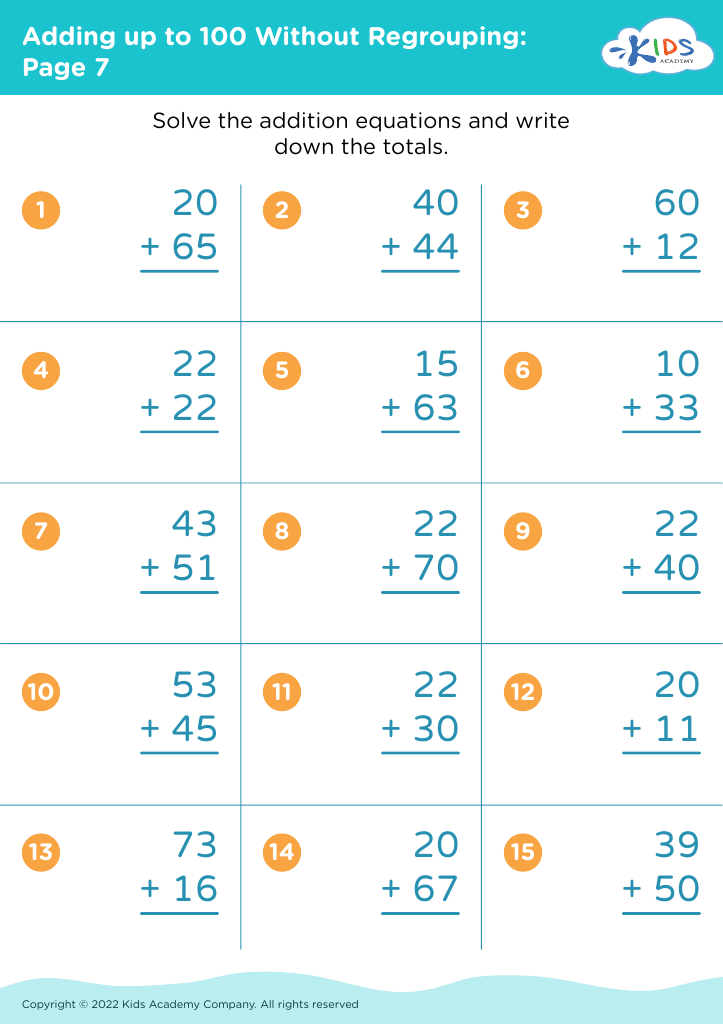
    Adding up to 100 Without Regrouping: Page 7
    Adding up to 100 Without Regrouping: Page 7
    Adding up to 100 Without Regrouping: Page 7
    Worksheet
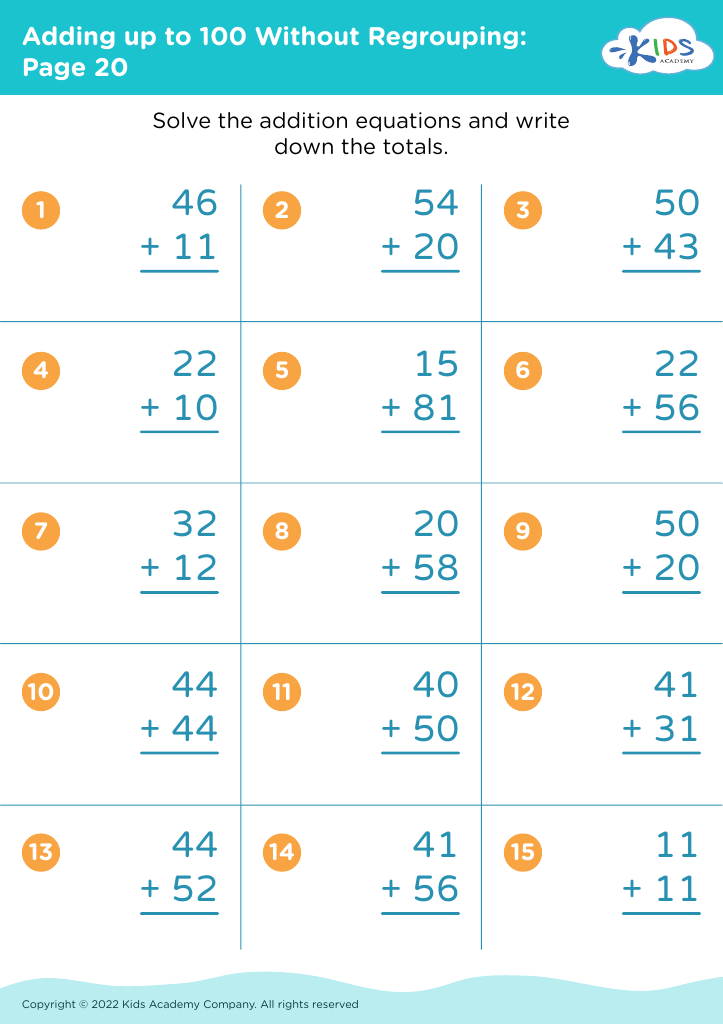
    Adding up to 100 Without Regrouping: Page 20
    Adding up to 100 Without Regrouping: Page 20
    Adding up to 100 Without Regrouping: Page 20
    Worksheet
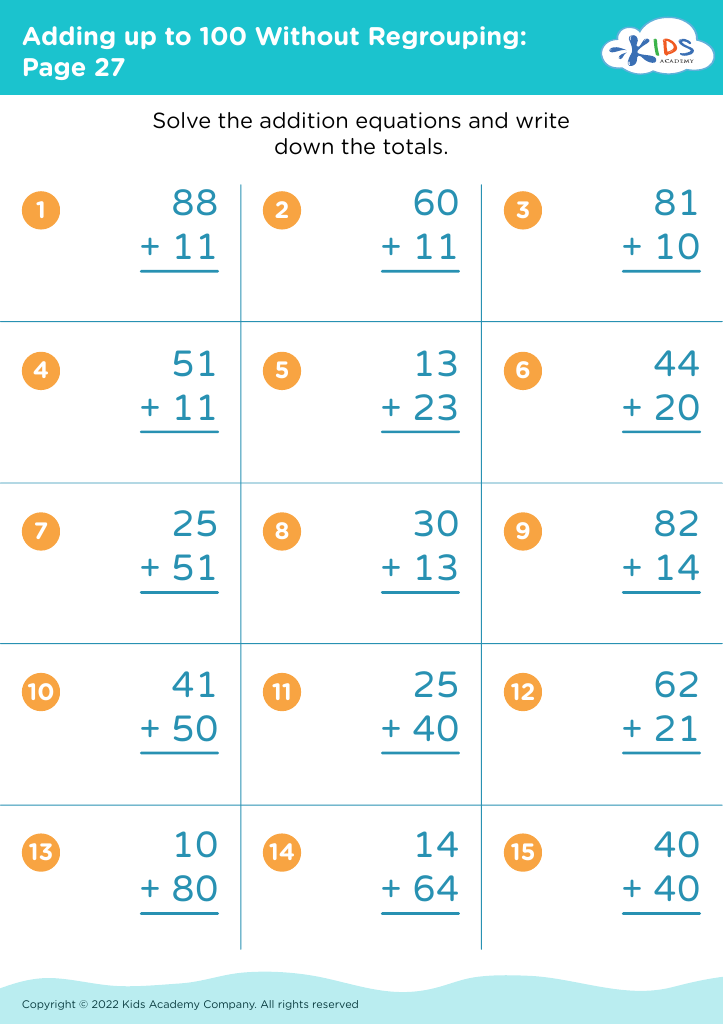
    Adding up to 100 Without Regrouping: Page 27
    Adding up to 100 Without Regrouping: Page 27
    Adding up to 100 Without Regrouping: Page 27
    Worksheet
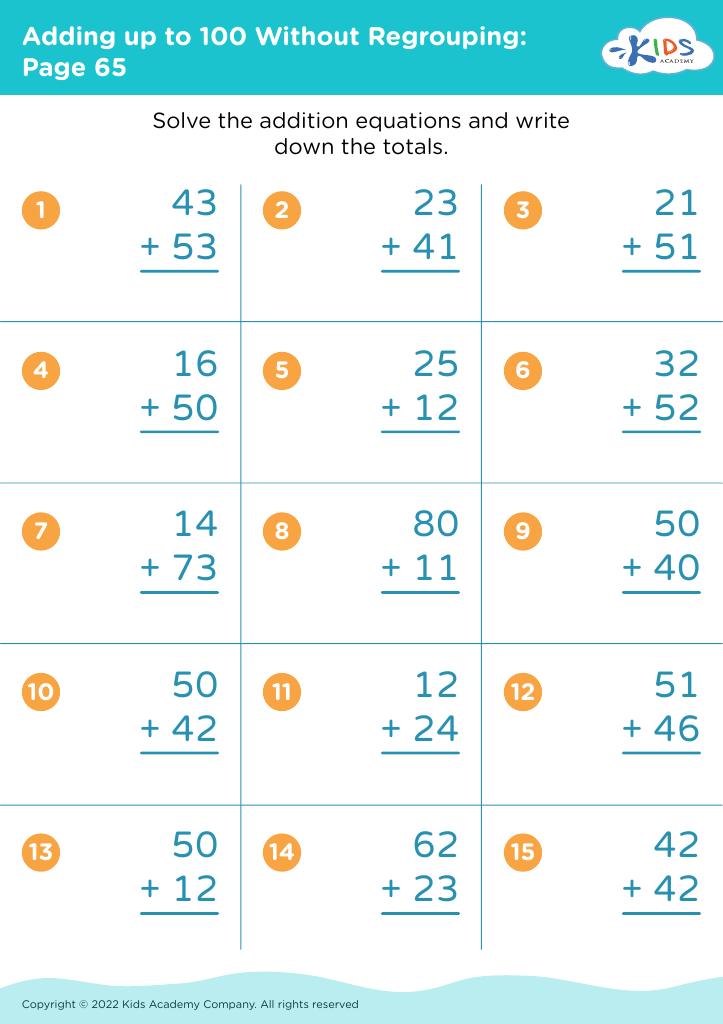
    Adding up to 100 Without Regrouping: Page 65
    Adding up to 100 Without Regrouping: Page 65
    Adding up to 100 Without Regrouping: Page 65
    Worksheet
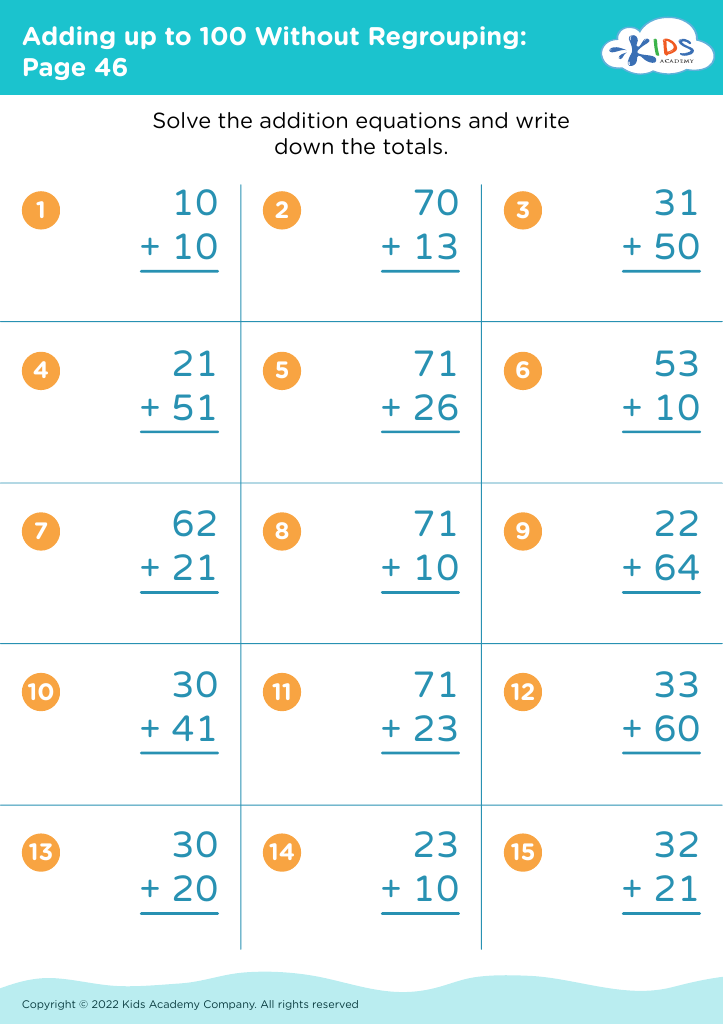
    Adding up to 100 Without Regrouping: Page 46
    Adding up to 100 Without Regrouping: Page 46
    Adding up to 100 Without Regrouping: Page 46
    Worksheet


    Parents and teachers should prioritize helping young learners understand Addition up to 100 Without Regrouping because it lays a critical foundation for their mathematical skills. At ages 4-7, children are developing their cognitive abilities and learning how to manipulate numbers. Mastering simple addition enhances their number sense, boosts confidence, and reduces anxiety related to math.

    This skill aids in connecting basic arithmetic to real-life situations, fostering problem-solving and critical thinking. When children grasp how to add numbers without regrouping, they develop a mental framework for more complex mathematical operations they'll encounter later, such as subtraction and multiplication.

    Additionally, fluency in addition strengthens their ability to work with larger numbers and different mathematical concepts in future grades. Engaging learners in fun activities or games that revolve around adding to 100 builds enthusiasm and positive attitudes toward math, encouraging lifelong learning and curiosity.

    Investing time and resources into teaching this skill not only accelerates academic growth but also prepares children for future educational challenges. By creating a supportive and enriching learning environment, parents and teachers can instill a love for mathematics and unlock the potential for success in various areas of their children's lives.