Adding up to 1000 Without Regrouping Worksheets for Ages 4-7 - Page 3
73 filtered results
-
From - To
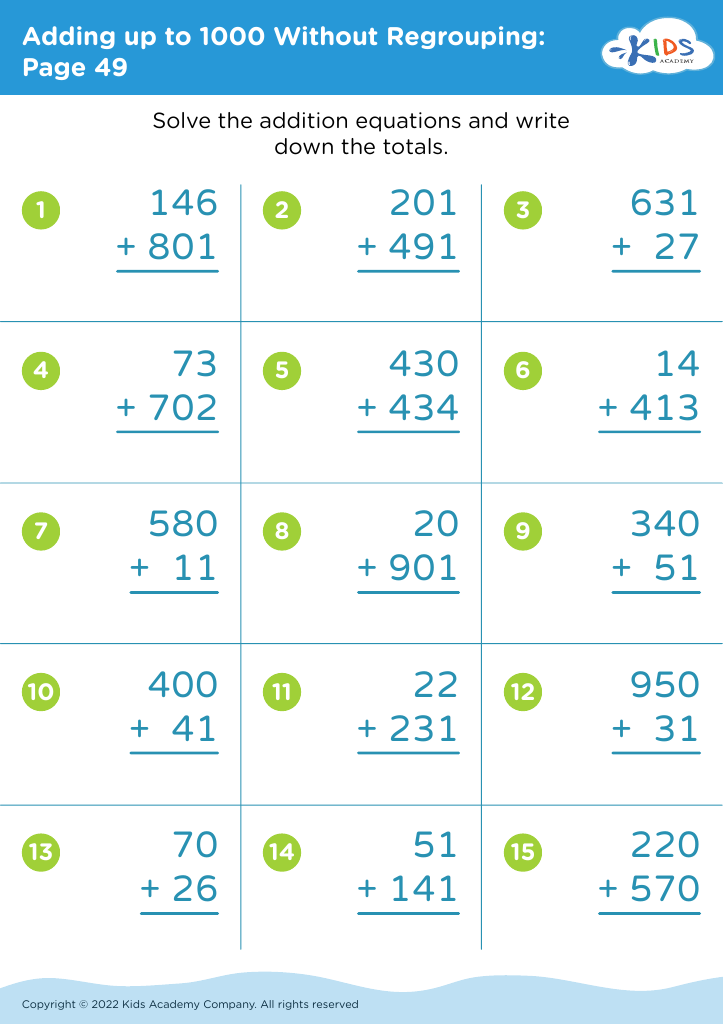
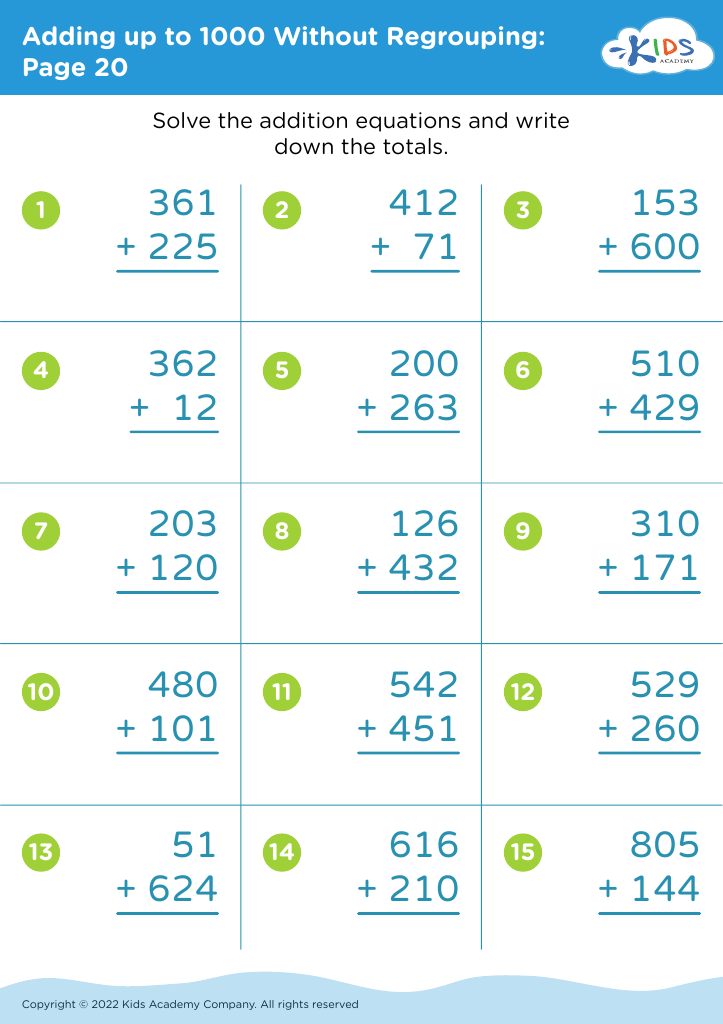
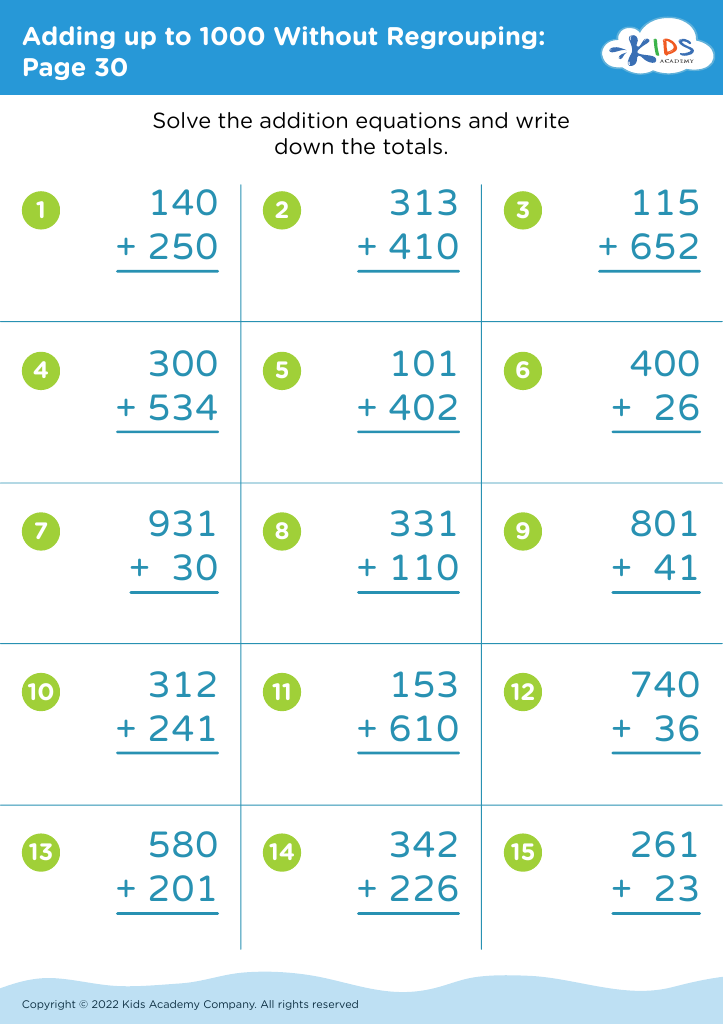
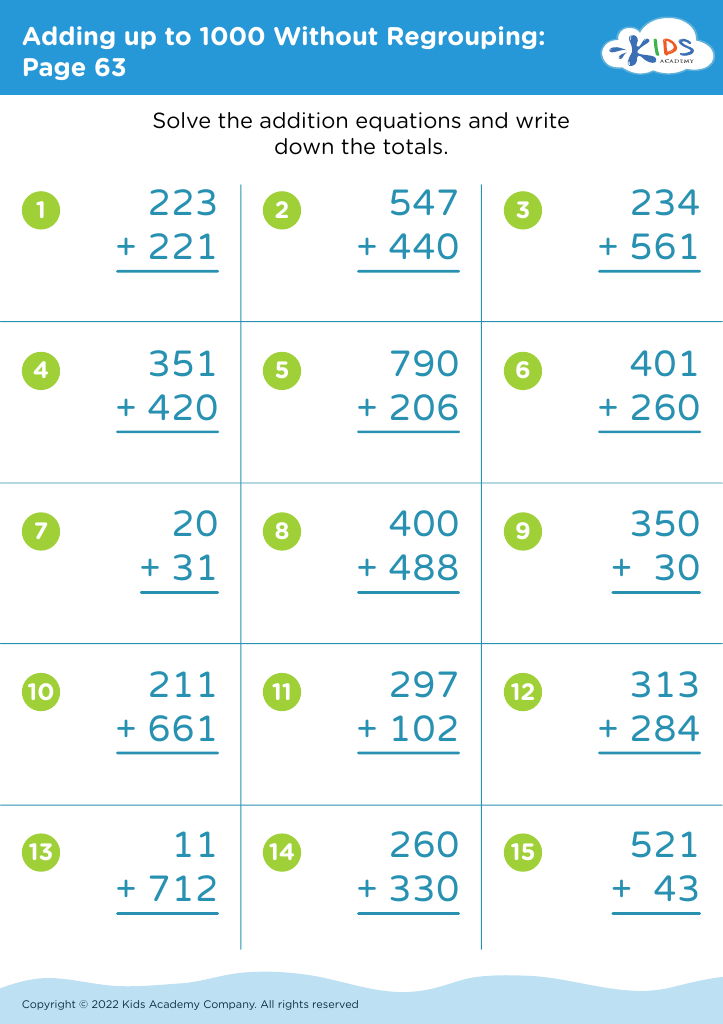
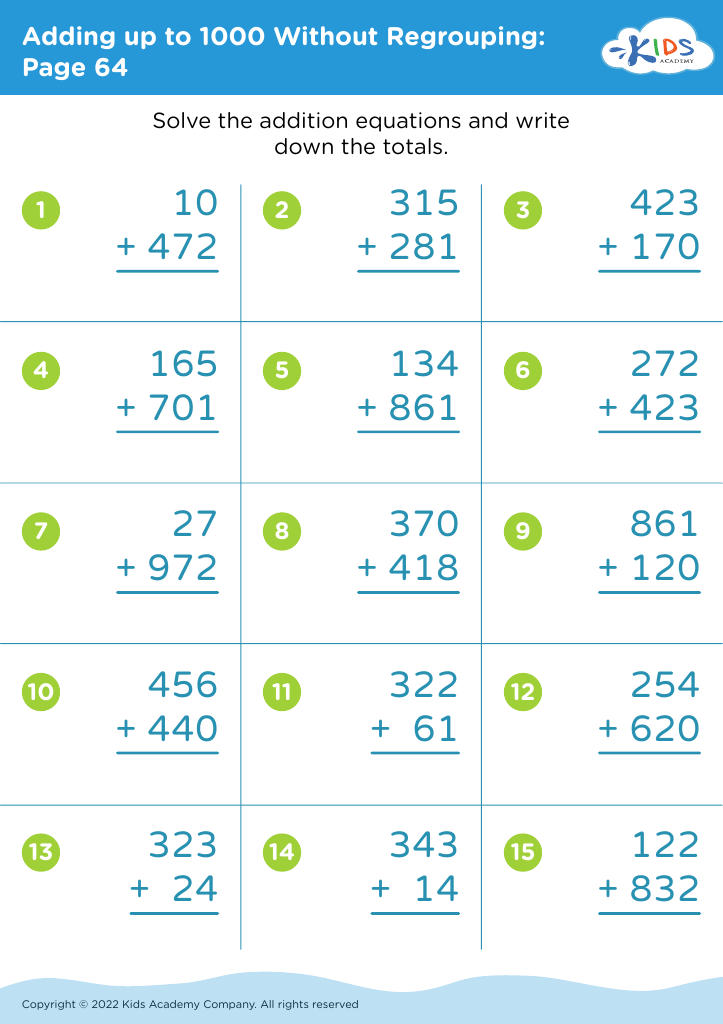
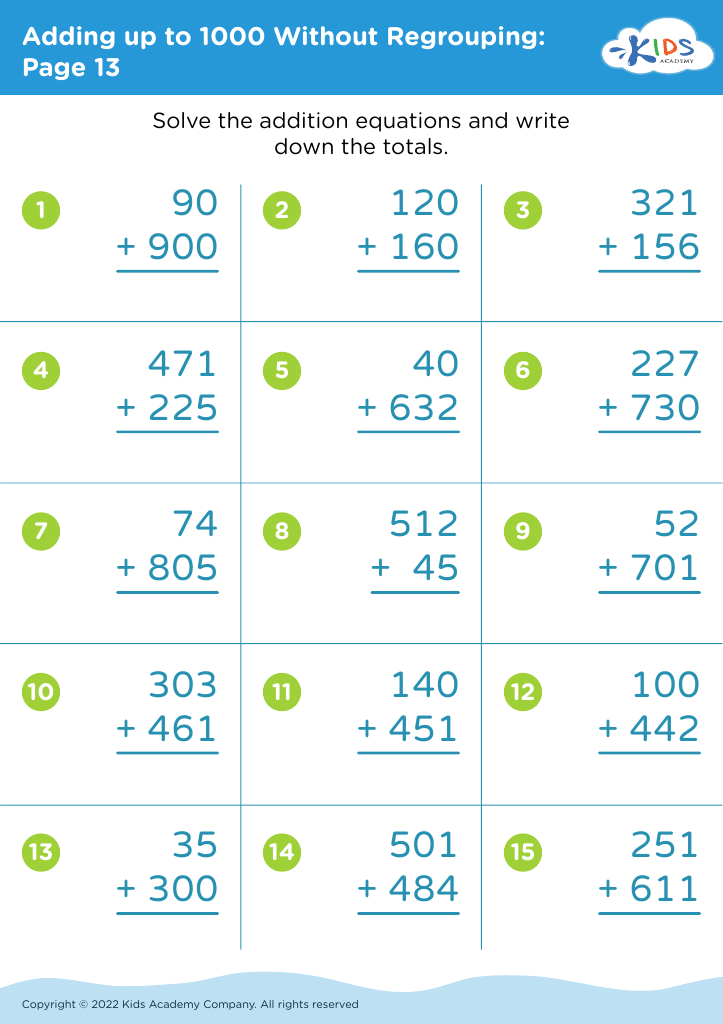
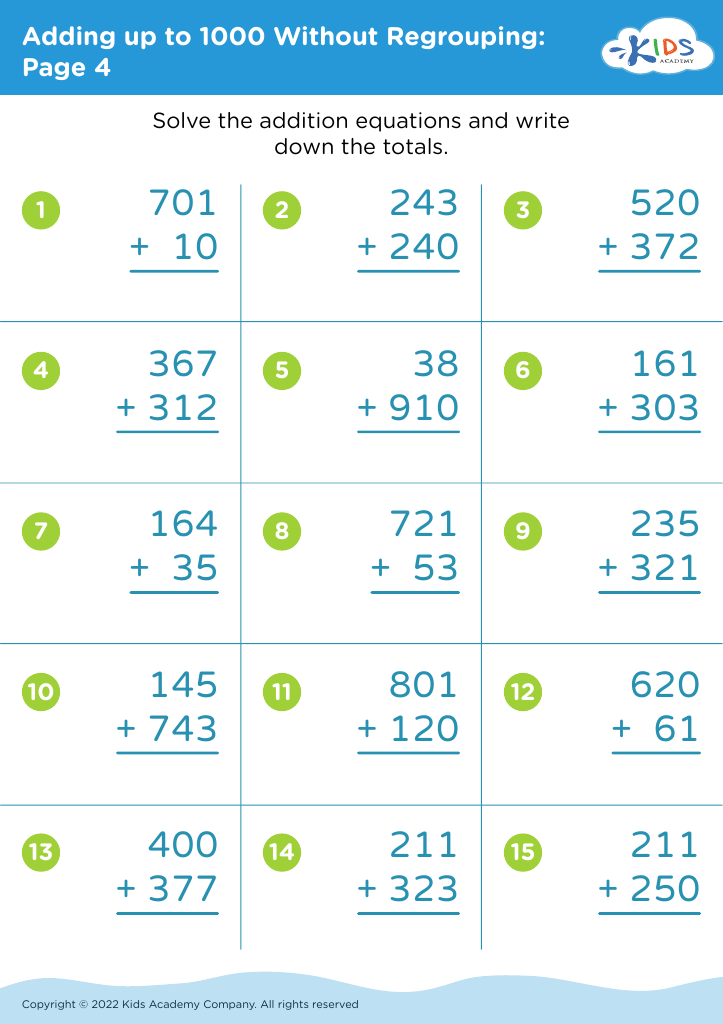
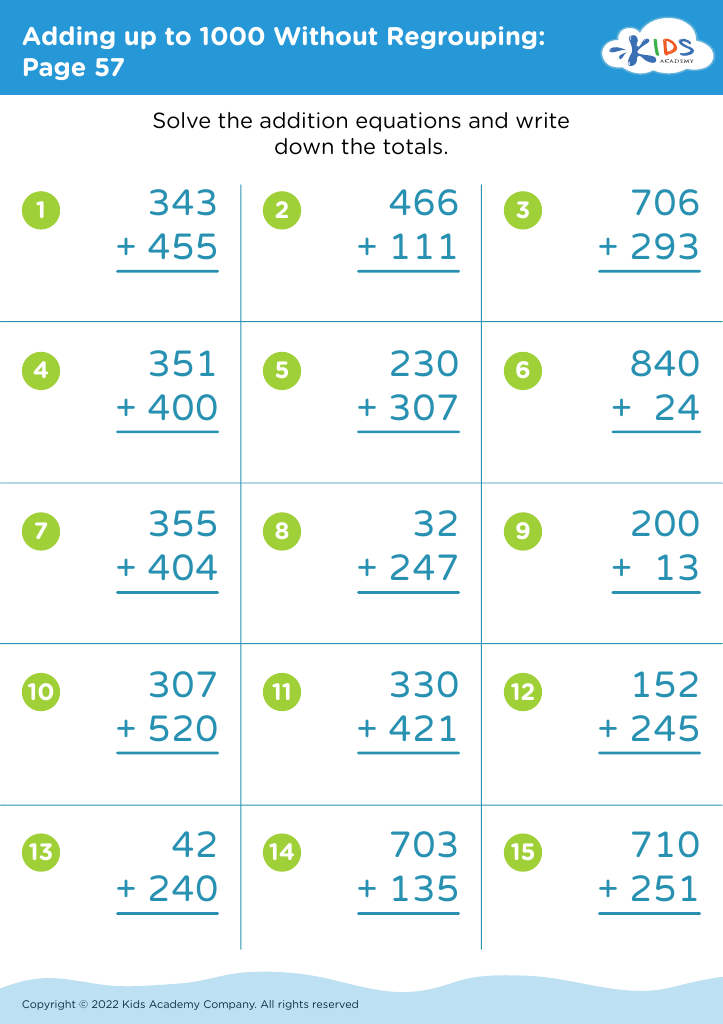
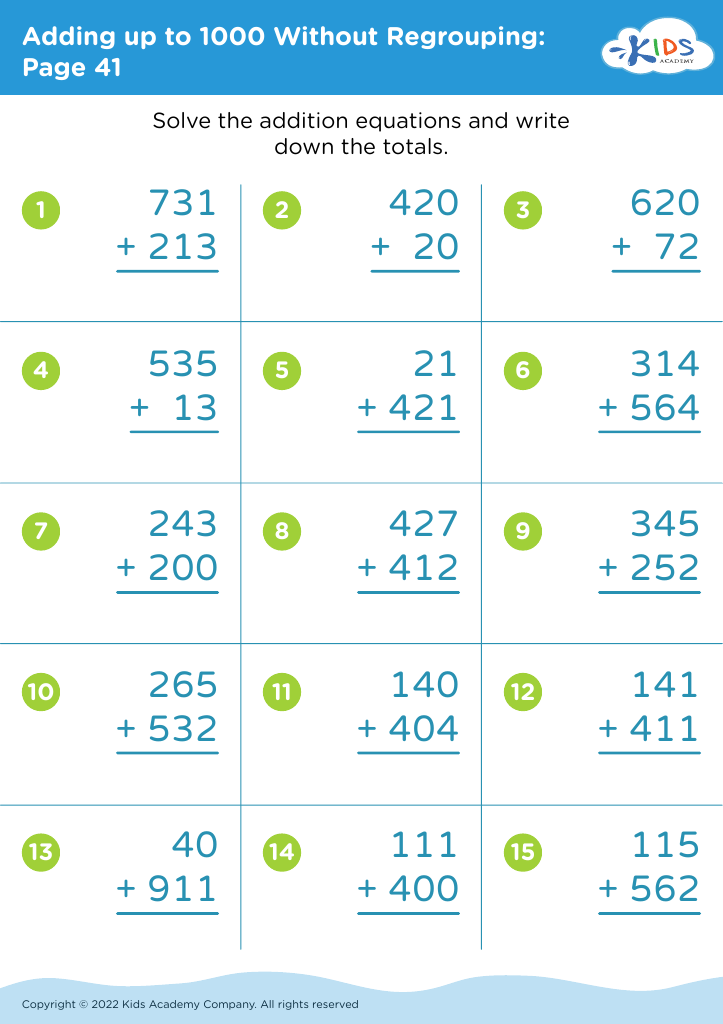
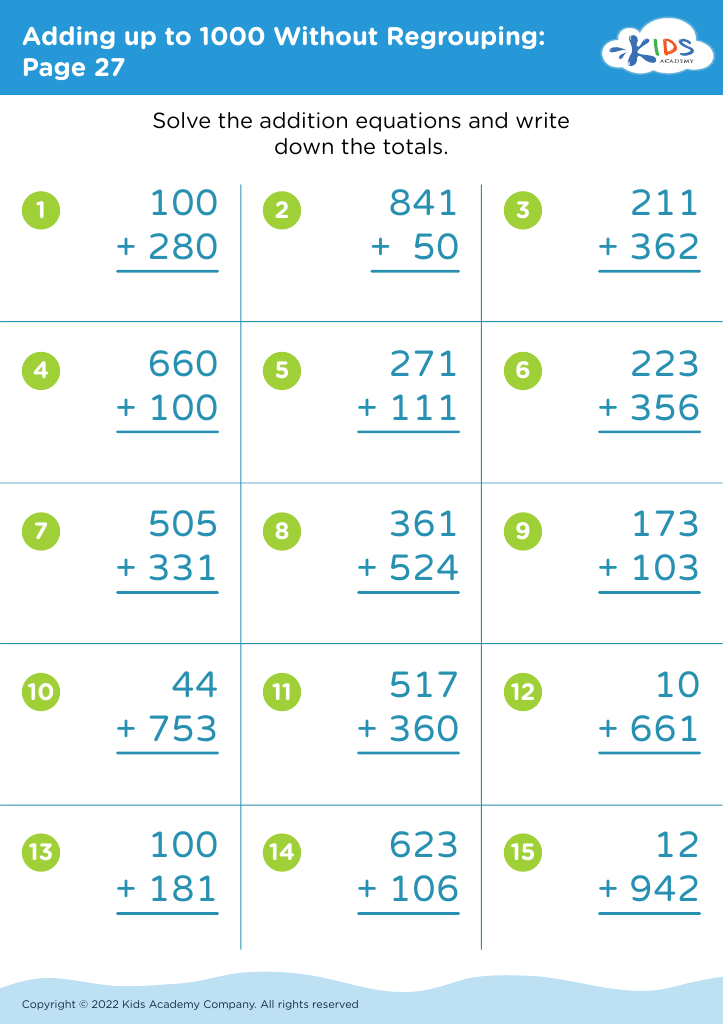
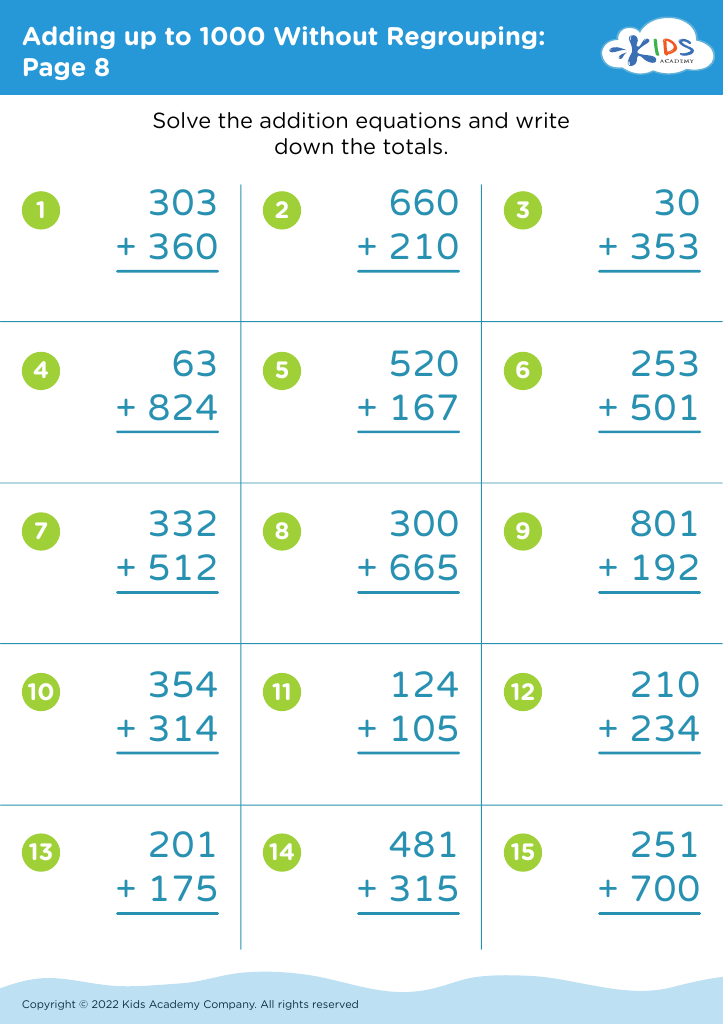
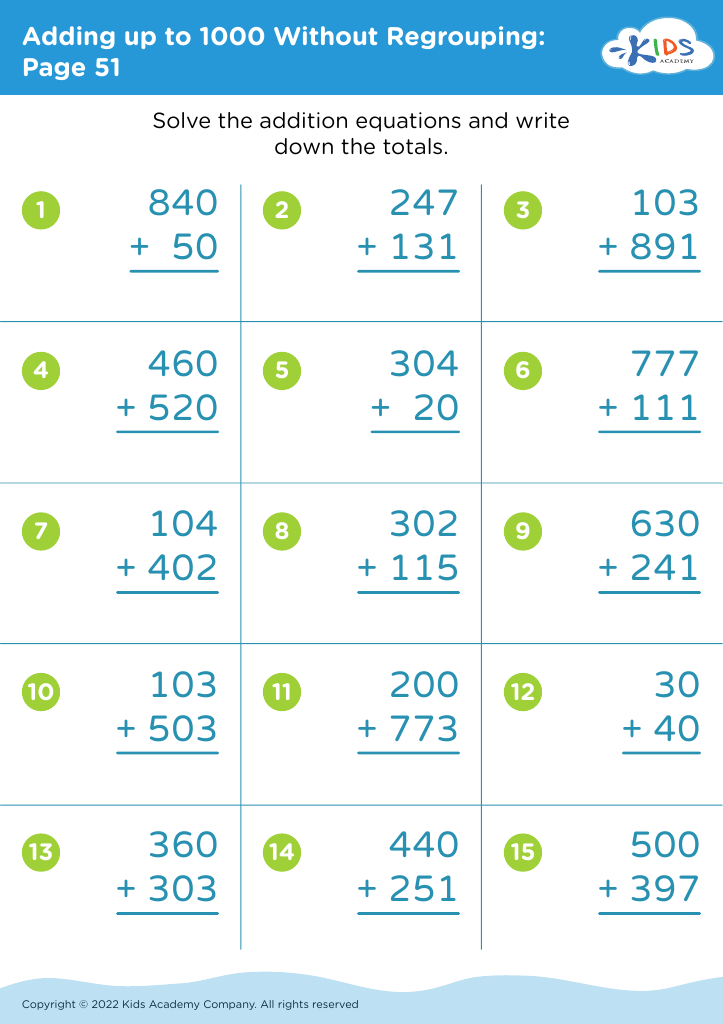
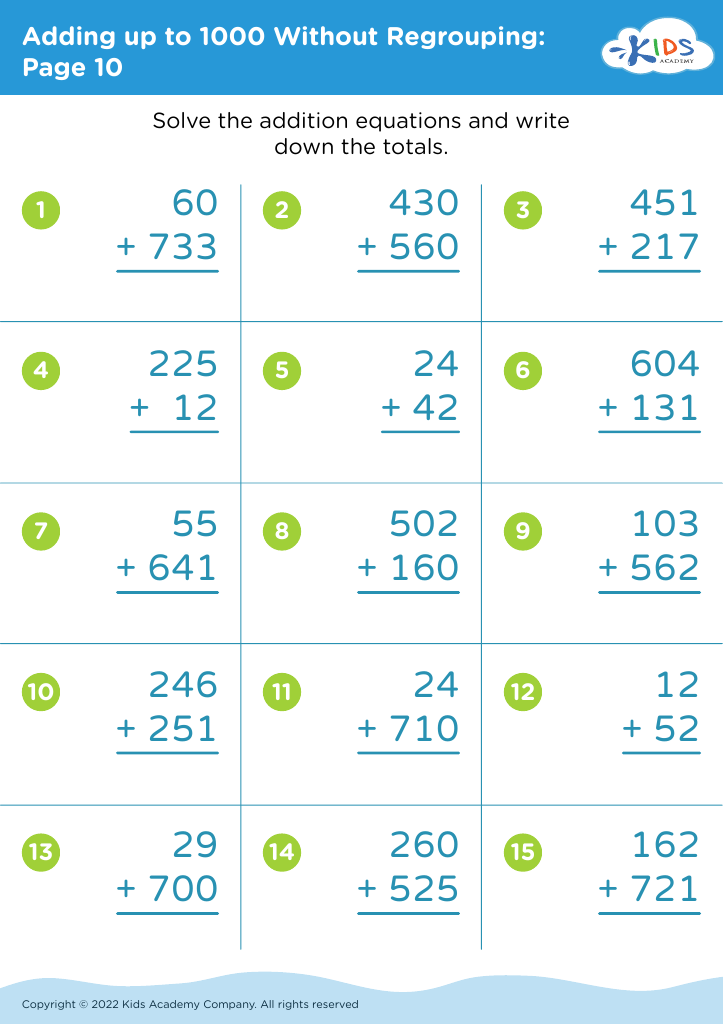
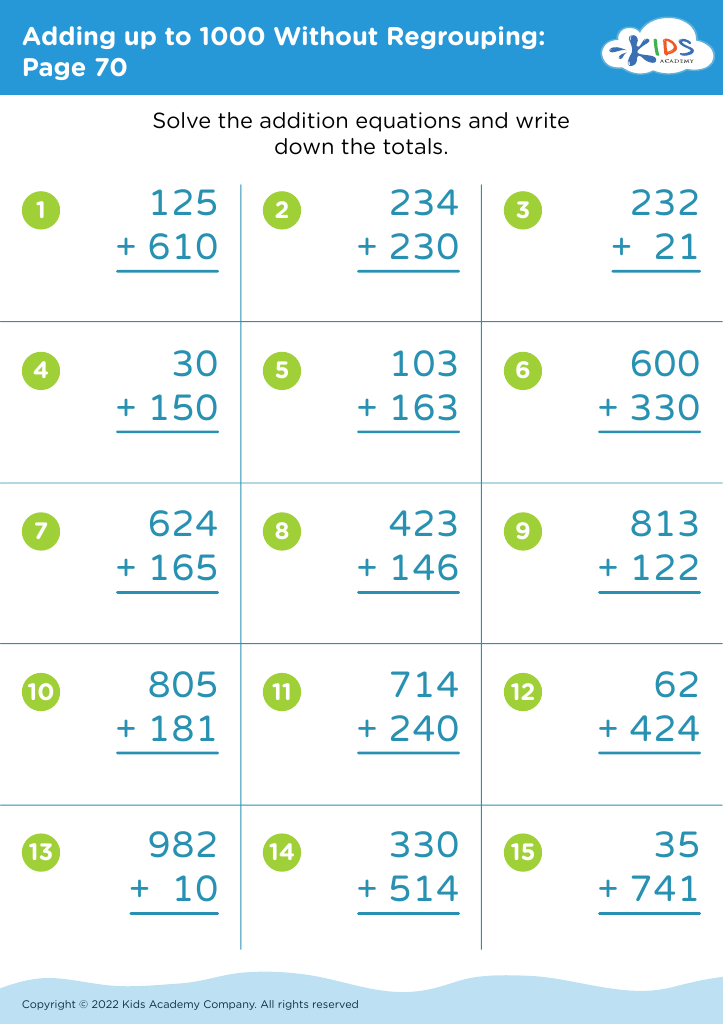
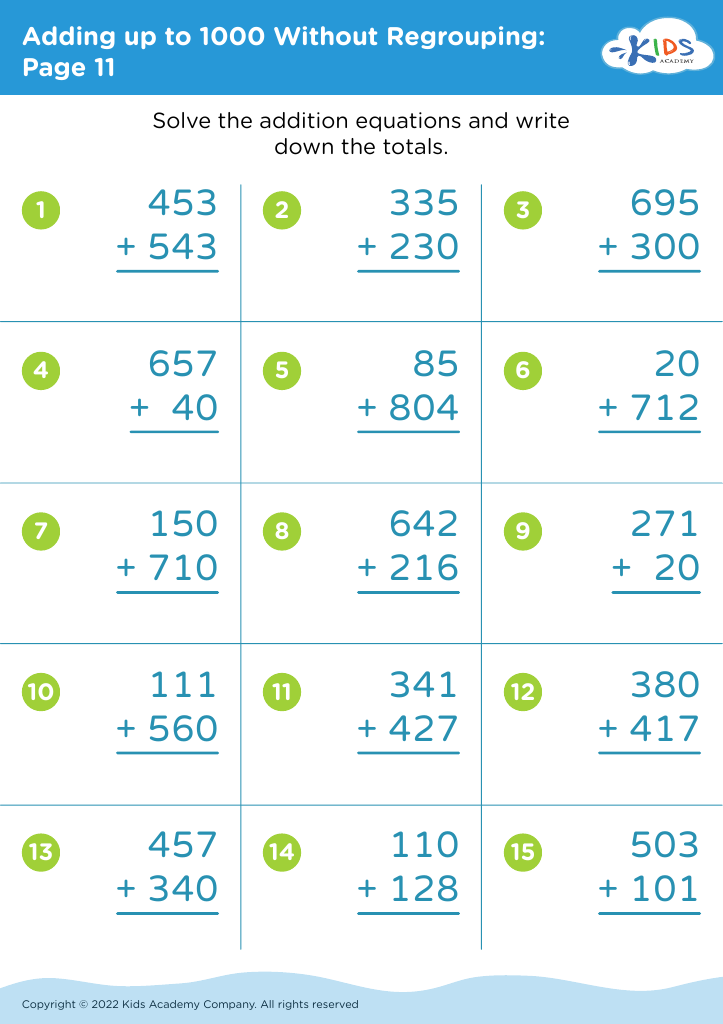
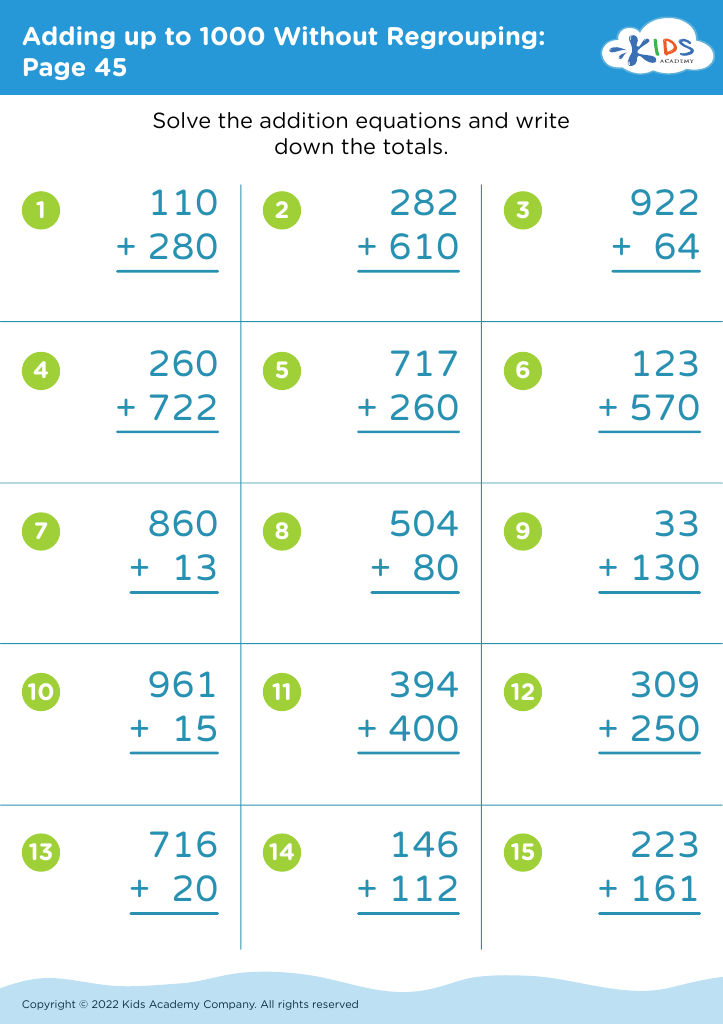
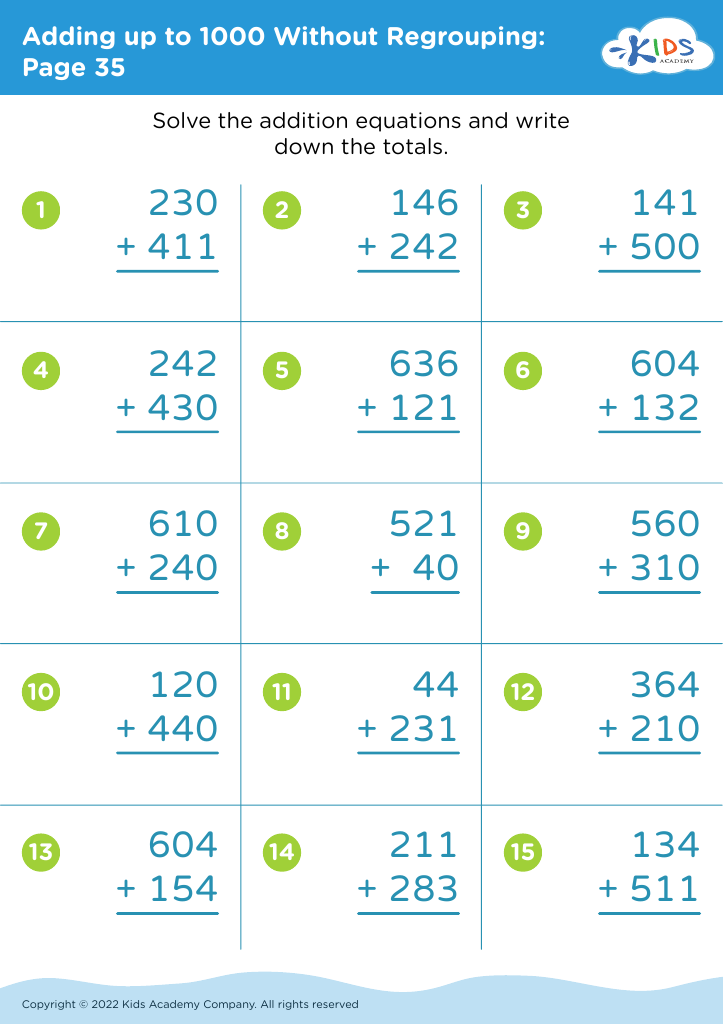
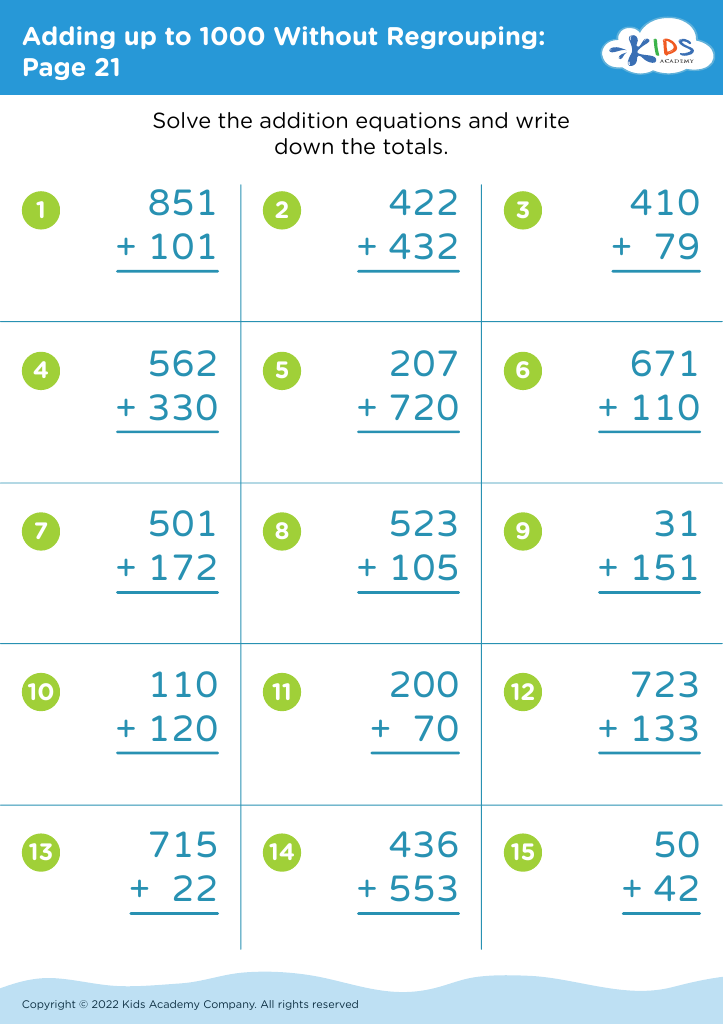
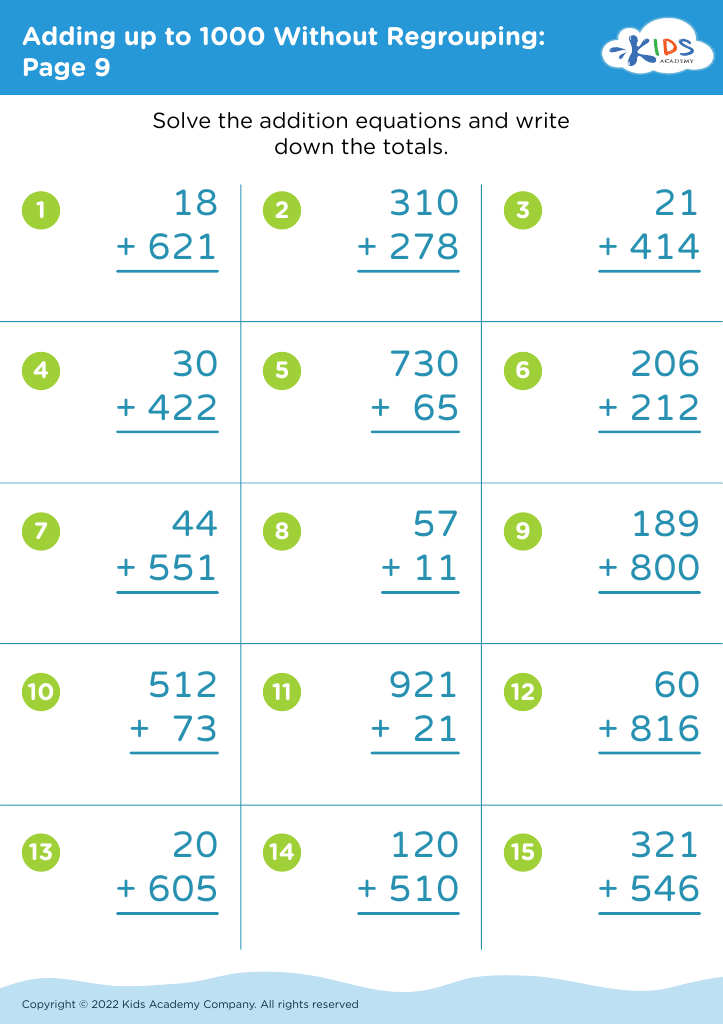
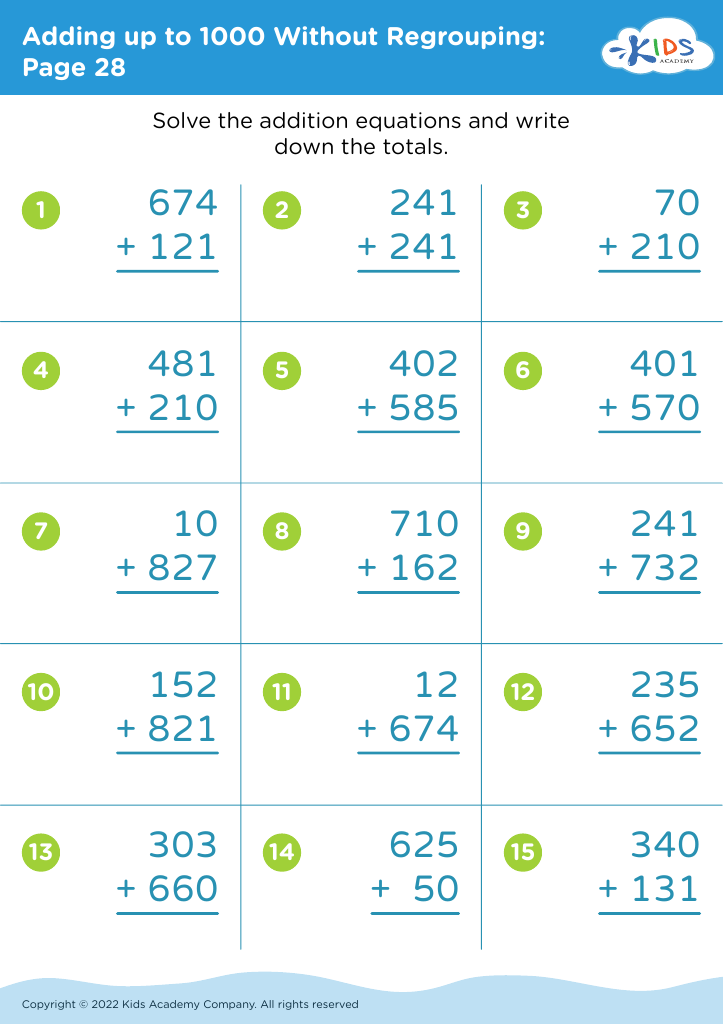
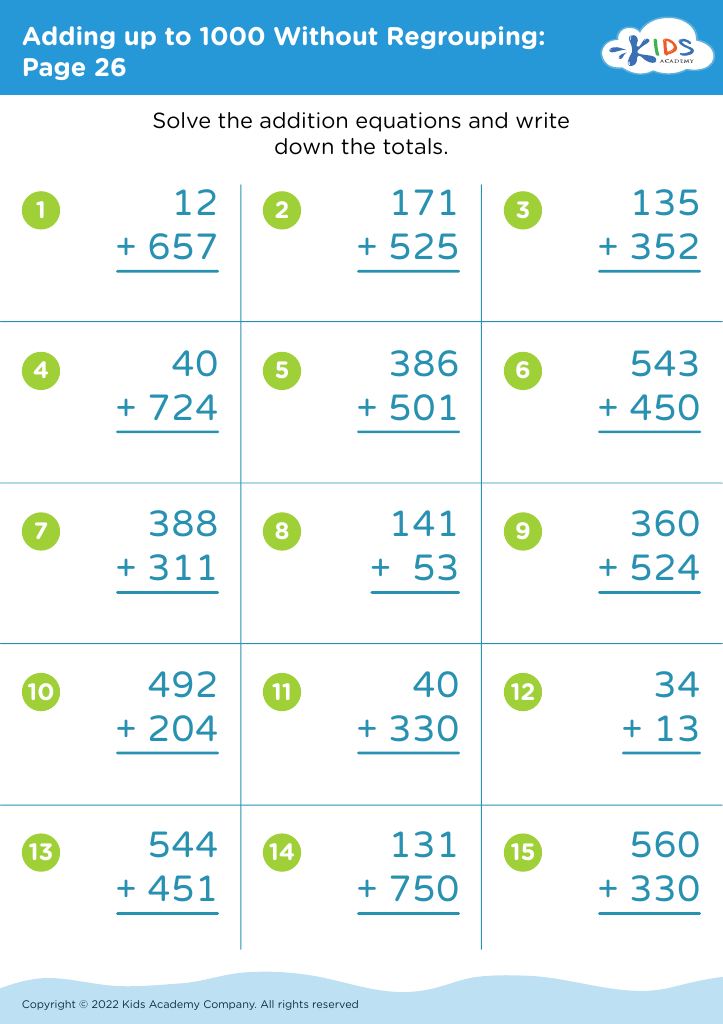
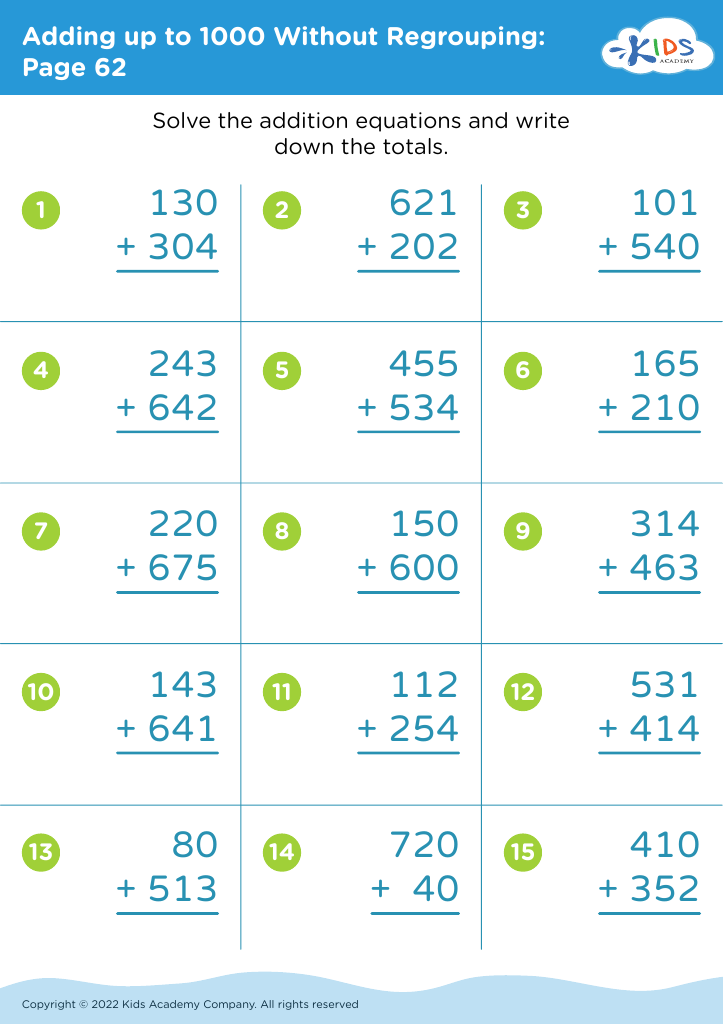
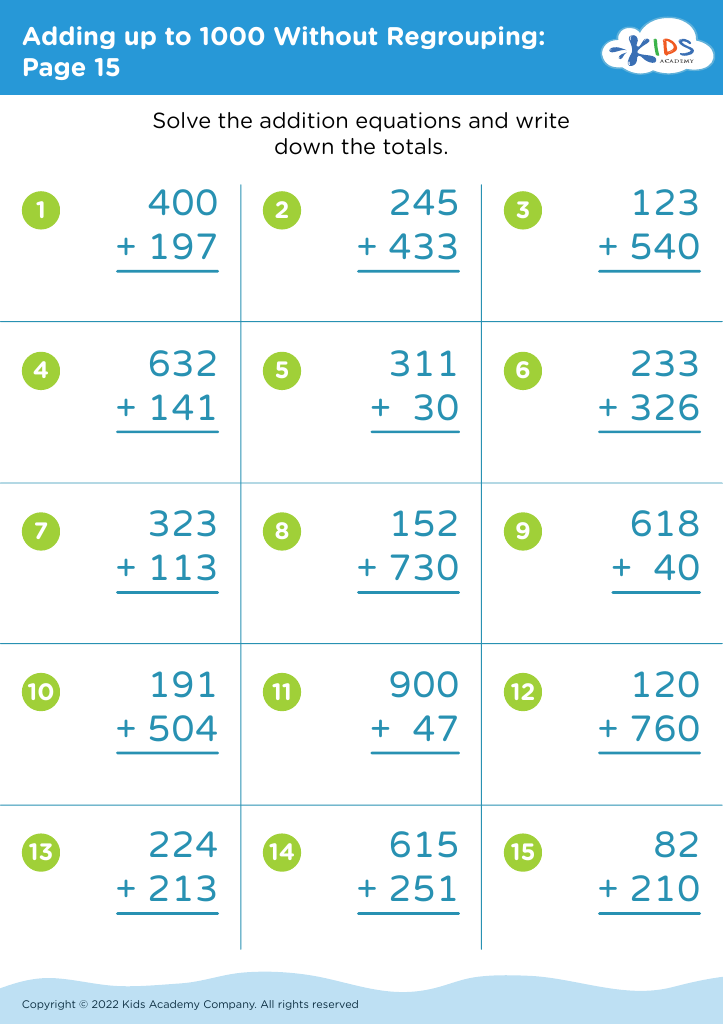
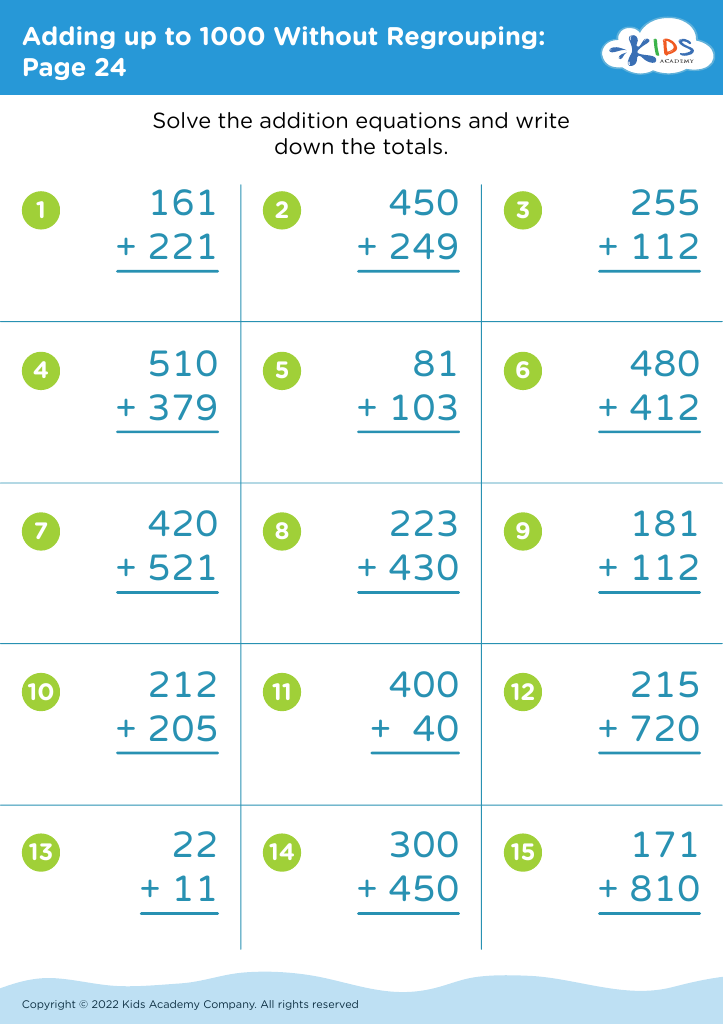



Understanding how to add up to 1000 without regrouping is fundamental for children aged 4 to 7, establishing a solid mathematical foundation. During these formative years, students develop critical thinking and problem-solving skills, which are essential for their overall cognitive development. Mastery of basic arithmetic reinforces their number sense and helps them understand place value, making future learning in mathematics more accessible.
Additionally, engaging in exercises that involve adding numbers to 1000 without regrouping enhances mental math abilities, allowing children to perform calculations more swiftly and accurately. Such foundational competencies are crucial for daily life situations and future academic success, as they encourage confidence in their numerical skills.
Furthermore, parents and teachers can use interactive and playful methods, making learning enjoyable and effective. This not only fosters a positive attitude towards math but also aids in nurturing essential persistence and resilience as children tackle challenges. Moreover, consistent practice aids memory retention and fluency, laying the groundwork necessary for more complex mathematical concepts children will encounter later. Therefore, advocating for and integrating practices that enhance addition skills in early education can have lasting impacts on a child's academic journey.