Filters

219 filtered results

Clear all filters
Favorites
With answer key
Interactive

219 filtered results

Difficulty Level

Grade


Subject

    Check out this FREE Trial Lesson on Adding up to 50 for age 4-7!

    Sorting Objects into 3 Categories

    Favorites
    With answer key
    Interactive
    • 4-7
    • Adding up to 50
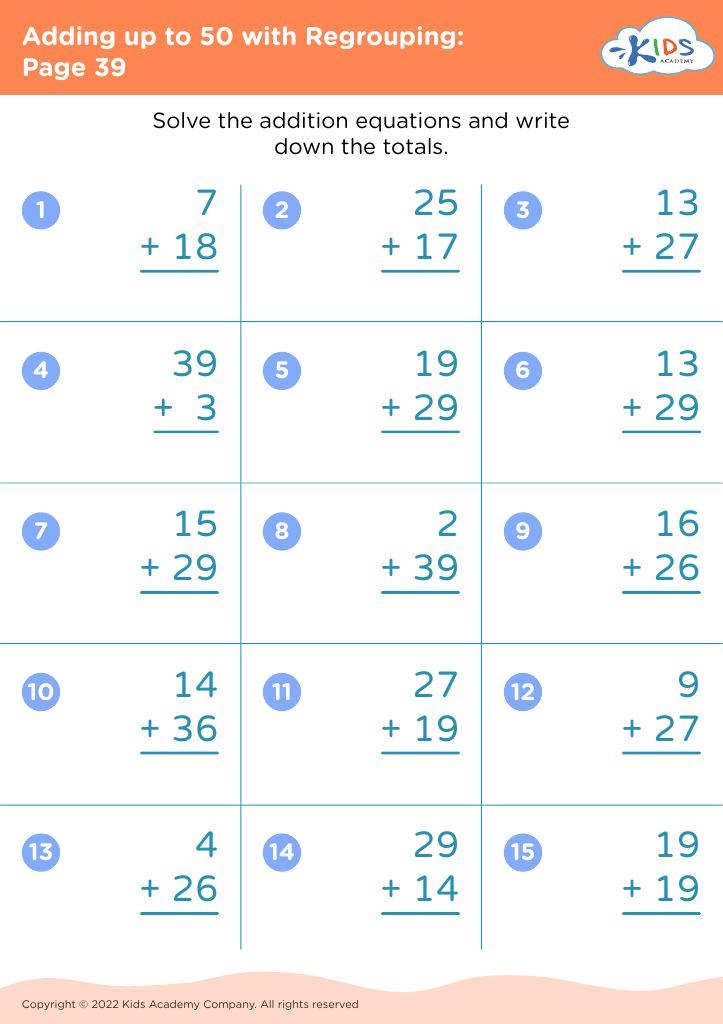
    Adding up to 50 with Regrouping: Page 39
    Adding up to 50 with Regrouping: Page 39
    Adding up to 50 with Regrouping: Page 39
    Worksheet
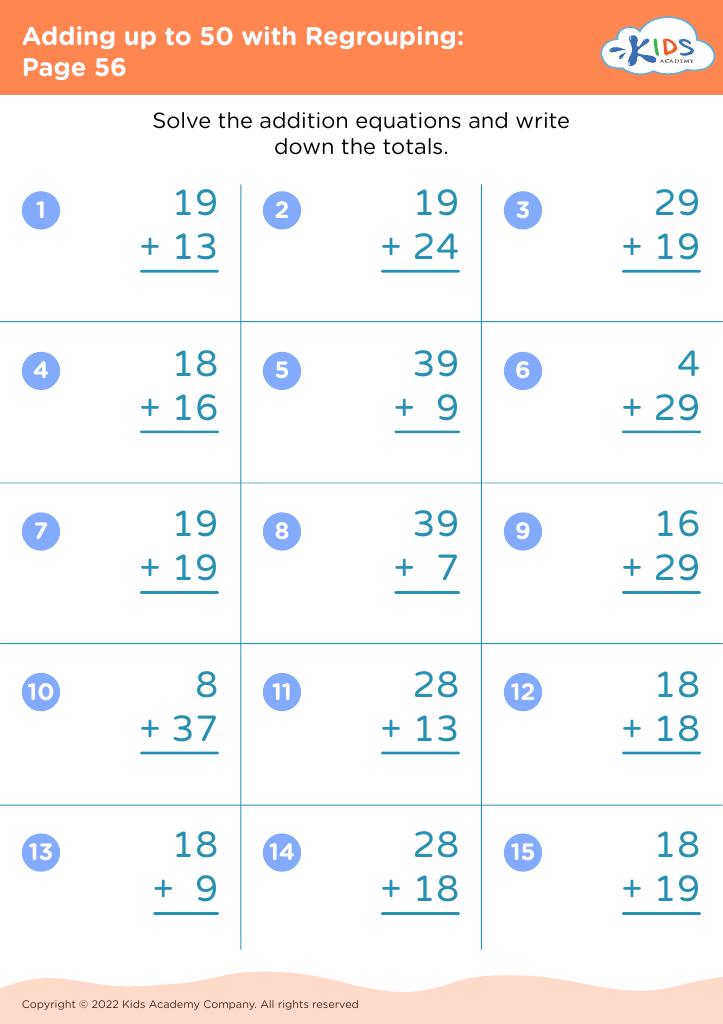
    Adding up to 50 with Regrouping: Page 56
    Adding up to 50 with Regrouping: Page 56
    Adding up to 50 with Regrouping: Page 56
    Worksheet
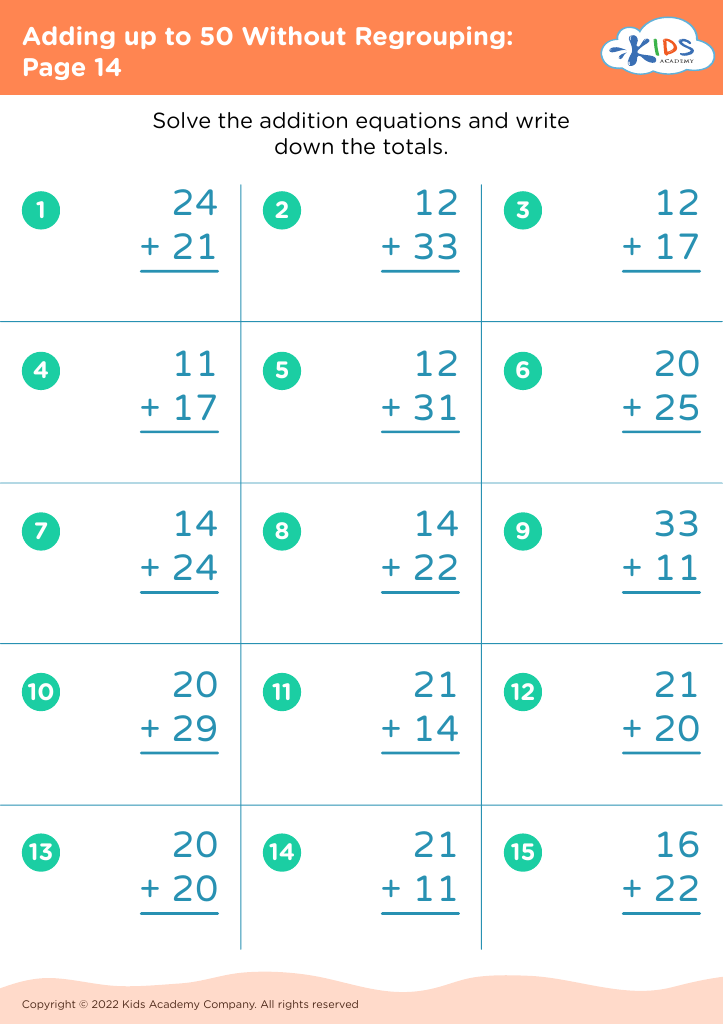
    Adding up to 50 Without Regrouping: Page 14
    Adding up to 50 Without Regrouping: Page 14
    Adding up to 50 Without Regrouping: Page 14
    Worksheet
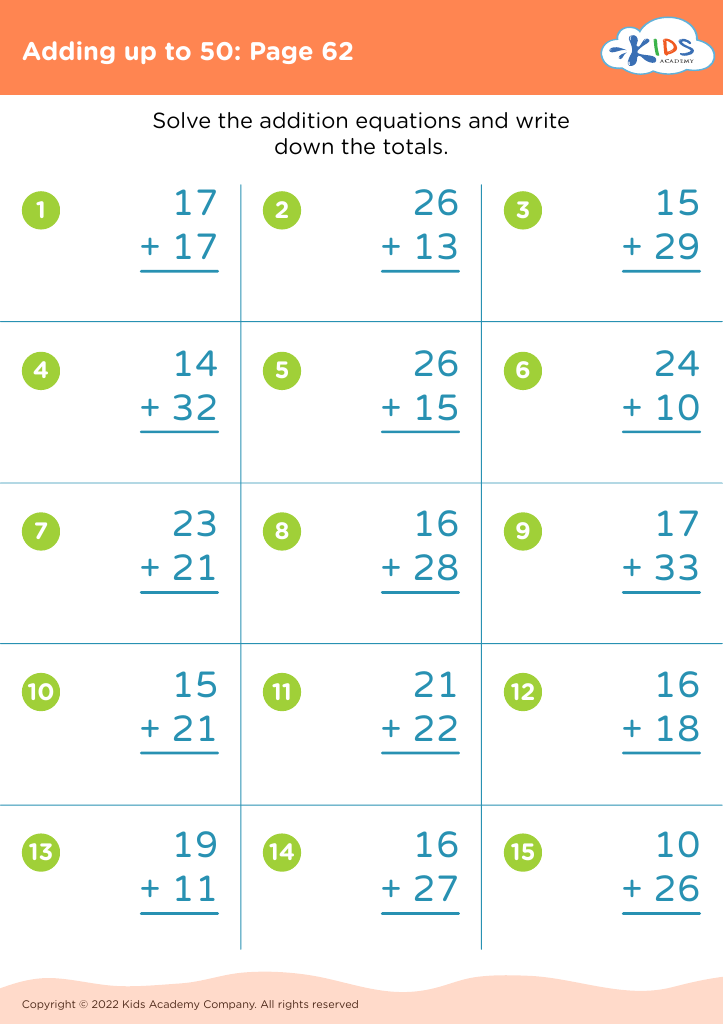
    Adding up to 50: Page 62
    Adding up to 50: Page 62

    Adding up to 50: Page 62

    Adding up to 50: Page 62
    Worksheet
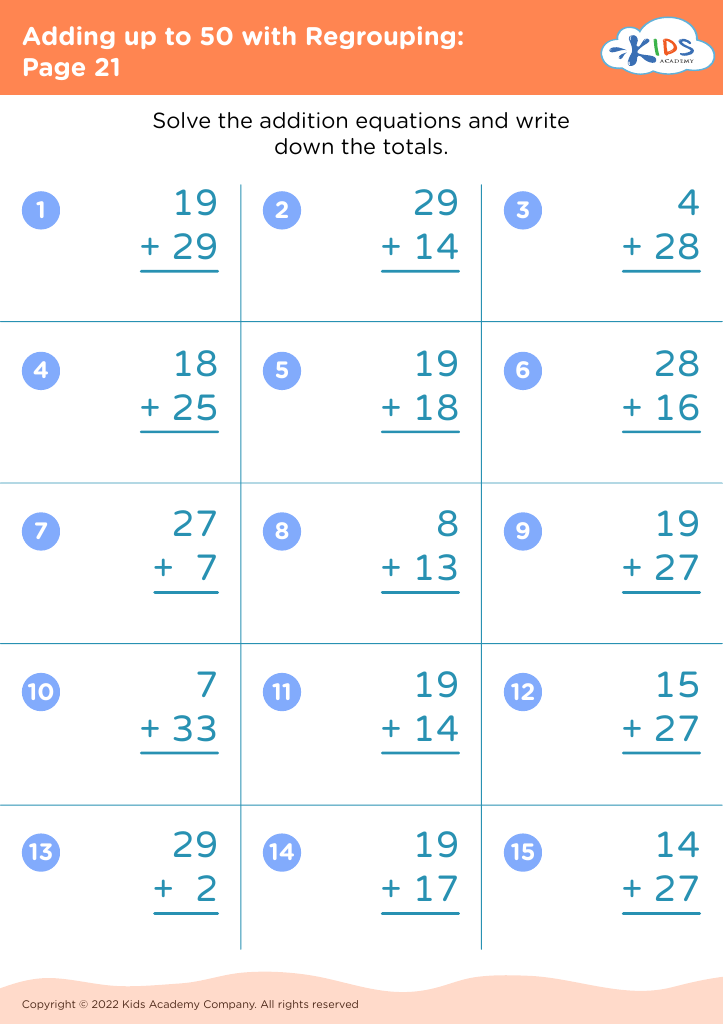
    Adding up to 50 with Regrouping: Page 21
    Adding up to 50 with Regrouping: Page 21
    Adding up to 50 with Regrouping: Page 21
    Worksheet
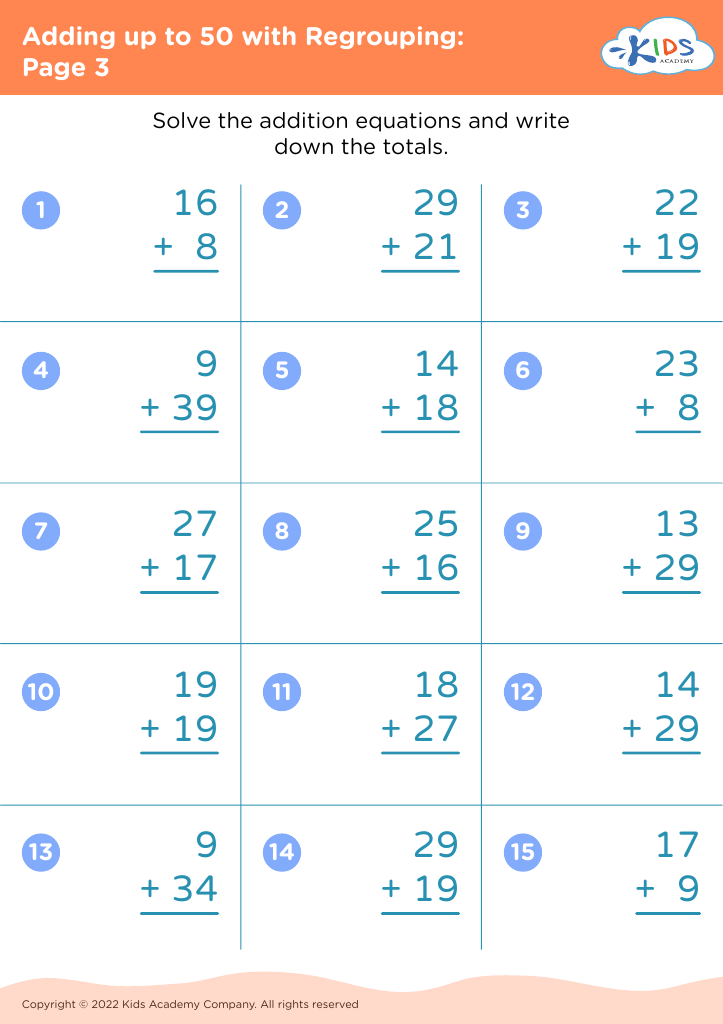
    Adding up to 50 with Regrouping: Page 3
    Adding up to 50 with Regrouping: Page 3
    Adding up to 50 with Regrouping: Page 3
    Worksheet
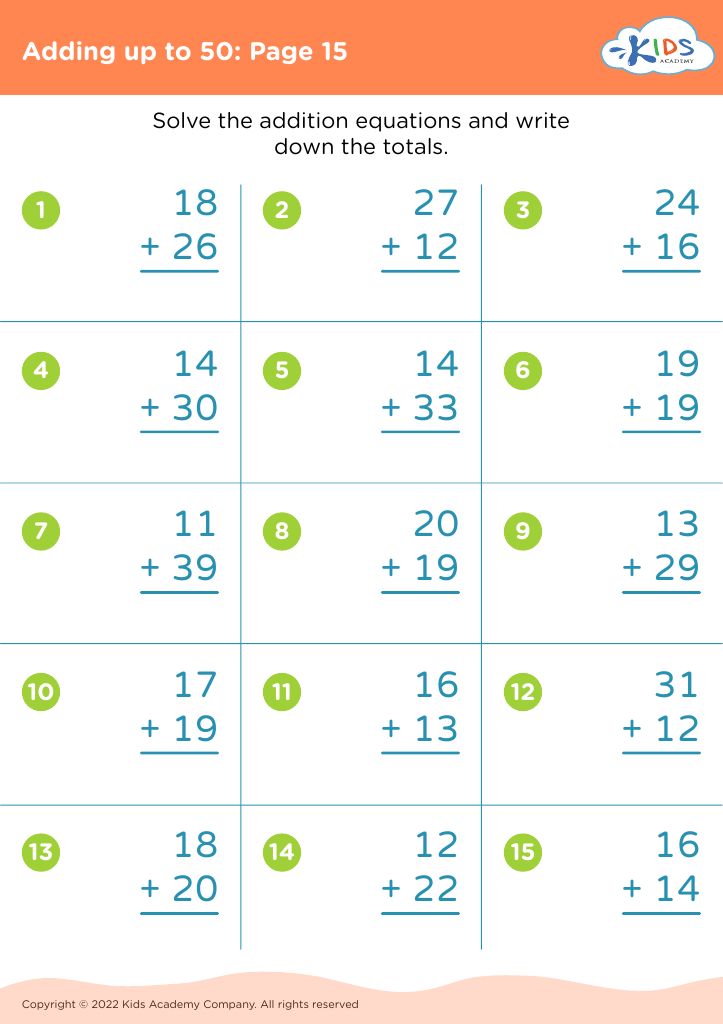
    Adding up to 50: Page 15
    Adding up to 50: Page 15

    Adding up to 50: Page 15

    Adding up to 50: Page 15
    Worksheet
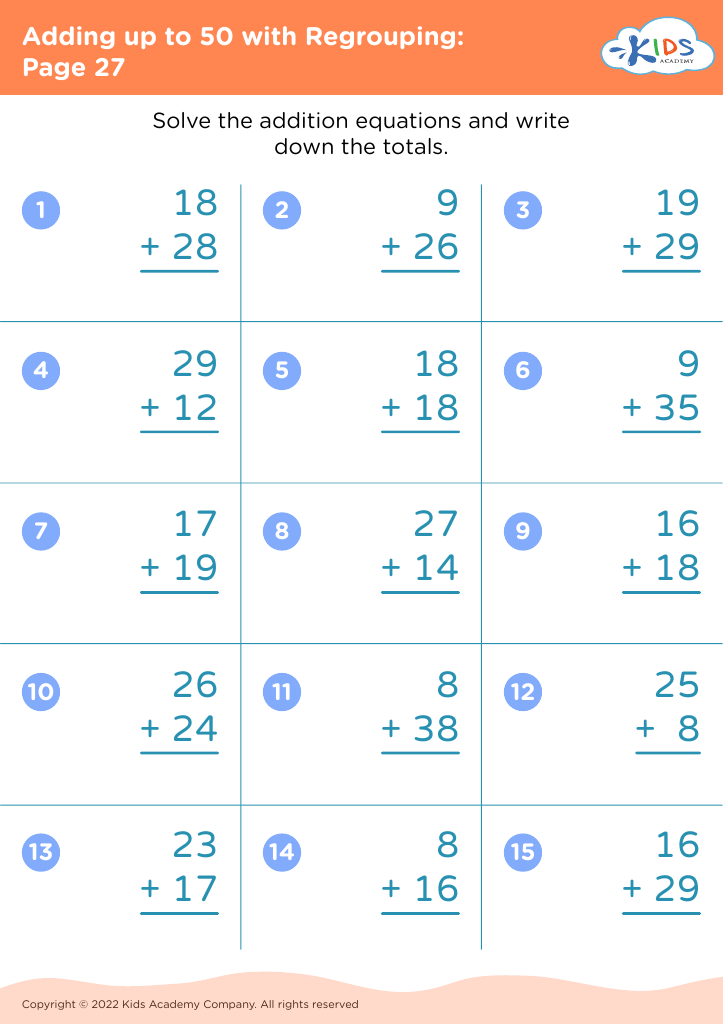
    Adding up to 50 with Regrouping: Page 27
    Adding up to 50 with Regrouping: Page 27
    Adding up to 50 with Regrouping: Page 27
    Worksheet
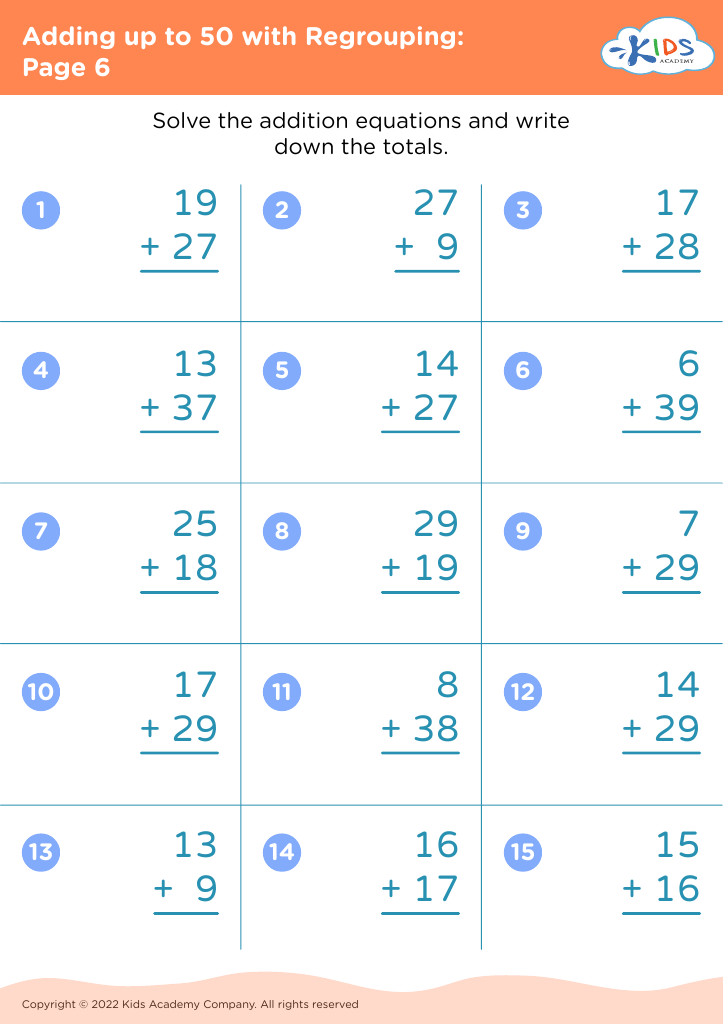
    Adding up to 50 with Regrouping: Page 6
    Adding up to 50 with Regrouping: Page 6
    Adding up to 50 with Regrouping: Page 6
    Worksheet
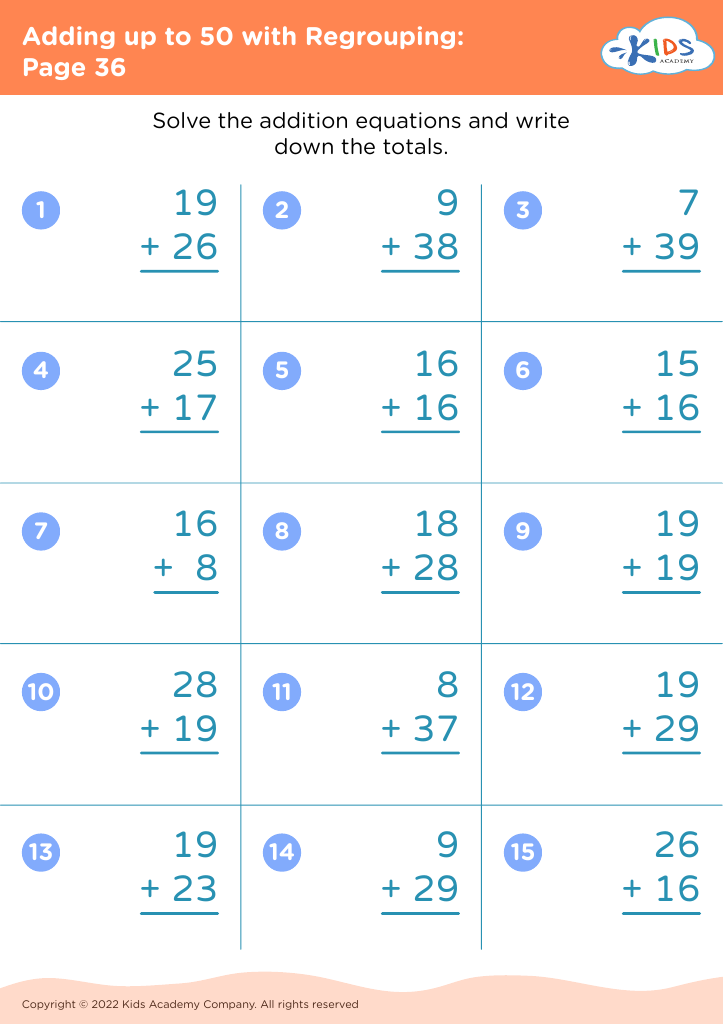
    Adding up to 50 with Regrouping: Page 36
    Adding up to 50 with Regrouping: Page 36
    Adding up to 50 with Regrouping: Page 36
    Worksheet
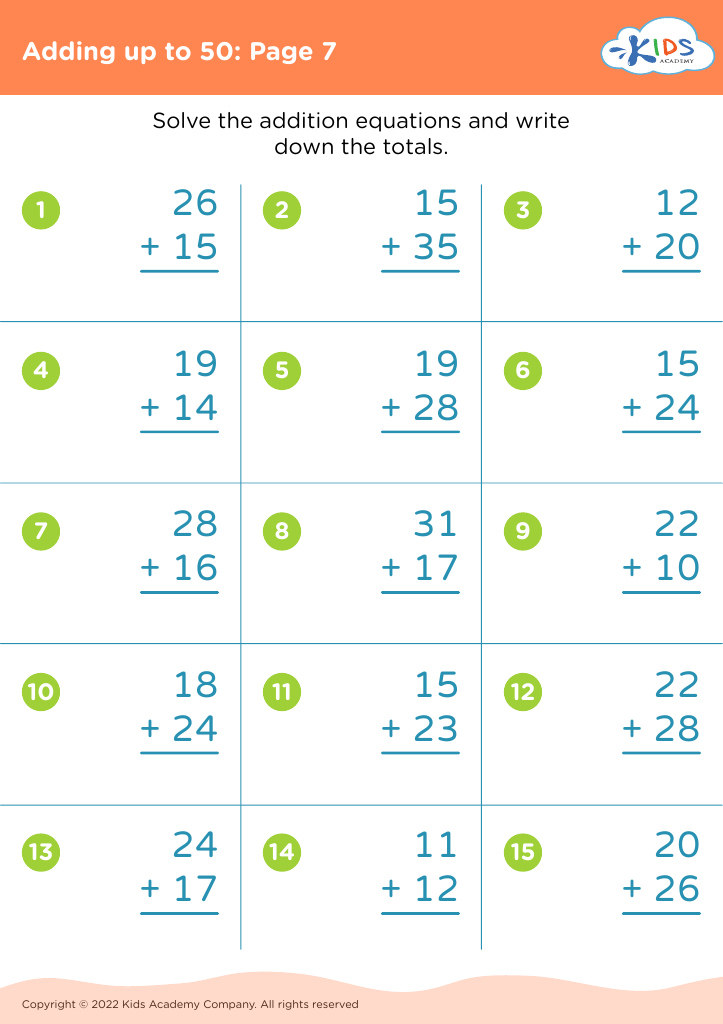
    Adding up to 50: Page 7
    Adding up to 50: Page 7

    Adding up to 50: Page 7

    Adding up to 50: Page 7
    Worksheet
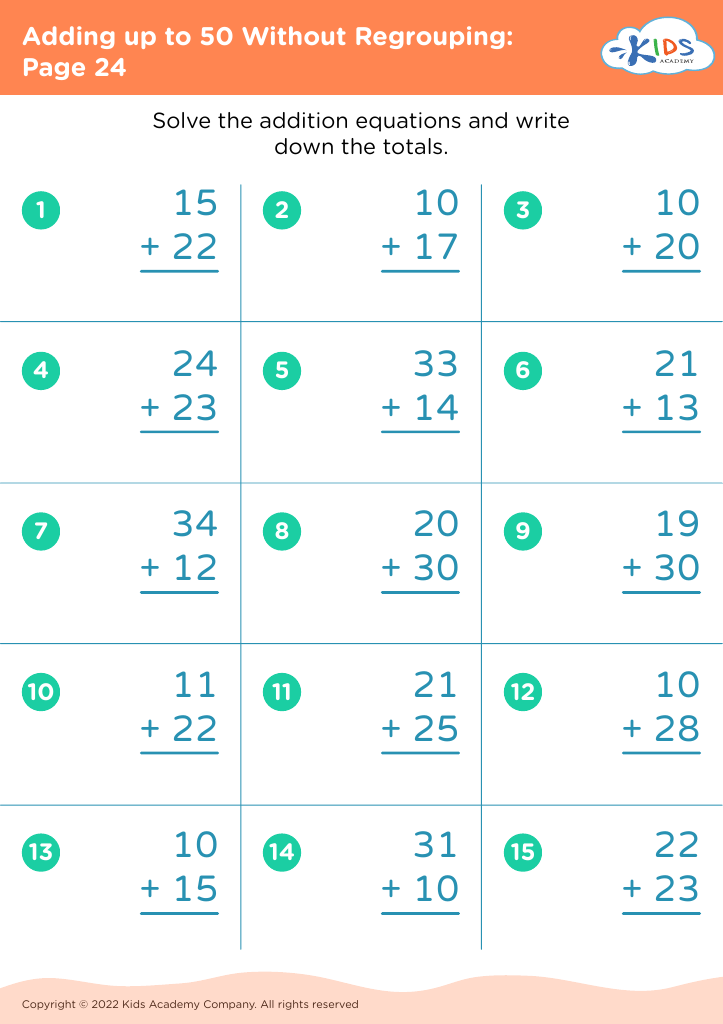
    Adding up to 50 Without Regrouping: Page 24
    Adding up to 50 Without Regrouping: Page 24
    Adding up to 50 Without Regrouping: Page 24
    Worksheet
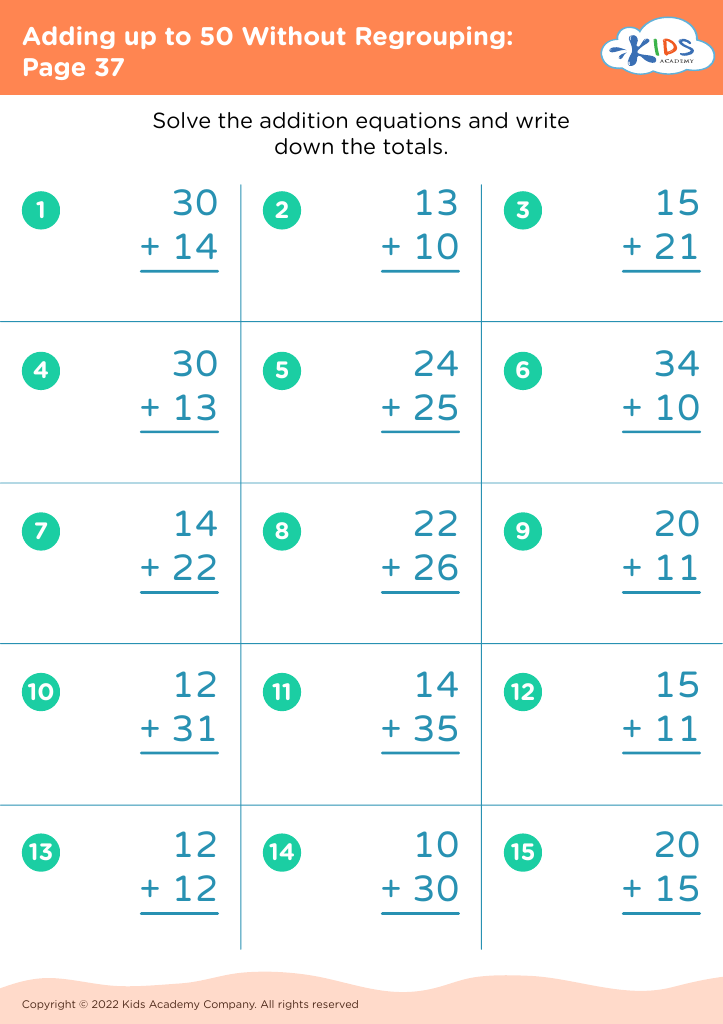
    Adding up to 50 Without Regrouping: Page 37
    Adding up to 50 Without Regrouping: Page 37
    Adding up to 50 Without Regrouping: Page 37
    Worksheet
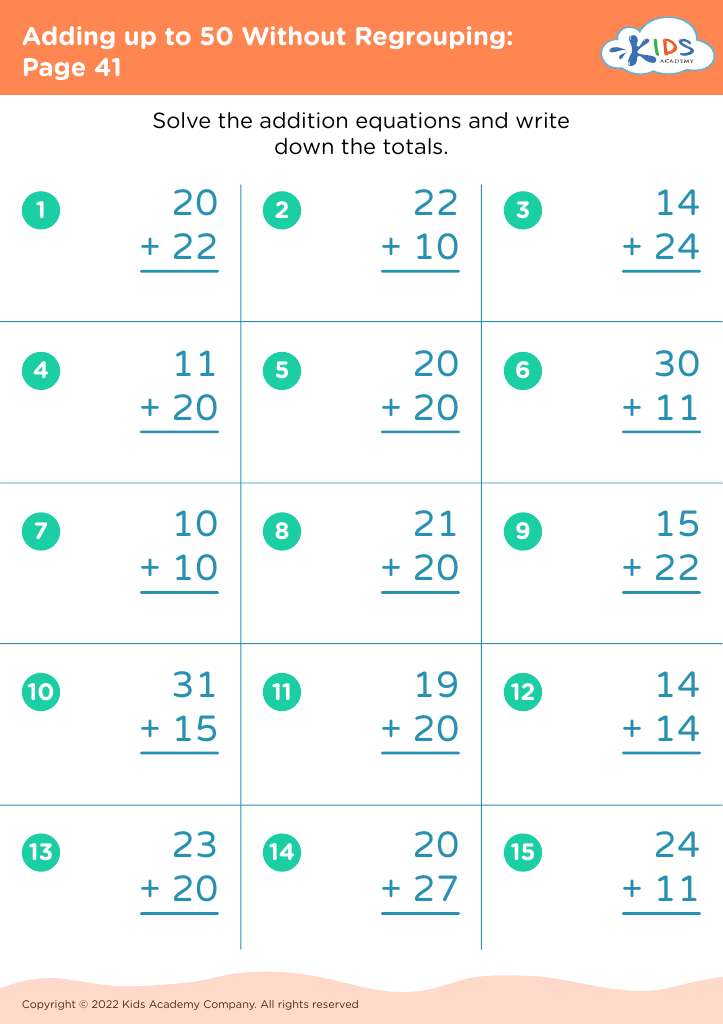
    Adding up to 50 Without Regrouping: Page 41
    Adding up to 50 Without Regrouping: Page 41
    Adding up to 50 Without Regrouping: Page 41
    Worksheet
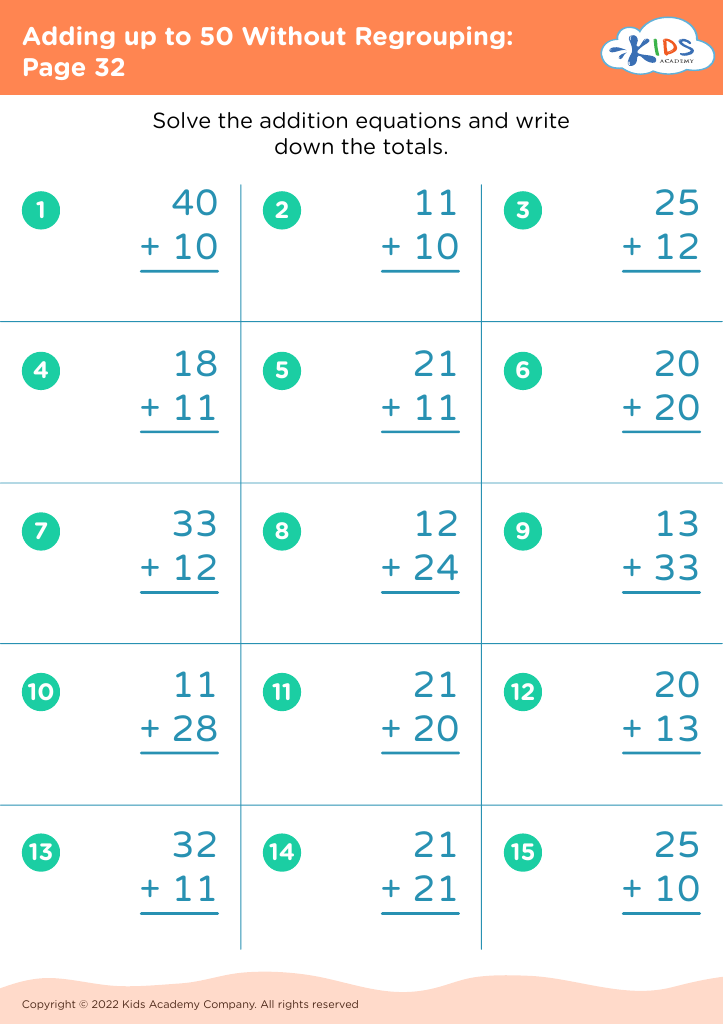
    Adding up to 50 Without Regrouping: Page 32
    Adding up to 50 Without Regrouping: Page 32
    Adding up to 50 Without Regrouping: Page 32
    Worksheet
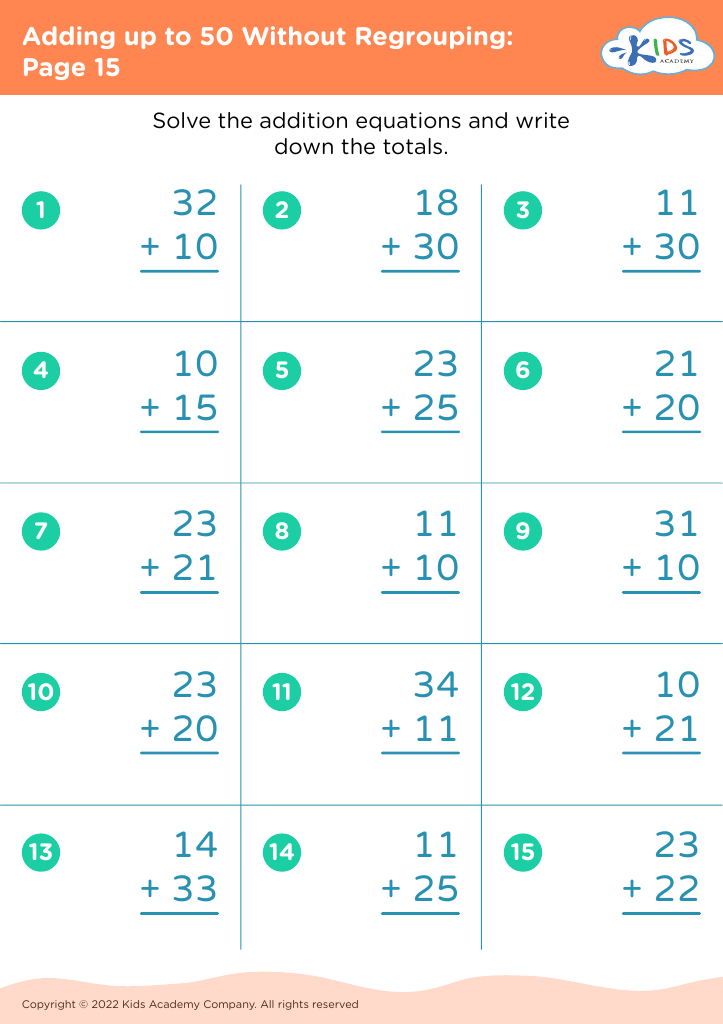
    Adding up to 50 Without Regrouping: Page 15
    Adding up to 50 Without Regrouping: Page 15
    Adding up to 50 Without Regrouping: Page 15
    Worksheet
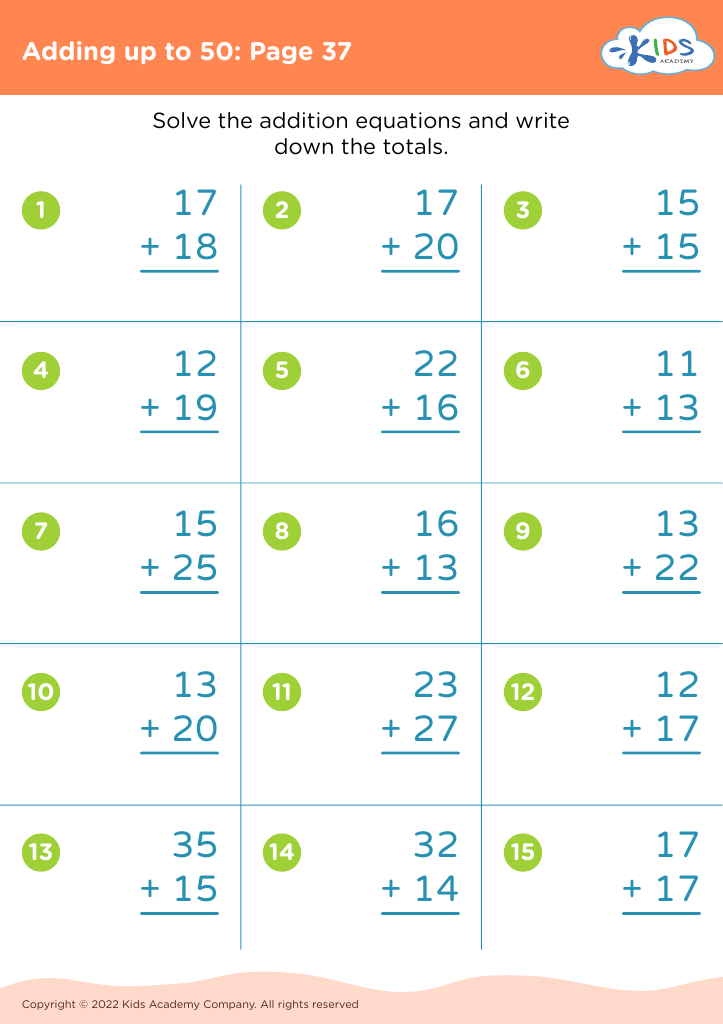
    Adding up to 50: Page 37
    Adding up to 50: Page 37

    Adding up to 50: Page 37

    Adding up to 50: Page 37
    Worksheet
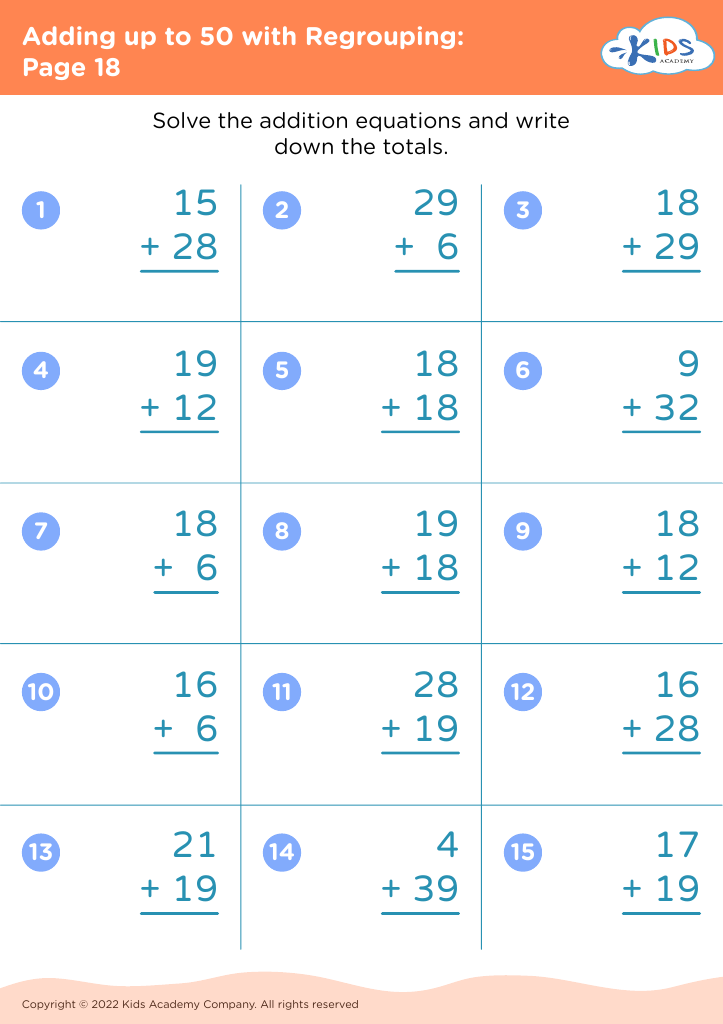
    Adding up to 50 with Regrouping: Page 18
    Adding up to 50 with Regrouping: Page 18
    Adding up to 50 with Regrouping: Page 18
    Worksheet
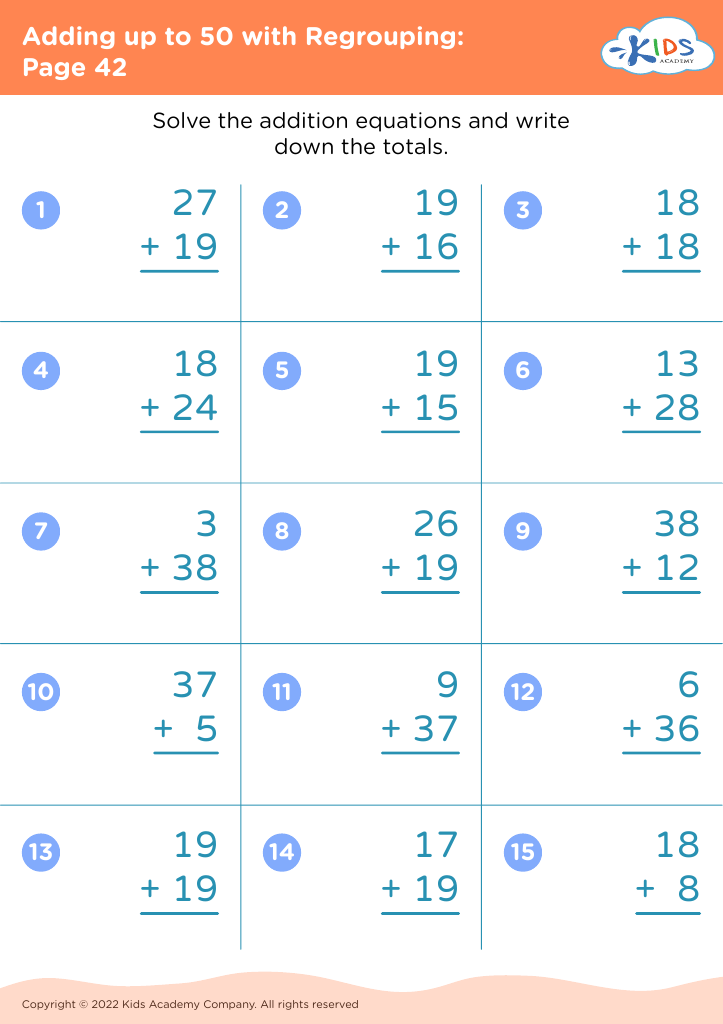
    Adding up to 50 with Regrouping: Page 42
    Adding up to 50 with Regrouping: Page 42
    Adding up to 50 with Regrouping: Page 42
    Worksheet
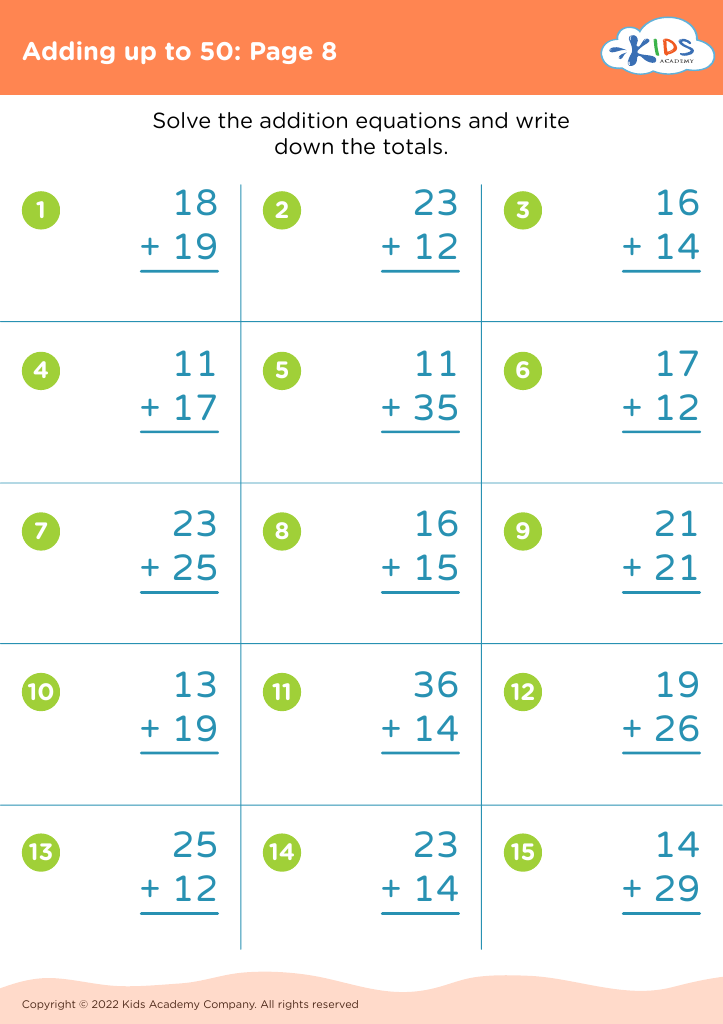
    Adding up to 50: Page 8
    Adding up to 50: Page 8

    Adding up to 50: Page 8

    Adding up to 50: Page 8
    Worksheet
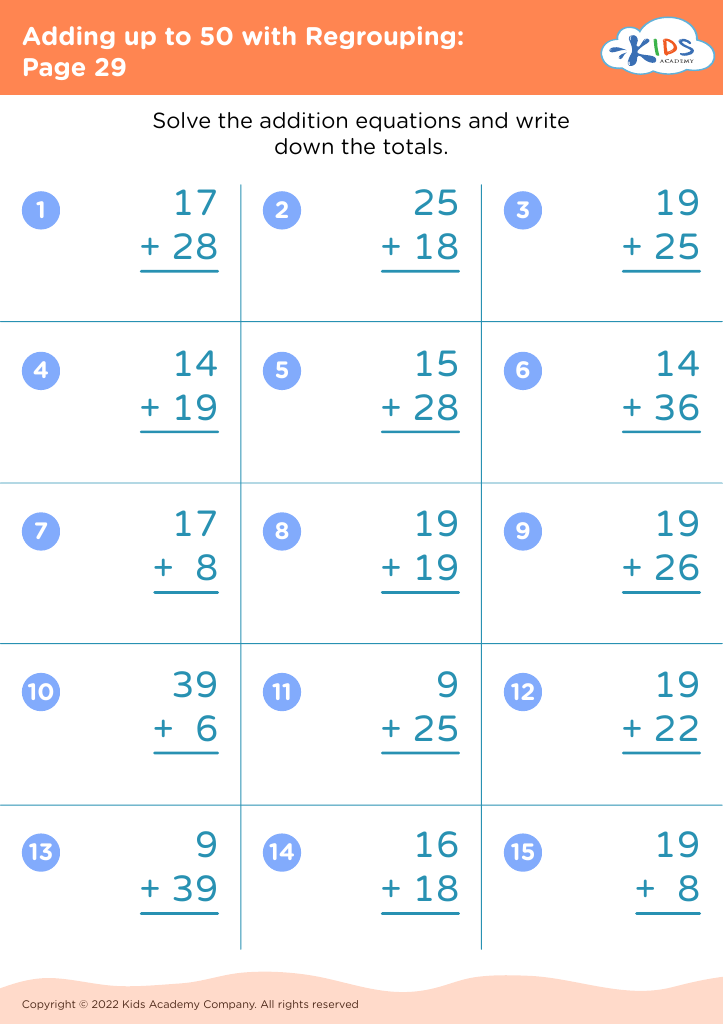
    Adding up to 50 with Regrouping: Page 29
    Adding up to 50 with Regrouping: Page 29
    Adding up to 50 with Regrouping: Page 29
    Worksheet
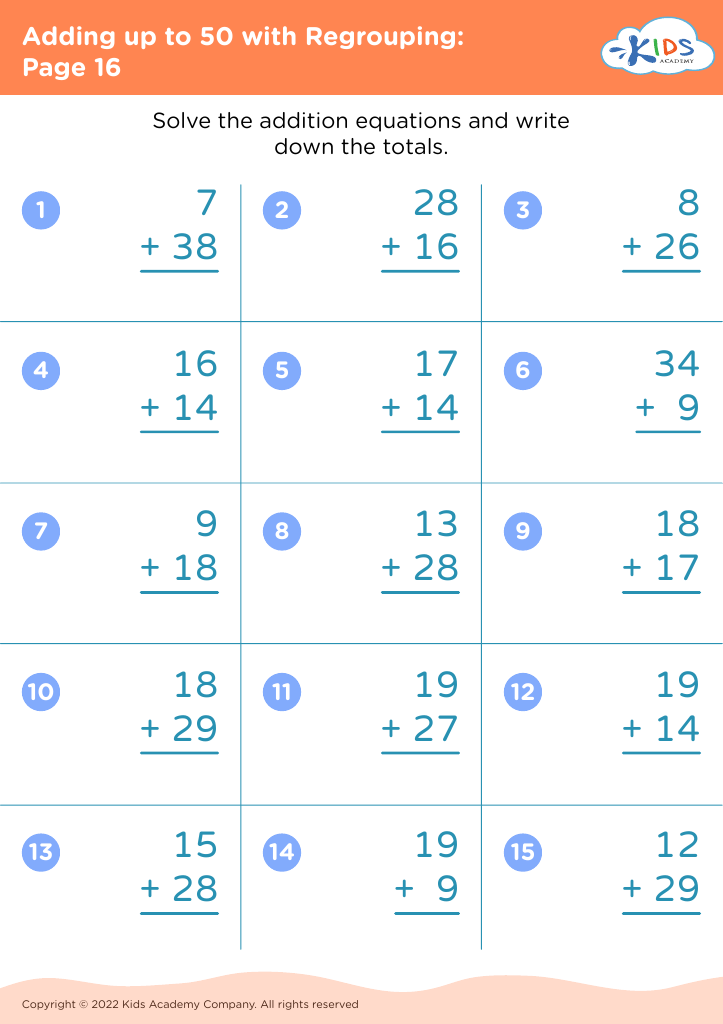
    Adding up to 50 with Regrouping: Page 16
    Adding up to 50 with Regrouping: Page 16
    Adding up to 50 with Regrouping: Page 16
    Worksheet
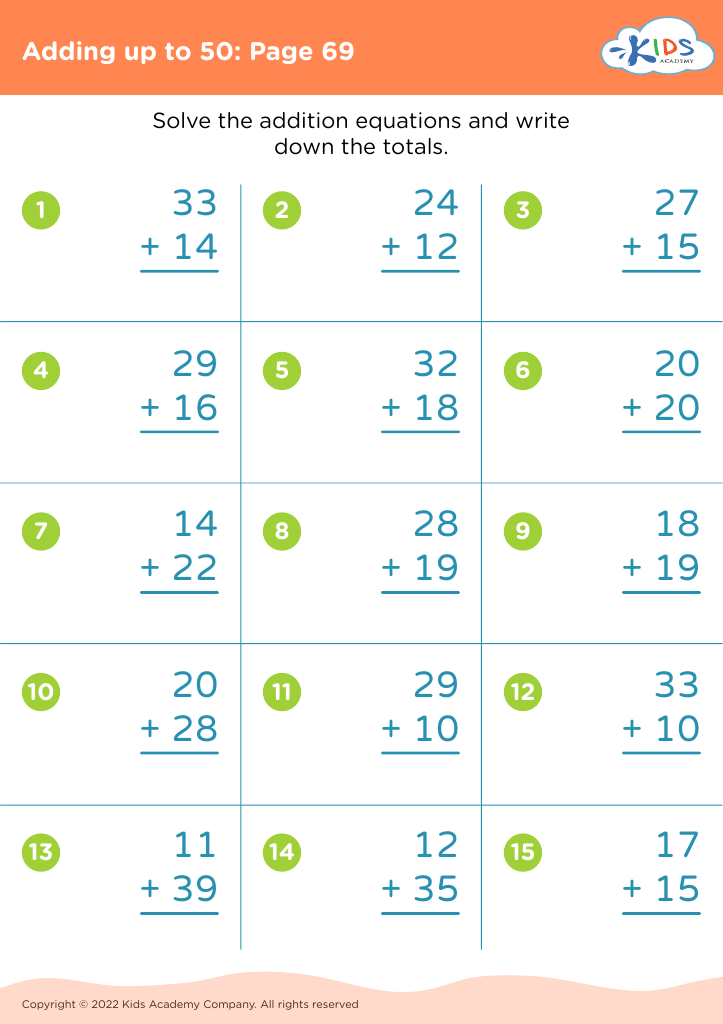
    Adding up to 50: Page 69
    Adding up to 50: Page 69

    Adding up to 50: Page 69

    Adding up to 50: Page 69
    Worksheet
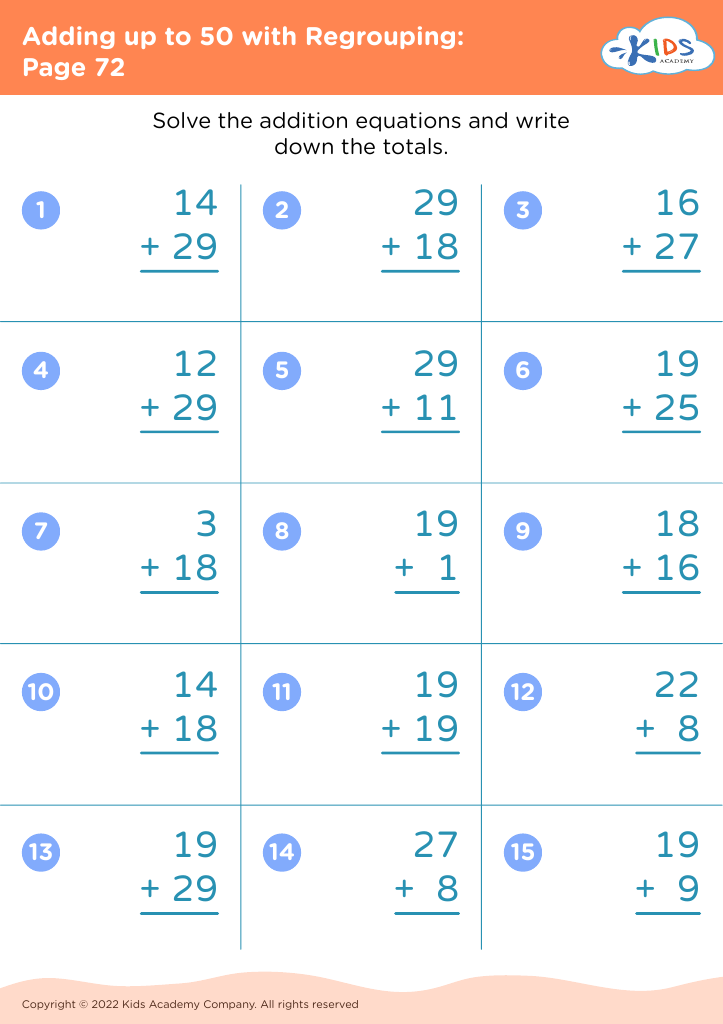
    Adding up to 50 with Regrouping: Page 72
    Adding up to 50 with Regrouping: Page 72
    Adding up to 50 with Regrouping: Page 72
    Worksheet


    Adding up to 50 for children ages 4-7 is a significant foundational milestone in early math education. At this stage, young learners are incredibly receptive and are building the basic blocks of their numerical understanding. Encouraging practice in addition up to 50 helps strengthen their comprehension of number relationships and arithmetic concepts.

    This exercise not only enhances their counting skills but also fosters a love for learning by making math engaging and less intimidating. Early excellence in addition can boost children's confidence, providing them a sense of accomplishment when they successfully solve equations. It lays the groundwork for more complex mathematical concepts they'll encounter later, such as subtraction, multiplication, and division.

    For parents and teachers, emphasizing addition skills prepares children for classroom success and practical life skills. Kids will encounter everyday activities involving numbers, like counting money or measuring ingredients while cooking. Structured support in early practice ensures they are equipped with the competencies to efficiently handle these real-life situations.

    Additionally, early math skills are predictors of later academic achievement not just in math but across other subjects as well. Proficiency in early addition thus has broad implications, impacting overall educational development and future opportunities. By prioritizing these skills, parents and teachers invest in a child's holistic growth and lifelong learning habits.