Critical Thinking Geometry Worksheets for Ages 4-7
5 filtered results
-
From - To
Discover fun and educational Critical Thinking Geometry Worksheets designed for children ages 4-7! Our engaging resources promote essential mathematical skills while encouraging young learners to explore shapes, patterns, and spatial reasoning. These worksheets are thoughtfully crafted to foster creativity and analytical skills through interactive activities. Children will enjoy sorting, matching, and identifying geometric figures, all while developing a strong foundation in geometry. Perfect for homeschoolers or classroom settings, our critical thinking resources make learning enjoyable and effective. Empower your child's geometric understanding and problem-solving abilities today with our exciting, age-appropriate worksheets that spark curiosity and inspire lifelong learning!
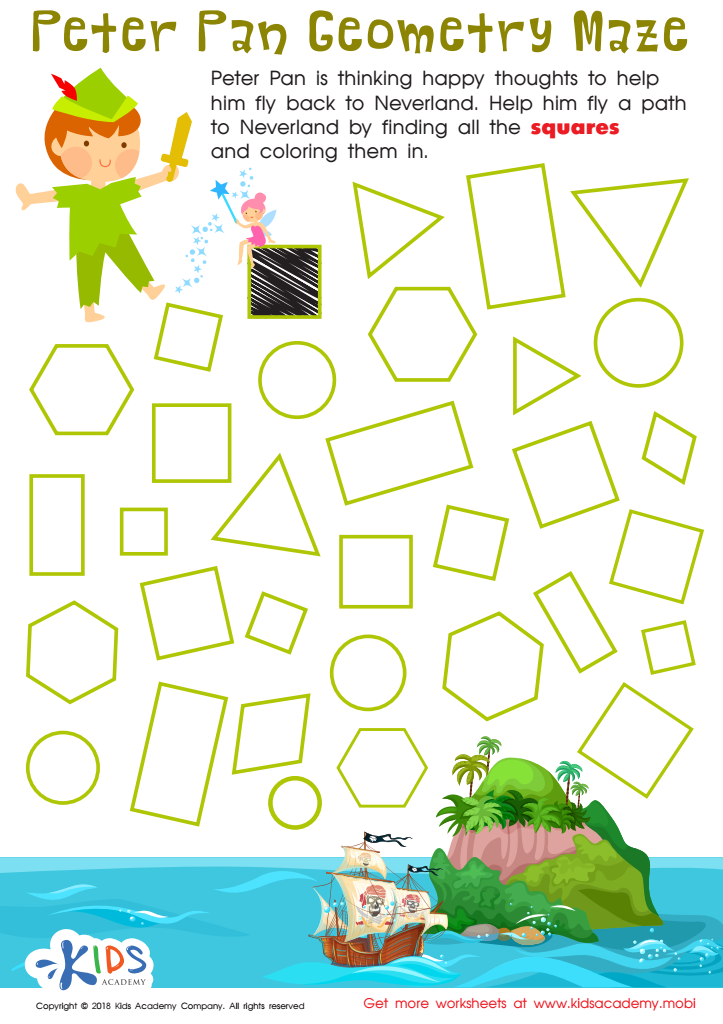
Peter Pan Worksheet
 Assign to My Students











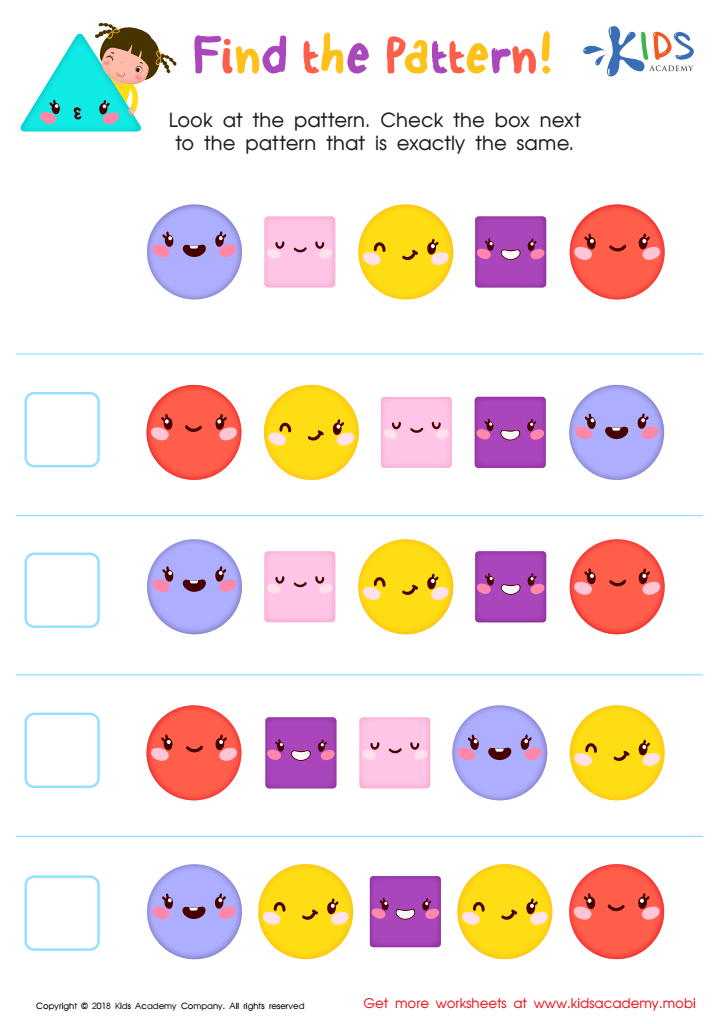
Find the Pattern Worksheet
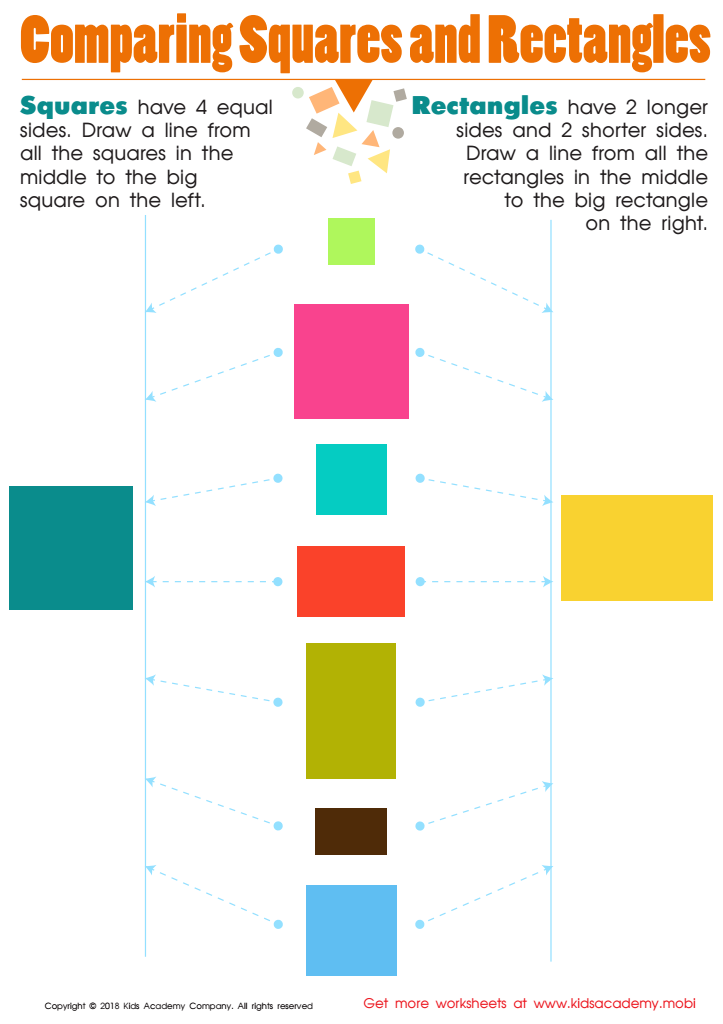
Comparing Squares Rectangles Worksheet
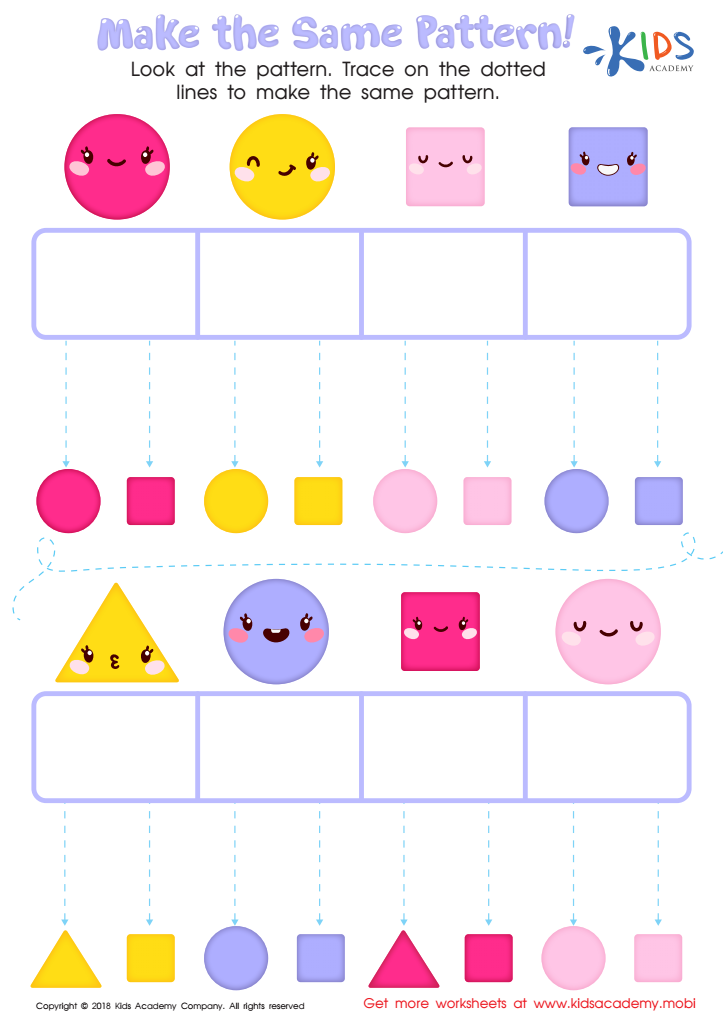
Make the Same Pattern Worksheet
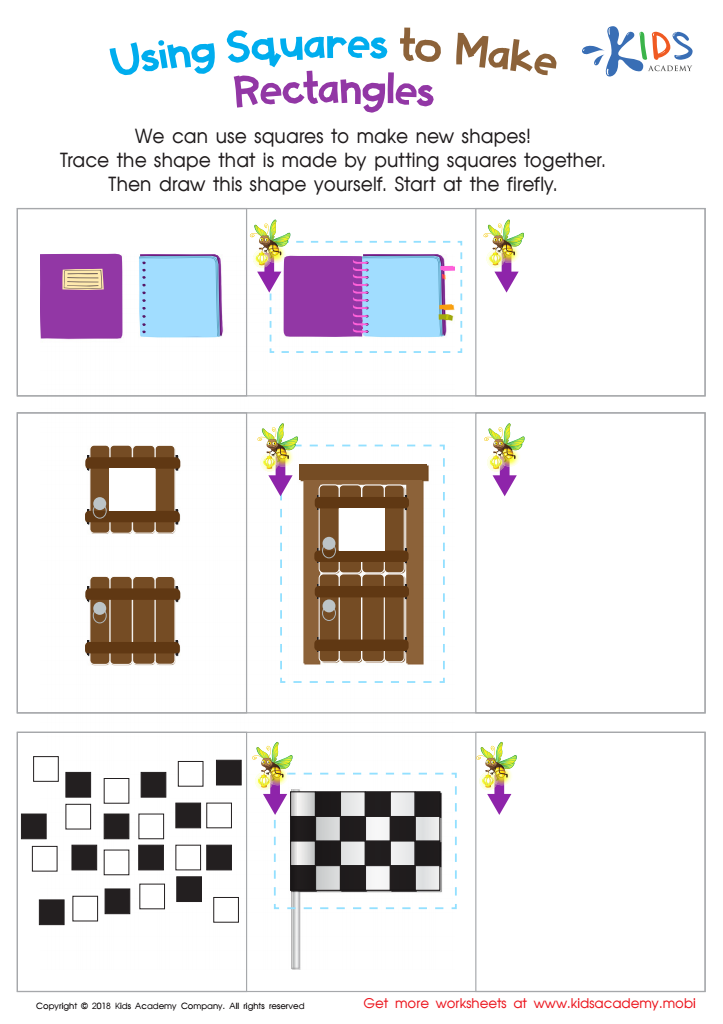
Using Squares to Make Rectangles Worksheet








Critical thinking in geometry for children ages 4-7 is essential for fostering a strong foundation in problem-solving and analytical skills. During these formative years, children are naturally curious and open to learning. Introducing them to geometric concepts encourages exploration and empowers them to ask questions, hypothesize, and test their ideas. Understanding basic geometry—like shapes, sizes, and spatial reasoning—helps children develop logical thinking and enhances their ability to classify and compare.
Furthermore, critical thinking in geometry supports future learning across various subjects, including mathematics, science, and even art. It engages children in active learning, where they can manipulate objects, create patterns, and visualize concepts, making math both accessible and enjoyable. This play-based approach promotes engagement and retention of knowledge, making abstract ideas more tangible.
Parents and teachers should prioritize critical thinking activities in geometry in order to nurture resiliency and confidence in young learners. When children learn to approach challenges with a critical mindset—from identifying a problem to evaluating solutions—they develop skills that will serve them throughout their academic journey and beyond. Ultimately, fostering critical thinking in geometry lays the groundwork for lifelong skills in reasoning, creativity, and effective communication.








