
Understanding subtraction Math Worksheets for Ages 4-7
14 filtered results
Difficulty Level
Grade
Age
-
From - To
Subject
Activity
Standards
Boost your child’s subtraction skills with our "Understanding Subtraction Math Worksheets for Ages 4-7." Perfect for young learners, these worksheets introduce basic subtraction concepts through engaging and easy-to-understand activities. Featuring colorful visuals and relatable scenarios, kids will practice subtracting numbers and improve their problem-solving abilities. Fun exercises include counting objects, simple equations, and real-life contexts to make learning subtraction enjoyable and effective. Designed to align with early grade math standards, these worksheets help build a solid mathematical foundation for your child. Start enhancing their math skills today with our expertly crafted subtraction worksheets!
Favorites
With answer key
Interactive
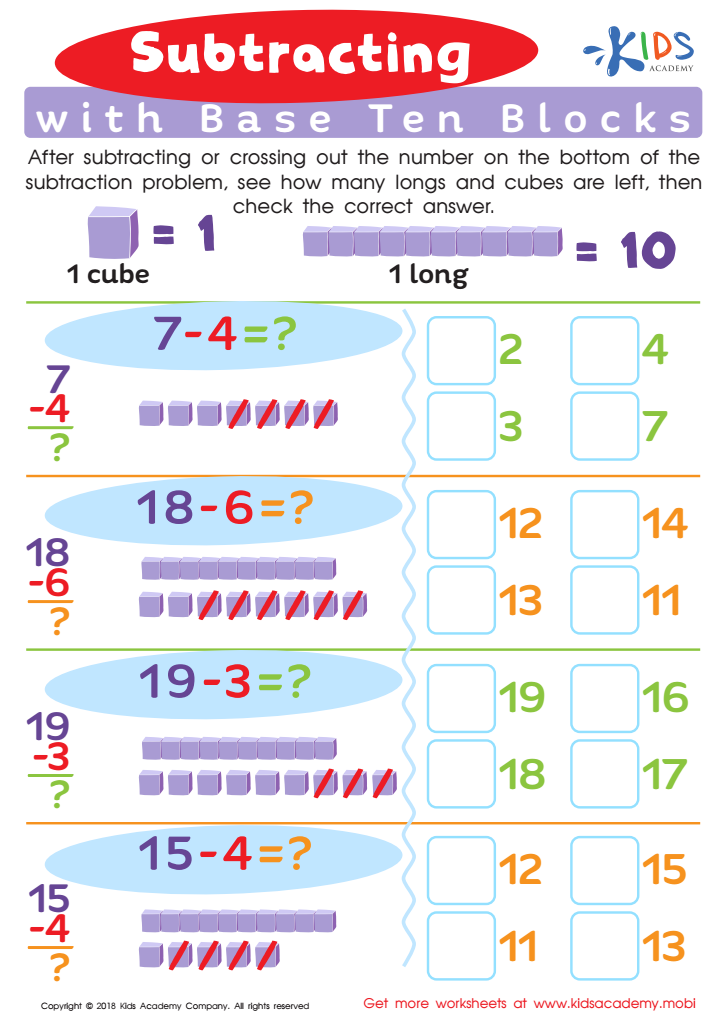
Subtracting With Base 10 Blocks Worksheet
Ask your child to count the cubes then help them check the answer. This problem may seem tricky, but it's just basic math. If they can count, they should have no trouble completing the exercise.
 Assign to My Students
Subtracting With Base 10 Blocks Worksheet
Worksheet
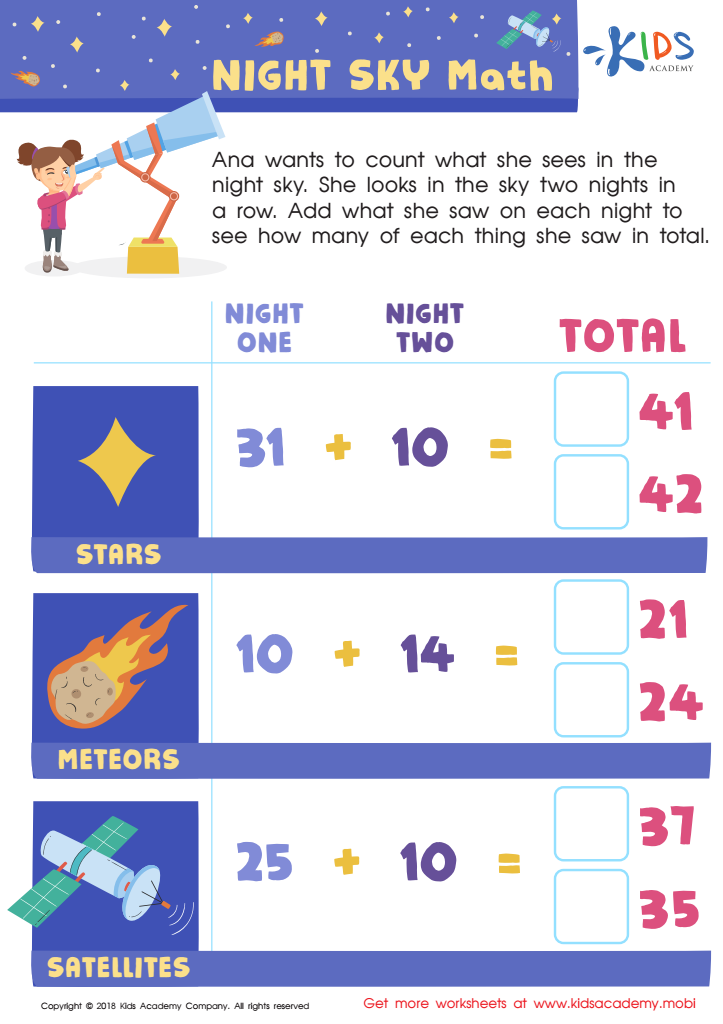
Night Sky Math Worksheet
Kids can use this colorful worksheet to learn math and addition while also exploring the night sky. Invite them to use a telescope to identify the things they see. Ask them to join Ana, the little girl in the worksheet, to count what she saw in two nights. Help them add the totals of each night to find out how many of each item she saw!
Night Sky Math Worksheet
Worksheet
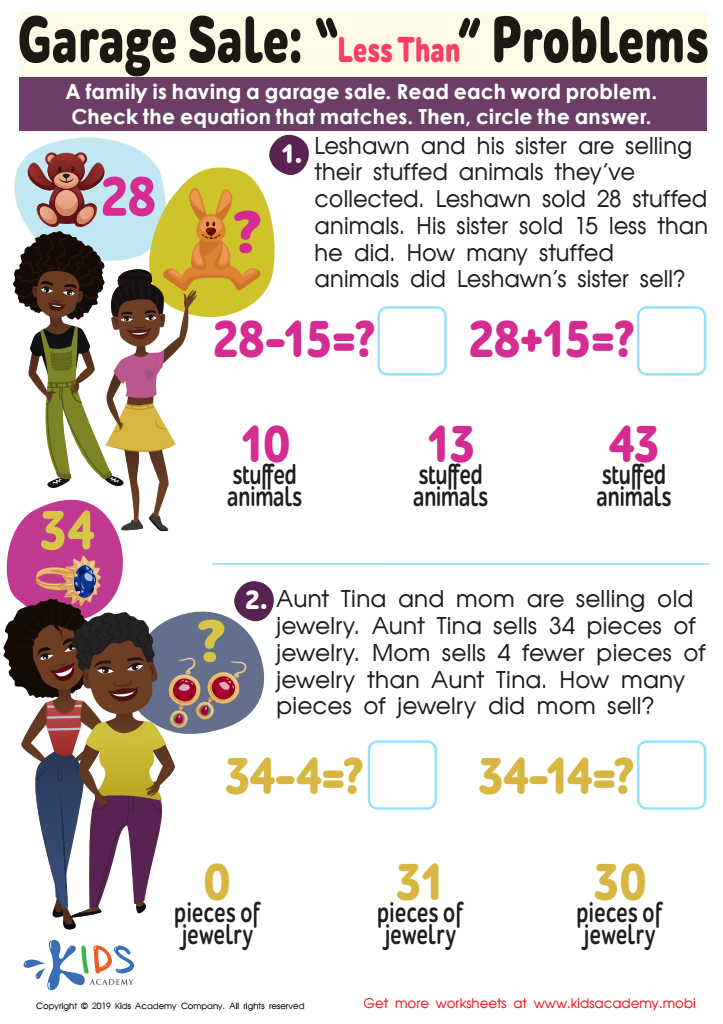
Garage Sale Less Than Worksheet
Kids often struggle with math word problems. This worksheet offers practice, using a real-world situation: friends having a garage sale. Students read each problem, extract the relevant information, match it with the correct equation and solve. Great for honing those essential problem-solving skills!
Garage Sale Less Than Worksheet
Worksheet
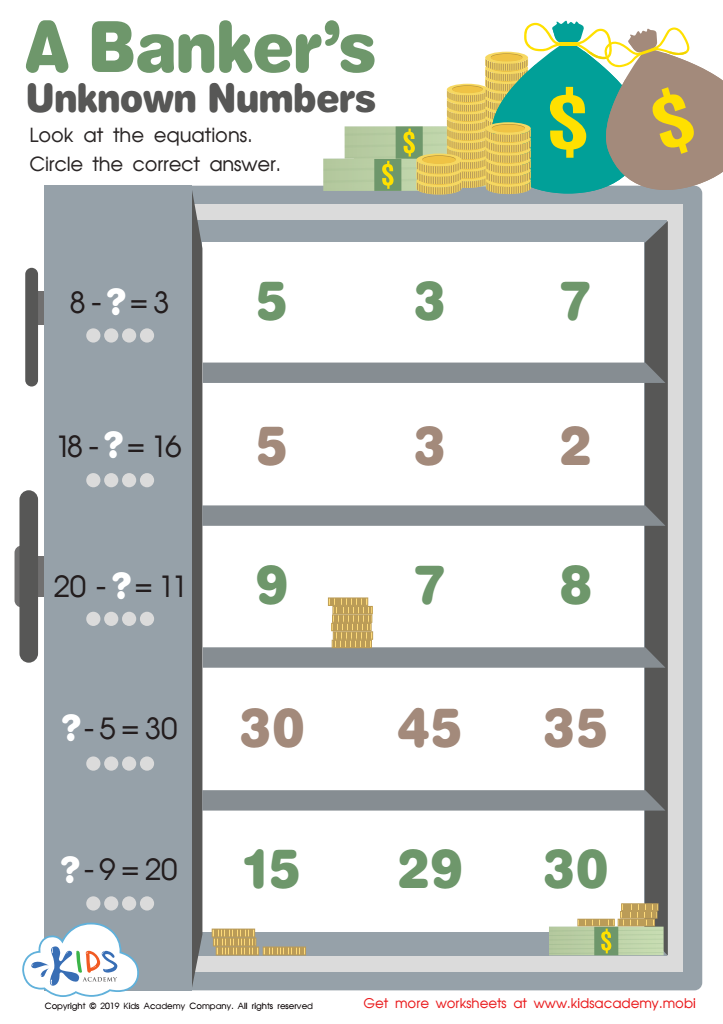
A Banker's Unknown Numbers Worksheet
At the bank, bankers count and record money properly to avoid losses. In this worksheet, kids count money and solve simple equations to find the correct answer. Help your kids work through the equations and circle the answer.
A Banker's Unknown Numbers Worksheet
Worksheet
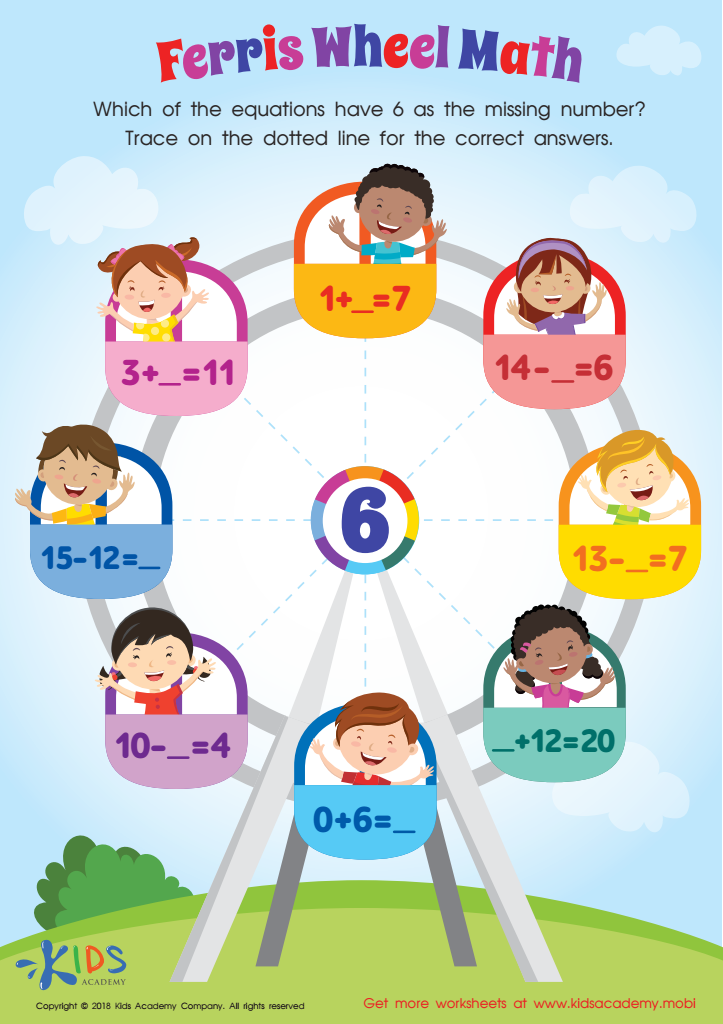
Missing Number: Ferris Wheel Math Worksheet
Hop on the Ferris wheel and solve the equations in the baskets! If the missing number is 6, draw a line from the basket to the middle of the wheel. Kids Academy's addition worksheet will not only help practice pre-algebra but also keep kids entertained with its vibrant illustrations. So, go round and round and have fun with math!
Missing Number: Ferris Wheel Math Worksheet
Worksheet
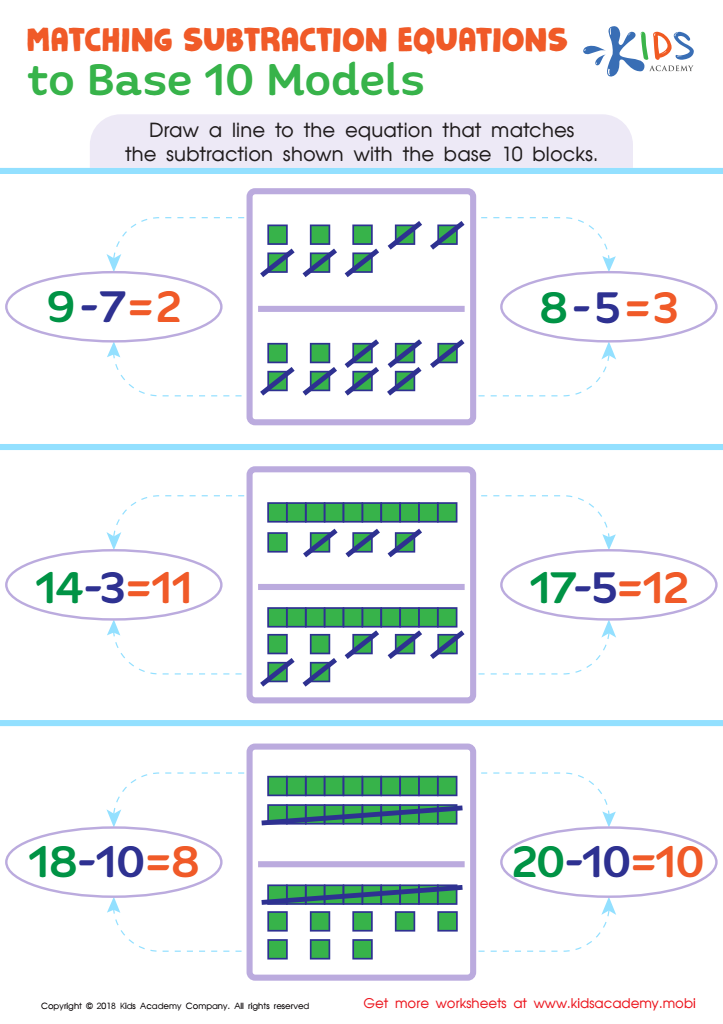
Matching Subtraction Equations To Base 10 Models Worksheet
Help your student draw a line to the equation that matches the subtraction shown with the base 10 blocks. Guide them through the task, ensuring they have good subtraction, counting and problem-solving skills. This tracing sheet is easy enough to complete with your support; the three mathematical problems here should be straightforward.
Matching Subtraction Equations To Base 10 Models Worksheet
Worksheet
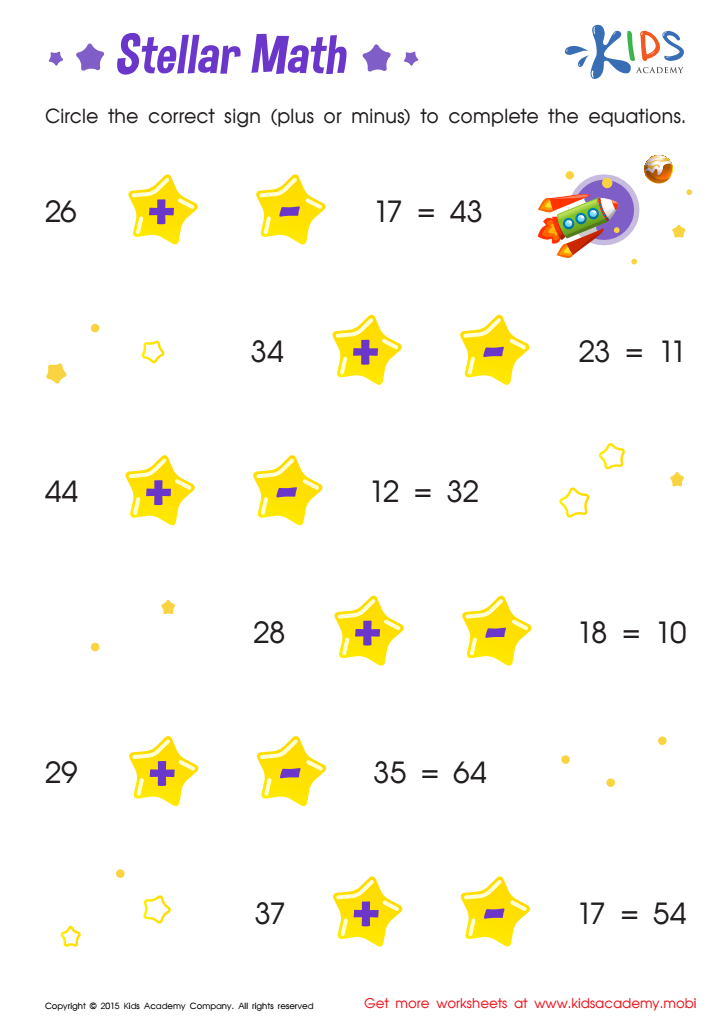
Stellar Math Substraction Worksheet
This worksheet offers more than just subtraction- your little learner can practice addition too! It will help them use number sense and mental math, as well as logical reasoning strategies, to complete the equations. With this worksheet, they'll use higher level thinking skills to determine which sign (plus or minus) is needed. Plus, they'll improve their cognitive skills too! Check out our rich collection of math worksheets for a fun and exciting math experience.
Stellar Math Substraction Worksheet
Worksheet
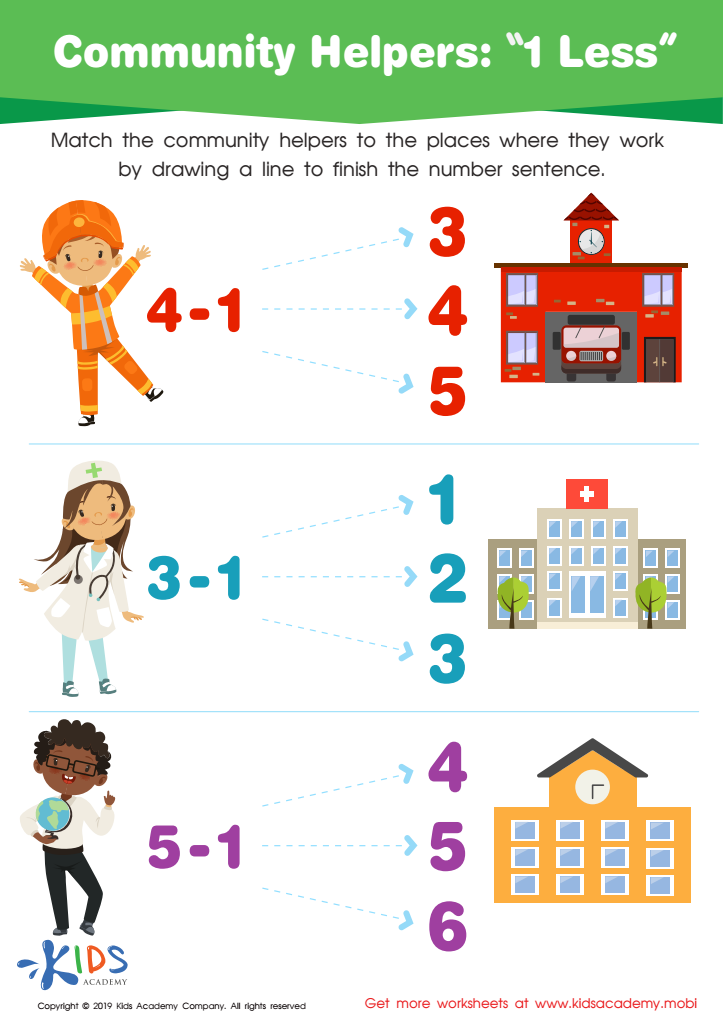
Community Helpers: 1 less Worksheet
Look at this worksheet with your child and ask them to identify the different community helpers. Match them to the places where they work by drawing a line to finish the number sentence. This helps them identify the people that help keep the community organized and running smoothly. Examples of community helpers include doctors, police officers, firefighters, teachers, etc.
Community Helpers: 1 less Worksheet
Worksheet
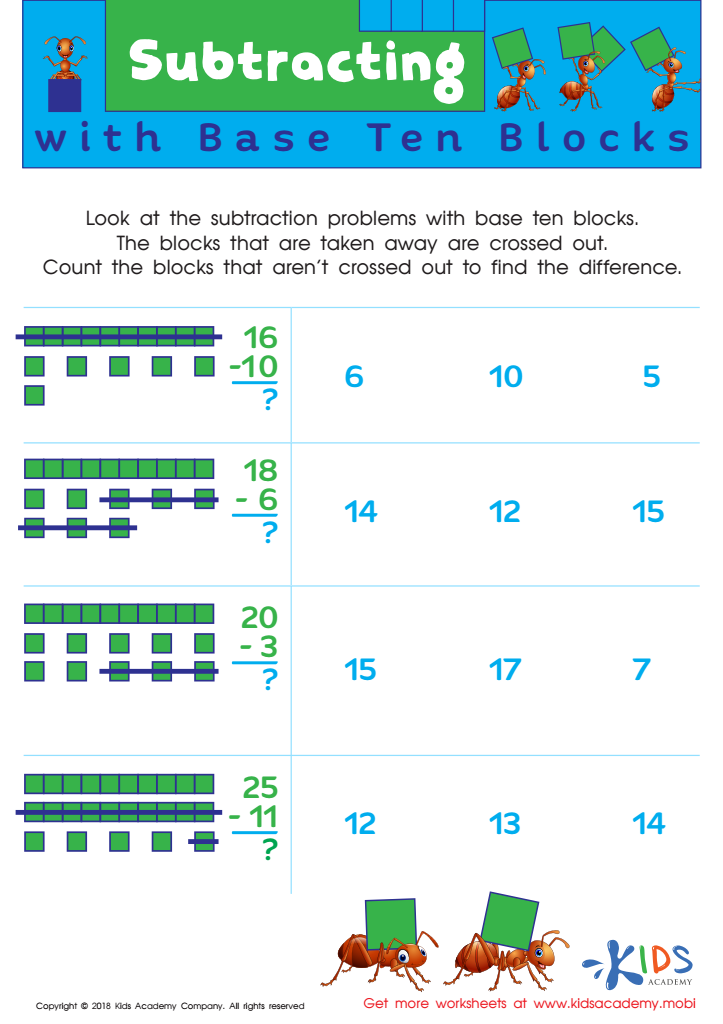
Subtracting with Base Blocks Worksheet
Little mathematicians can use base ten blocks to understand place value for subtraction. This worksheet helps them cross out blocks to solve problems with accuracy. Seeing equations like this boosts their number reasoning skills and helps them work with larger numbers.
Subtracting with Base Blocks Worksheet
Worksheet
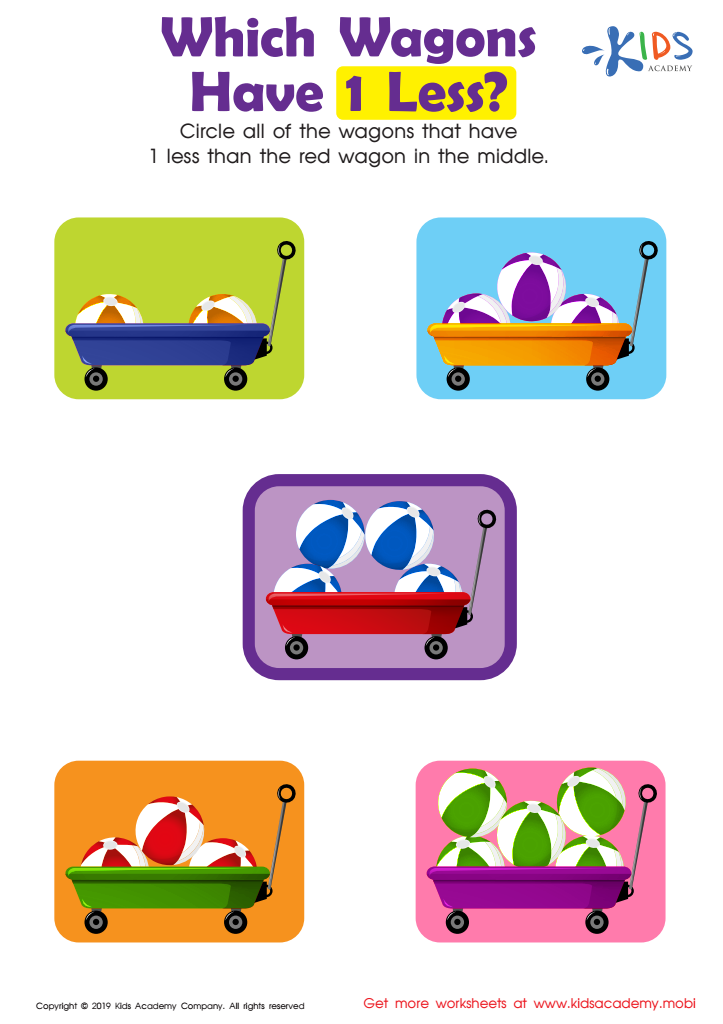
Which Wagons Have 1 Less? Worksheet
Test your kid's counting skills with a simple exercise. Ask them to count the balls in the five wagons shown and to circle the wagons with one less than the red wagon in the middle. This will give their brains a simple task that tests their knowledge of numbers.
Which Wagons Have 1 Less? Worksheet
Worksheet
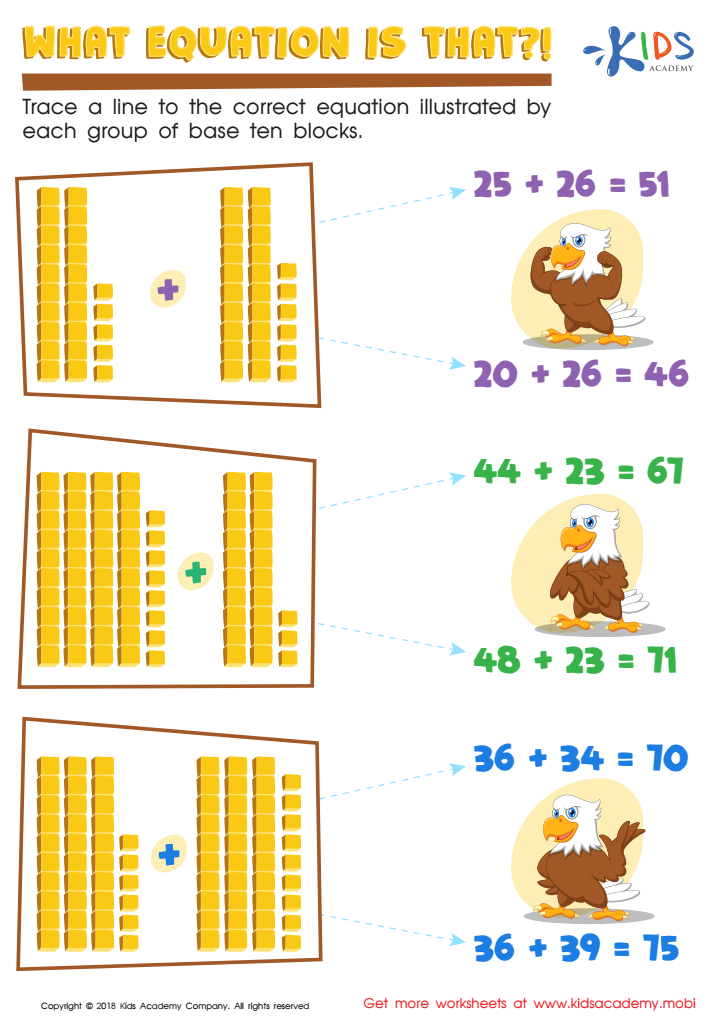
What Equation Is That? Worksheet
Have your students practice counting with base ten blocks. This will help them with math struggles. Homework and worksheets will help them improve; ask them to trace lines to the correct equation on a tracing sheet. Guide them as they count the blocks and trace the lines.
What Equation Is That? Worksheet
Worksheet
Join Kids Academy for Free
Who is primarily going to use this learning content?







Understanding subtraction at an early age (4-7 years) lays the foundation for essential mathematical skills and cognitive development. For parents and teachers, emphasizing subtraction is crucial because it not only helps children grasp basic arithmetic but also enhances their problem-solving abilities and logical thinking.
Mastering subtraction aids in developing a child's ability to comprehend the idea of 'taking away,' which is essential for real-life situations, such as understanding time management, budgeting allowances, or sharing toys and snacks. Early mastery can prevent future math anxiety and build confidence, making subsequent mathematical concepts like multiplication, division, and algebra more approachable.
At these formative ages, children's brains are highly receptive to learning. Therefore, parents and teachers must use engaging, interactive methods to teach subtraction, like using visual aids, physical objects, and storytelling. This approach ensures that children associate math with fun and curiosity rather than fear or frustration.
Moreover, early math skills are closely linked to overall academic achievement. A solid understanding of subtraction can boost children's performance across various subjects, promoting a positive attitude towards learning in general. By prioritizing subtraction, parents and teachers invest in a child's comprehensive intellectual growth.








