Understanding ecosystems Plants and Animals Worksheets for Ages 4-7
6 filtered results
-
From - To
Explore our "Understanding Ecosystems: Plants and Animals Worksheets" designed for ages 4-7! These engaging, age-appropriate worksheets help young learners discover the essential relationships between plants, animals, and their environments. Through fun activities, children will build their knowledge of ecosystems, learn to identify different species, and understand the importance of biodiversity. Incorporating visually appealing illustrations and interactive elements, these worksheets promote critical thinking and foster a love for science. Perfect for home or classroom use, they provide an excellent resource for teachers and parents alike, nurturing curiosity about the natural world while reinforcing foundational learning skills. Dive into the wonders of ecosystems today!
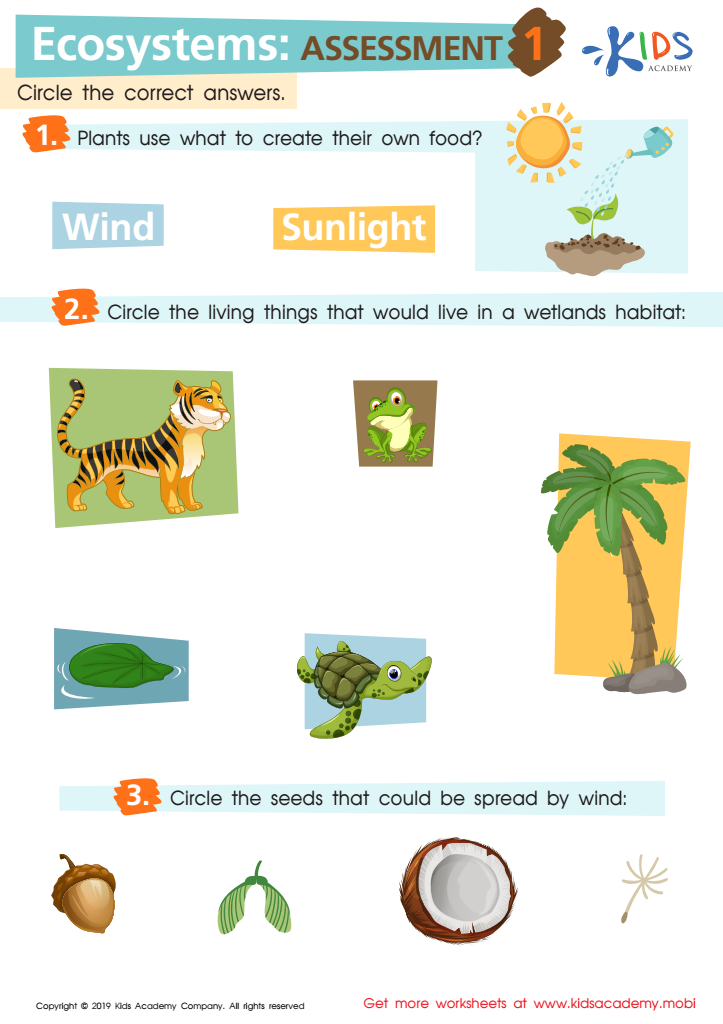
Ecosystems: Assessment 1 Worksheet
 Assign to My Students











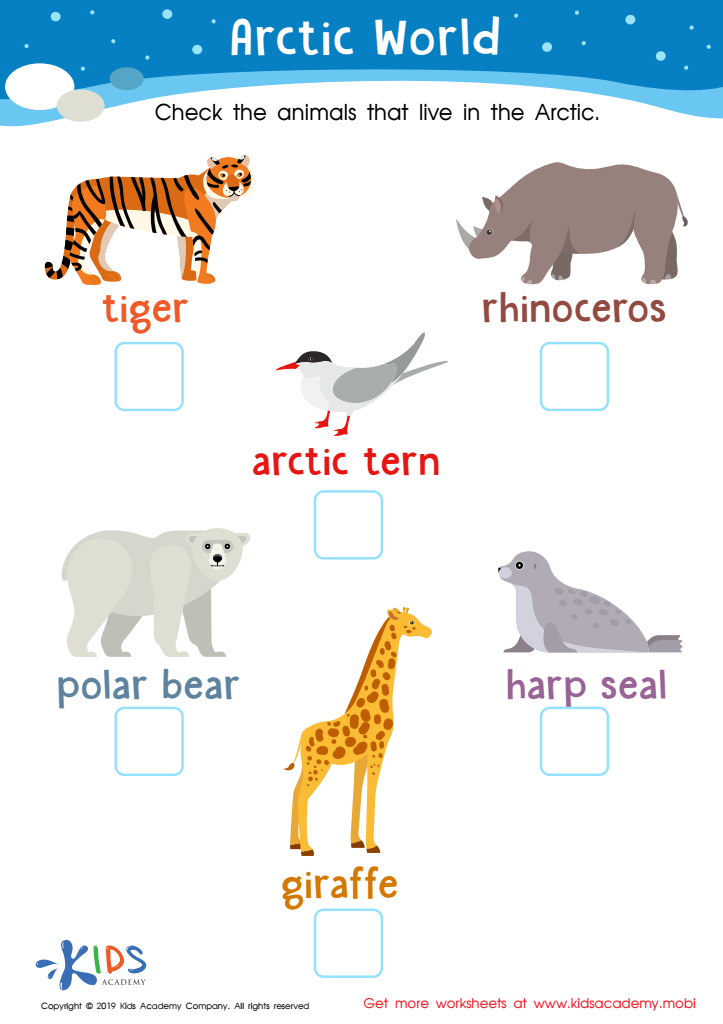
Arctic World Worksheet
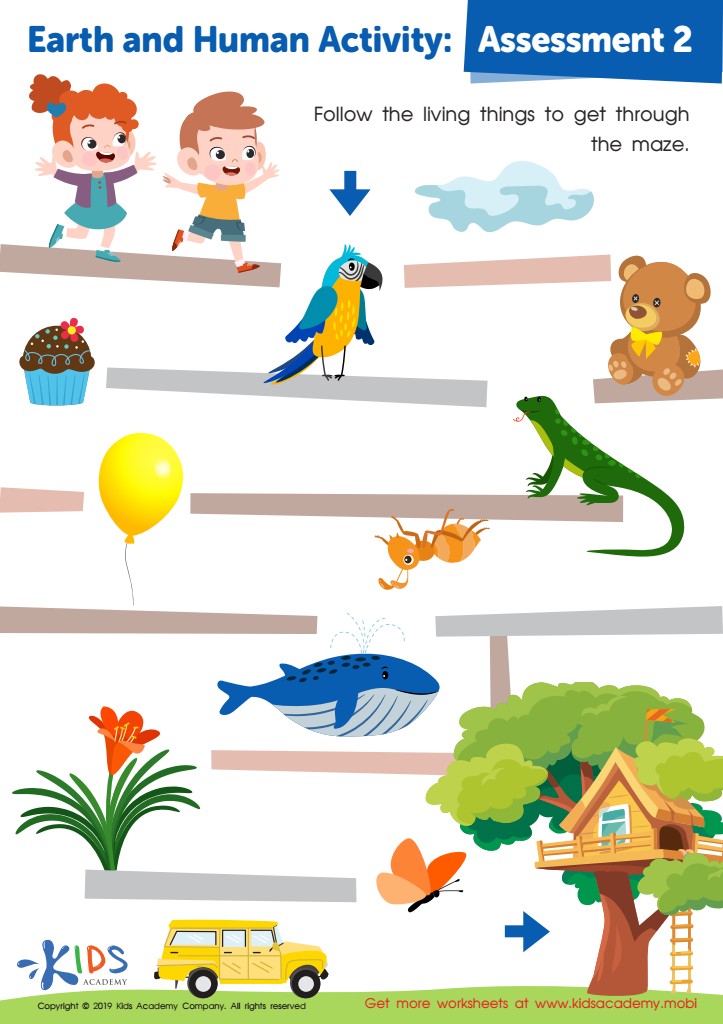
Earth and Human Activity: Assessment 2 Worksheet
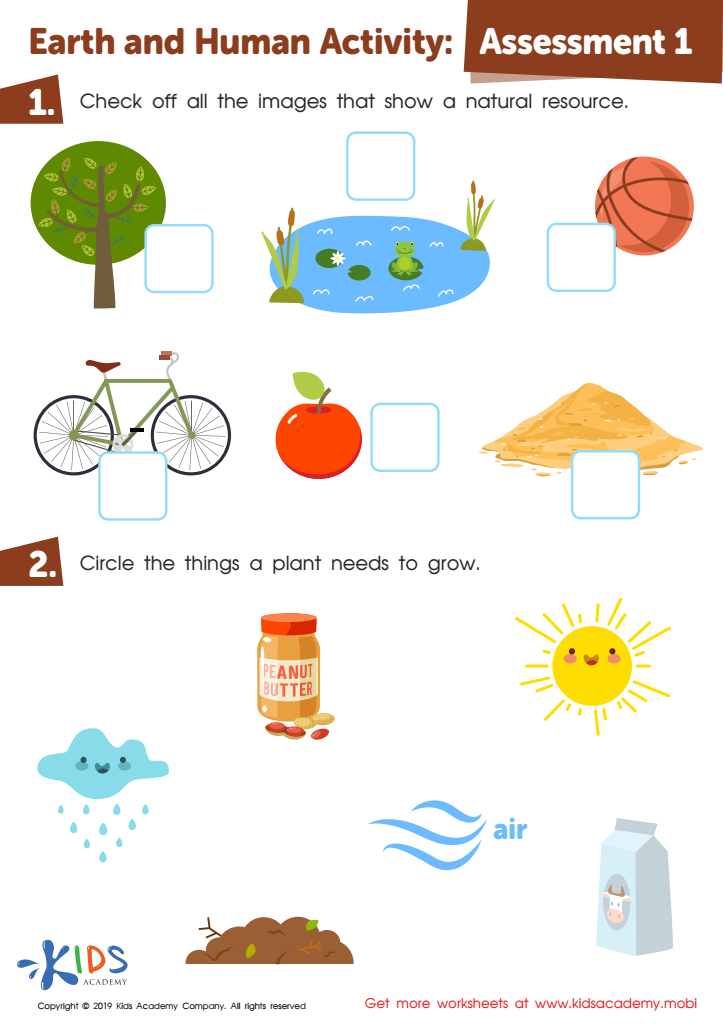
Earth and Human Activity: Assessment 1 Worksheet
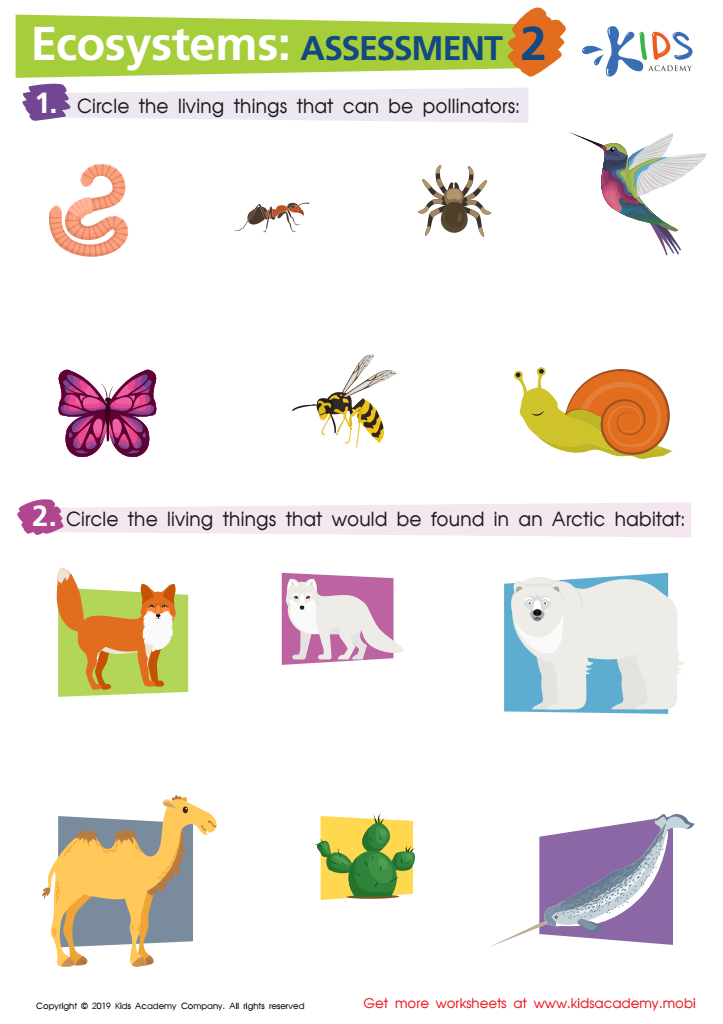
Ecosystems: Assessment 2 Worksheet
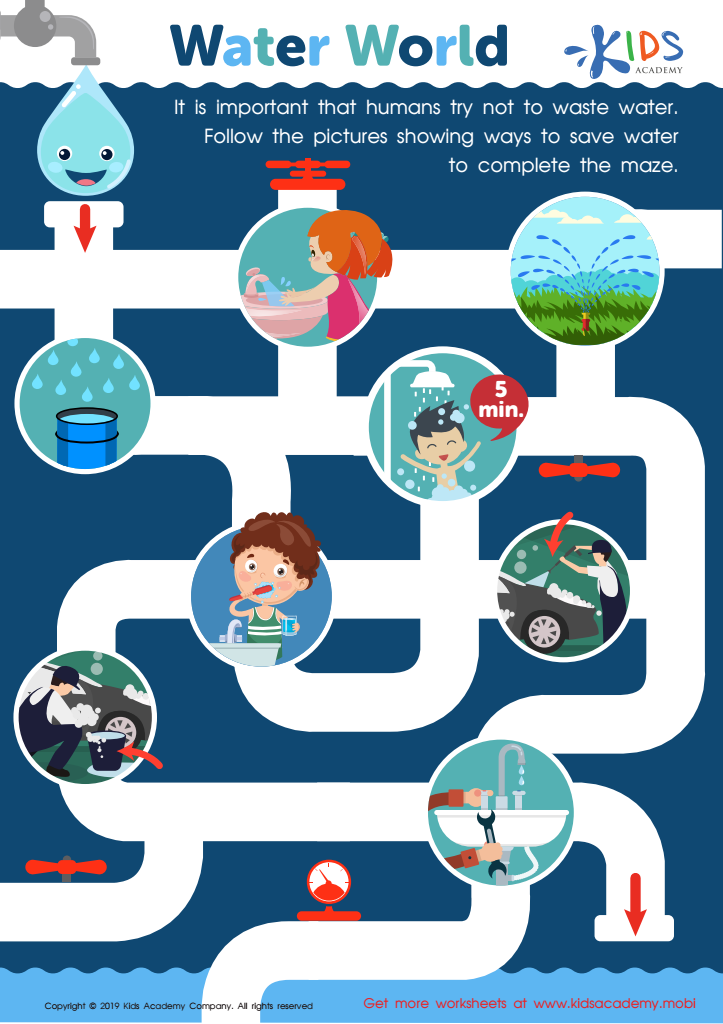
Water World Worksheet








Understanding ecosystems is vital for children aged 4-7 as it lays the foundation for their relationship with the natural world. At this age, children are naturally curious about plants and animals, and learning about ecosystems fosters that curiosity, encouraging exploration and observation of their surroundings. By engaging with the concept of ecosystems, they discover how living organisms—plants, animals, and humans—interact with one another and their environment, leading to a greater appreciation for biodiversity.
Moreover, early exposure to ecosystems nurtures empathy for all living things, instilling values of stewardship and responsibility for the planet. Teachers and parents can use hands-on experiences, such as outdoor walks or gardening, to illustrate these concepts in an engaging manner. Understanding ecosystems also supports key developmental skills, including critical thinking and problem-solving, as children learn about food chains, habitats, and conservation.
Incorporating lessons about ecosystems into early education helps children understand essential concepts about sustainability and environmental health, which are crucial topics in today's world. By fostering this knowledge early on, parents and teachers can empower young learners to become informed, caring individuals who contribute positively to their communities and the environment.








