Phonological awareness Phonics Worksheets for Ages 4-8
9 filtered results
-
From - To
Enhance your child's reading foundation with our Phonological Awareness Phonics Worksheets, crafted for ages 4-8. These engaging worksheets help young learners grasp essential skills such as rhyming, blending, and segmenting sounds. Our activities are designed to make the learning process fun and effective, using colorful visuals and interactive tasks to boost phonics confidence and proficiency. Perfect for home or classroom use, these worksheets guide kids towards becoming strong, fluent readers. Start your child's reading journey with resources that foster a love for learning and literacy. Discover the joy of phonics with Kids Academy today!
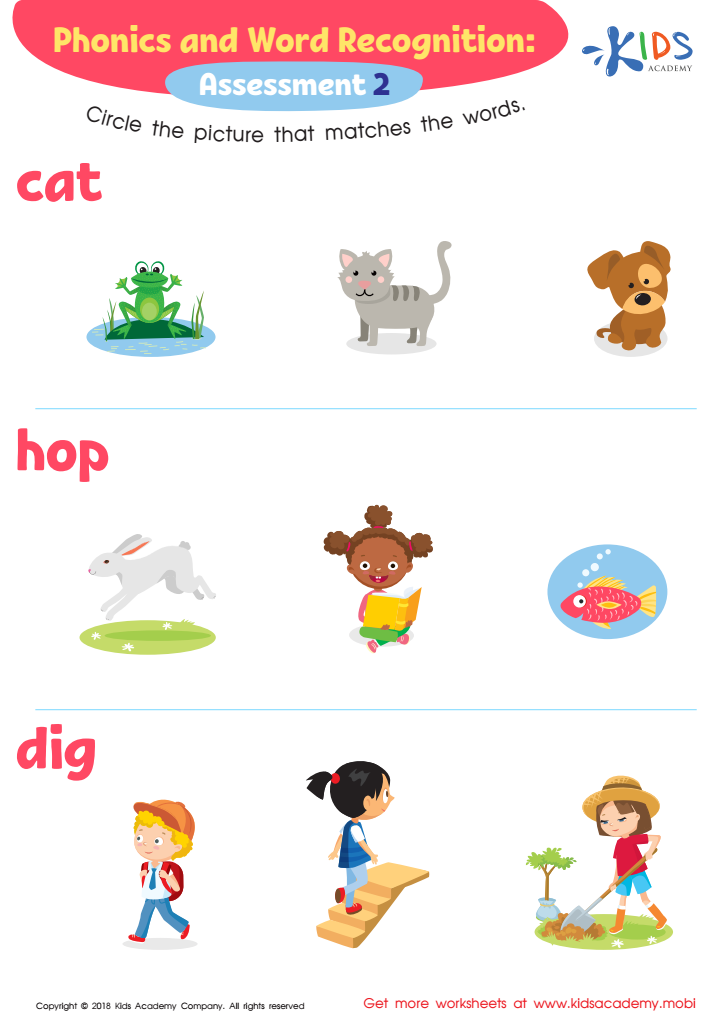
Phonological Awareness: Assessment 2 ELA Worksheet
 Assign to My Students
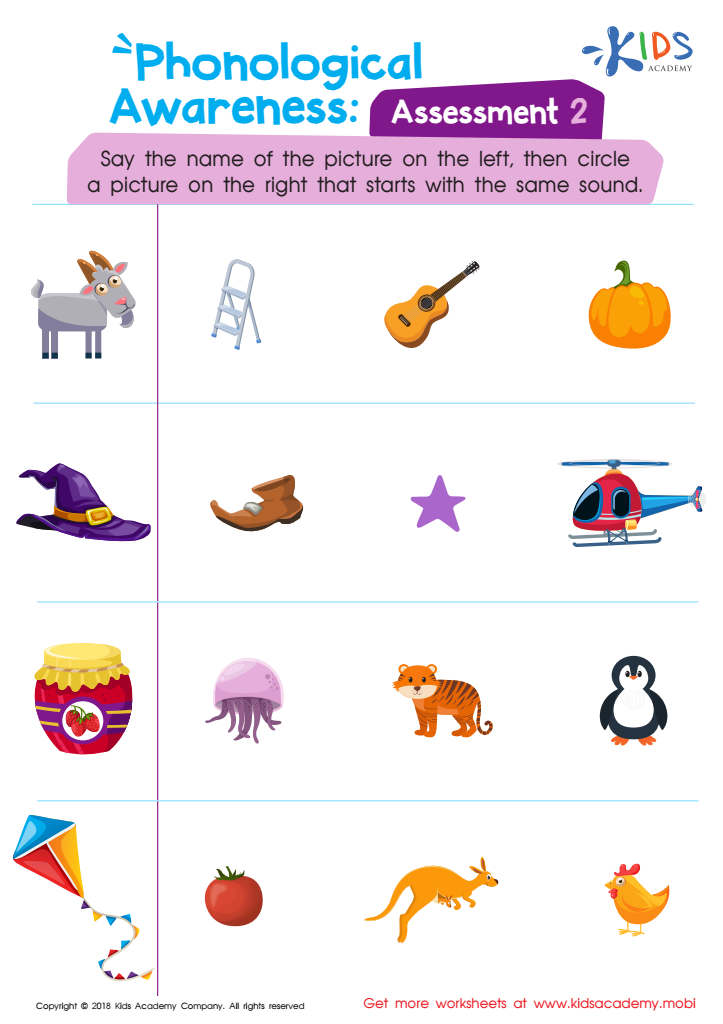
Phonological Awareness: Assessment 2 Worksheet
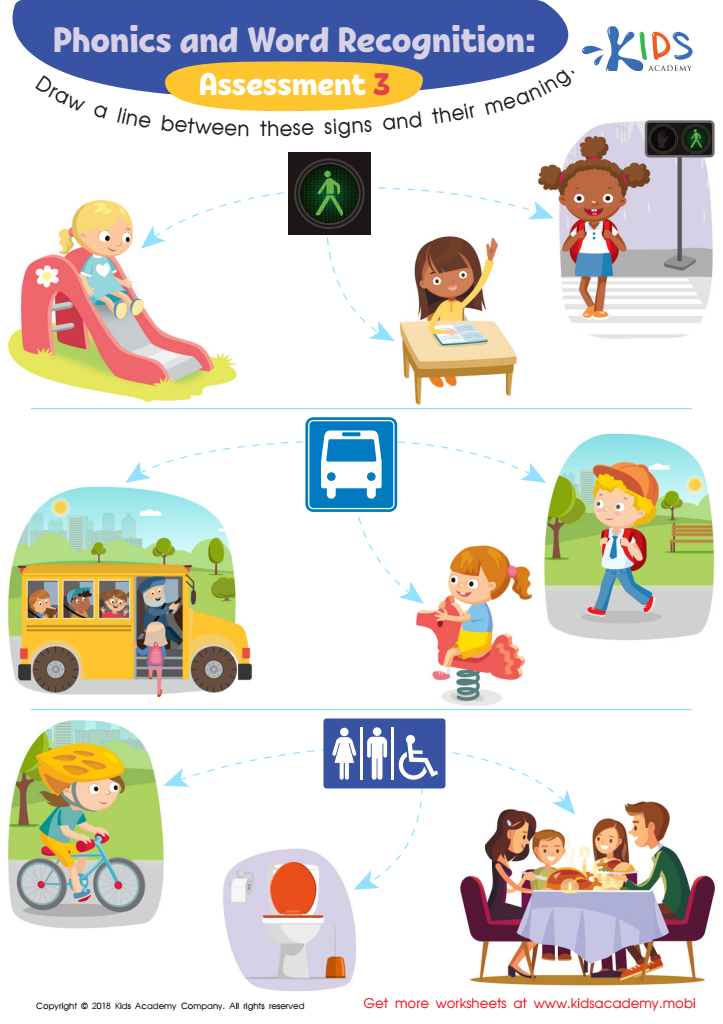
Phonological Awareness: Assessment 3 ELA Worksheet
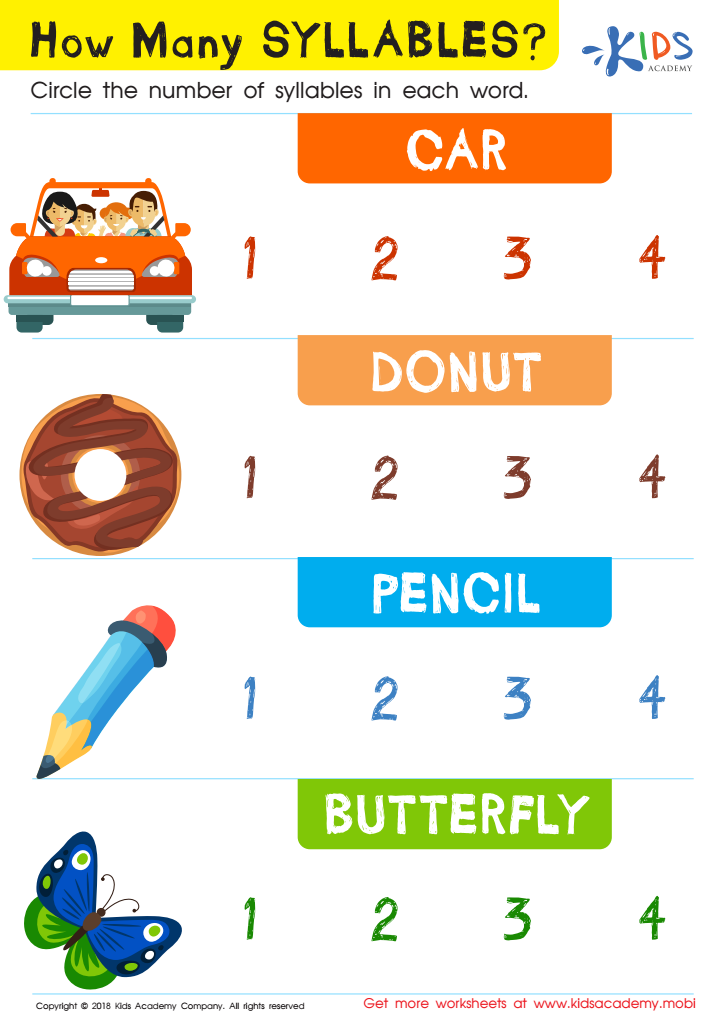
How Many Syllables? Worksheet
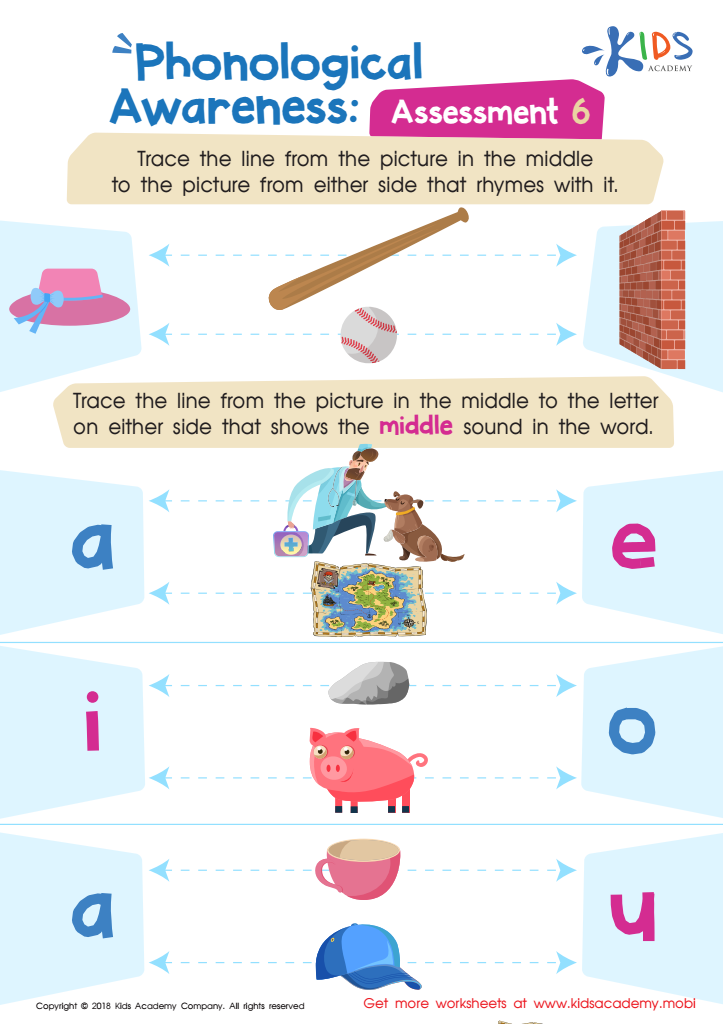
Phonological Awareness: Assessment 6 Worksheet
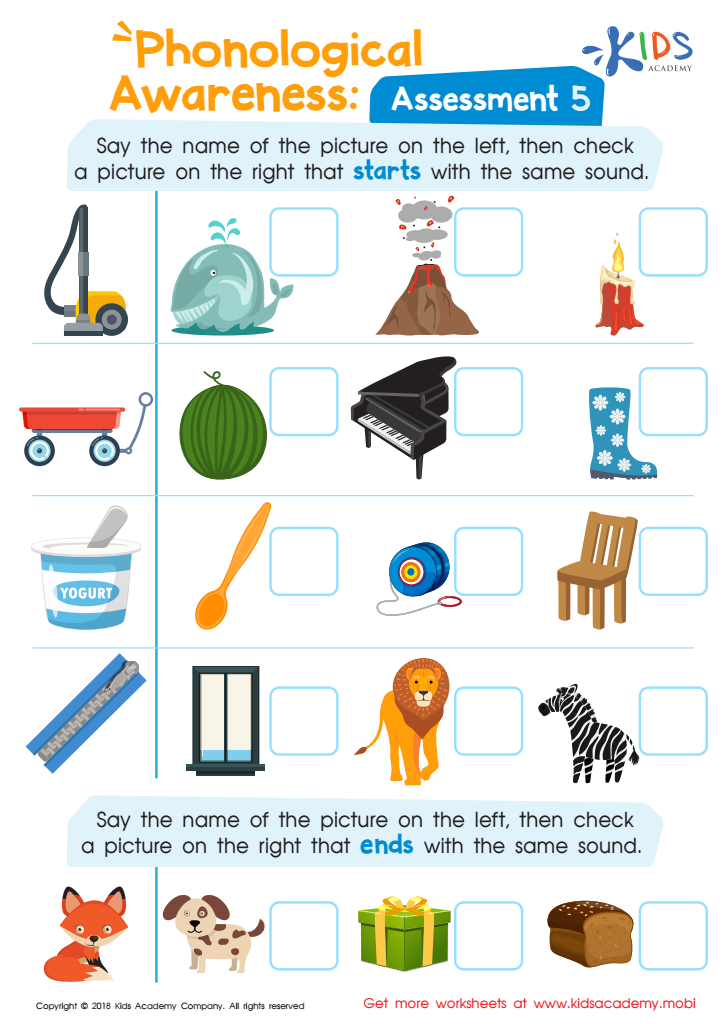
Phonological Awareness: Assessment 5 Worksheet
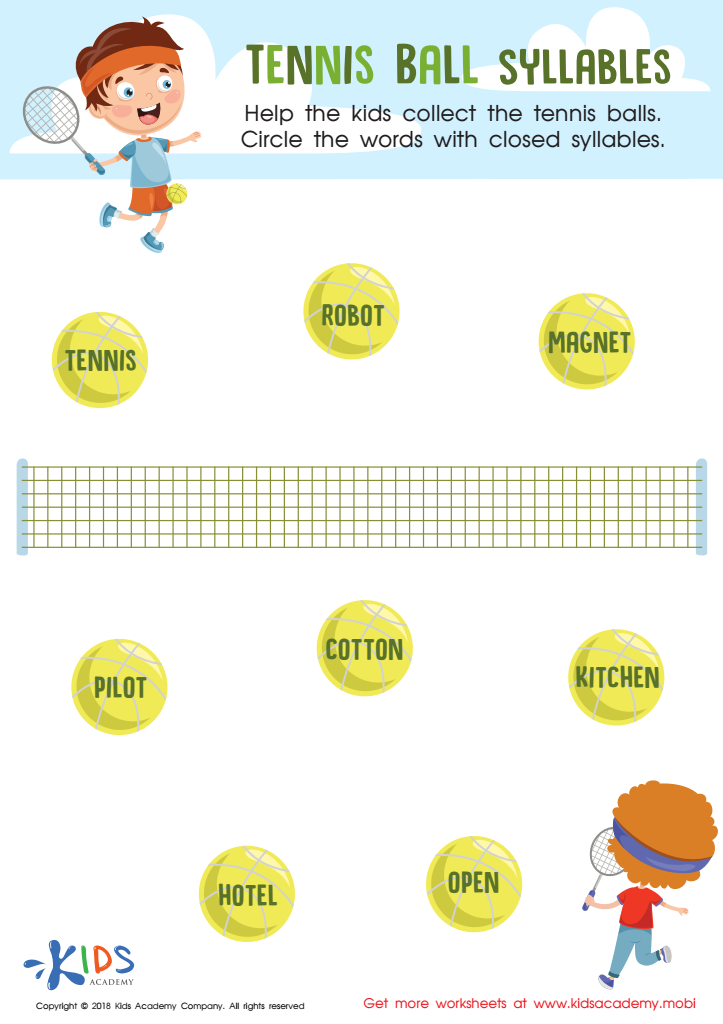
Tennis Ball Syllables Worksheet
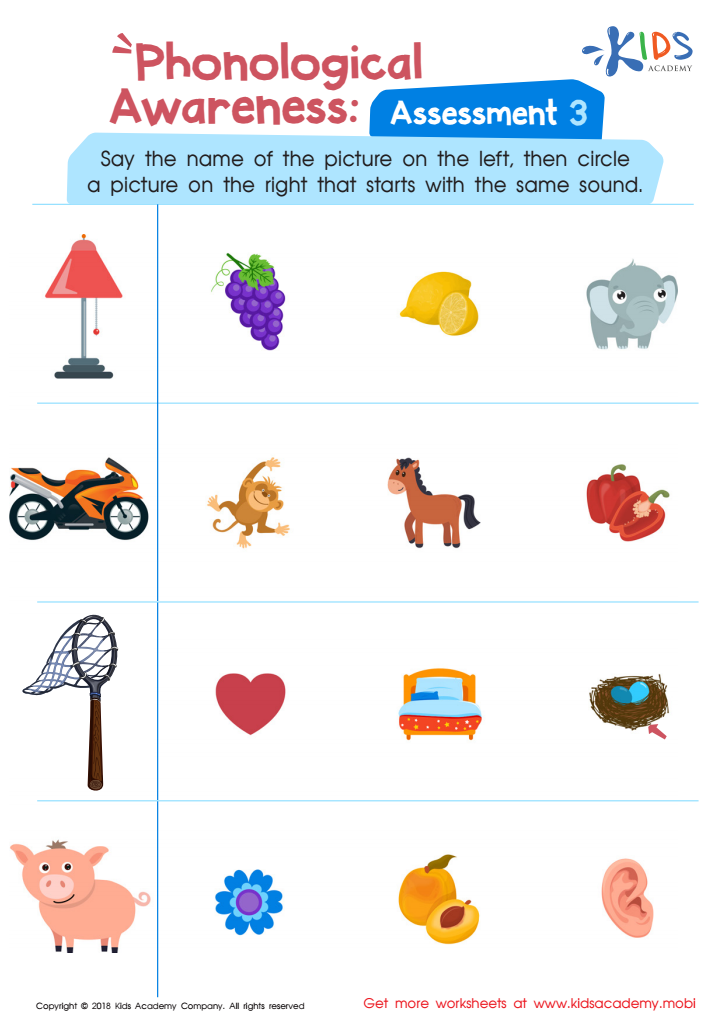
Phonological Awareness: Assessment 3 Worksheet
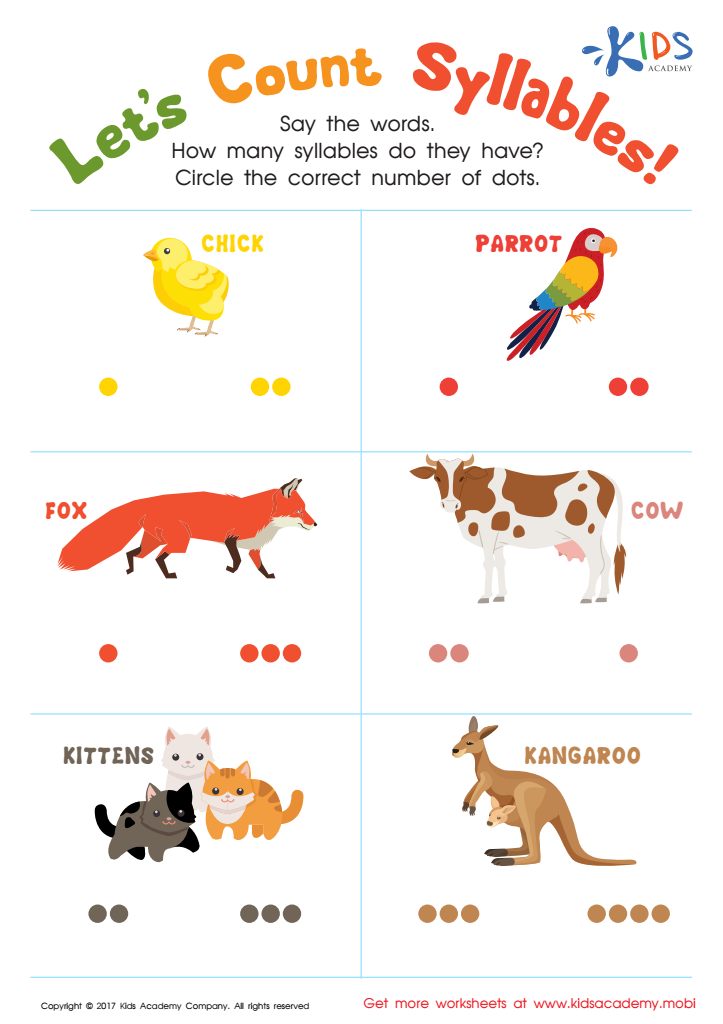
Lets Count Syllables Worksheet








Phonological awareness and phonics are foundational skills for early literacy, crucial for children aged 4–8. Phonological awareness refers to the ability to recognize and manipulate sounds in spoken language, such as identifying rhymes, syllables, and individual phonemes (smallest units of sound). Phonics, on the other hand, entails understanding the relationship between these sounds and their corresponding letters or groups of letters in written language. Together, they are essential components of reading and spelling.
Parents and teachers should prioritize these skills because they form the bedrock of reading proficiency, a key predictor of later academic success. When children develop strong phonological awareness, they become adept at decoding new words, which is fundamental for fluid and comprehensive reading. This skill set also aids in spelling and writing, supporting overall communication abilities.
Intervening within this crucial age window maximizes cognitive flexibility, making learning these skills more natural. Engaging with children through games, songs, and reading activities enhances their enjoyment and facilitates learning. Additionally, early mastery can mitigate struggles with reading that might emerge in more advanced grades, thereby bolstering self-confidence and fostering a lifelong love of reading. By focusing on phonological awareness and phonics early on, parents and teachers set the stage for robust educational development and literacy.







