Two Vowels Together Worksheets for Ages 4-8
11 filtered results
-
From - To
Discover engaging "Two Vowels Together Worksheets” designed for children ages 4-8! These interactive resources help young learners understand the foundational concept of vowel pairs, enhancing their reading and writing skills. Our carefully crafted worksheets feature colorful illustrations and fun activities to keep kids motivated while mastering phonics. From identifying vowel combinations to filling in missing letters, each exercise promotes critical thinking and reinforces language development. Perfect for home or classroom settings, these worksheets foster a love for learning while encouraging kids to explore the world of words. Start your child's journey to literacy with our two vowels together worksheets today!
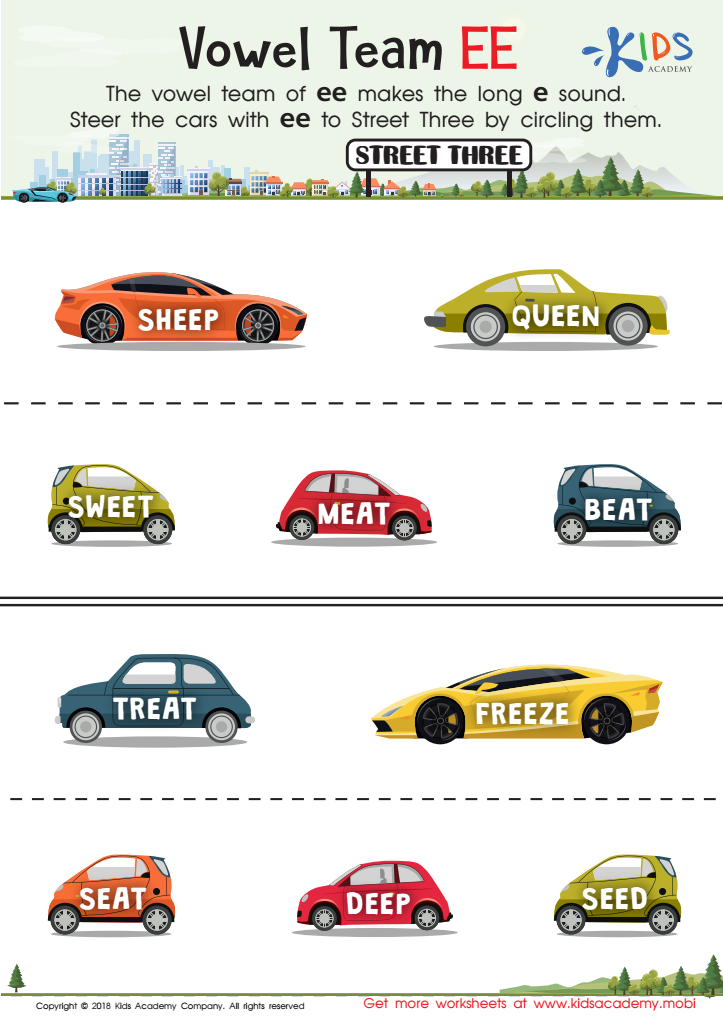
Vowel team ee Worksheet
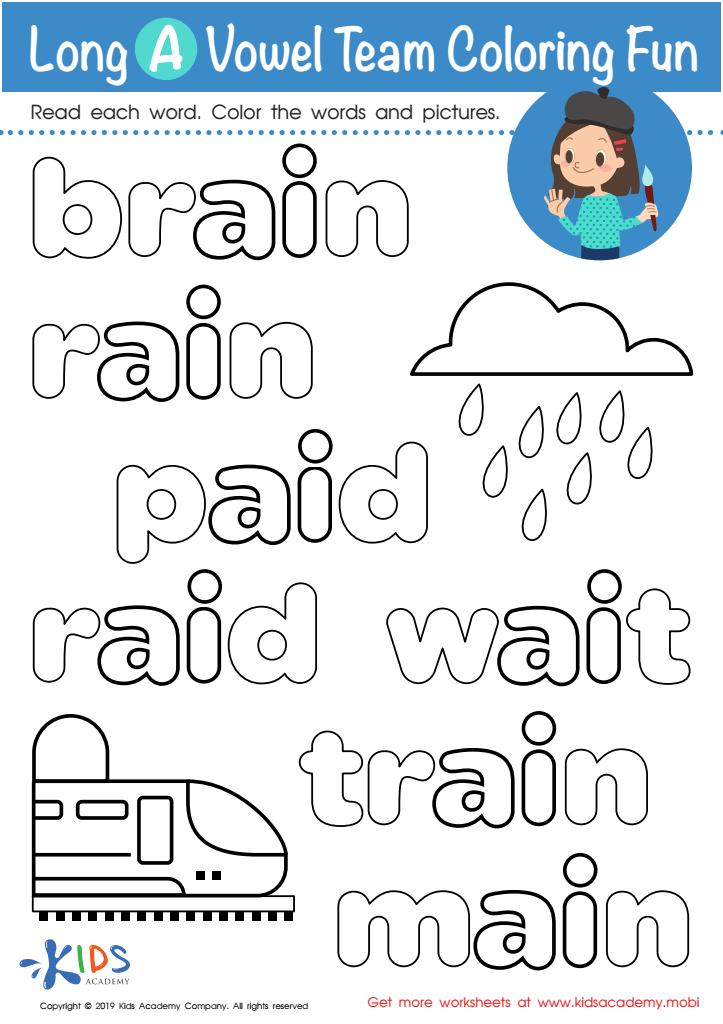
Long A Vowel Team Coloring Fun Worksheet
 Assign to My Students
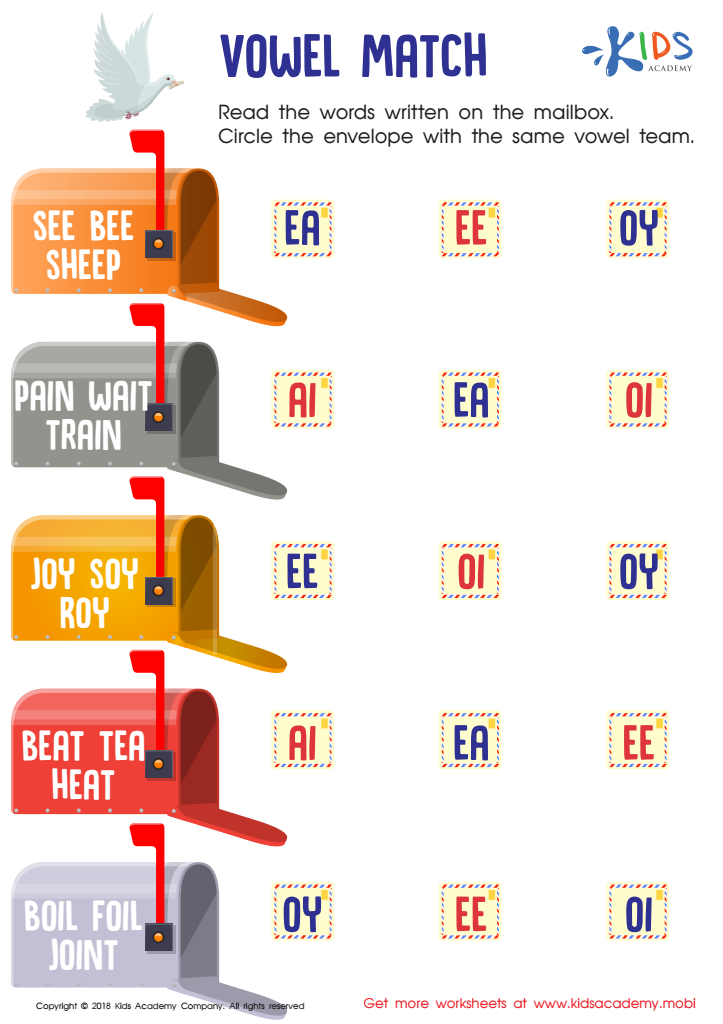
Vowel match Worksheet
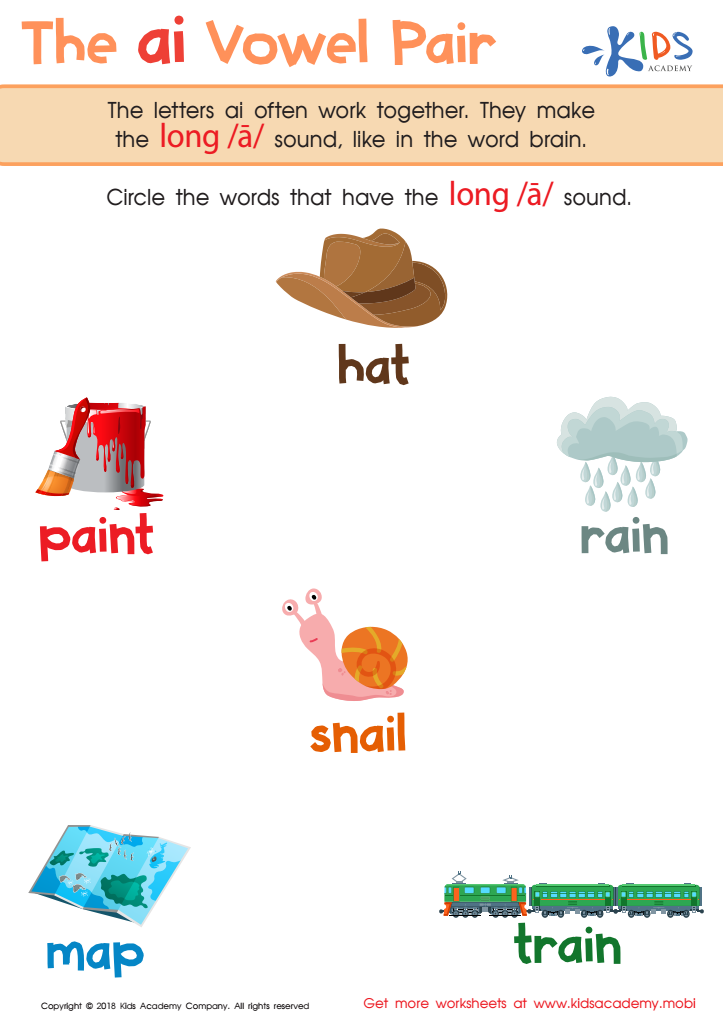
The AI Vowel Pair Worksheet
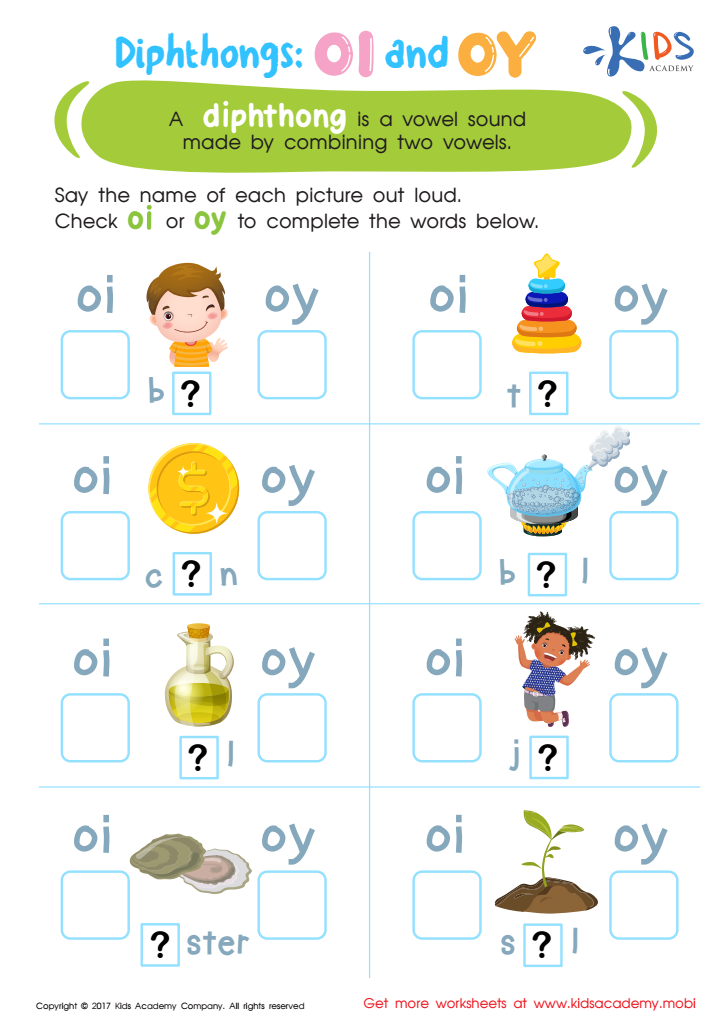
Vowel Diphthongs OI OY Worksheet
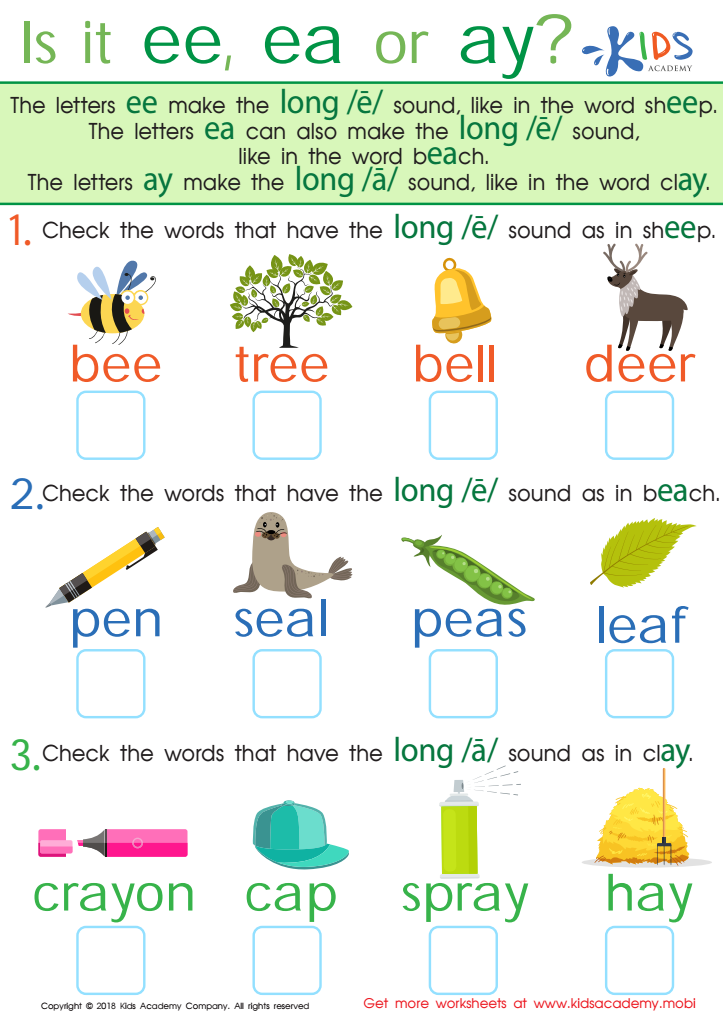
Is It EE, EA, or AY? Worksheet
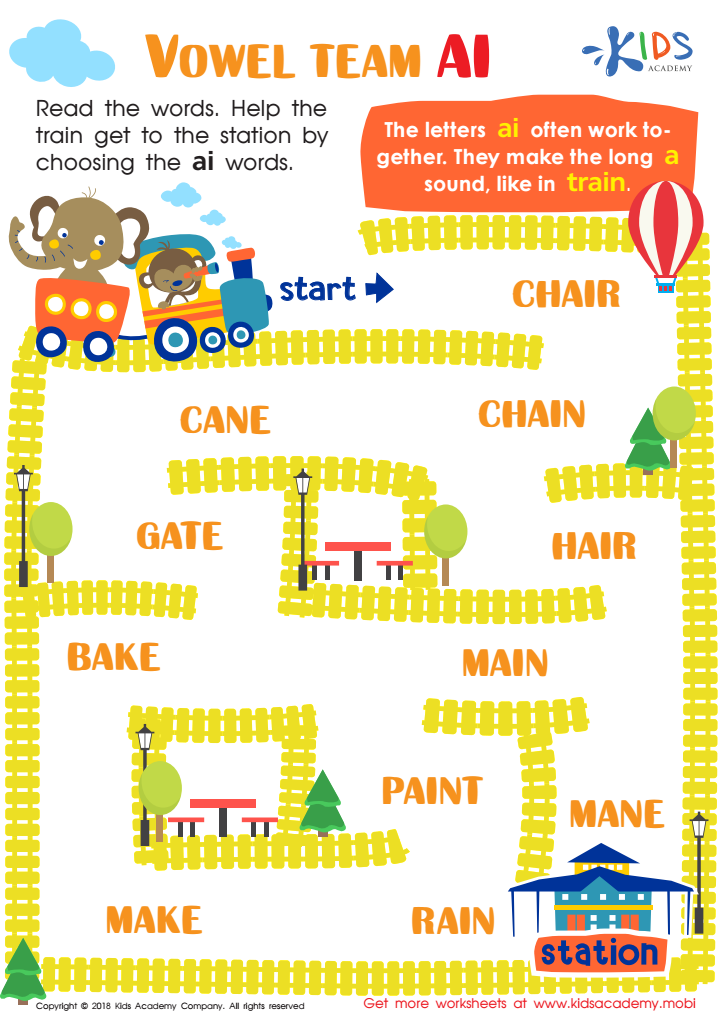
Vowel team ai Worksheet
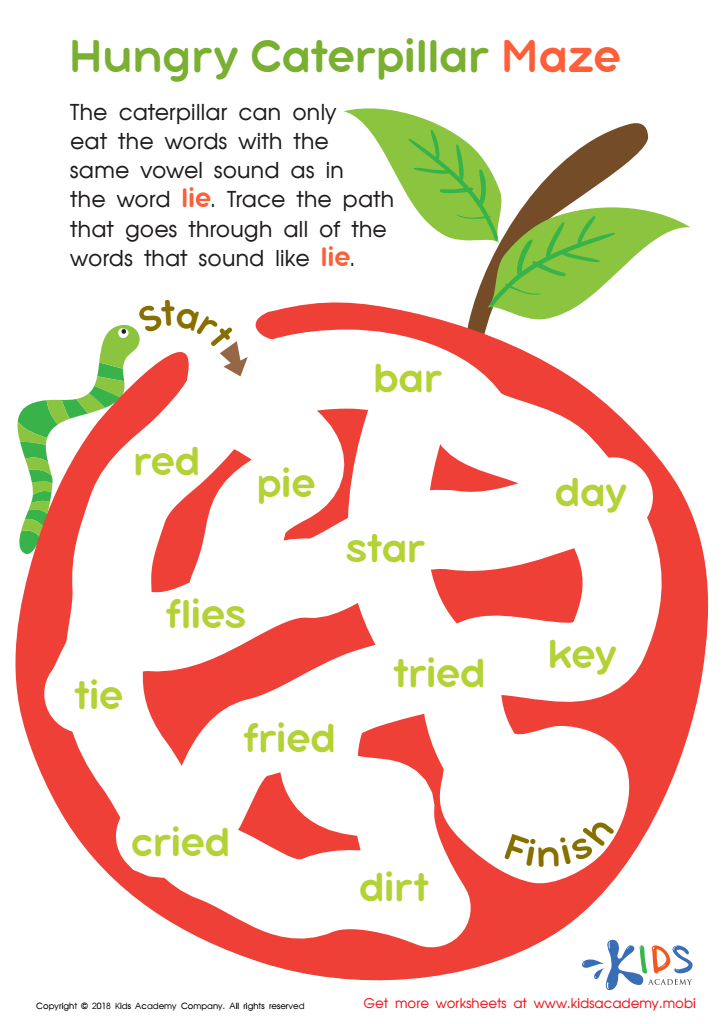
Hungry Caterpillar Maze Worksheet
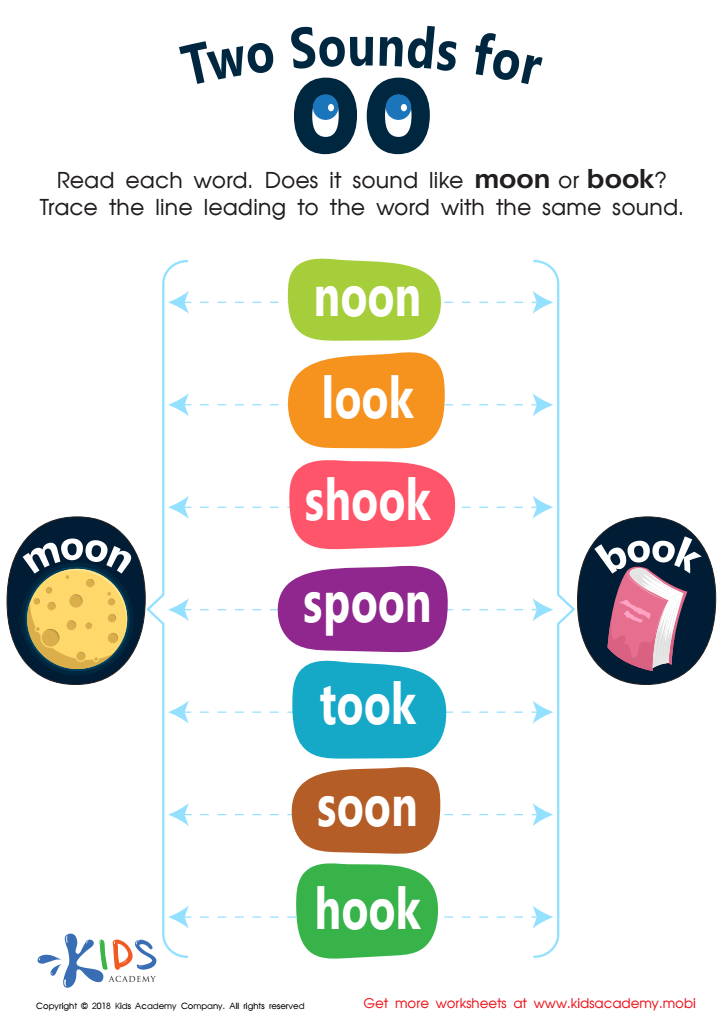
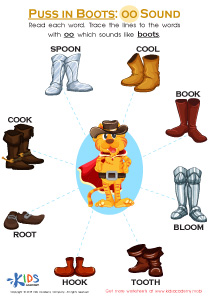
Two Sounds for OO Worksheet
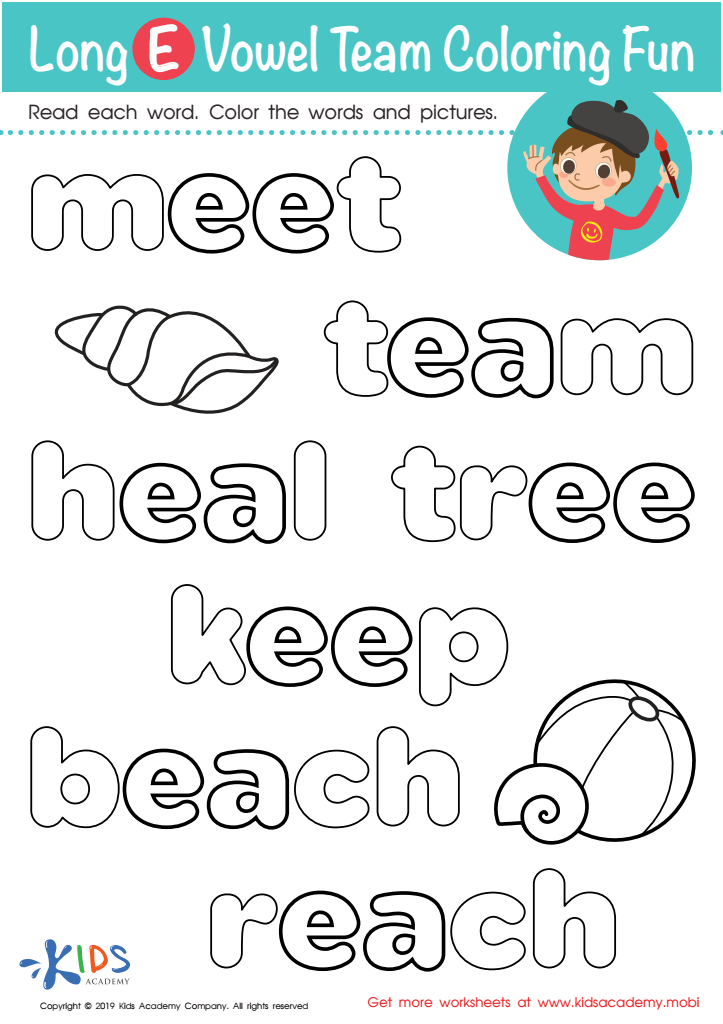
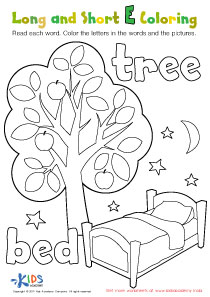
Long E Vowel Team Coloring Worksheet
Assign to My Students
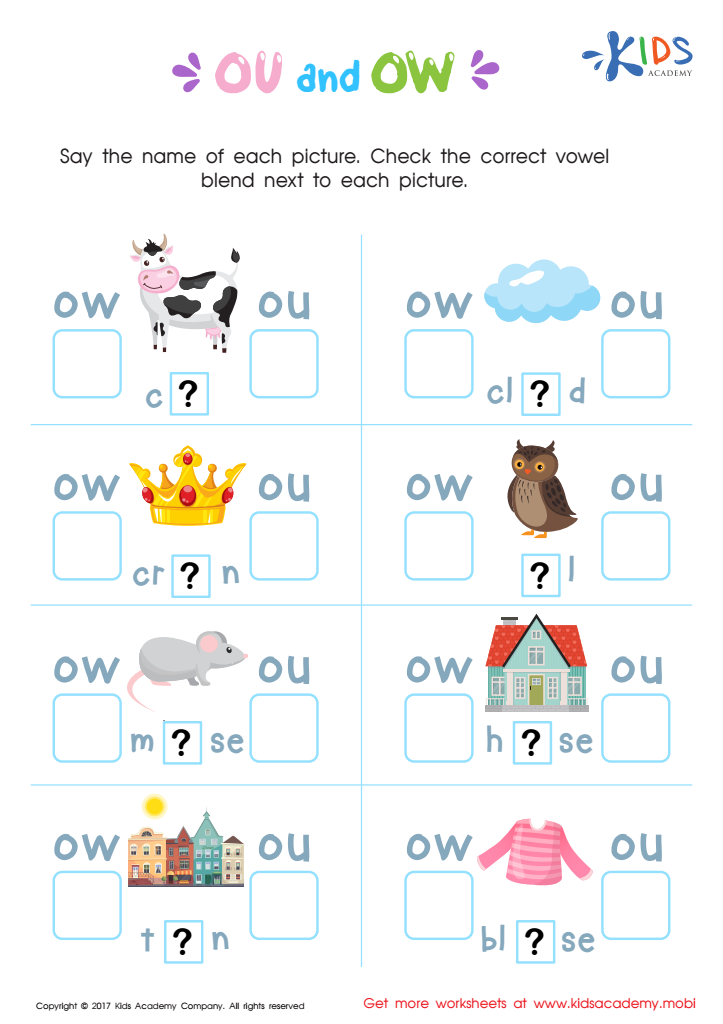
OU and OW Words Worksheet


Understanding "Two Vowels Together," often called vowel teams, is essential for young learners aged 4-8 as it lays the foundation for proficient reading and spelling. Vowel teams occur when two vowels are paired together to create a single vowel sound, like in words such as "boat" or "rain." This concept helps children recognize patterns in spelling and pronunciation, making it easier for them to decode unfamiliar words and enhance their reading fluency.
When parents and teachers emphasize the importance of vowel teams, they support children's phonemic awareness—the ability to hear, identify, and manipulate phonemes. This skill is crucial for developing literacy early on. Engaging children with vowel team activities can also foster enthusiasm for reading, as they experience success in understanding and utilizing these patterns. Moreover, a strong grasp of such phonetic components aids in spelling accuracy, boosting confidence as learners progress.
Involving parents through fun, interactive reading games or meaningful conversations about words helps reinforce these concepts at home. Constructive practice of vowel teams contributes to a positive language experience and sets the stage for future academic success in literacy and beyond. Thus, making vowel teams a focal point can greatly benefit the young learners’ journeys.