Comparing shapes Worksheets for Ages 4-8
6 filtered results
-
From - To
Discover our engaging "Comparing Shapes Worksheets," designed for children aged 4 to 8. These fun and interactive activities encourage young learners to explore and identify various shapes, enhancing their critical thinking and observational skills. With a variety of exercises that promote comparison, classification, and visual differentiation, children will build a strong foundational understanding of geometry. Each worksheet features vibrant illustrations that make learning enjoyable and captivating. Perfect for at-home practice or classroom use, these resources seamlessly support early math curriculum goals. Help your child develop essential skills while fostering a love for learning with our comparing shapes worksheets today!
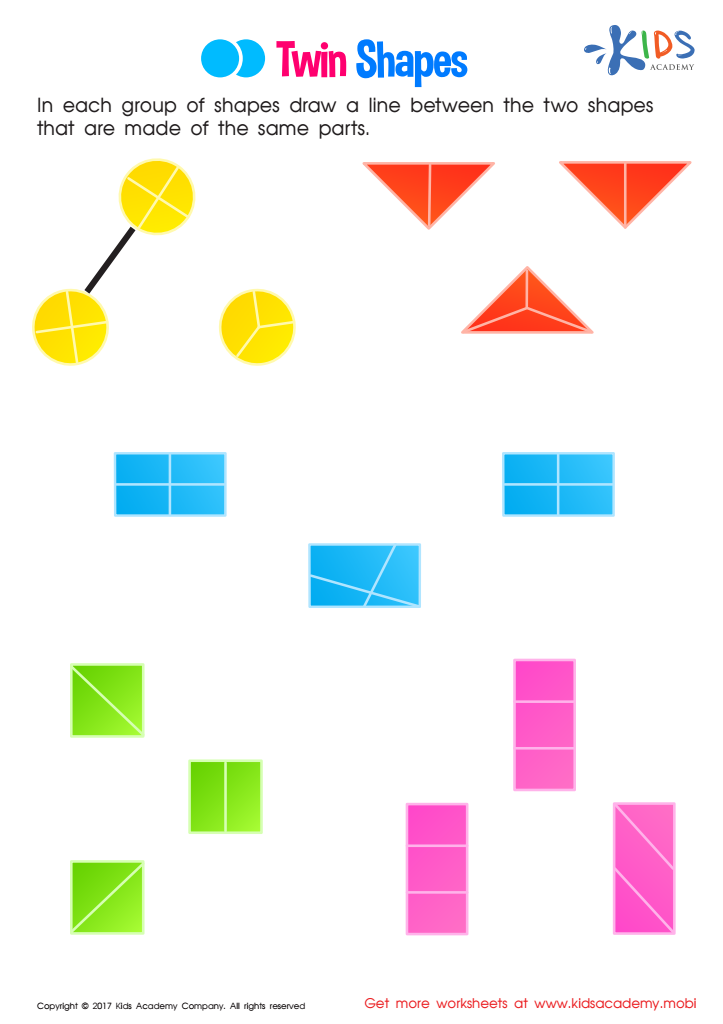
Twin Shapes Worksheet
 Assign to My Students
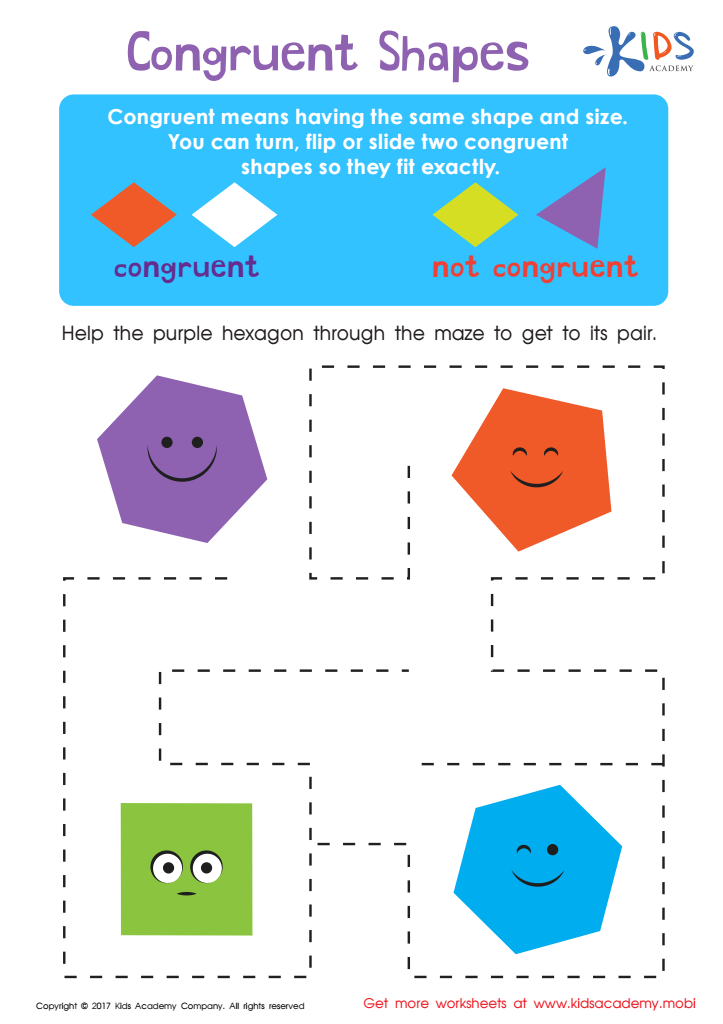
Congruent Shapes Worksheet
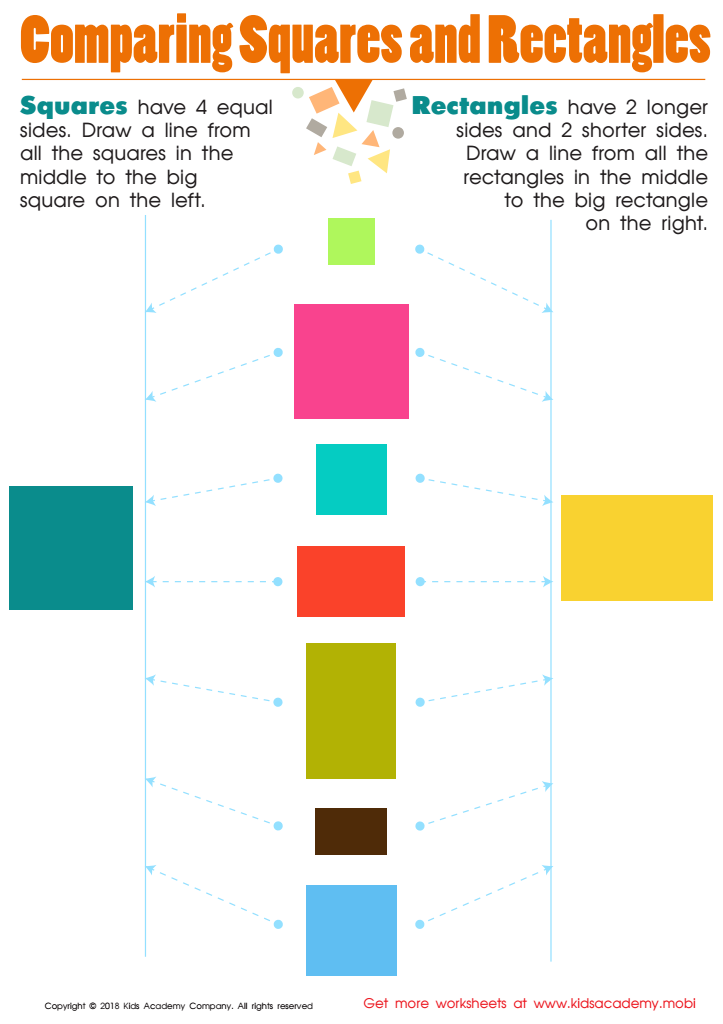
Comparing Squares Rectangles Worksheet
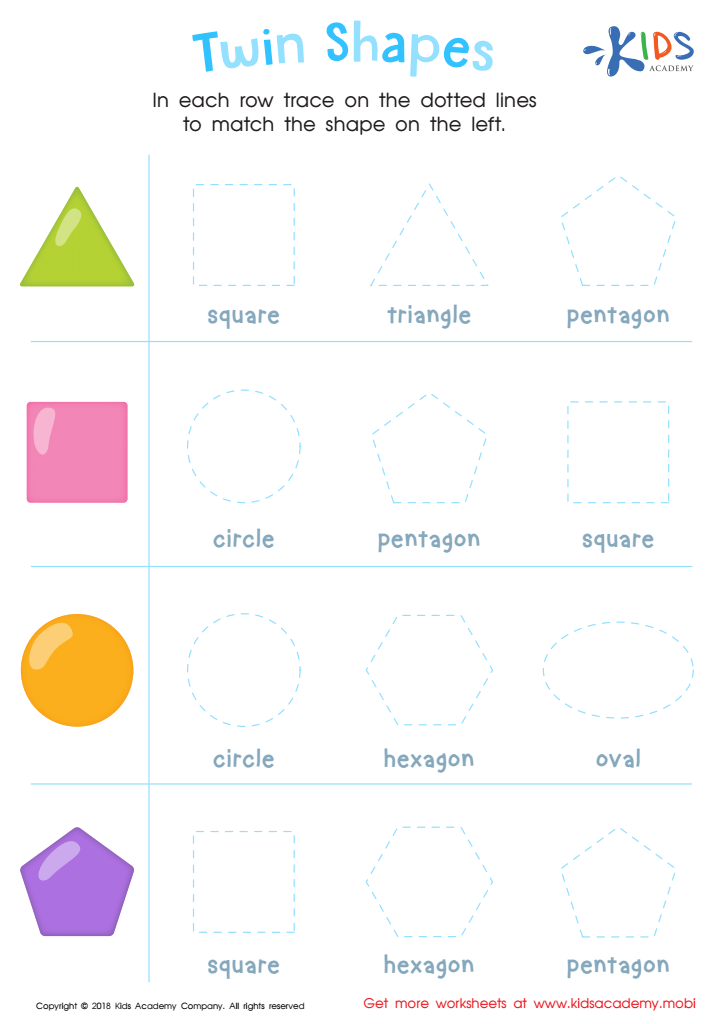
Twin Shapes Dot-to-Dot Worksheet






Comparing shapes is a foundational skill for children ages 4-8 that has far-reaching implications for their cognitive development and understanding of the world around them. For parents and teachers, it is crucial to emphasize this skill because it lays the groundwork for more complex mathematical concepts, such as geometry, measurement, and spatial awareness.
Engaging children in activities that involve comparing shapes helps them develop critical thinking and observational skills. For instance, identifying similarities and differences between shapes teaches them to categorize and classify objects, fostering logical reasoning. Additionally, these skills support language development as children learn to articulate their observations and describe geometric attributes like size, color, and angles.
Beyond mathematics, shape comparison activities promote problem-solving abilities essential for a child's overall academic success. They encourage the exploration of the environment, enhancing spatial awareness critical for navigation and coordination.
Moreover, integrating shape comparison with art, storytelling, and everyday activities enriches the learning experience, making it relevant and engaging. By nurturing these skills, parents and teachers not only prepare children for future educational challenges but also help them develop a love for learning through playful exploration.








