
Understanding bar graphs Worksheets for Ages 4-8
8 filtered results
Difficulty Level
Grade
Age
-
From - To
Subject
Activity
Standards
Unlock the exciting world of data with our "Understanding Bar Graphs Worksheets" designed for children ages 4-8. These engaging worksheets help young learners interpret and create bar graphs, key skills for developing early math and analytical abilities. Colorful, kid-friendly graphs featuring relatable themes such as pets, favorite foods, and toys make learning both fun and meaningful. Step-by-step activities guide children to compare data, count and sort items, and draw conclusions. Perfect for classroom use or at-home practice, these worksheets lay a solid foundation for future STEM learning, transforming statistics into a playful adventure.
Favorites
With answer key
Interactive
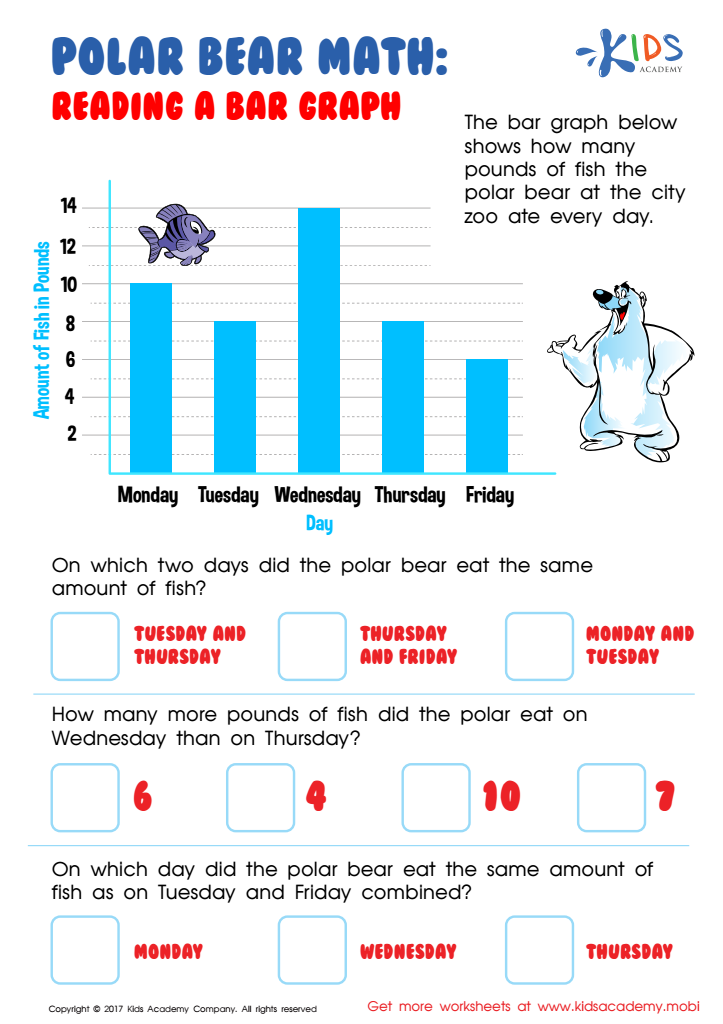
Reading Bar Graph Worksheet
Take your child north to practice data reading with a polar bear friend! This worksheet challenges 3rd graders to interpret data on a graph and solve related math problems.
 Assign to My Students
Reading Bar Graph Worksheet
Worksheet
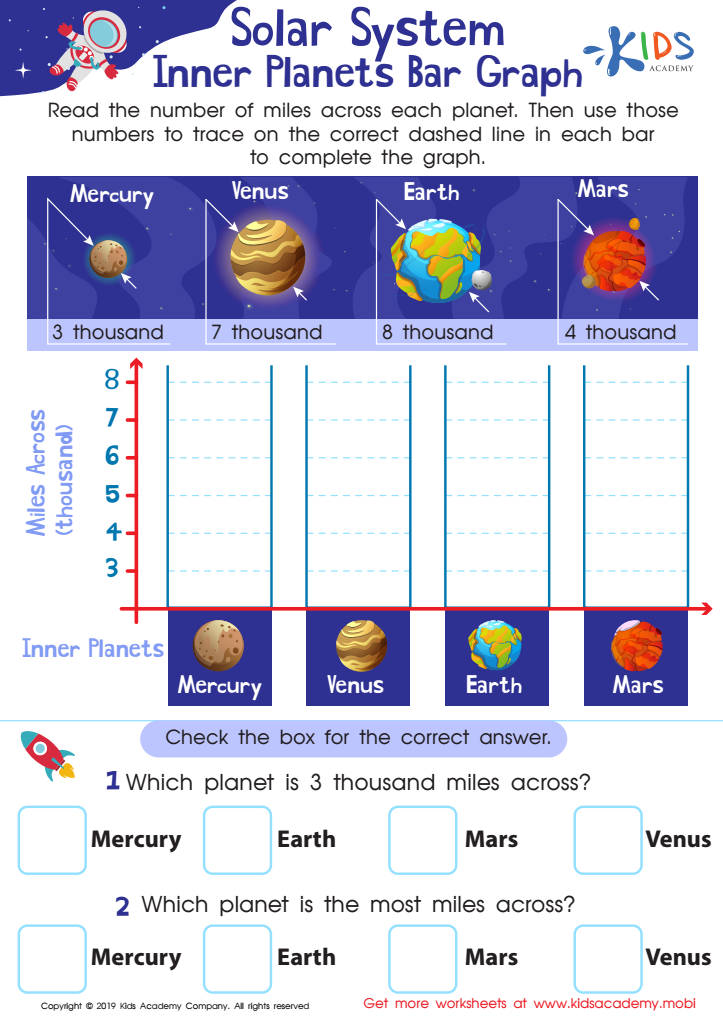
Planets Bar Graph Worksheet
With this fun, educational worksheet, kids can learn about bar graphs and the solar system simultaneously. Introduce them to the concept by reading out the number of miles for each planet, then help them trace the dashed lines in each bar to complete the graph.
Planets Bar Graph Worksheet
Worksheet
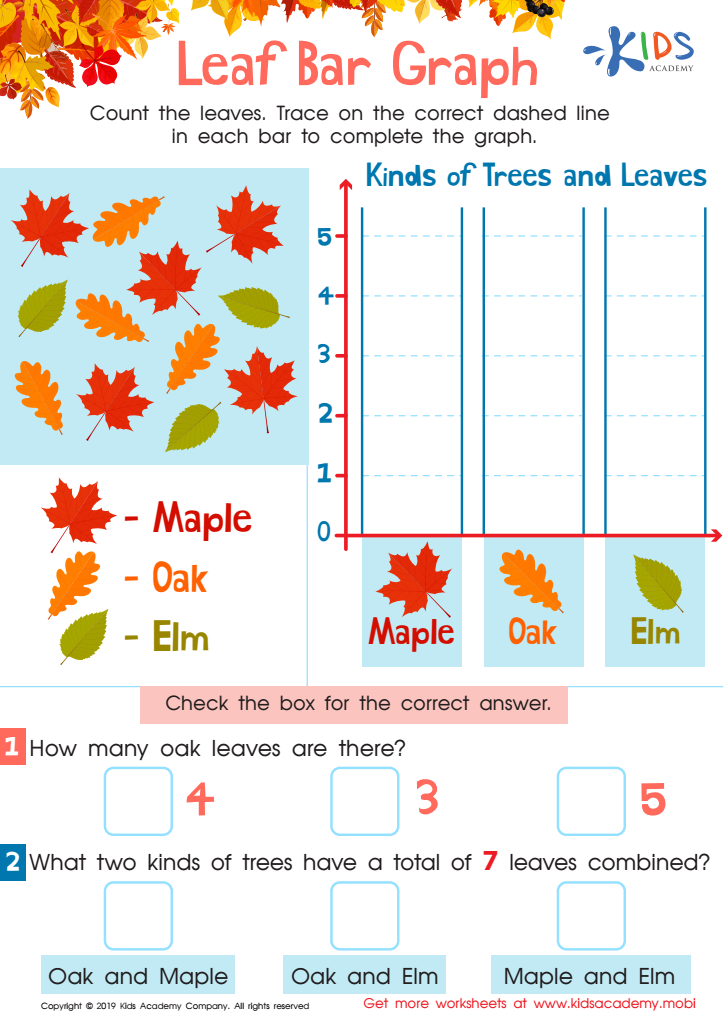
Leaf Bar Graph Worksheet
You can help your kids make learning easier and more enjoyable. While their teachers provide lessons and homework, you can take their education further. This worksheet can assist them in mastering bar charts. Count the leaves, then trace the correct line for each bar to complete the graph.
Leaf Bar Graph Worksheet
Worksheet
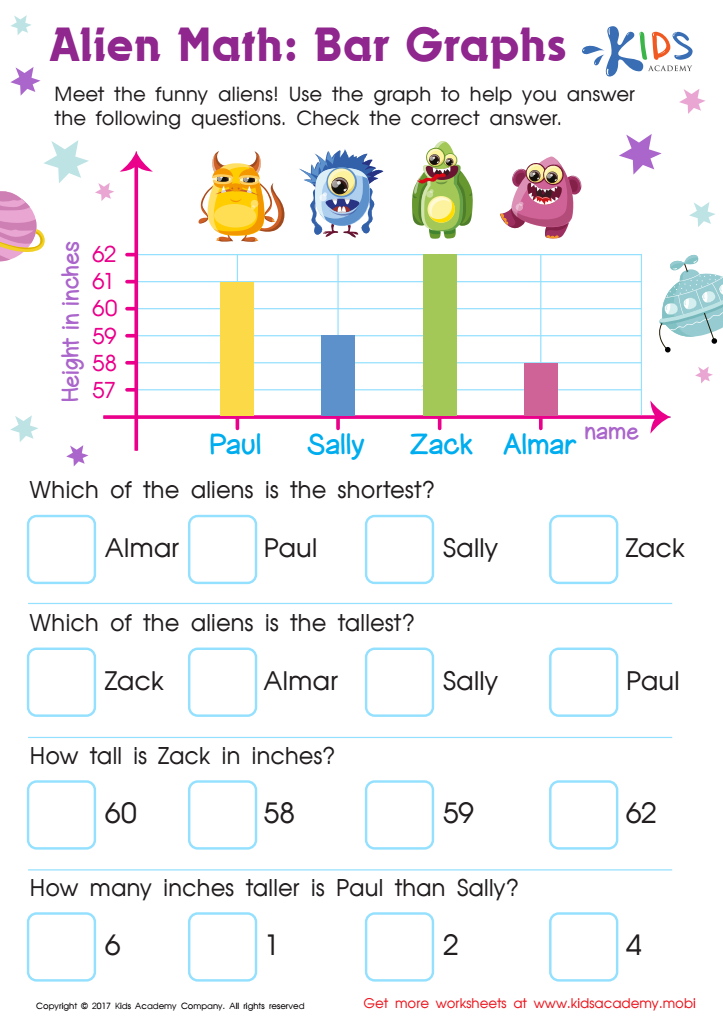
Bar Graphs Worksheet
Let's blast off to outer space and visit our funny alien friends with this bar graphs worksheet PDF! Kids gain valuable measurement and data analysis skills by comparing sizes of the aliens and working with bar graphs.
Bar Graphs Worksheet
Worksheet
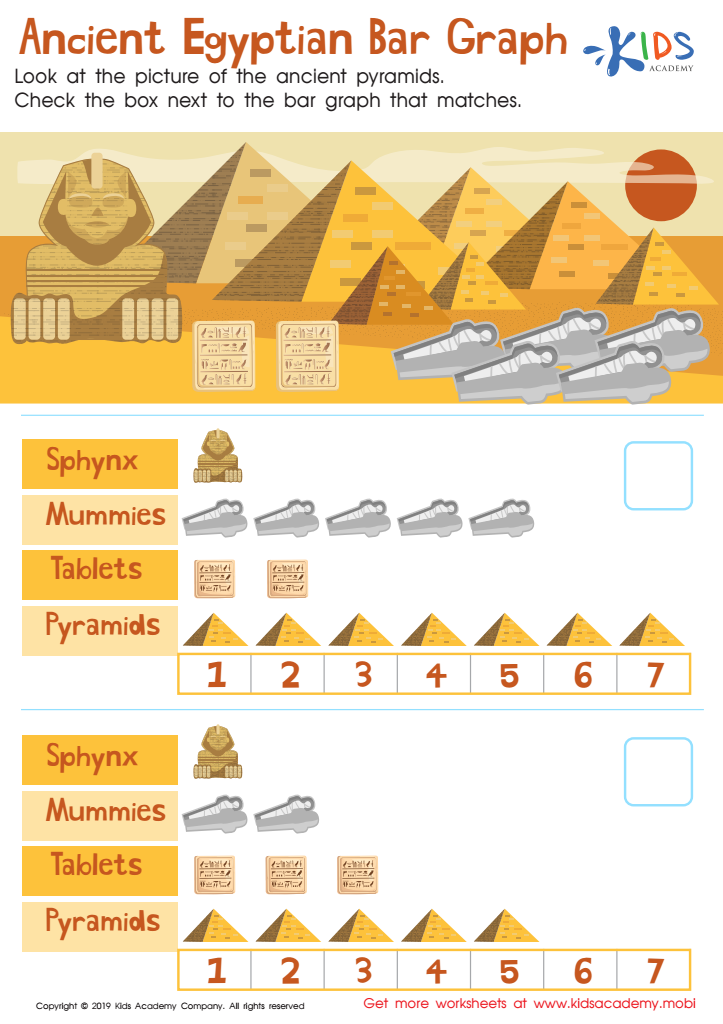
Egyptian Bar Graph Worksheet
Help your kids get a hang of bar graphs with this fun worksheet. Examine the picture of the ancient pyramids and help them match the bar graph to it. Check the box next to the correct bar graph and watch your little ones learn quickly!
Egyptian Bar Graph Worksheet
Worksheet
Join Kids Academy for Free
Who is primarily going to use this learning content?






Understanding bar graphs is crucial for children ages 4-8 as it lays a strong foundation for their future mathematical and analytical skills. For both parents and teachers, helping young learners get comfortable with bar graphs can significantly enhance their ability to interpret and organize data in a visual manner.
Bar graphs simplify comparisons and showcase trends in data that might otherwise seem abstract to young minds. This visual form of data representation helps children grasp concepts of quantity and comparison more concretely. For instance, when children see a bar graph showing the number of apples and oranges, they can easily identify which fruit has more or fewer pieces, fostering their analytical thinking and decision-making skills.
Moreover, an early understanding of bar graphs nurtures critical thinking. By interpreting this graphical information, children learn to ask questions, like "Why does this bar go higher?" or "What does this data tell us?" This curiosity drives deeper learning and encourages a problem-solving mindset.
Additionally, decoding bar graphs integrates cross-curricular abilities, linking math proficiency with reading comprehension. It aids in promoting cognitive development, improving focus, and enhancing organizational skills as children sort, count, and chart their own data.
In summary, emphasizing bar graph literacy in early education equips children with essential skills for academic success and daily life, making it a pivotal aspect of their early learning journey.








