
Develop addition skills Addition & Subtraction Worksheets for Ages 4-8
4 filtered results
Difficulty Level
Grade
Age
-
From - To
Subject
Activity
Standards
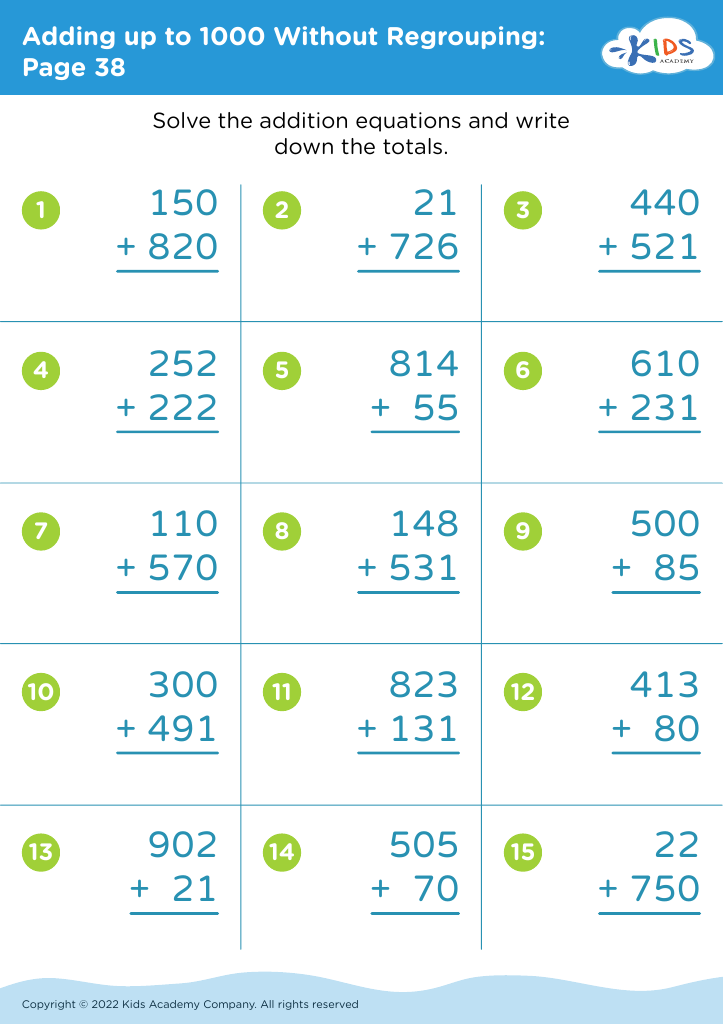
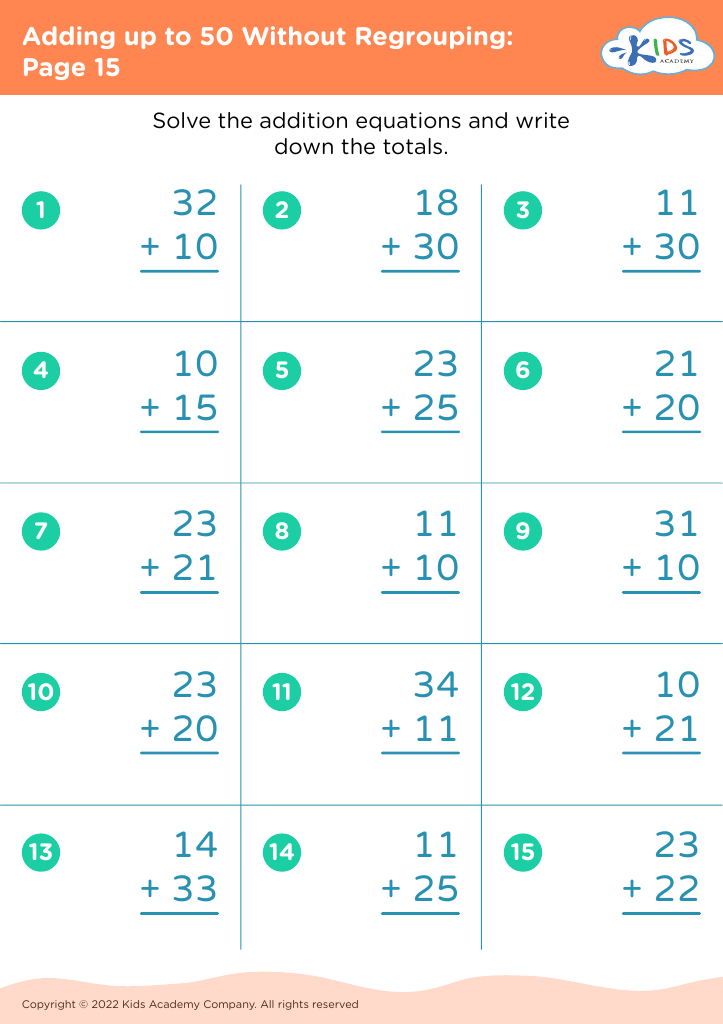
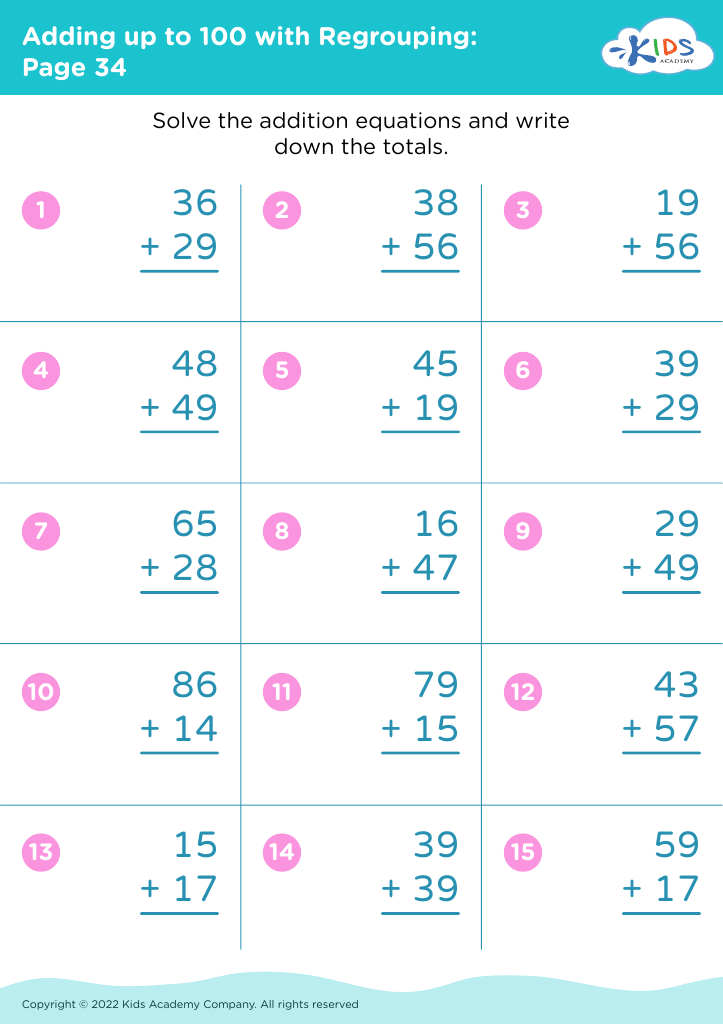
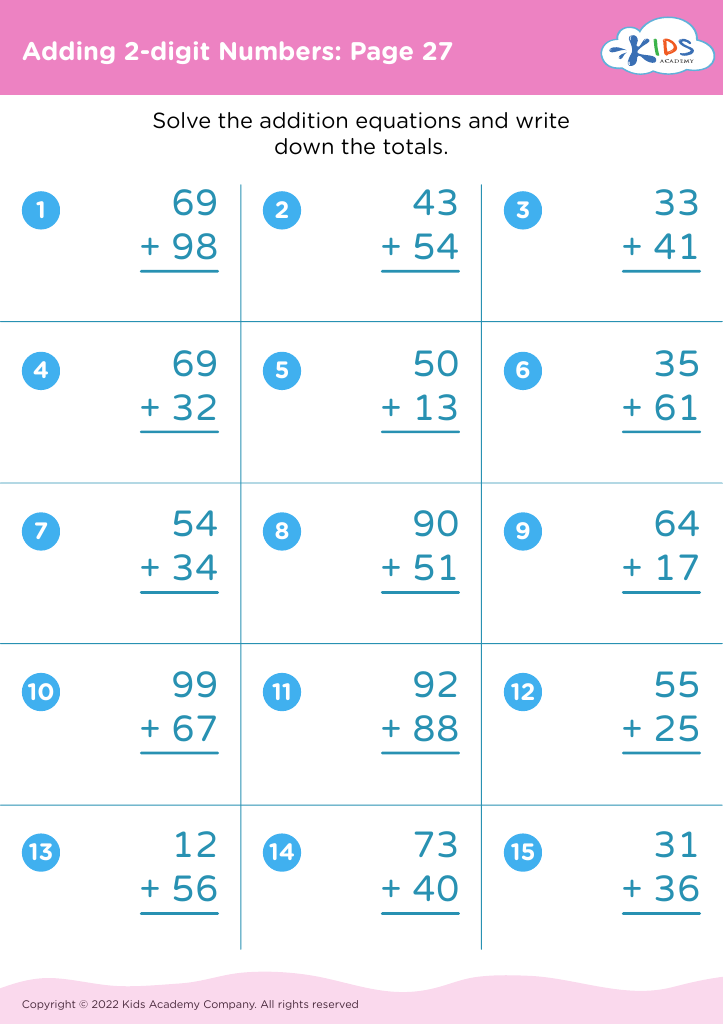
Enhance your child's math abilities with our "Develop Addition Skills" worksheets, specially designed for ages 4-8. These engaging, printable activities make learning addition fun and interactive. Each worksheet provides a variety of challenges, promoting problem-solving and critical thinking. As children practice, they build a foundation for more complex math concepts, boosting their confidence and competence in addition. Created by educational experts, our resources ensure a solid grasp of basic arithmetic skills. Give your child the tools they need for academic success with Kid’s Academy's professionally crafted and age-appropriate addition worksheets.
Favorites
With answer key
Interactive
Learning Skills
Join Kids Academy for Free
Who is primarily going to use this learning content?








Developing addition and subtraction skills in children ages 4-8 is crucial because these skills lay the foundation for all future mathematical understanding. Addition and subtraction are often the first mathematical operations children learn, and mastering them early on builds confidence and academic readiness.
For parents, focusing on these skills ensures that children start school with a strong grasp of basic math, preparing them for more complex concepts they'll encounter later. When children practice these skills, they improve their problem-solving abilities, enhance their cognitive development, and stimulate their logical thinking. Strong addition and subtraction skills also help in everyday situations, like counting toys or sharing snacks, making math relevant and practical from a young age.
Teachers see firsthand how early math skills correlate with academic success across other subjects. By embedding addition and subtraction practice into daily lessons through engaging activities, storytelling, and games, teachers can make learning fun while fostering a positive attitude toward math. This early focus not only improves mathematical precision and speed but also encourages a mind poised for analytical thinking. Neglecting these foundational skills can lead to learning gaps, making future mathematical concepts more challenging to grasp. Therefore, early and consistent focus on addition and subtraction helps set students on a path toward continuous learning and mathematical fluency.








