Filters

10 filtered results

Clear all filters
Favorites
With answer key
Interactive

10 filtered results

Difficulty Level

Grade


Enhance your child's logical thinking skills with our engaging Addition & Subtraction Worksheets designed for ages 4-8! These thoughtfully crafted worksheets help young learners master essential math concepts while fostering critical reasoning abilities. Each activity encourages children to solve problems creatively, promoting a deeper understanding of numbers and operations. With colorful illustrations and age-appropriate challenges, kids will enjoy strengthening their math skills in a fun, interactive way. Perfect for home use or classroom settings, our worksheets are an excellent resource for parents and teachers alike. Start exploring the joy of mathematics and logical thinking today!
Check out this FREE Trial Lesson on Addition & Subtraction for age 4-8!

Basic Facts Doubles & Turn Around Facts

Favorites
With answer key
Interactive
  • 4-8
  • Logical thinking
  • Addition & Subtraction
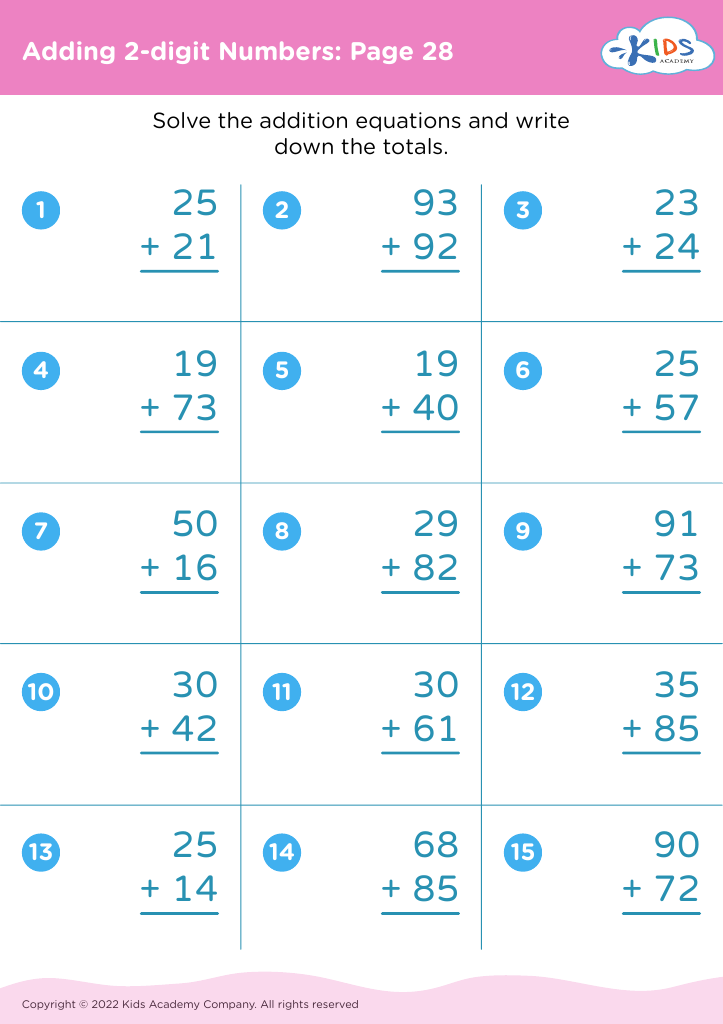
Adding 2-digit Numbers: Page 28

Adding 2-digit Numbers: Page 28

Adding 2-digit Numbers: Page 28
Worksheet
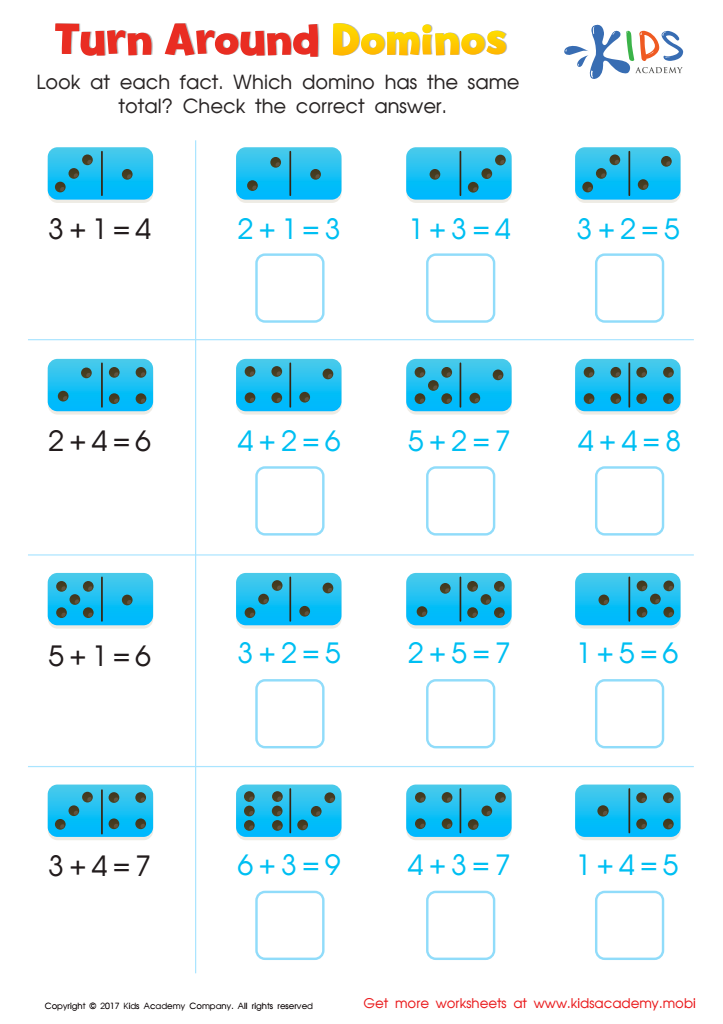
Turn Around Dominos Worksheet

Turn Around Dominos Worksheet

Encourage your child to flex their mental muscles with this math worksheet. Look through the left side's dominos and their values and then check the three boxes on the right. Ask your child if any of the right box's dominos are similar. This requires focus and careful observation.
Turn Around Dominos Worksheet
Worksheet
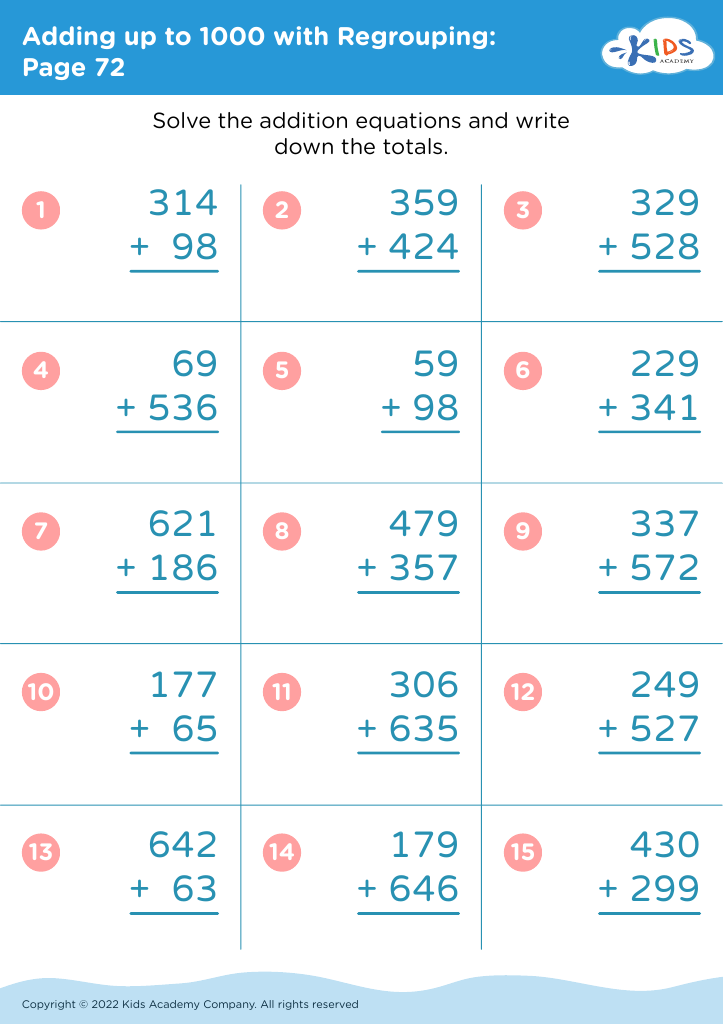
Adding up to 1000 with Regrouping: Page 72
Worksheet
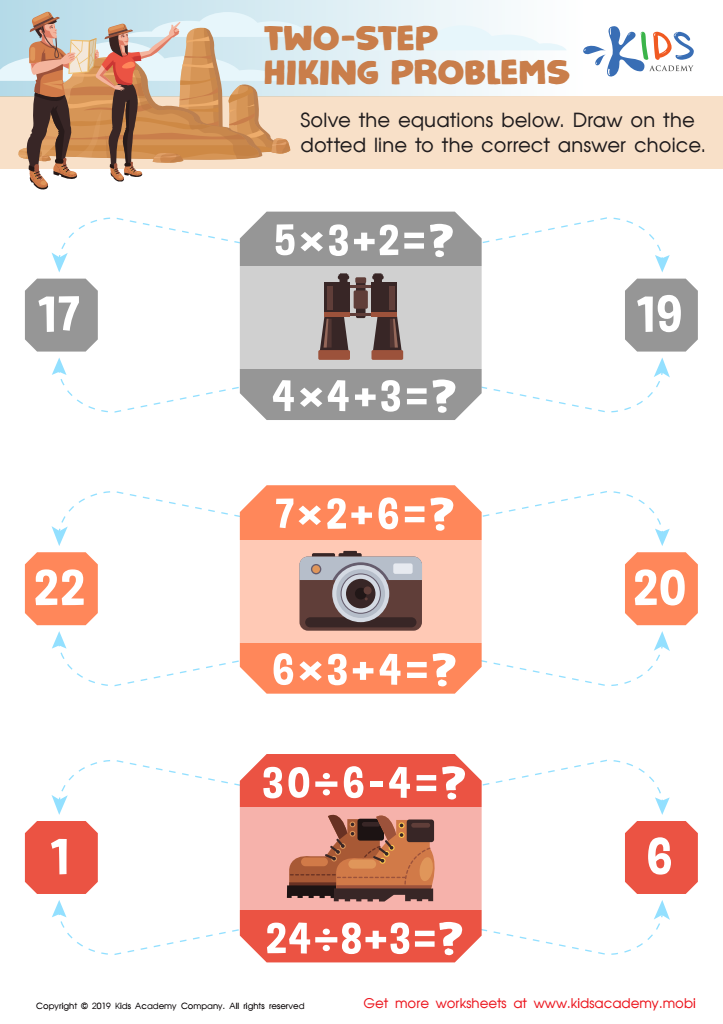
Two-Step Hiking Problems Worksheet

Two-Step Hiking Problems Worksheet

Help your kids ease into math with this worksheet. Solve the three basic equations, then draw on the dotted line to the correct answer. You can help your kids make their journey smoother by guiding them through it.
Two-Step Hiking Problems Worksheet
Worksheet
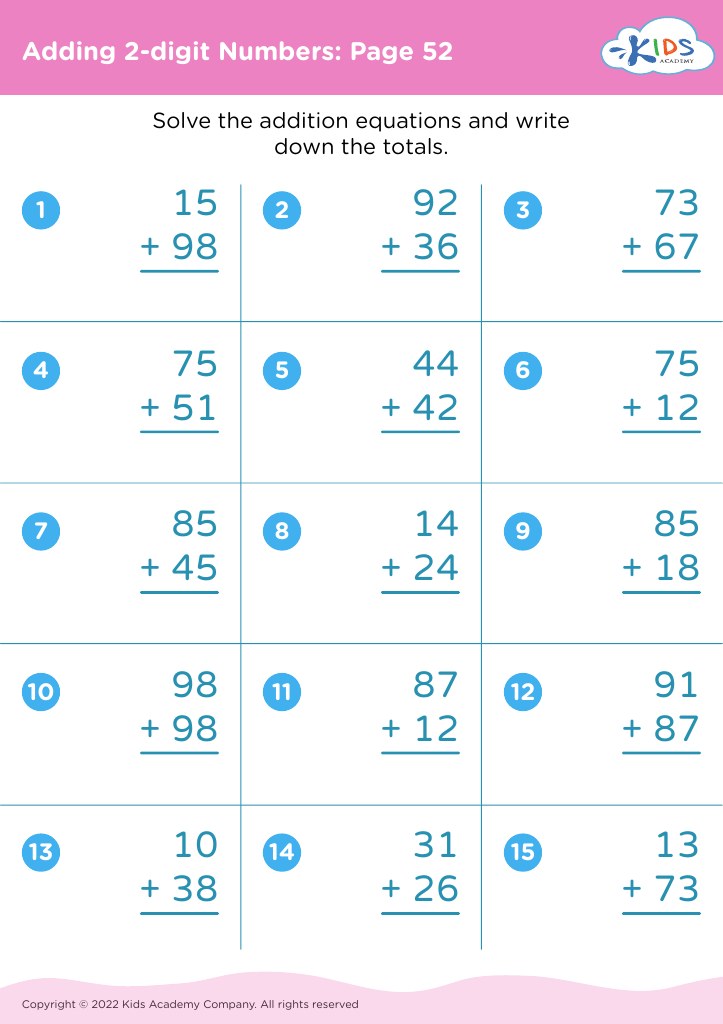
Adding 2-digit Numbers: Page 52

Adding 2-digit Numbers: Page 52

Adding 2-digit Numbers: Page 52
Worksheet
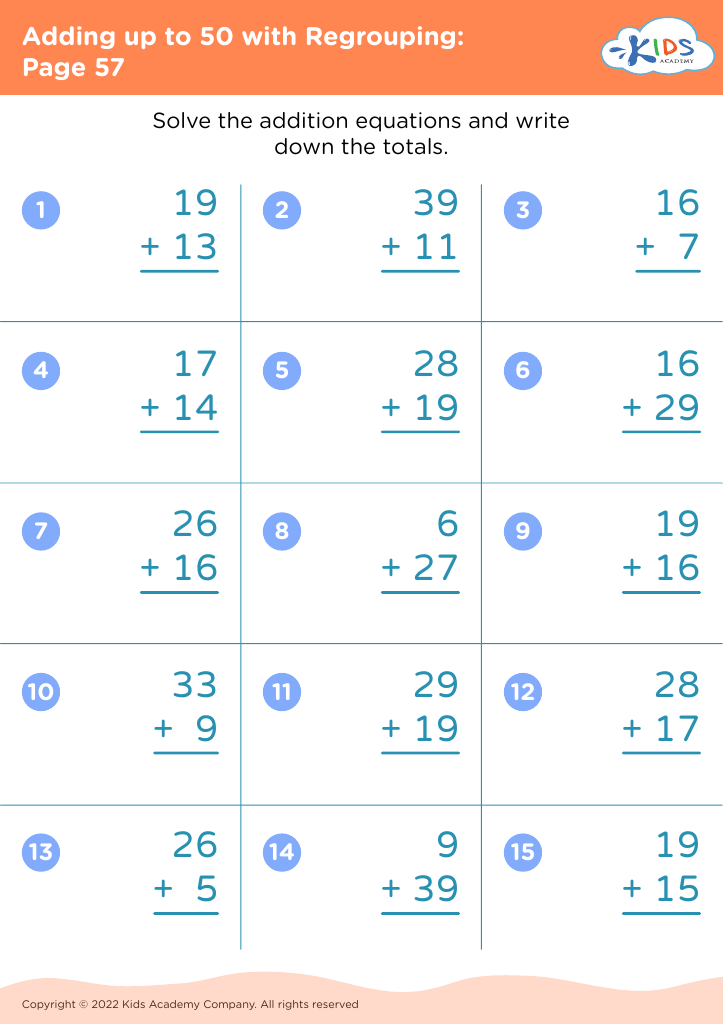
Adding up to 50 with Regrouping: Page 57
Worksheet
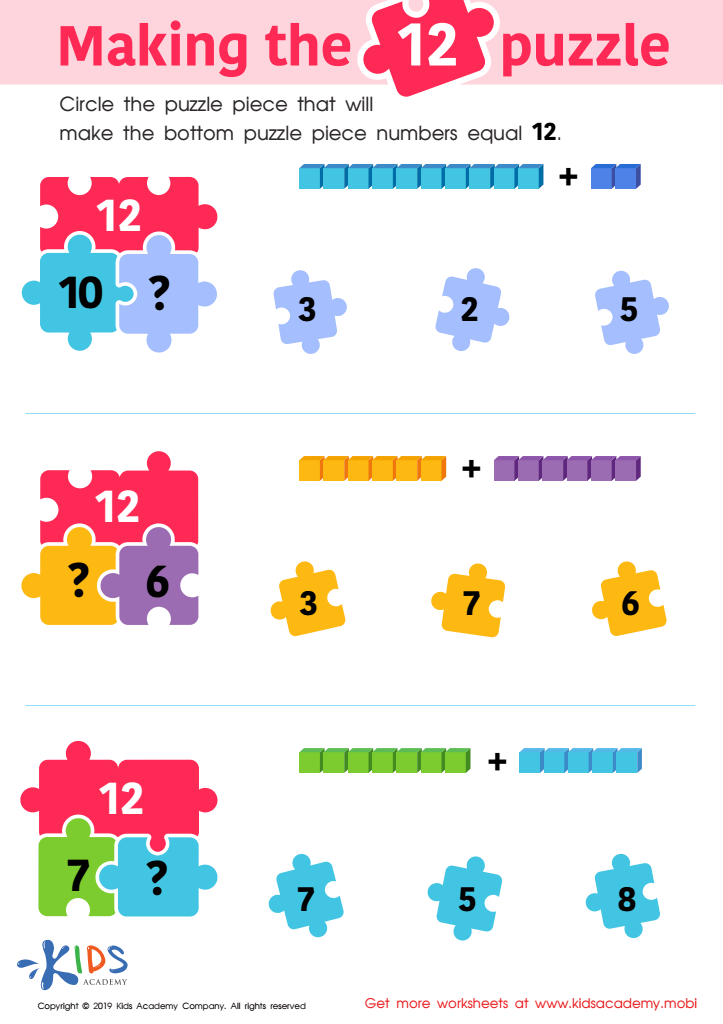
Making the 12 Puzzle Worksheet
Making the 12 Puzzle Worksheet
Engage preschoolers in learning with this fun and colorful worksheet. Ask them to look at the picture and identify the missing equation on each puzzle piece; then help them solve the problems. When all the puzzle pieces make the bottom numbers equal 12, have them circle it. This is a great way to combine learning and fun!
Making the 12 Puzzle Worksheet

Worksheet
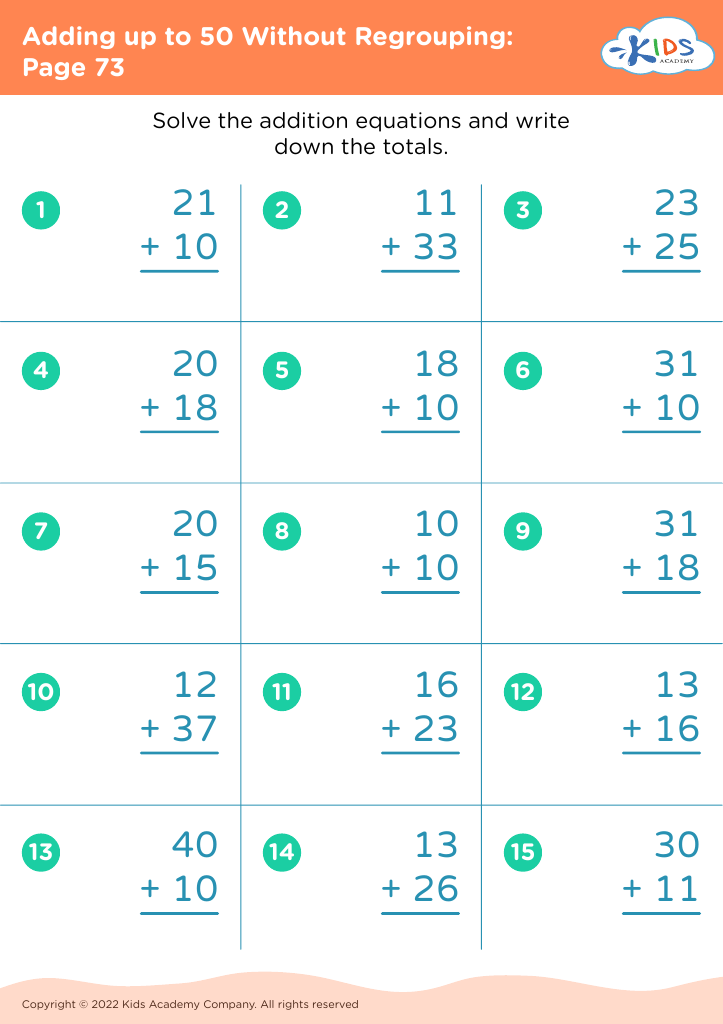
Adding up to 50 Without Regrouping: Page 73
Worksheet
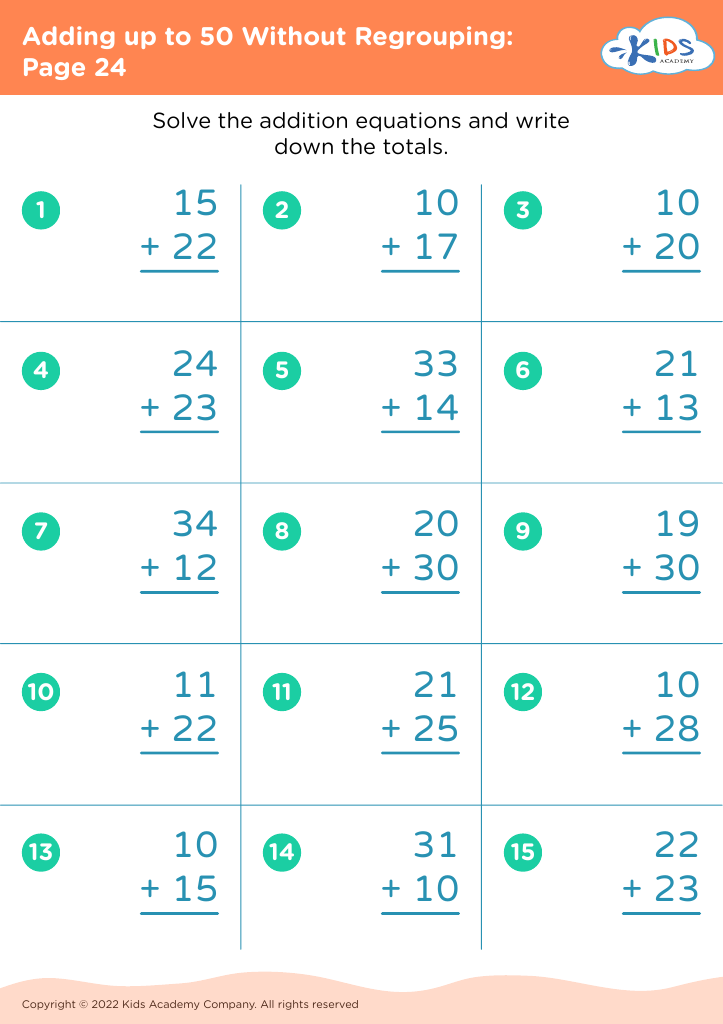
Adding up to 50 Without Regrouping: Page 24
Worksheet
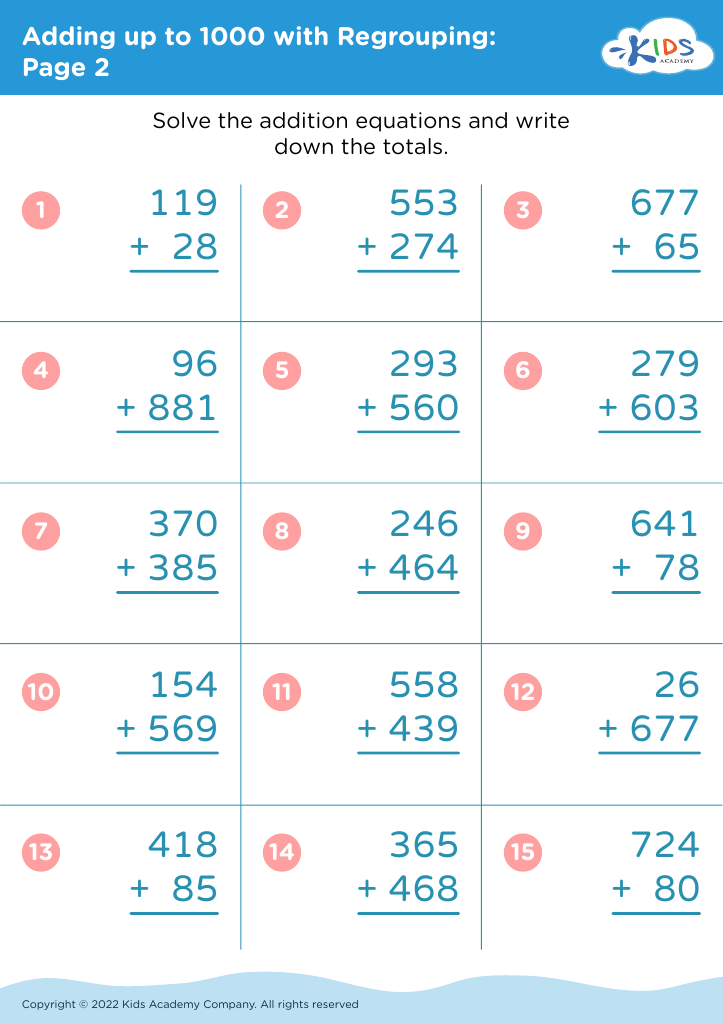
Adding up to 1000 with Regrouping: Page 2
Worksheet


Logical thinking in addition and subtraction lays the groundwork for effective problem-solving and critical thinking skills in young children. For ages 4-8, this foundational stage in mathematics not only helps learners understand basic arithmetic operations but also cultivates their overall cognitive abilities.

When parents and teachers emphasize logical thinking in these mathematical concepts, children are encouraged to explore relationships between numbers, make connections, and develop strategies for approaching problems. This underpins their ability to navigate more complex mathematical ideas in the future.

Furthermore, practicing addition and subtraction through logical reasoning enhances children's ability to approach other subjects with confidence. It fosters a mindset of inquiry and encourages them to ask questions, explore alternatives, and seek solutions—essential skills in any learning environment.

In addition, engaging in activities that promote logical thinking nurtures perseverance and resilience, as children learn to tackle challenges and understand that making mistakes is part of the learning process. For parents and teachers, fostering these skills is crucial for not just academic success but for shaping well-rounded, thoughtful individuals who can thrive in an increasingly complex world.