Check out this FREE Trial Lesson on Addition & Subtraction for age 4-8!

Making 11

Favorites
With answer key
Interactive
  • 4-8
  • Understanding fractions
  • Addition & Subtraction
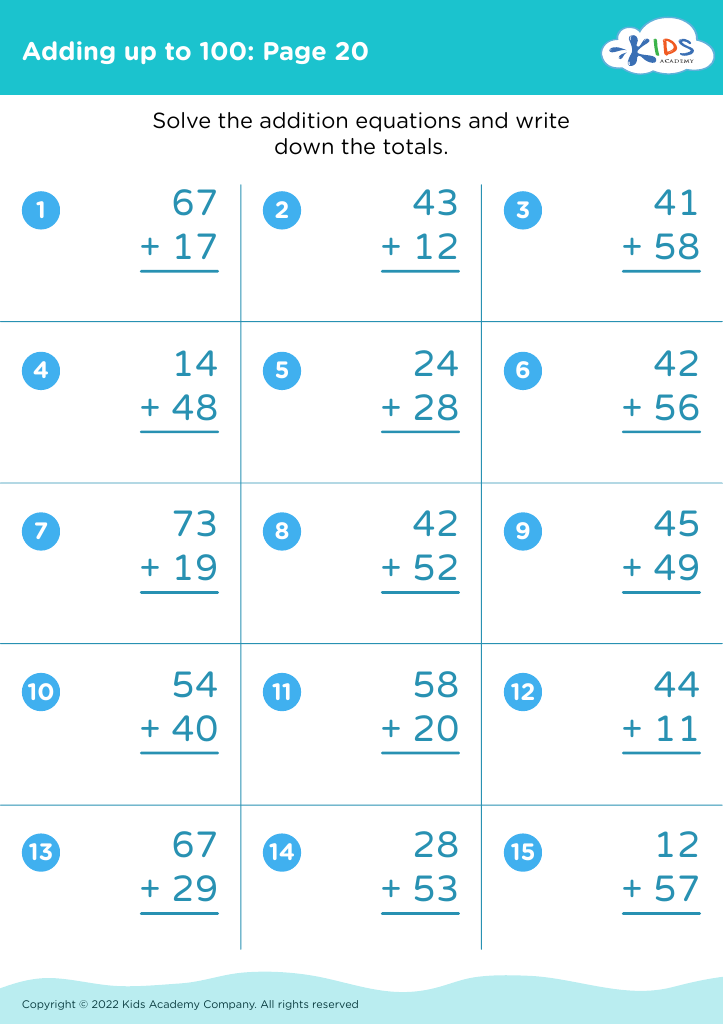
Adding up to 100: Page 20

Adding up to 100: Page 20

Adding up to 100: Page 20
Worksheet
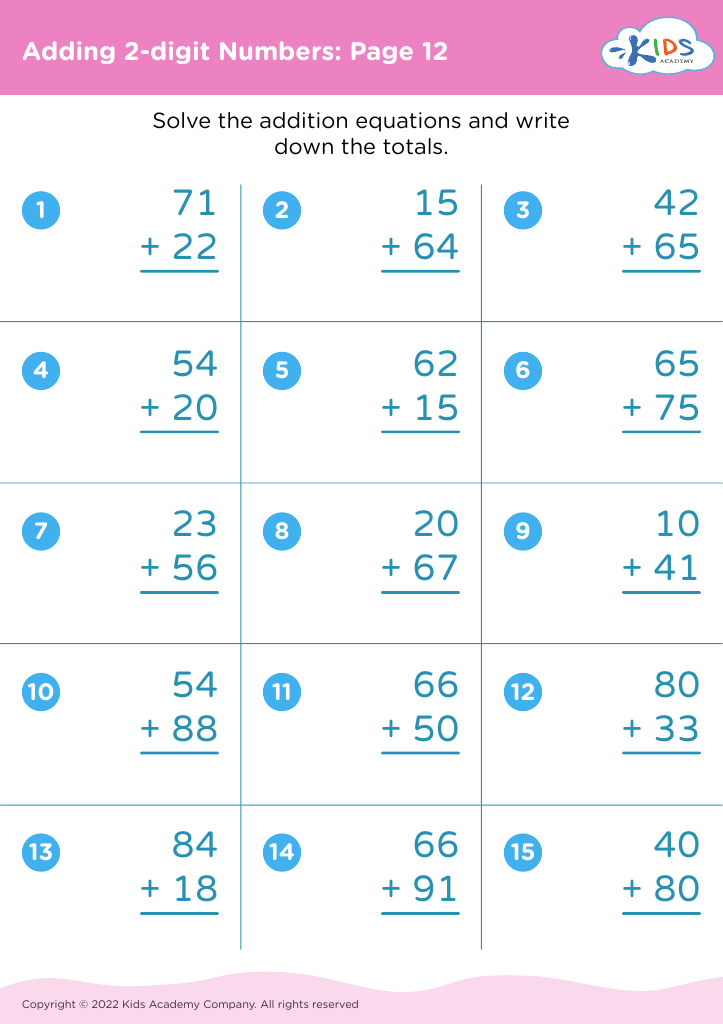
Adding 2-digit Numbers: Page 12

Adding 2-digit Numbers: Page 12

Adding 2-digit Numbers: Page 12
Worksheet
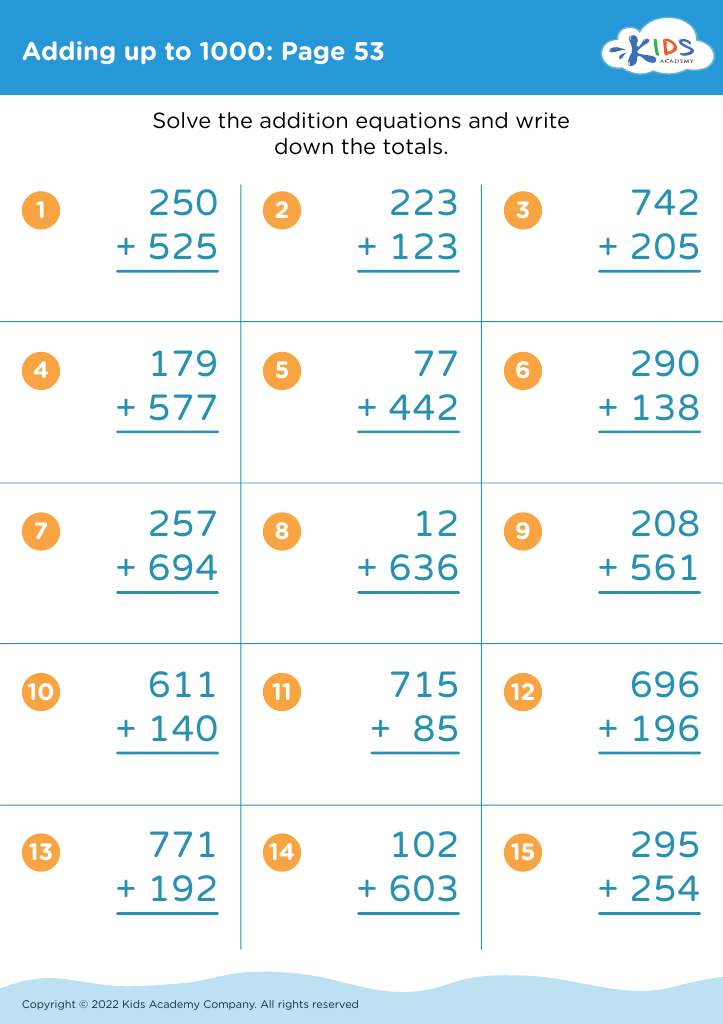
Adding up to 1000: Page 53

Adding up to 1000: Page 53

Adding up to 1000: Page 53
Worksheet
Piecing Together 11 Worksheet

Piecing Together 11 Worksheet

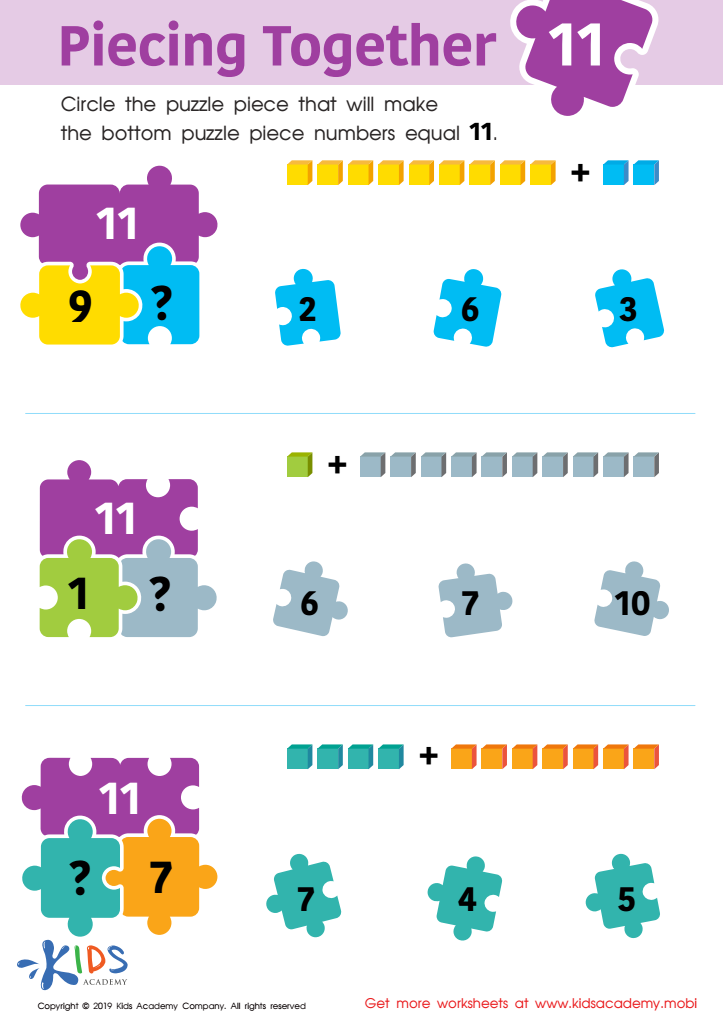
Engage your preschoolers with learning-filled fun! Show them this colorful worksheet, and ask them to identify the figures. Each puzzle piece features an equation, except one which is missing. Help the kids solve the problems and circle the piece that'll make the numbers equal 11. It's a surefire way to make learning enjoyable!
Piecing Together 11 Worksheet
Worksheet
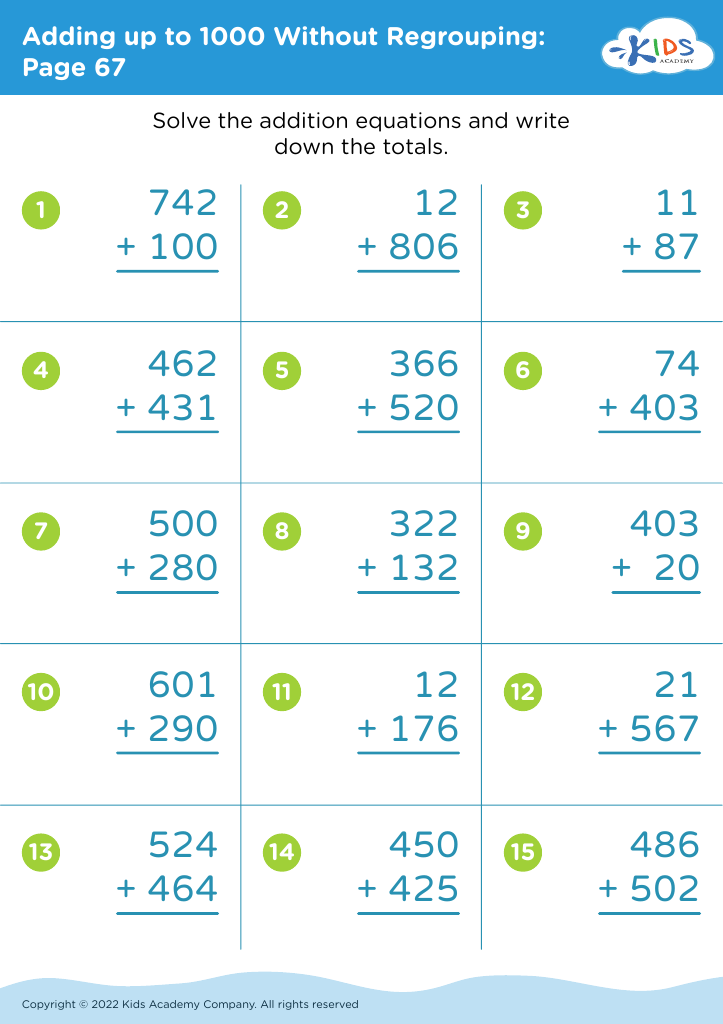
Adding up to 1000 Without Regrouping: Page 67
Worksheet
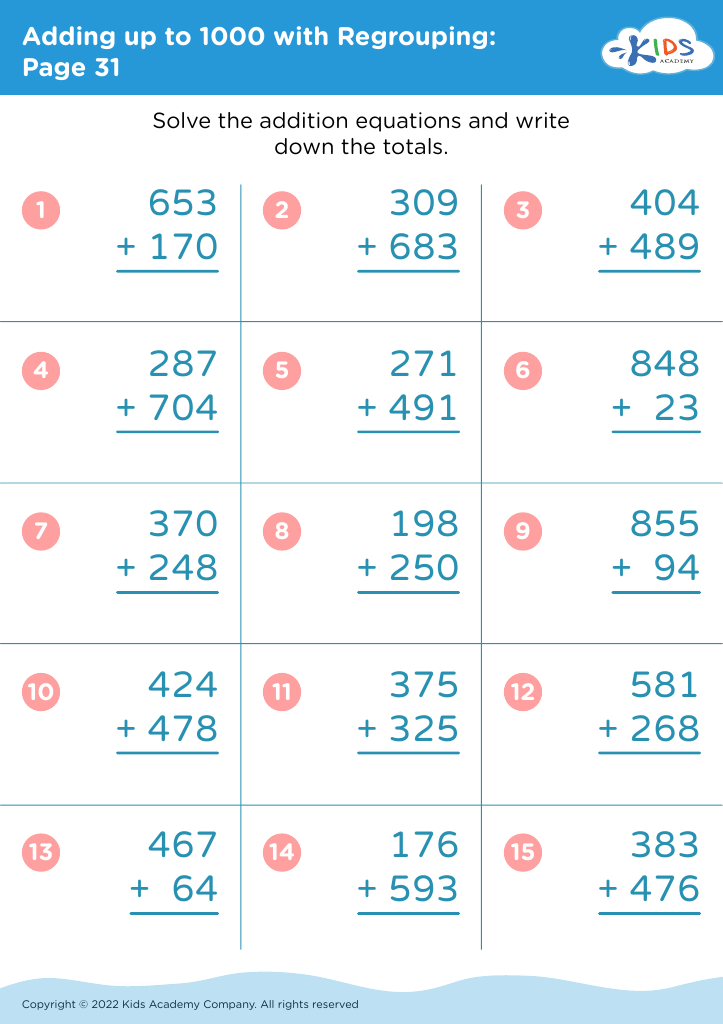
Adding up to 1000 with Regrouping: Page 31
Worksheet
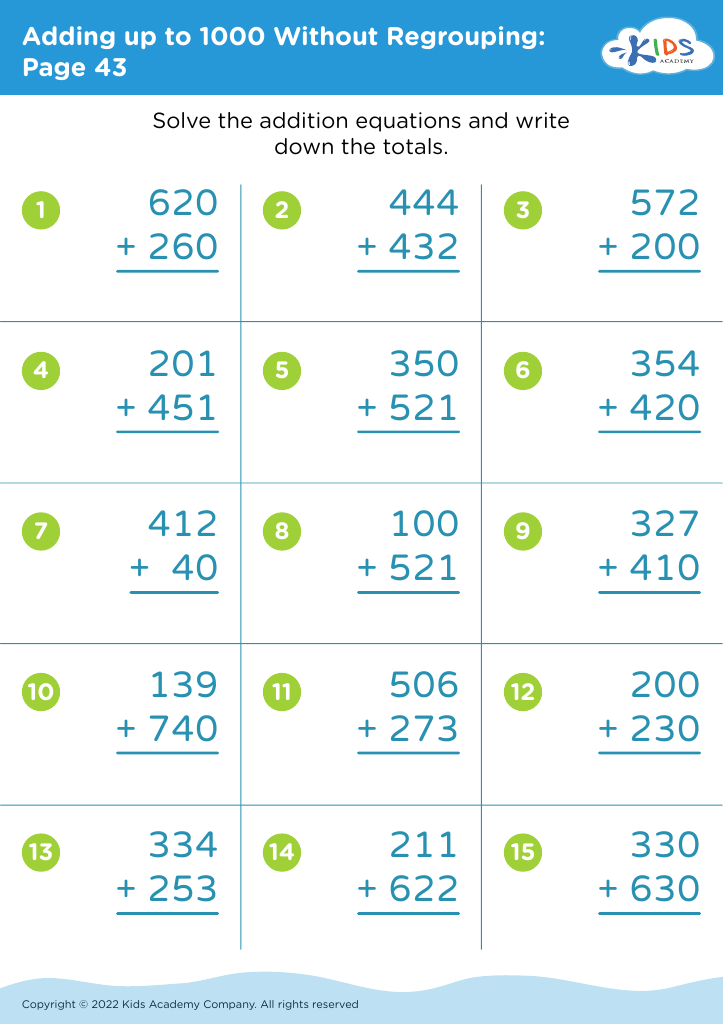
Adding up to 1000 Without Regrouping: Page 43
Worksheet
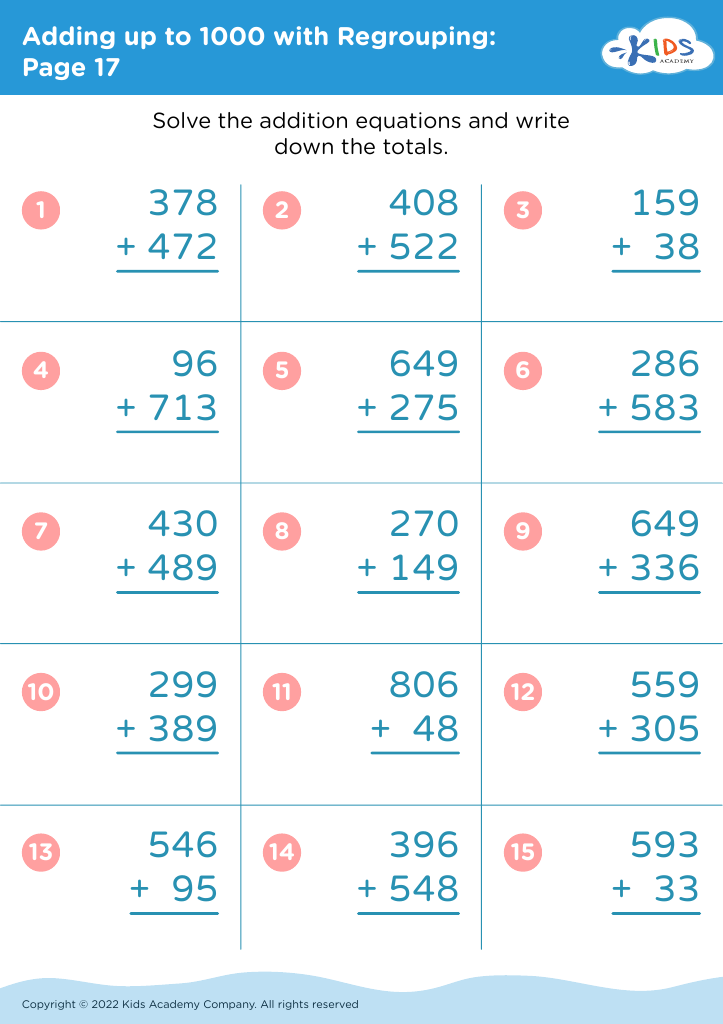
Adding up to 1000 with Regrouping: Page 17
Worksheet
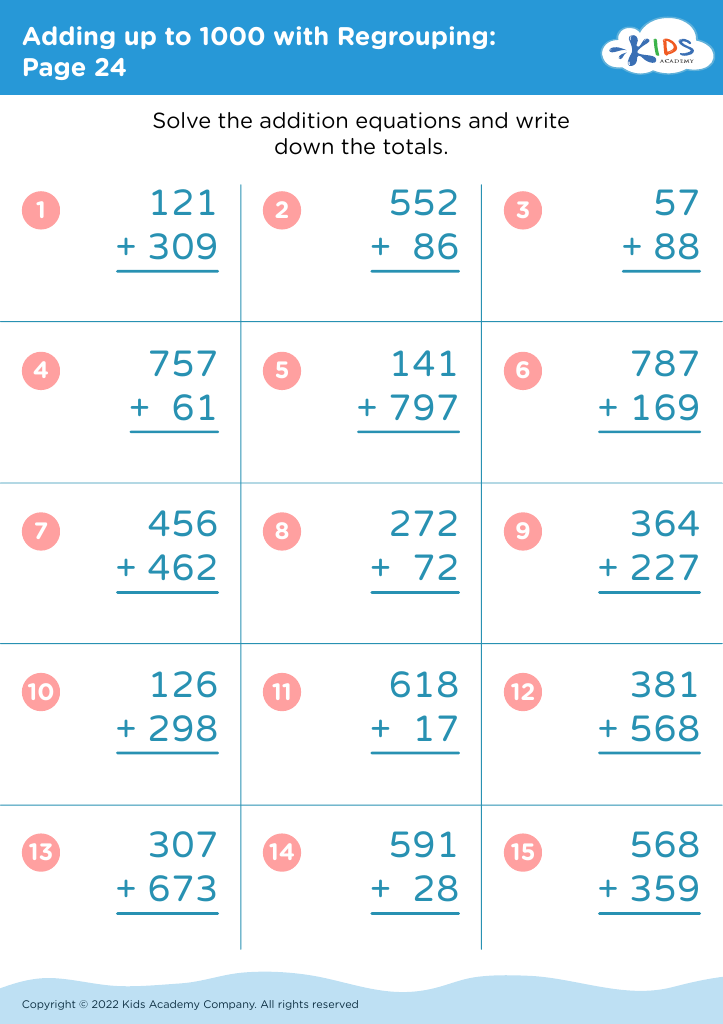
Adding up to 1000 with Regrouping: Page 24
Worksheet
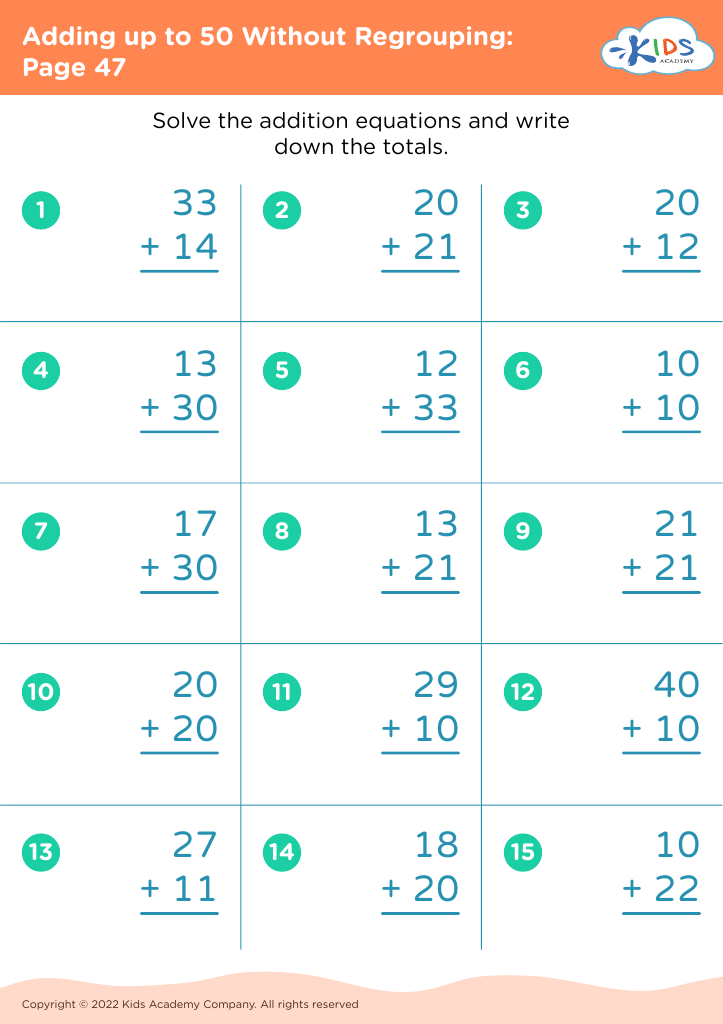
Adding up to 50 Without Regrouping: Page 47
Worksheet
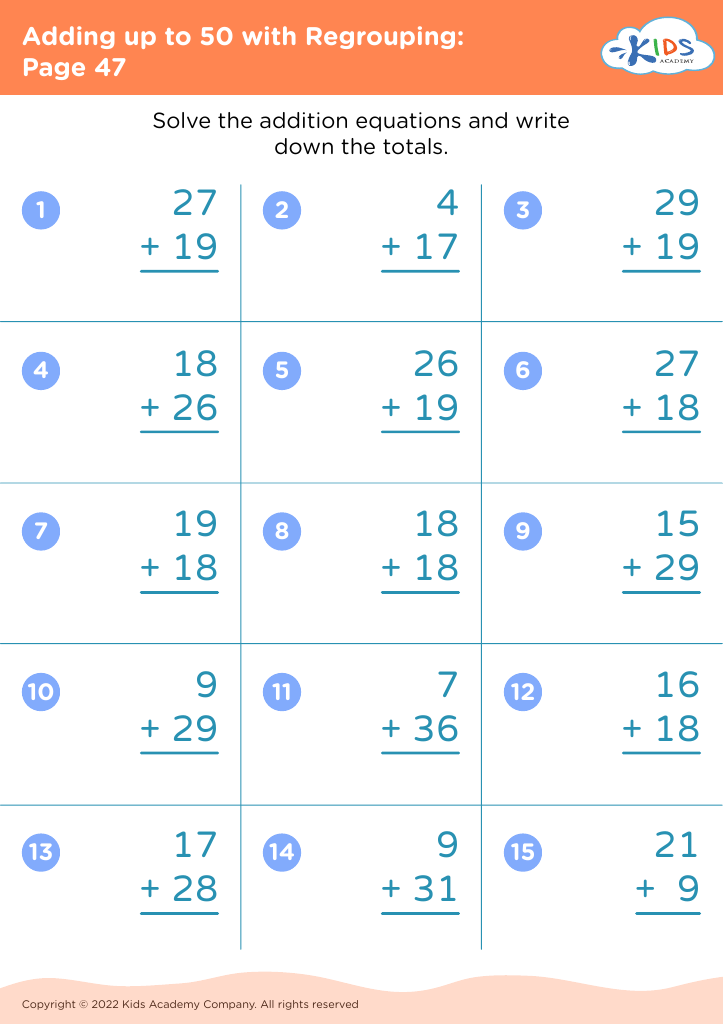
Adding up to 50 with Regrouping: Page 47
Worksheet
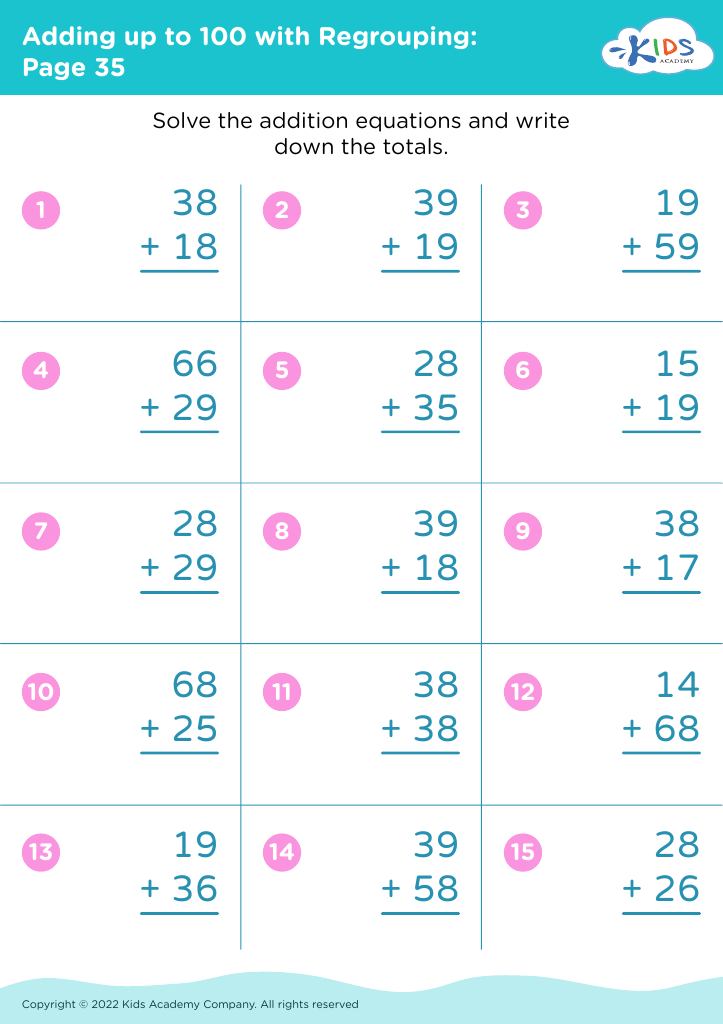
Adding up to 100 with Regrouping: Page 35
Worksheet
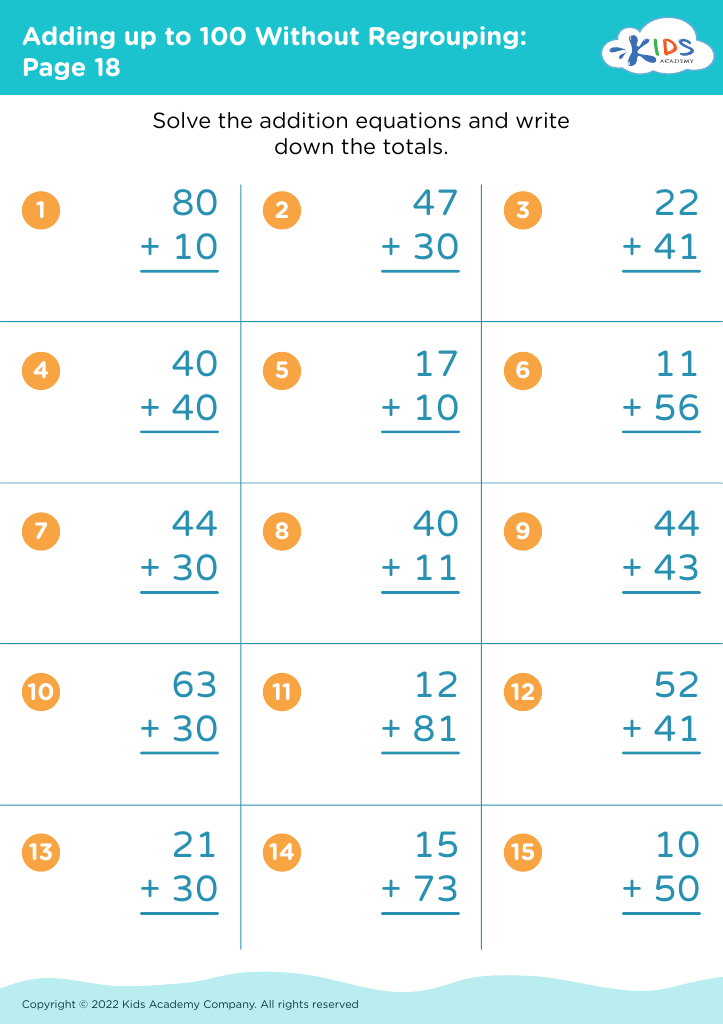
Adding up to 100 Without Regrouping: Page 18
Worksheet
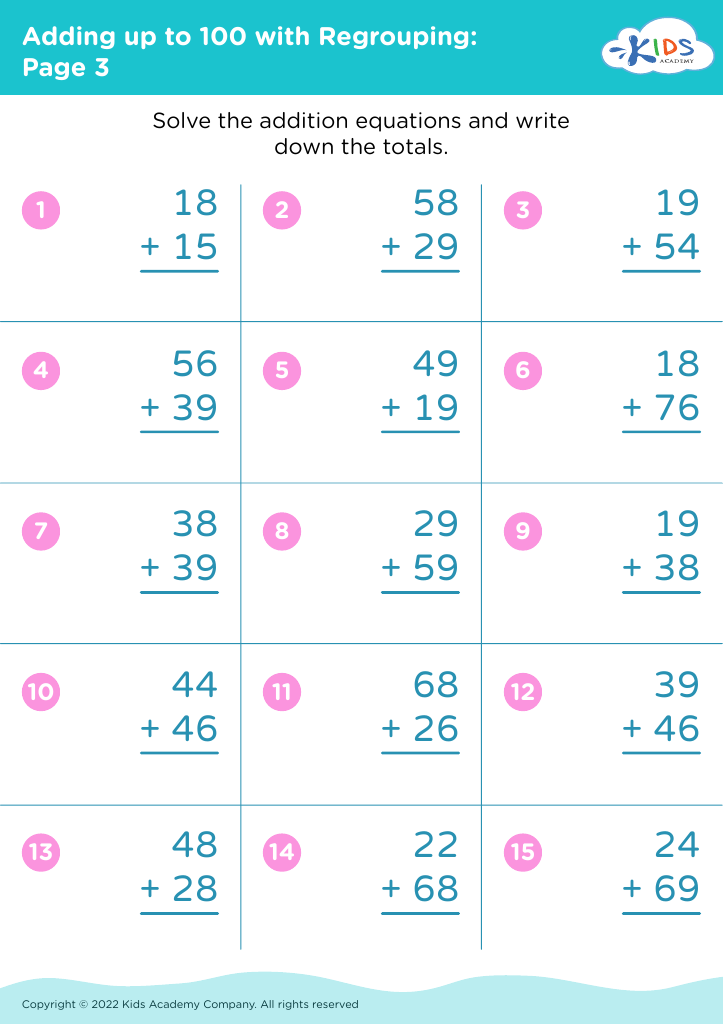
Adding up to 100 with Regrouping: Page 3
Worksheet
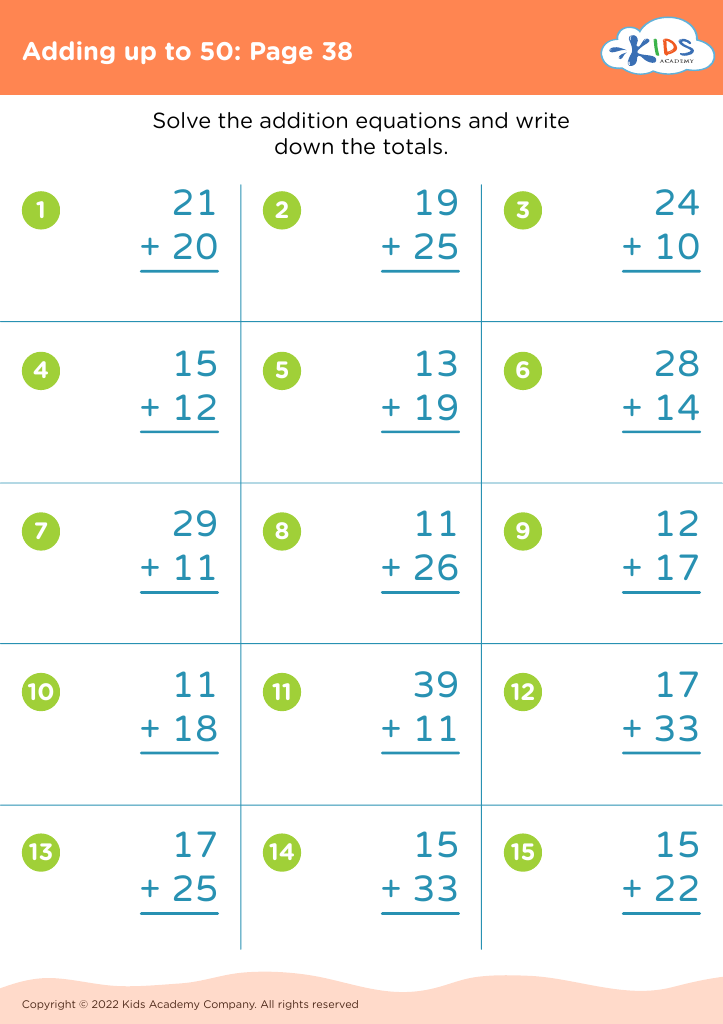
Adding up to 50: Page 38

Adding up to 50: Page 38

Adding up to 50: Page 38
Worksheet
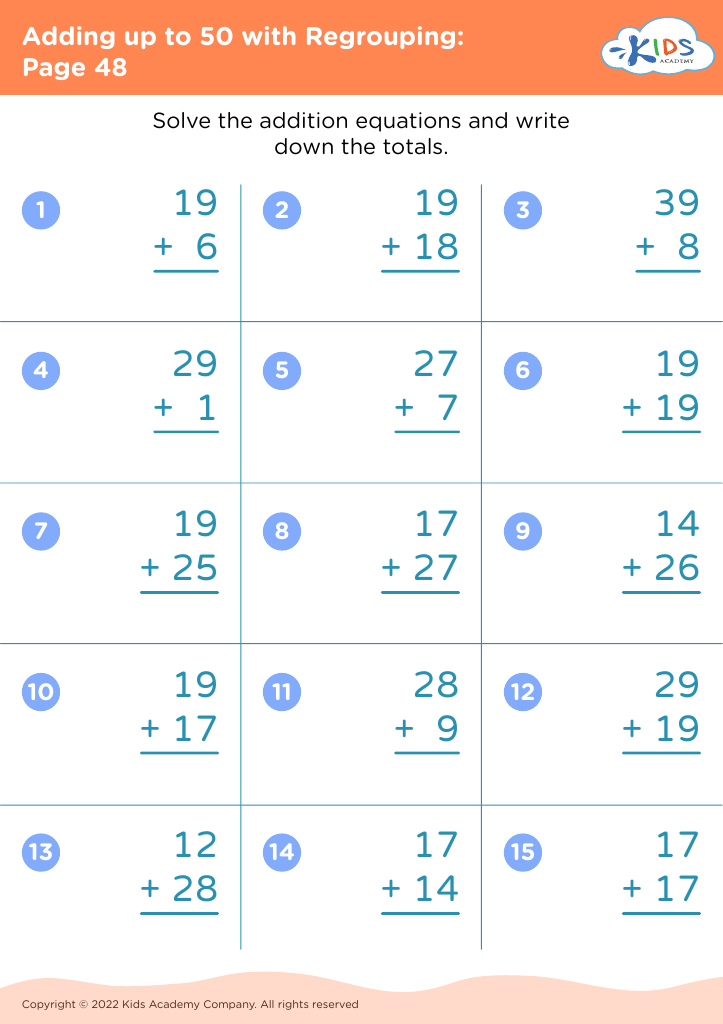
Adding up to 50 with Regrouping: Page 48
Worksheet
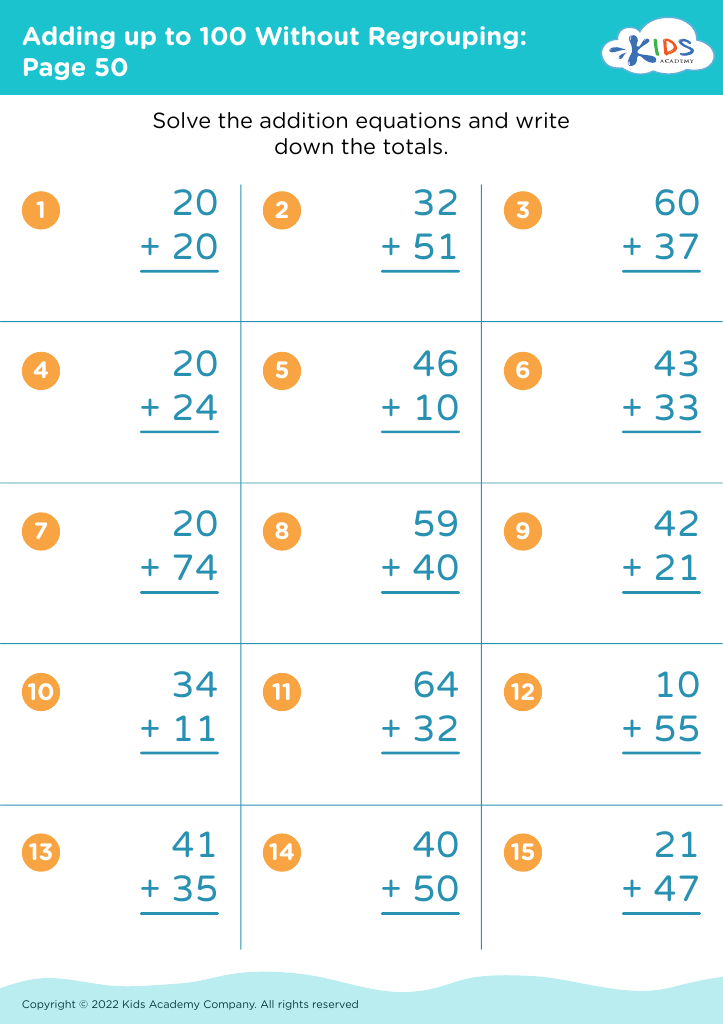
Adding up to 100 Without Regrouping: Page 50
Worksheet
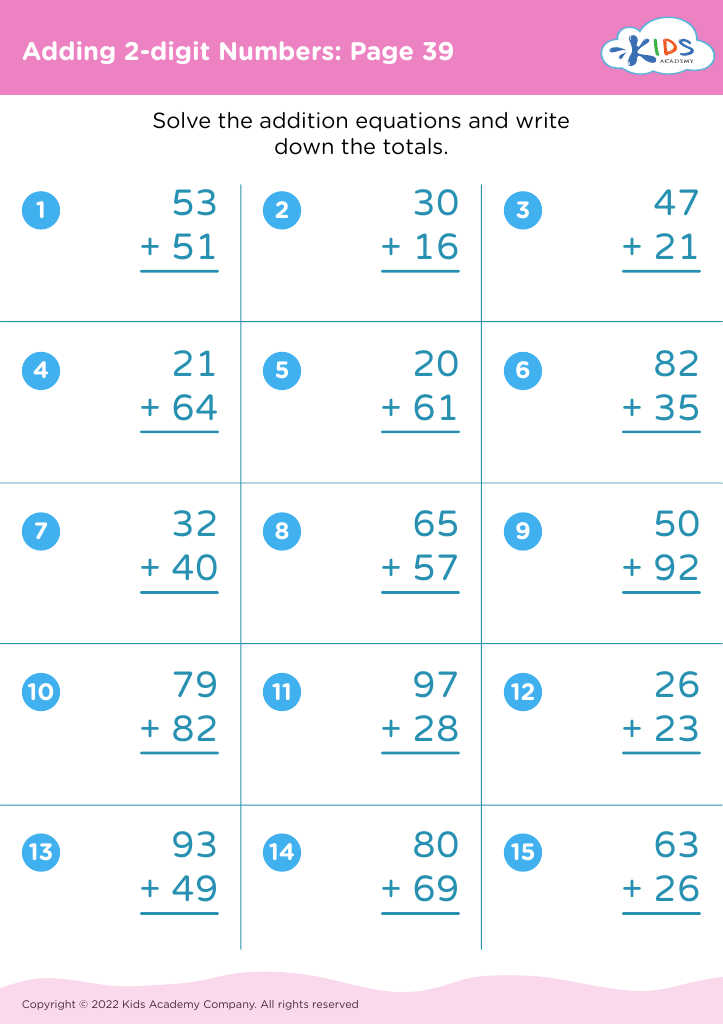
Adding 2-digit Numbers: Page 39

Adding 2-digit Numbers: Page 39

Adding 2-digit Numbers: Page 39
Worksheet
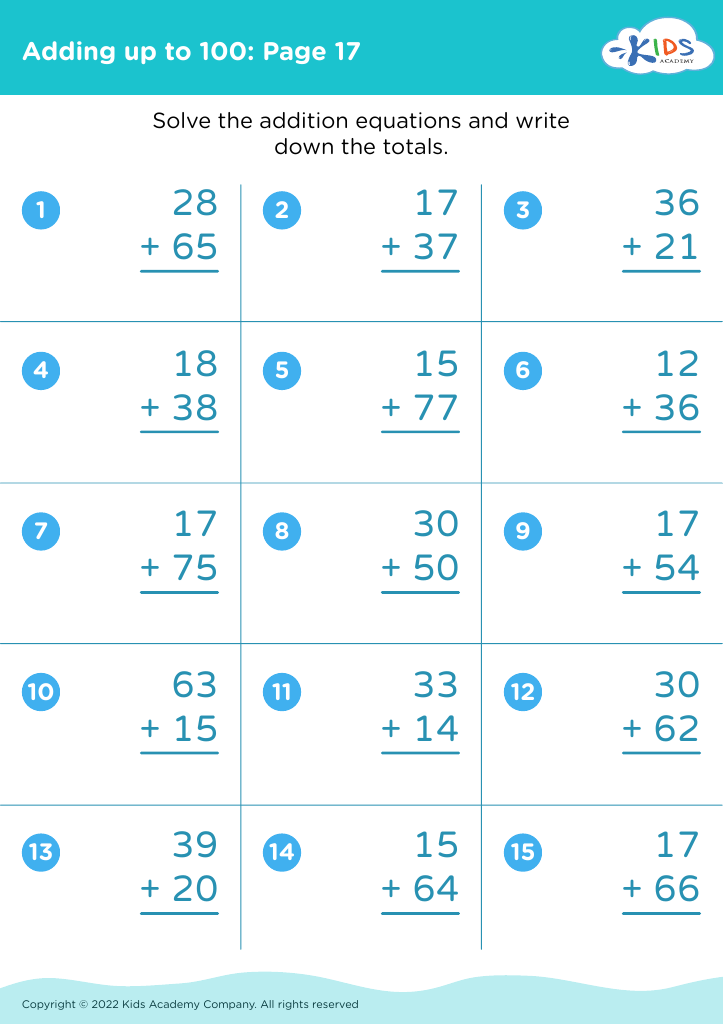
Adding up to 100: Page 17

Adding up to 100: Page 17

Adding up to 100: Page 17
Worksheet
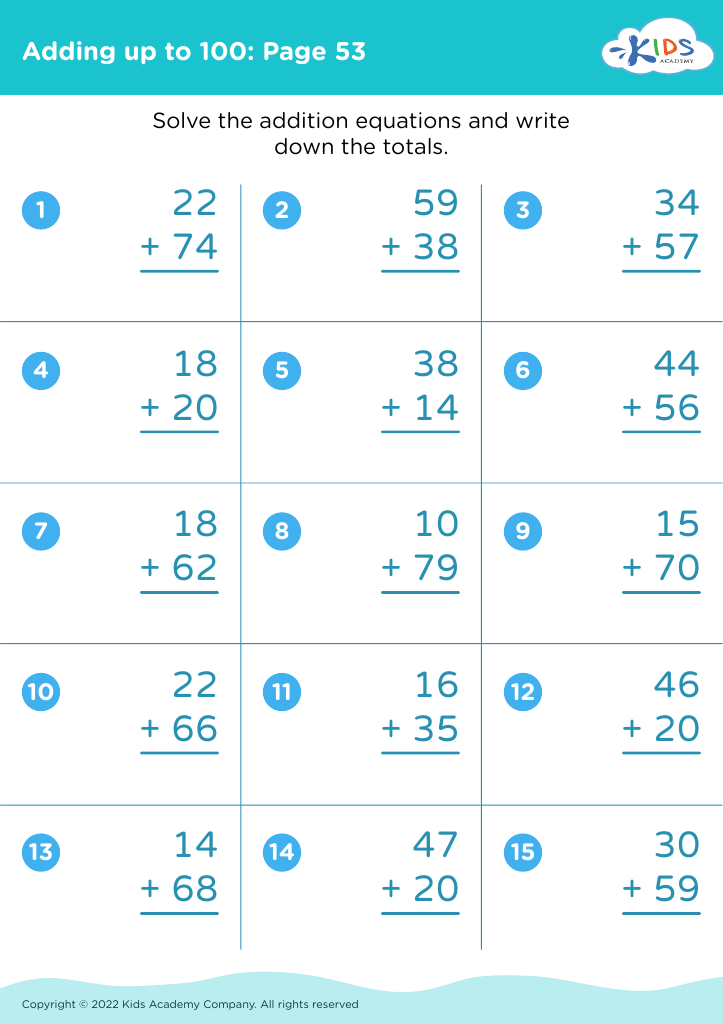
Adding up to 100: Page 53

Adding up to 100: Page 53

Adding up to 100: Page 53
Worksheet
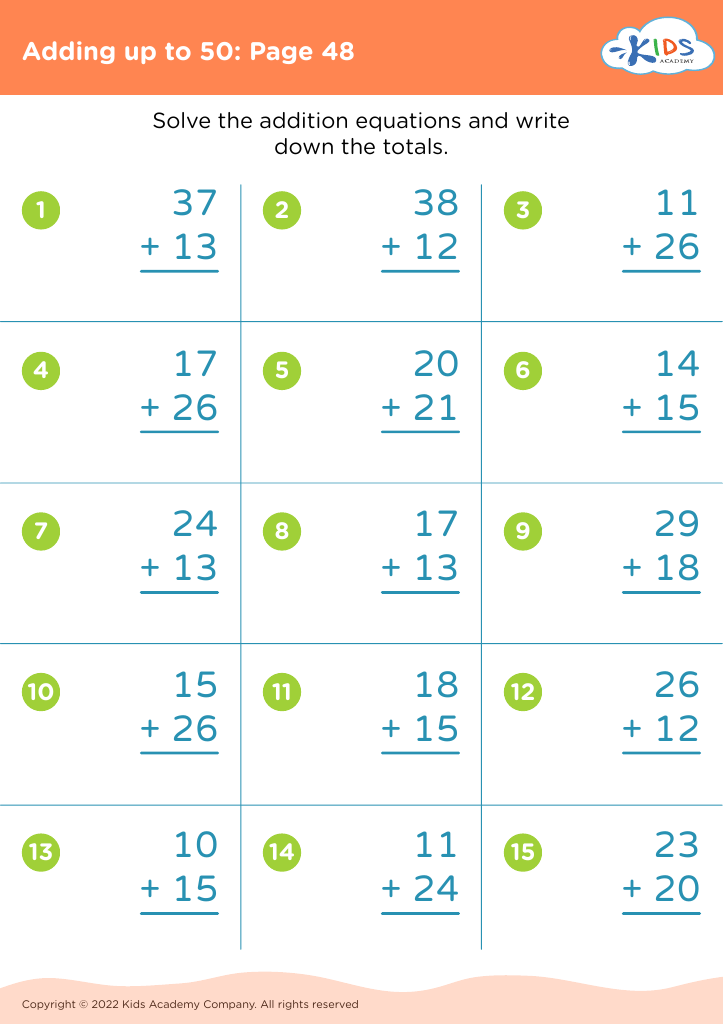
Adding up to 50: Page 48

Adding up to 50: Page 48

Adding up to 50: Page 48
Worksheet
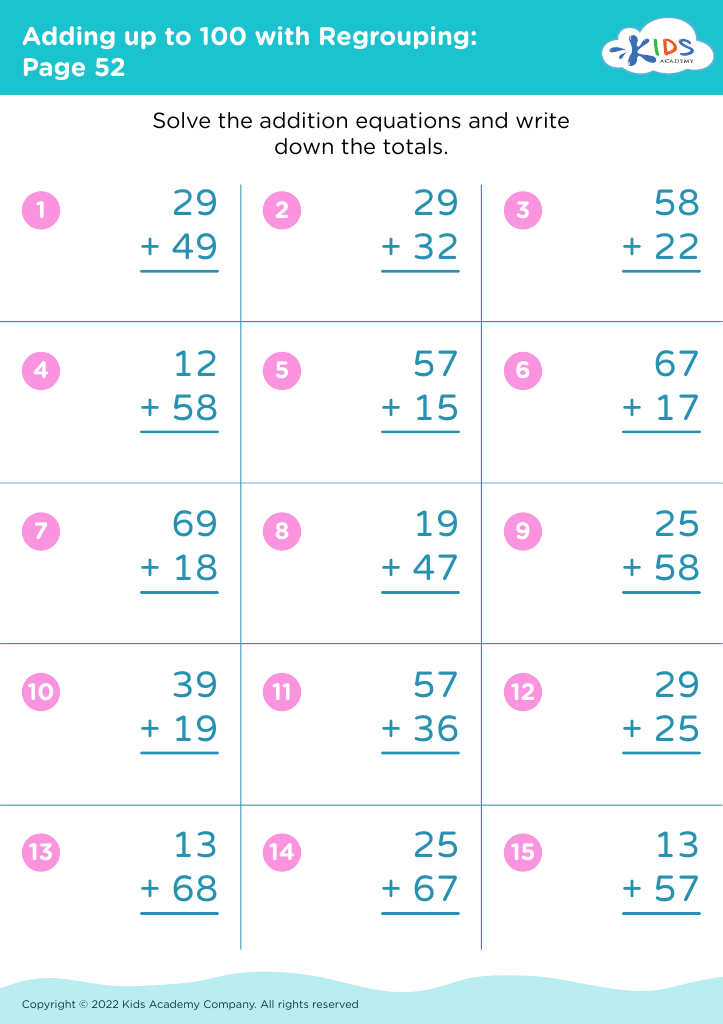
Adding up to 100 with Regrouping: Page 52
Worksheet
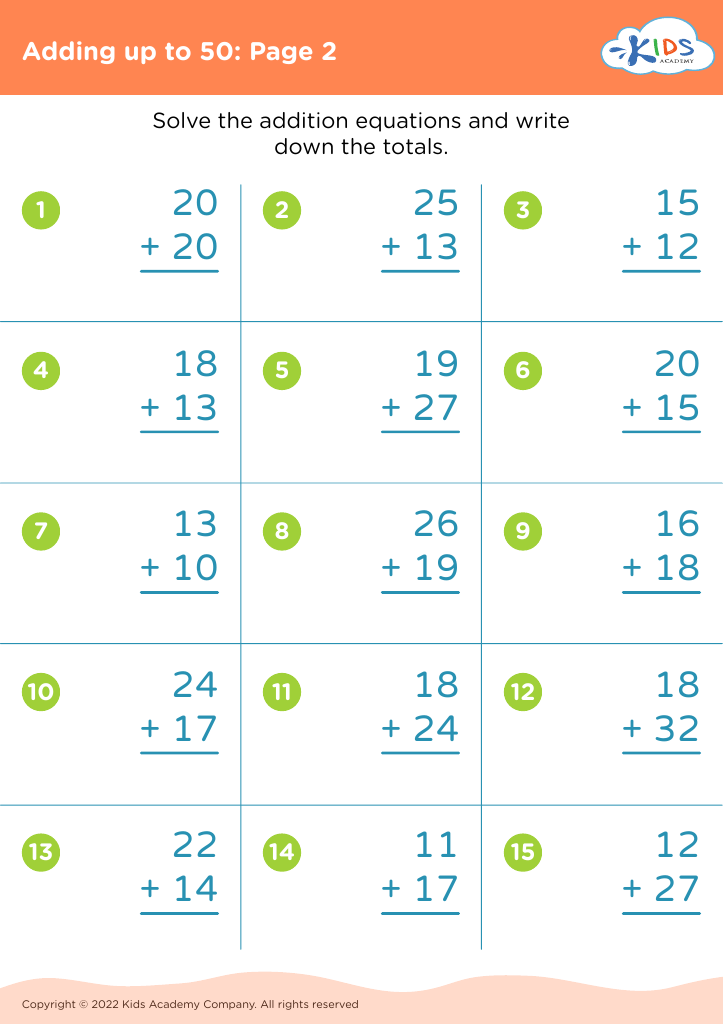
Adding up to 50: Page 2

Adding up to 50: Page 2

Adding up to 50: Page 2
Worksheet
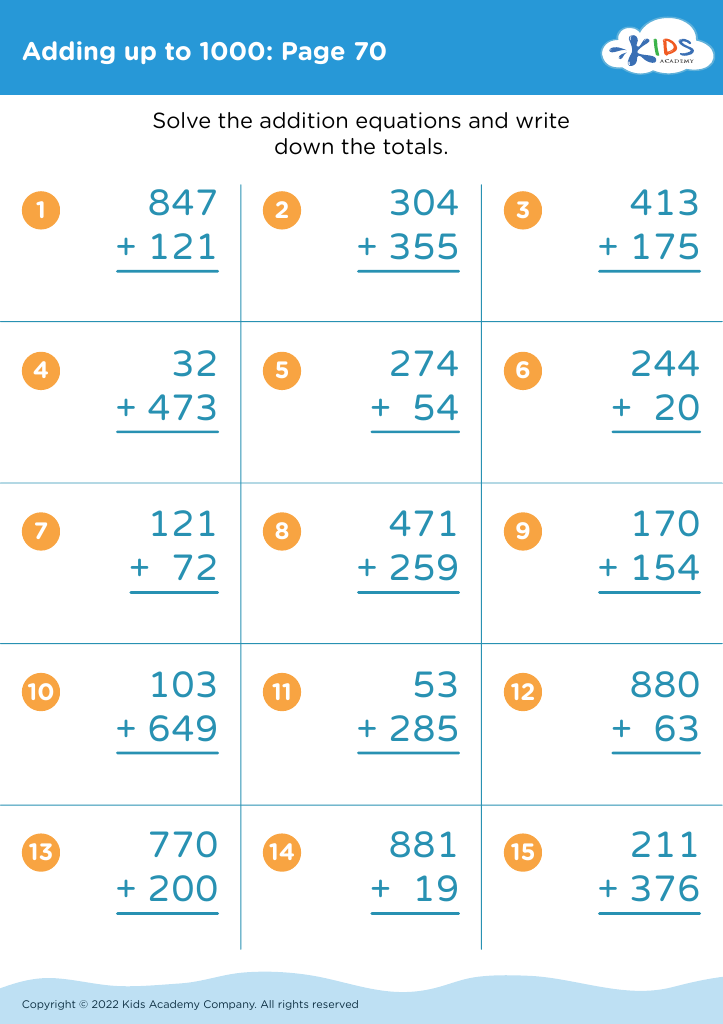
Adding up to 1000: Page 70

Adding up to 1000: Page 70

Adding up to 1000: Page 70
Worksheet


Understanding fractions, particularly addition and subtraction, is crucial for children aged 4-8 as it lays a foundational skill-set essential for their mathematical development. First, grasping fractions helps children comprehend the concept of part-to-whole relationships, a significant building block for later math topics. When children learn how to represent and manipulate fractions, they gain skills that translate to everyday situations, such as cooking, sharing, and measuring—tasks that involve dividing quantities.

Furthermore, this understanding enhances critical thinking and problem-solving skills. For instance, when children are taught to add or subtract fractions with the same or different denominators, they exercise logical reasoning and learn to find common ground, which is essential for collaboration and social interactions.

Additionally, early fraction knowledge serves as a precursor to more complex mathematical concepts like ratios, proportions, and even algebra. Parents and teachers play a pivotal role in this development; by introducing engaging activities and real-life contexts, they can foster a love for mathematics in young learners. Ultimately, investing in a strong foundation in fractions empowers children to build confidence in their mathematical abilities and prepares them for future academic success.