Numeracy development Addition Worksheets for Ages 4-8
3 filtered results
-
From - To
Discover our engaging numeracy development addition worksheets designed specifically for children aged 4-8. Tailored to enhance early math skills, these worksheets make learning addition fun and interactive. With colorful illustrations and age-appropriate exercises, your child will build a strong foundation in math concepts through enjoyable activities. Designed to cater to different learning styles, our worksheets improve number recognition, boost confidence, and promote problem-solving skills. Whether used in the classroom or at home, these resources are perfect for motivating young learners and fostering a love for mathematics. Explore our collection today and give your child the tools they need to succeed in addition!
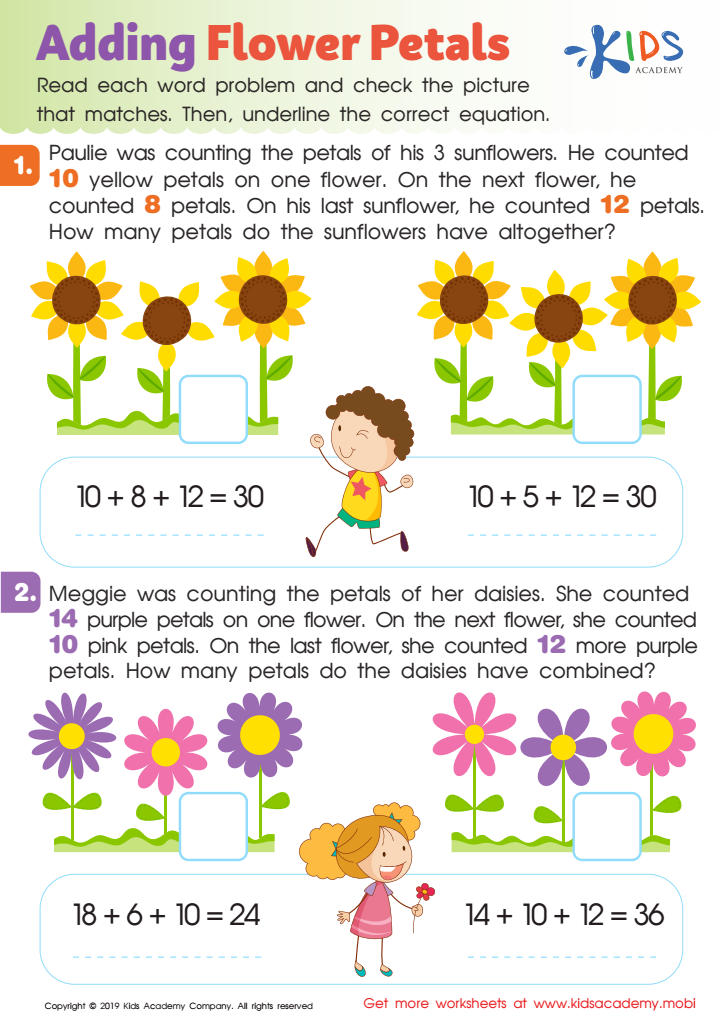
Adding Flower Petals Worksheet
 Assign to My Students
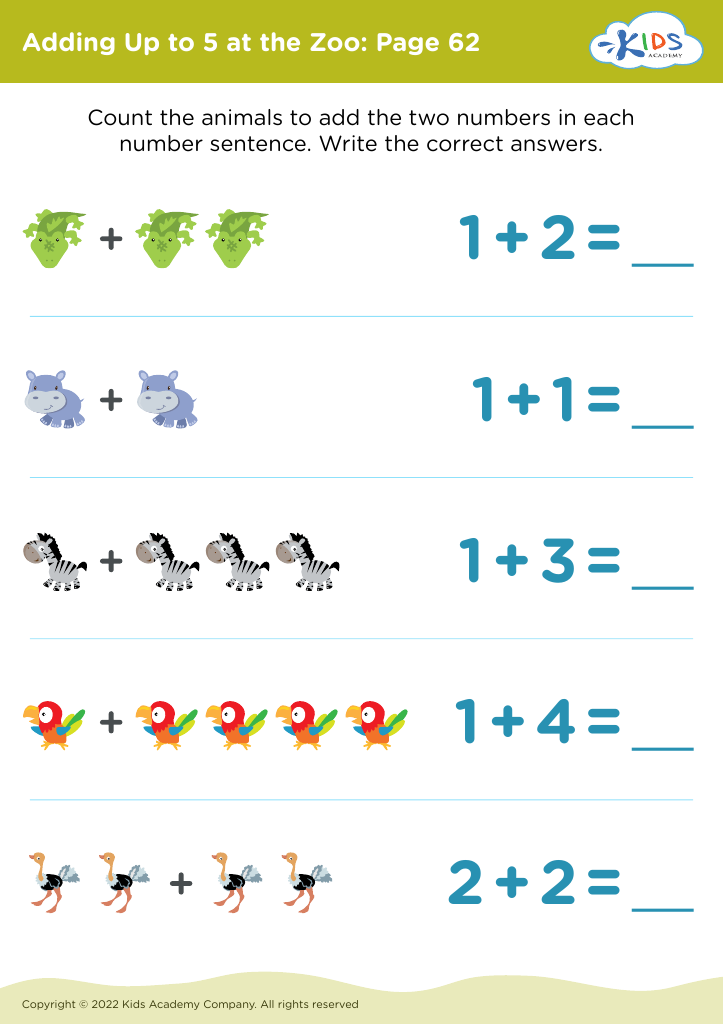
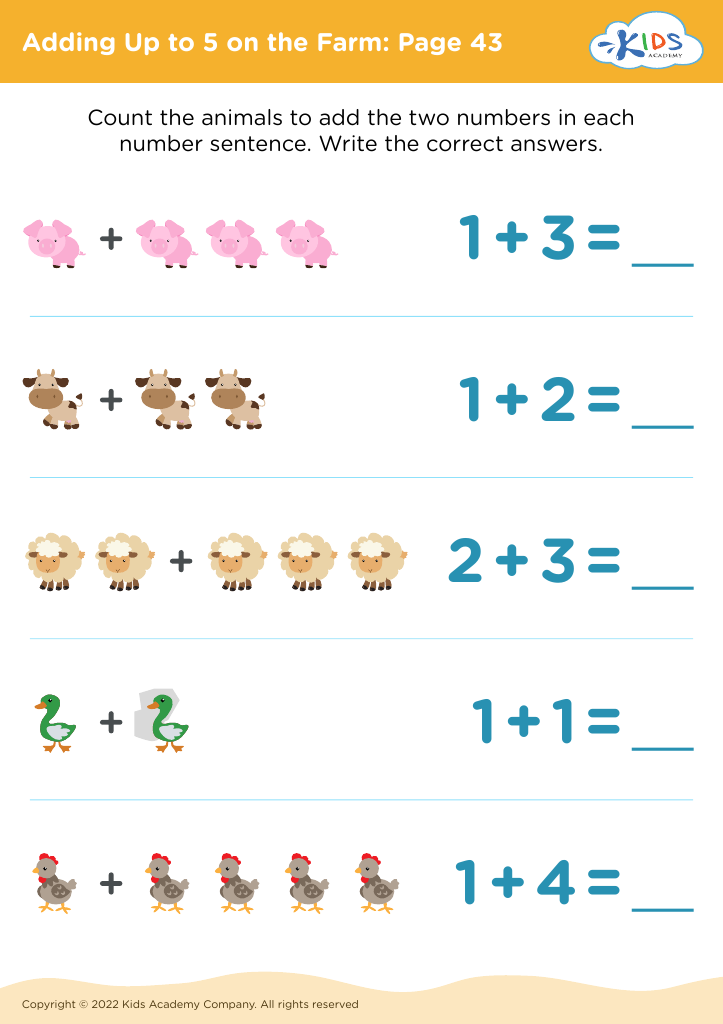








Numeracy development, particularly in addition for children aged 4 to 8, is crucial for several reasons. First, this foundational skill serves as the building block for all future mathematical learning. Children who develop strong addition skills at an early age are more likely to excel in more complex mathematical concepts later on. This capability promotes not only academic success but also boosts self-confidence in their problem-solving abilities.
Moreover, girls and boys often show varying levels of comfort with numbers and mathematics, so early intervention can help close any gender gaps. Engaging activities that focus on addition not only foster cognitive development but also enhance critical thinking and logical reasoning.
Additionally, numeracy is profoundly linked to everyday life. Understanding addition equips children with the skills necessary for basic tasks like shopping, cooking, and budgeting later on. Supporting addition development also encourages positive attitudes toward math, helping reduce anxiety associated with numeracy tasks.
Ultimately, by prioritizing numeracy and addition during these formative years, parents and teachers lay the groundwork for lifelong learning, empowering children with essential skills that they will carry throughout their education and into their futures. Hence, fostering a strong numeracy foundation is vital for holistic child development.








