Problem-Solving Skills Division Worksheets for Ages 4-8
9 filtered results
-
From - To
Unlock your child's potential with our engaging Problem-Solving Skills Division Worksheets designed for ages 4-8! These interactive worksheets foster essential math skills while making learning enjoyable. Our carefully curated activities encourage critical thinking and help children grasp division concepts through real-life scenarios. Perfect for home or classroom use, they provide a hands-on approach to problem-solving, ideal for early learners. With colorful illustrations and fun challenges, your child will develop confidence in their math abilities, laying a strong foundation for future learning. Explore our collection today and watch your child's problem-solving skills soar as they tackle division with enthusiasm!
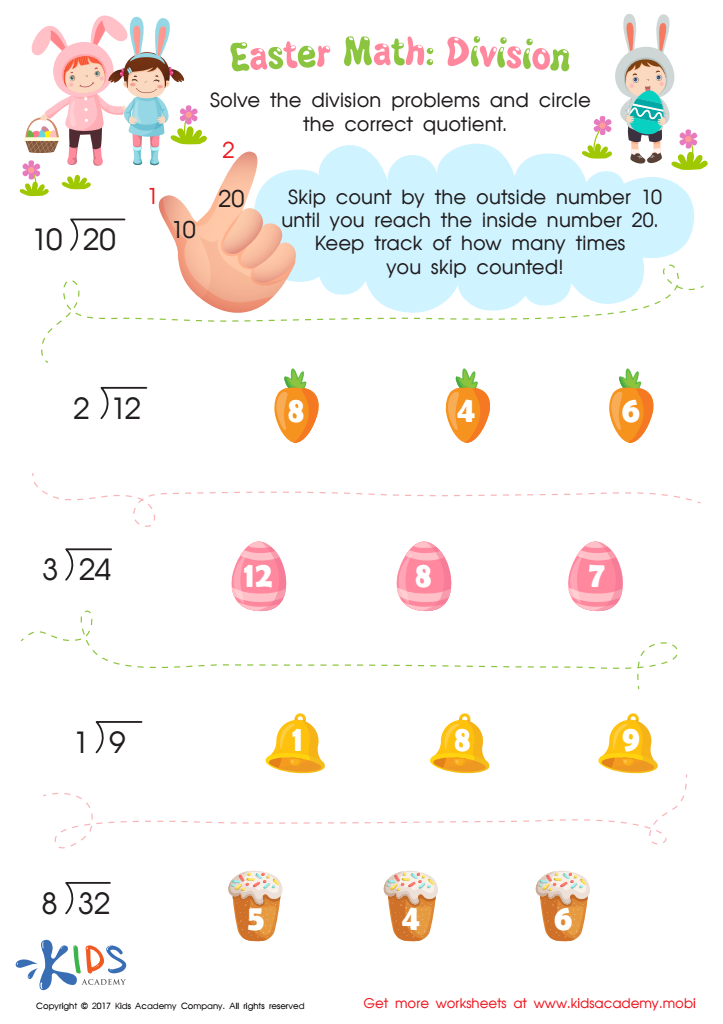
Division Worksheet
 Assign to My Students
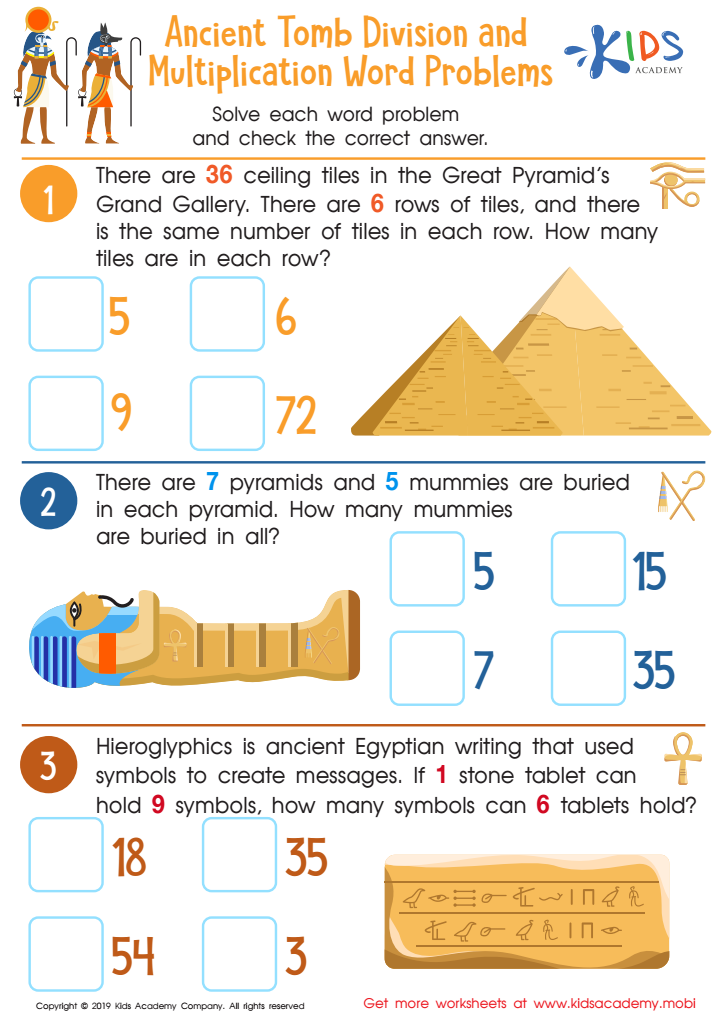
Ancient Tomb Division and Multiplication Word Problems Worksheet
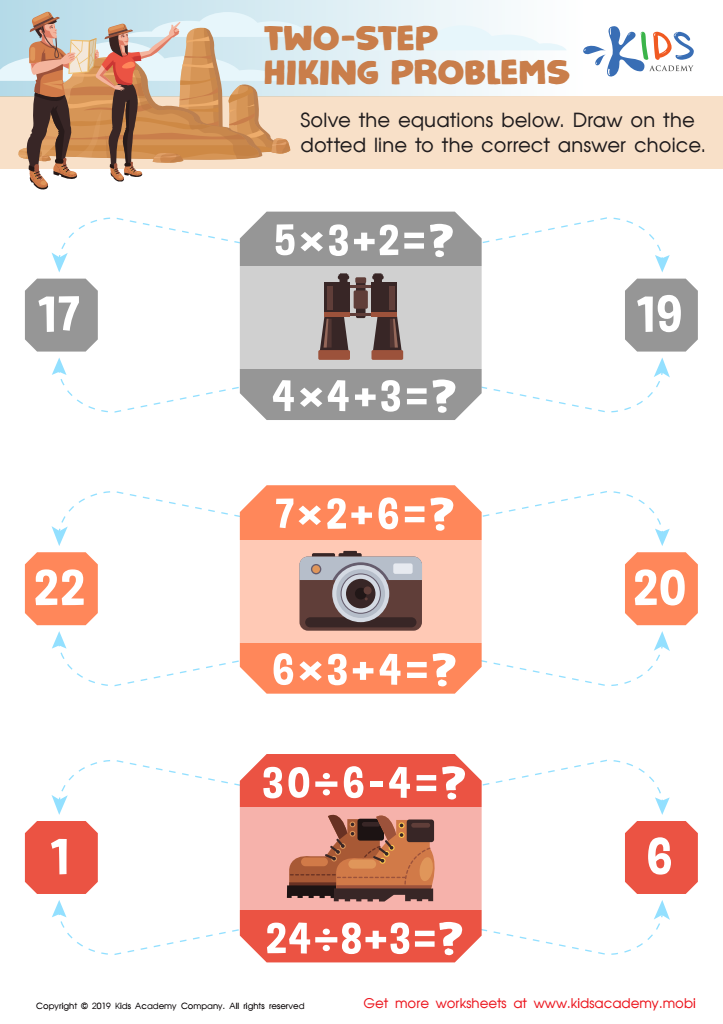
Two-Step Hiking Problems Worksheet
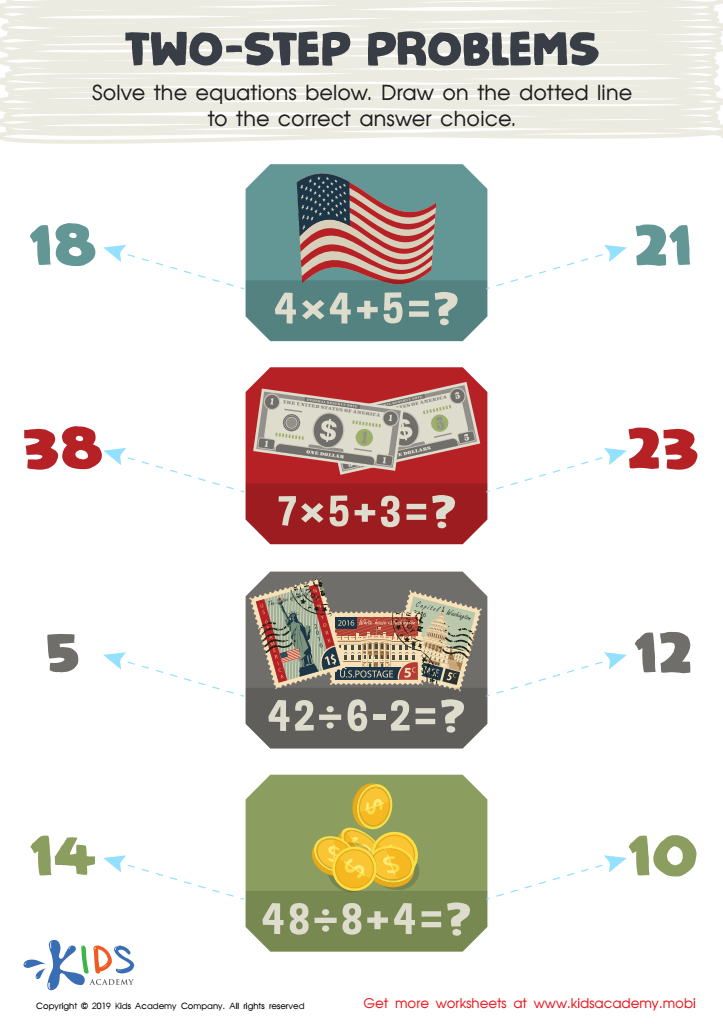
Two-Step Problems Worksheet
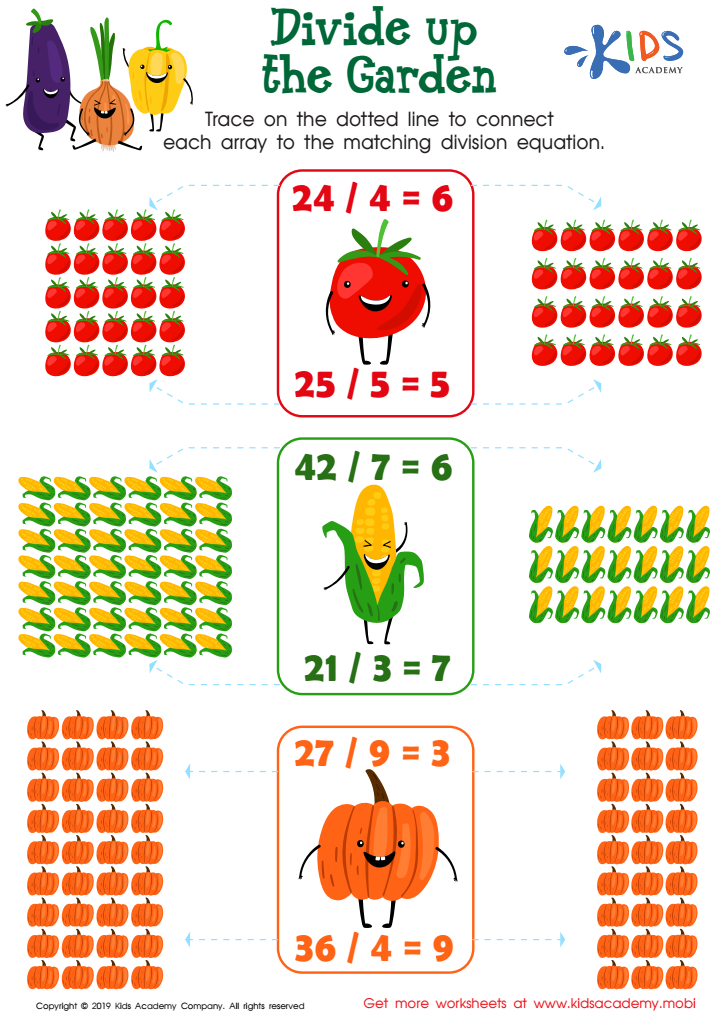
Divide up the Garden Worksheet
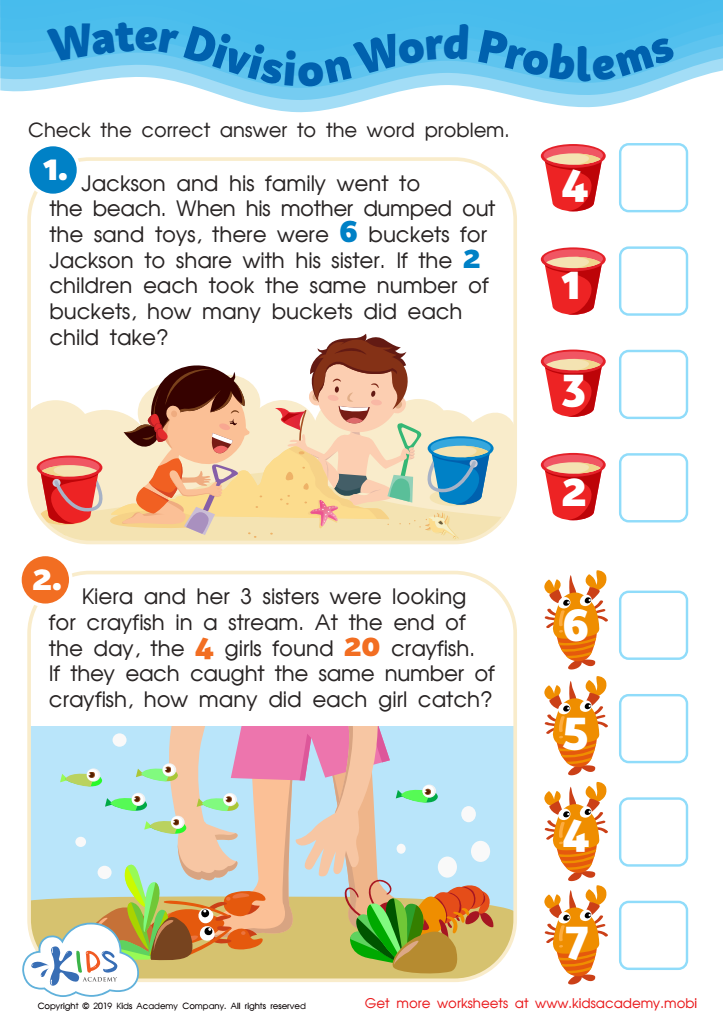
Water Division Word Problems Worksheet
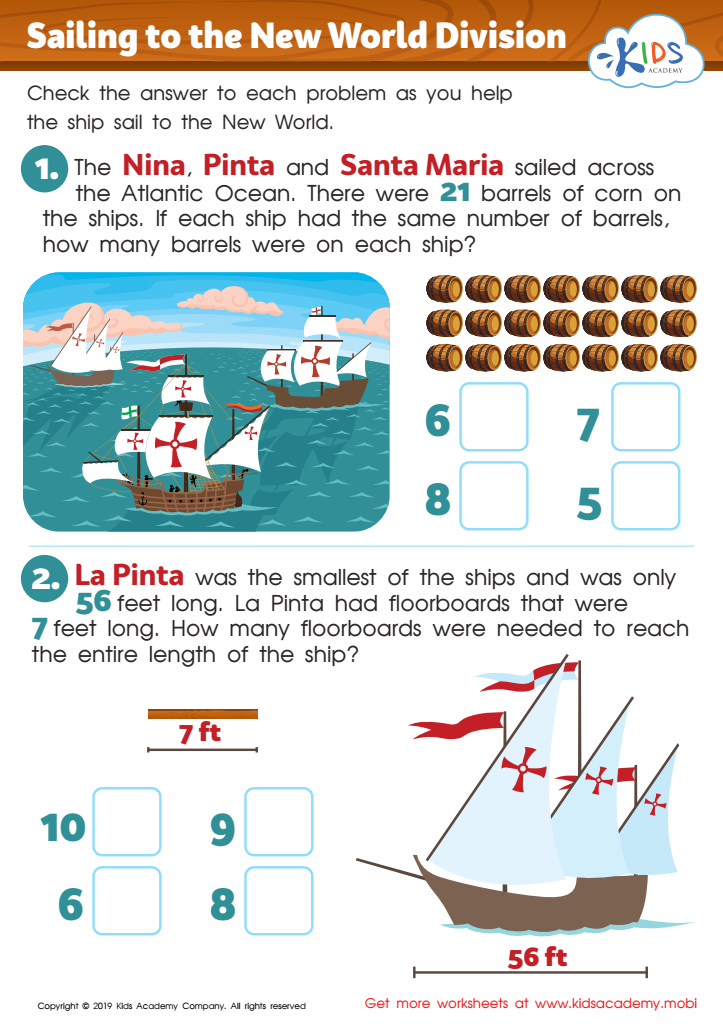
Sailing to the New World Division Worksheet
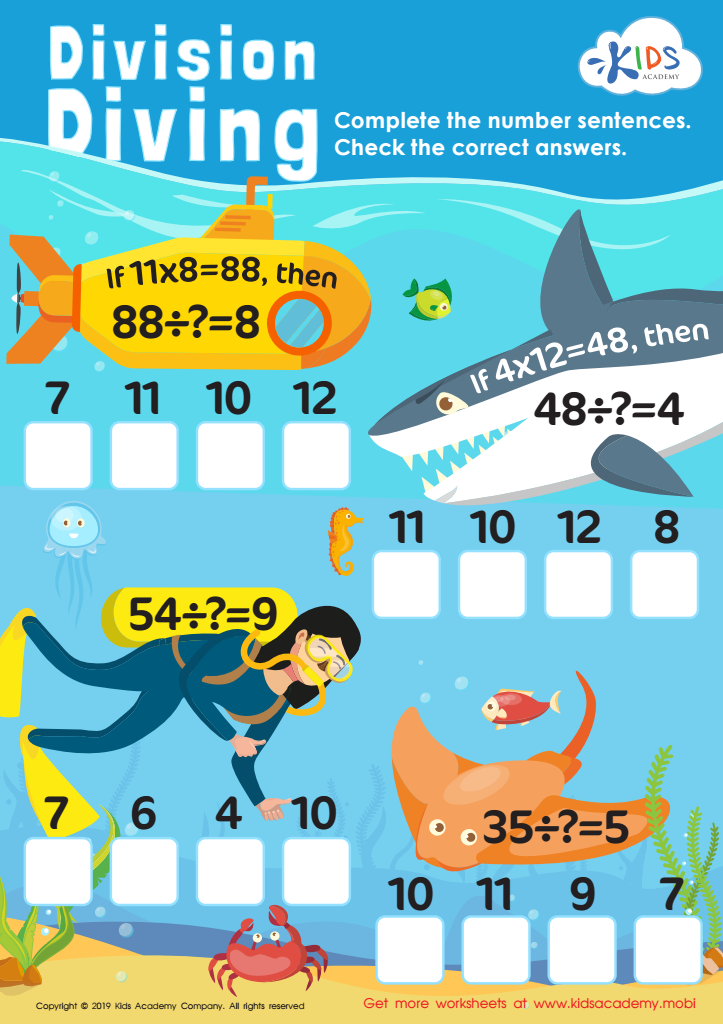
Division Diving Worksheet
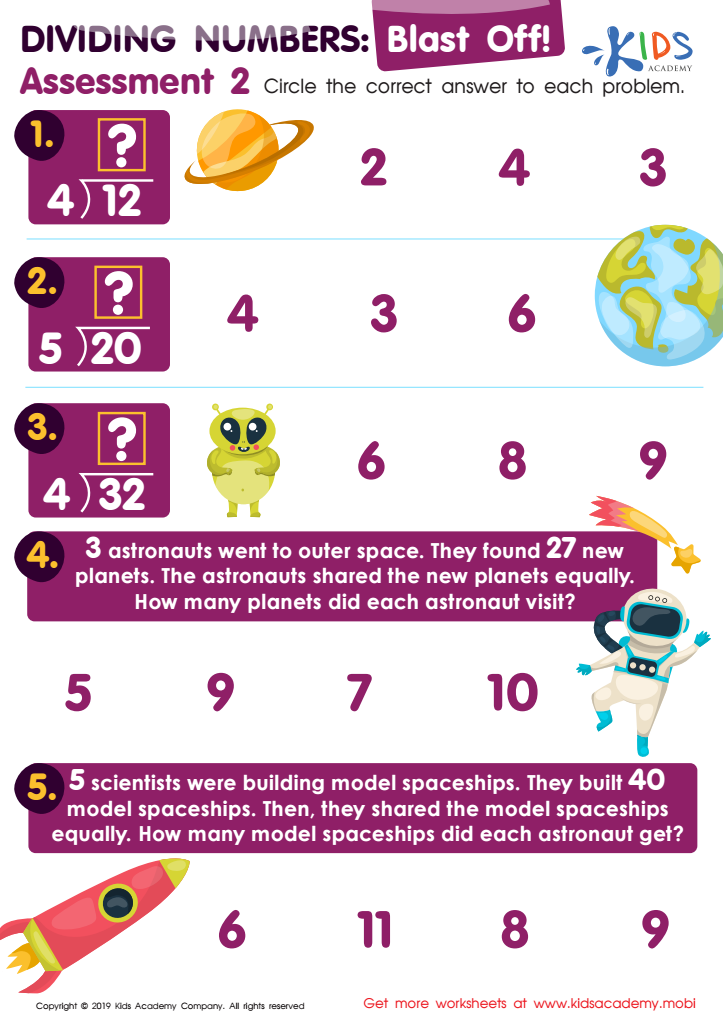
Dividing Numbers Assessment 2 Worksheet








Problem-solving skills are essential for children ages 4-8 as they form the foundation for critical thinking and cognitive development. At this age, kids encounter various challenges, from resolving conflicts with peers to grasping math concepts. By fostering strong problem-solving skills, parents and teachers not only enhance children's ability to think creatively but also promote resilience, adaptability, and independence.
Engaging children in problem-solving activities encourages them to analyze situations, brainstorm solutions, and evaluate outcomes, building their ability to make informed decisions. These skills are not only vital in academic contexts but also in everyday situations, helping children navigate social interactions and challenges they may face in life.
Moreover, teaching problem-solving skills during these formative years aligns with developmental milestones and aids in emotional regulation. Children learn to cope with frustration when their solutions don’t work out, ultimately building confidence and self-esteem.
By valuing and supporting problem-solving initiatives, parents and teachers can equip children with essential tools for lifelong success—both in school and beyond, instilling a growth mindset that embraces challenges as learning opportunities. Ultimately, cultivating these skills empowers children to become innovative thinkers and effective collaborators in their futures.








