Comparing shapes Geometry Worksheets for Ages 4-8
4 filtered results
-
From - To
Unlock your child's understanding of geometry with our engaging "Comparing Shapes" worksheets for ages 4-8! These worksheets are designed to help young learners identify, compare, and differentiate various shapes through fun activities. With colorful illustrations and interactive exercises, your child will develop essential skills in recognizing differences based on size, color, and form. Perfect for home or classroom use, our resources promote critical thinking and boost mathematical confidence in a playful manner. Encourage your child's curiosity about the world of shapes and geometry today—download our worksheets and make learning an enjoyable adventure!
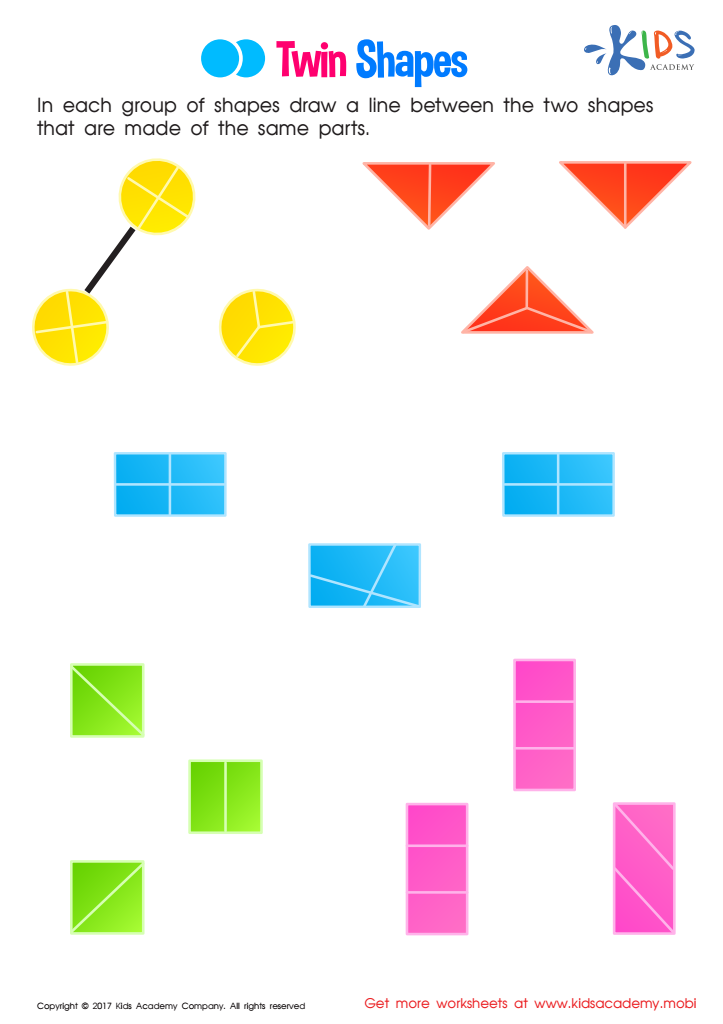
Twin Shapes Worksheet
 Assign to My Students











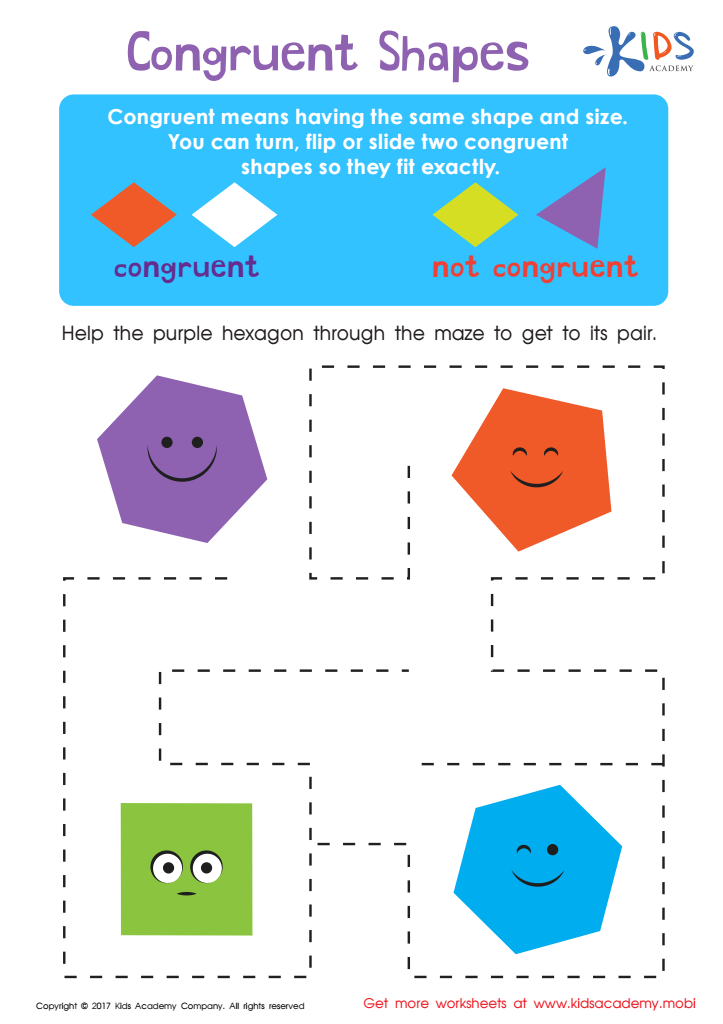
Congruent Shapes Worksheet
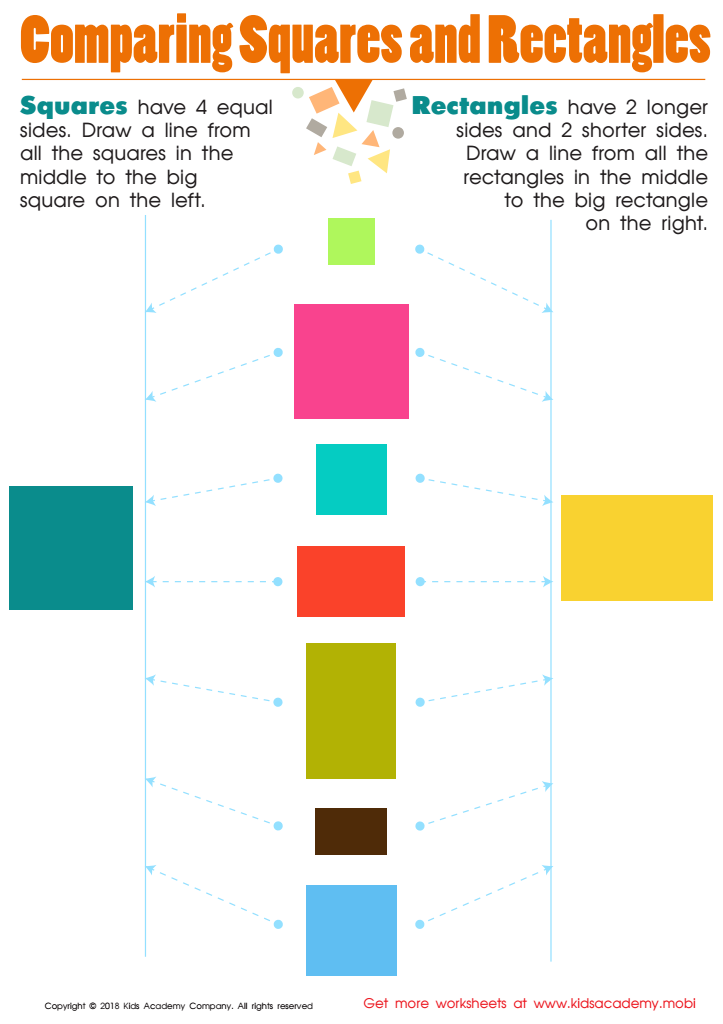
Comparing Squares Rectangles Worksheet
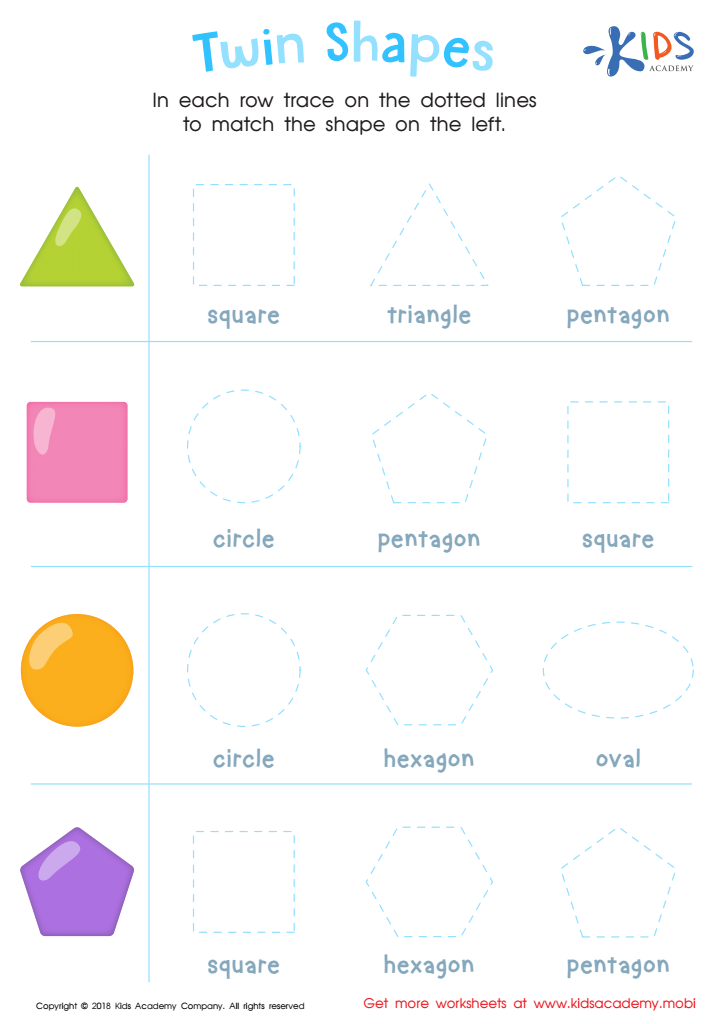
Twin Shapes Dot-to-Dot Worksheet








Comparing shapes in geometry is essential for children aged 4-8, as it lays a strong foundation for their mathematical understanding. During these formative years, children develop critical thinking and spatial awareness skills that are vital to their cognitive growth. By learning to analyze and compare shapes, students become more adept at recognizing patterns and visualizing how objects relate to one another in space.
Teachers and parents play a crucial role in reinforcing these concepts through interactive and engaging activities. Sorting and classifying shapes enhances children's ability to articulate their observations, fostering language skills alongside their mathematical knowledge. Moreover, this foundational skill set prepares children for more advanced topics, such as geometry and measurement, in their later years.
Beyond academics, understanding geometry supports problem-solving skills and logical reasoning. As children learn to compare and differentiate shapes, they build resilience in tackling challenges, which translates to other areas of learning. Additionally, shape comparisons nurture creativity, allowing young learners to explore design and art from a geometric perspective. Ultimately, fostering an appreciation for shapes and geometry in early childhood enhances overall cognitive development, motivating a lifelong love for learning and exploration. Thus, both parents and teachers should prioritize this fundamental aspect of early education.








