Animal identification Numbers Worksheets for Ages 4-8
4 filtered results
-
From - To
Discover our engaging Animal Identification Numbers Worksheets designed specifically for children ages 4-8! These worksheets promote early math skills by combining number recognition with the excitement of animals. Kids will enjoy identifying various animals while practicing counting and improving their number association abilities. Each worksheet features fun illustrations and simple activities to keep learning lively and interactive. Ideal for both classroom and at-home learning, these resources help build a strong foundation in numeracy through vibrant animal themes. Perfect for budding animal lovers, our worksheets make learning about numbers enjoyable and enriching. Download now and inspire your child's love for numbers and wildlife!
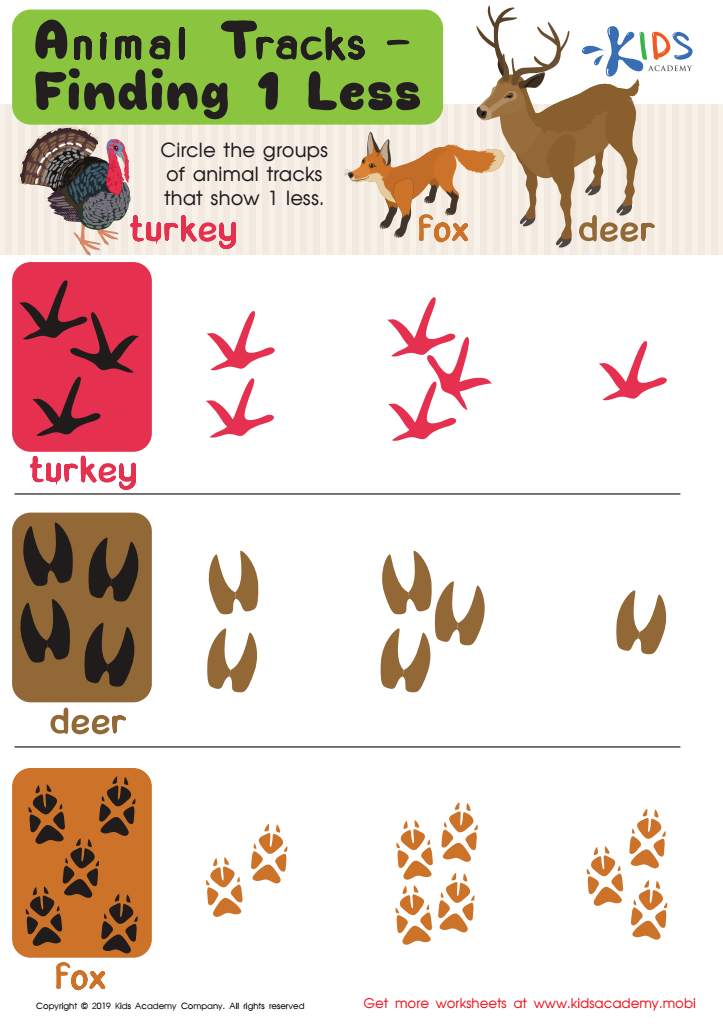
Animal Tracks: Find 1 Less Worksheet
 Assign to My Students
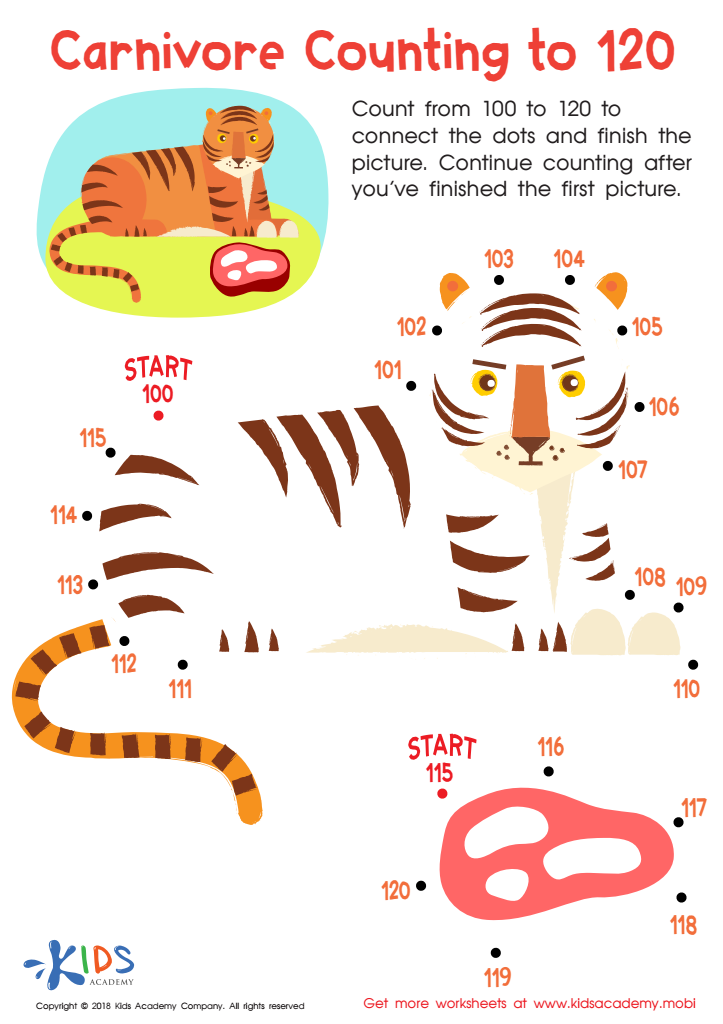
Carnivore Counting to 120 Worksheet
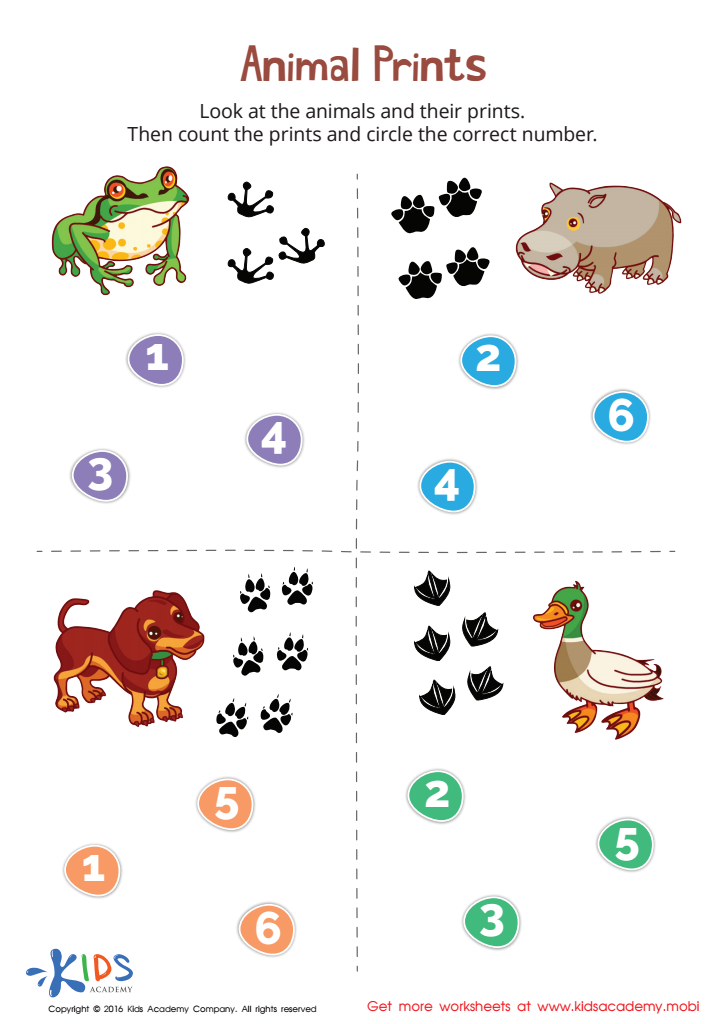
Animal Prints Match-Up Worksheet
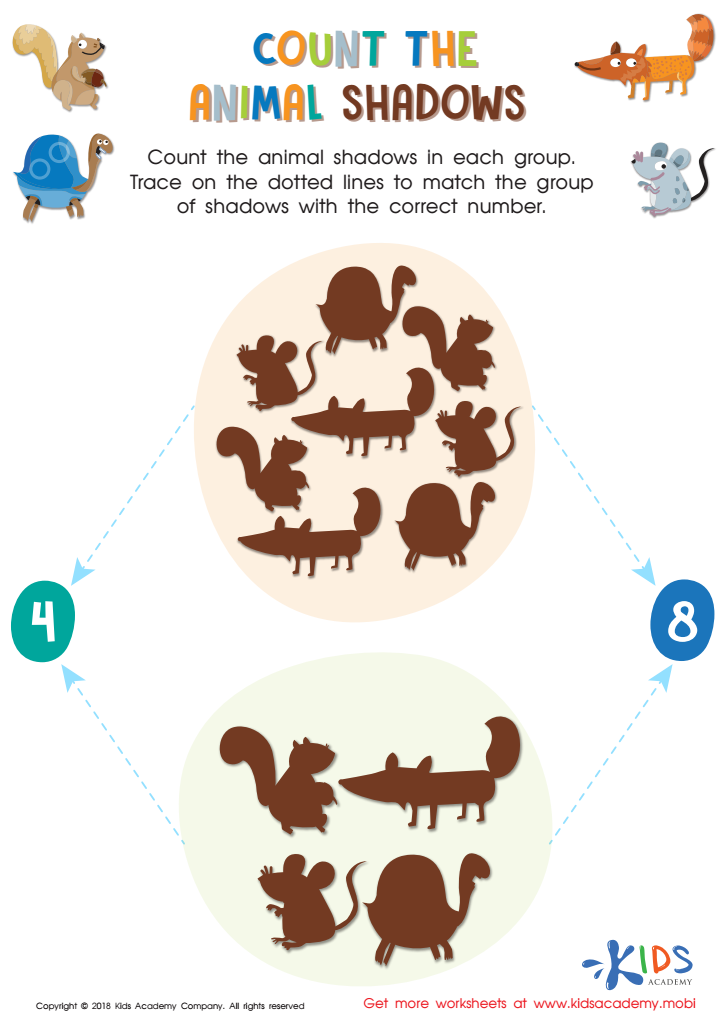
Count the Animal Shadows Worksheet








Animal Identification Numbers (AINs) are special labels used to track and identify animals, much like how people have names or identification cards. Parents and teachers should care about AINs because they help children learn important lessons about responsibility, caring for animals, and understanding the natural world.
First, teaching kids about AINs encourages them to think about the importance of each animal's health and safety. By knowing that animals have identifiers, children can understand why we treat pets and farm animals with care and respect. This fosters empathy, as they learn that each animal has its own needs and story.
Second, AINs are a practical part of learning about science and the environment. Educators can use real-life examples to explain topics like habitats, animal behaviors, and how humans can help protect animals. This builds a sense of curiosity and encourages kids to ask questions while exploring the world around them.
Finally, learning about AINs can spark interest in careers related to animals, like veterinarians or wildlife biologists. By introducing this topic early, parents and teachers can inspire children to become future caretakers of the planet and its animals, helping them grow into informed and compassionate adults.








