Discover our engaging Comparing Fractions Numbers Worksheets for ages 4-8 at Kids Academy. Perfect for young learners, these worksheets enhance understanding of fractions through fun and educational activities. With vivid illustrations and simple instructions, children can easily grasp concepts of comparing and contrasting fraction sizes. Our expertly designed resources foster critical thinking and math skills in a playful manner. Ideal for classrooms and homeschooling, these printable sheets provide a strong foundation in early math, helping your child gain confidence and excel. Visit us today and unlock the door to fraction mastery tailored to young minds!

Check out this FREE Trial Lesson on Numbers for age 4-8!

Addition with Arrays - Part 2

Favorites
With answer key
Interactive
  • 4-8
  • Comparing Fractions
  • Numbers
Fractions: Assessment 1 Worksheet

Fractions: Assessment 1 Worksheet

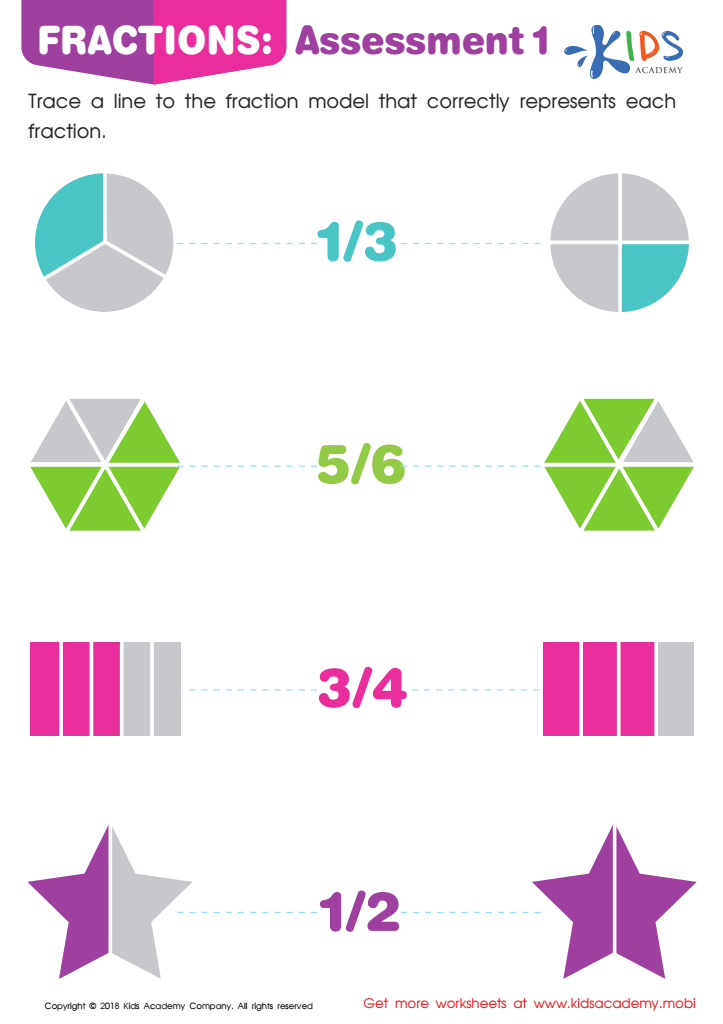
Master fractions easily with this worksheet! It has four sets of fraction models and fraction equations with two models each. Guide your kids to trace a line to the correct fraction model for each equation.
Fractions: Assessment 1 Worksheet
Worksheet
Fractions: Assessment 2 Worksheet

Fractions: Assessment 2 Worksheet

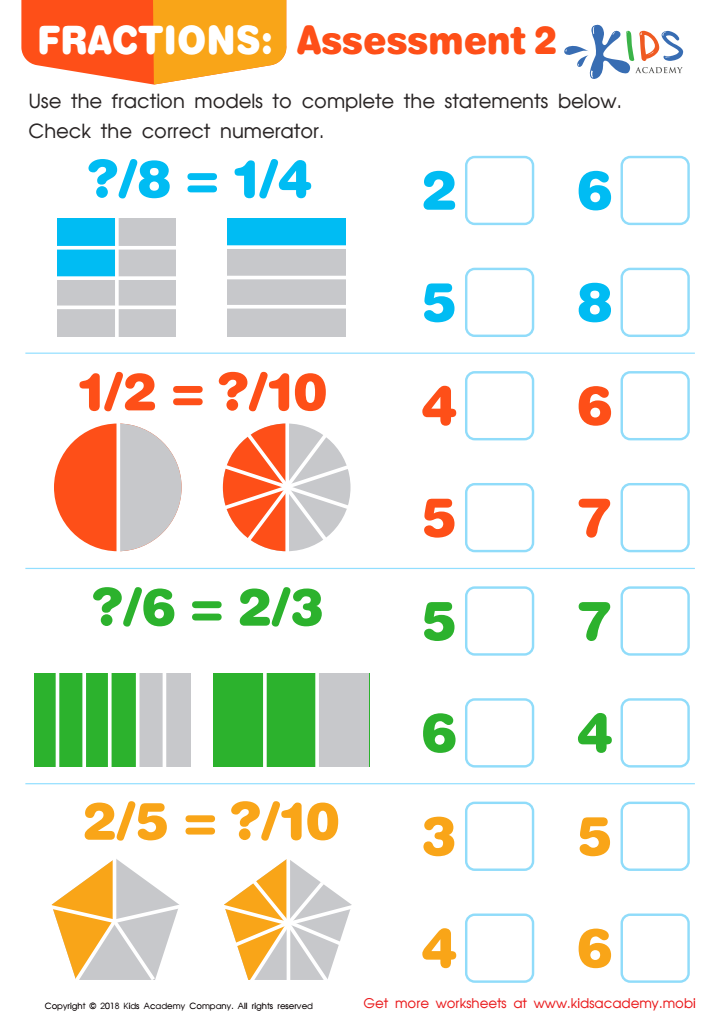
Help your kids understand fractions better with this worksheet. Ask them to complete the fraction statements using the fraction models on the left and then check the correct numerators. This can help clear up any confusion they may have with fractions and fraction models.
Fractions: Assessment 2 Worksheet
Worksheet
Fractions: Assessment 3 Worksheet

Fractions: Assessment 3 Worksheet

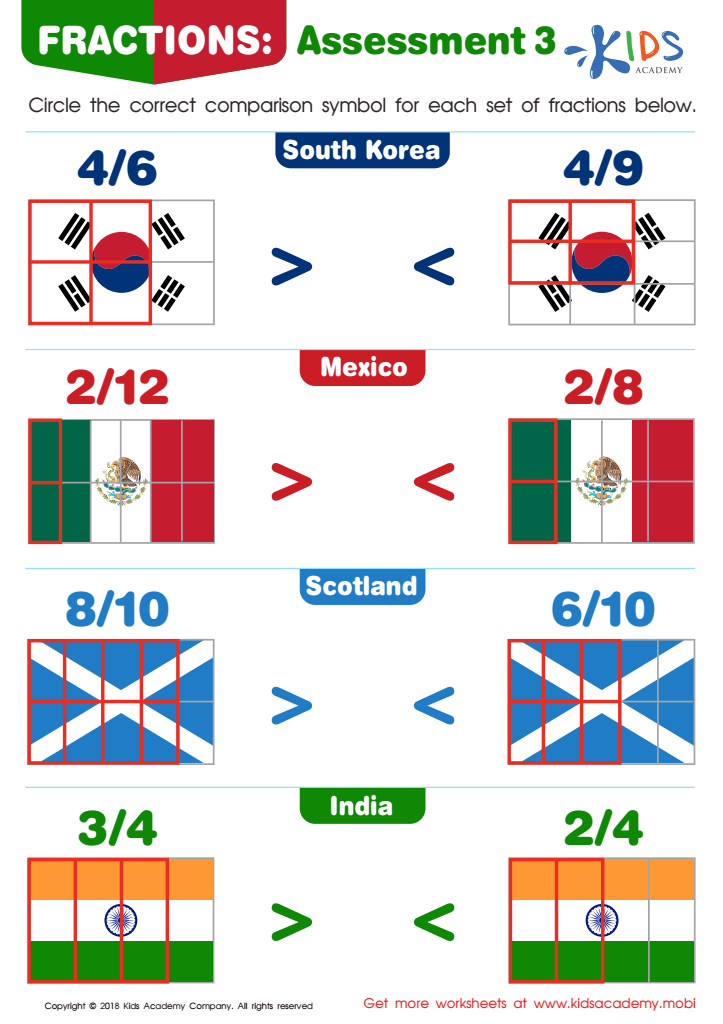
This worksheet helps teach kids about fractions and introduces them to countries and their flags. Have them read the country names and point to the flags. Then help them assess the fractions, and ask them to circle the symbol that shows their values.
Fractions: Assessment 3 Worksheet
Worksheet
Adding with Arrays: Chocolate Bars Worksheet

Adding with Arrays: Chocolate Bars Worksheet

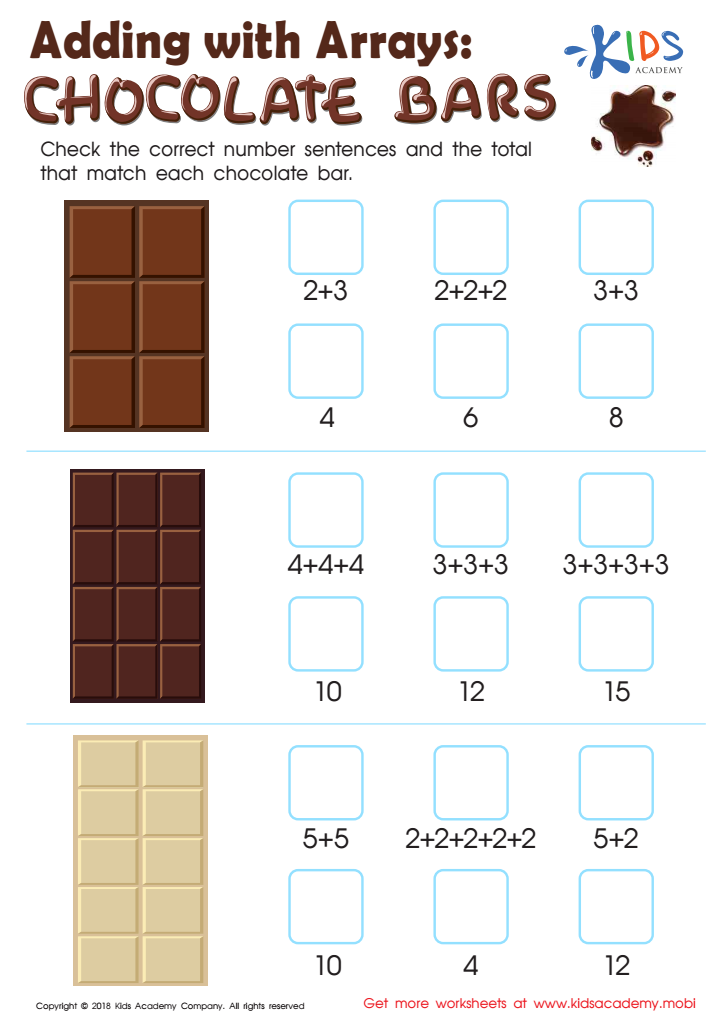
Kids love chocolates! Gauge how enthused your kids get when you mention them. This worksheet is a fun exercise about chocolates - get your kids to check the correct number sentences and totals for each chocolate bar. Reward their hard work with some chocolates - extra incentive for a job well done!
Adding with Arrays: Chocolate Bars Worksheet
Worksheet
Bubbling Over Worksheet

Bubbling Over Worksheet

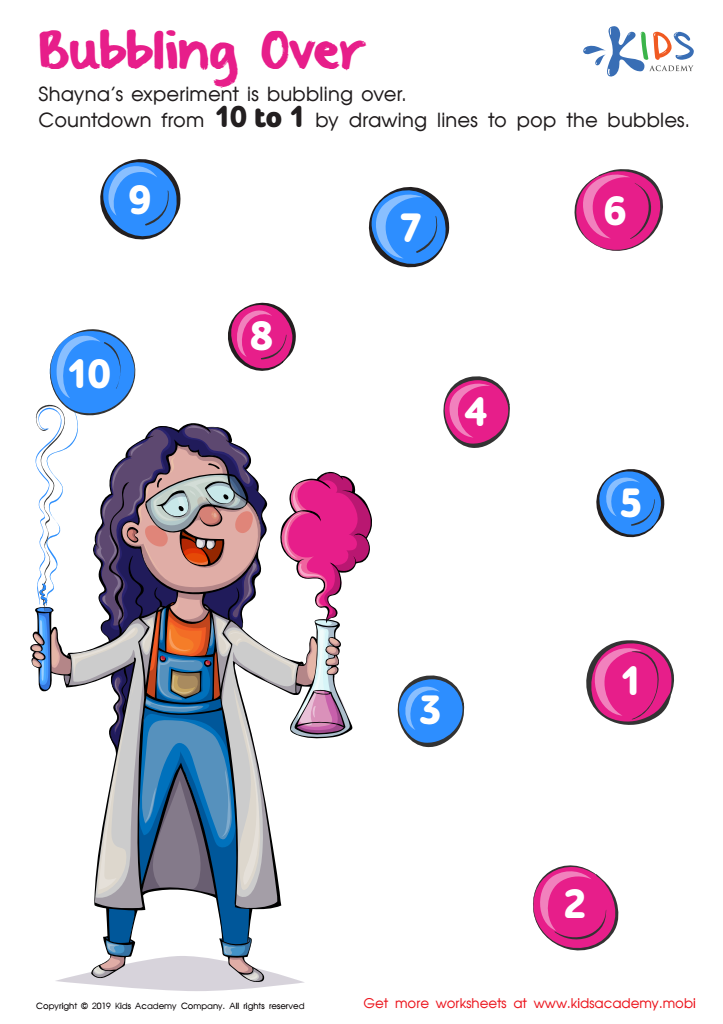
Students love science experiments at the lab! They get to practice their counting skills while creating a masterpiece or an unexpected catastrophe! Ask them to count down from 10 to 1 by drawing lines to 'pop' the bubbles coming out of Shayna's experiment in the worksheet.
Bubbling Over Worksheet
Worksheet
Comparing Numerators Part 2 Worksheet

Comparing Numerators Part 2 Worksheet

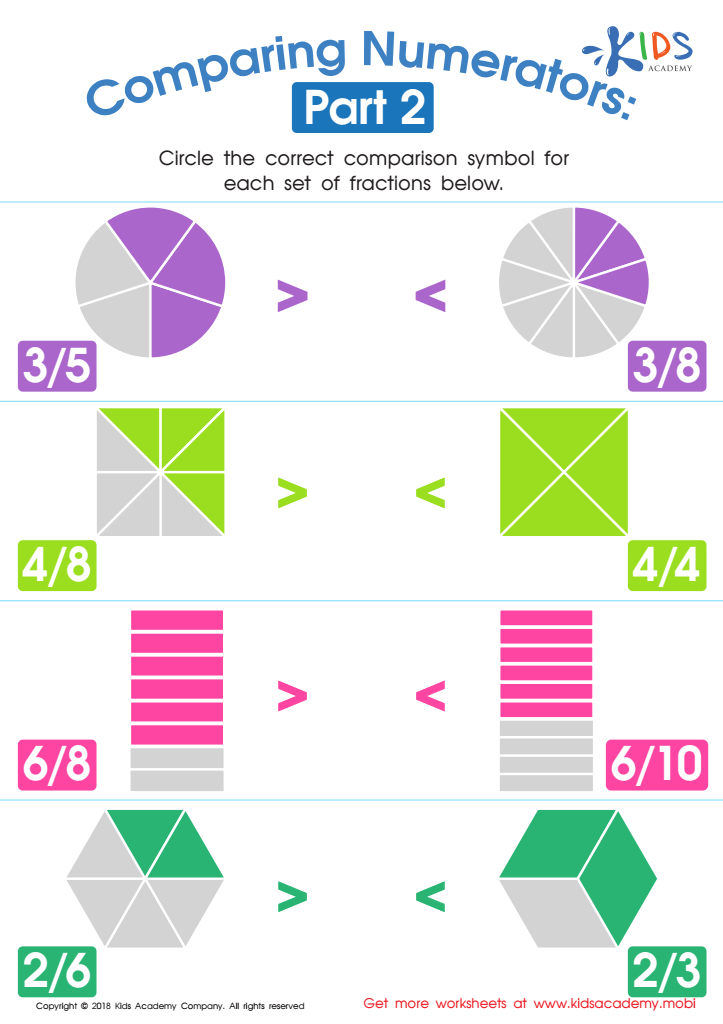
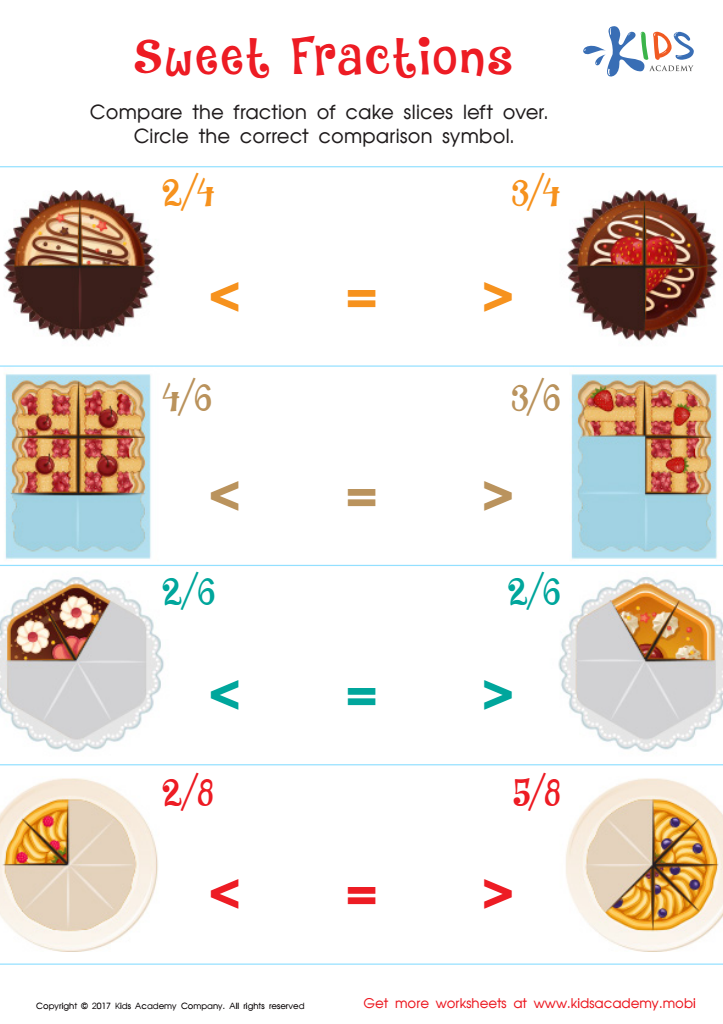
Before beginning this exercise, your child should have knowledge of fractions, including counting and identifying them in shaded areas of shapes. In the pdf, they must compare two fractions in each set and circle the symbol for the larger fraction. Help them as needed.
Comparing Numerators Part 2 Worksheet
Worksheet
Сompare fractions worksheet for 3rd grade

Compare Fractions Worksheet

This compare fractions worksheet is great for 3rd graders to learn and understand fractions in a fun way. Let them explore fractions visually with the help of sweet treats!
Compare Fractions Worksheet
Worksheet


Introducing children aged 4-8 to comparing fractions is an essential step in building their mathematical foundation. At this age, children are highly receptive to learning new concepts, and understanding fractions can significantly boost their number sense and overall problem-solving abilities. By comparing fractions, children learn important mathematical principles, like the ideas of parts and wholes, which are foundational to more advanced topics like decimals and percentages in later years.

Parental and teacher involvement in comparing fractions can also foster a positive attitude towards math from an early age. When children see fractions in everyday scenarios—like splitting a pizza or sharing toys—they realize that math is relevant and practical. Engaging them with visual aids and hands-on activities can make learning these concepts fun and interactive, reducing any fear or anxiety associated with math.

Furthermore, comparing fractions encourages critical thinking and analytical skills. Children not only learn how to compare numerical values but also how to reason through problems and make logical decisions. This cognitive development is crucial and transferable to other subjects and real-life situations.

Ultimately, caring about comparing fractions at an early age equips children with vital academic tools and promotes lifelong learning habits, setting them up for future success in both school and life.