Understanding tens Numbers Worksheets for Ages 4-8
4 filtered results
-
From - To
Welcome to our "Understanding Tens Numbers Worksheets" specifically designed for children aged 4-8! These engaging worksheets introduce young learners to the concept of tens in a fun and interactive way. By using colorful visuals and practical exercises, children will develop a strong foundation in counting, place value, and basic addition. Our resources promote critical thinking and problem-solving skills while making learning enjoyable. Whether in the classroom or at home, these worksheets are perfect for reinforcing numeracy skills and preparing children for more complex math concepts. Explore our diverse range of activities that make mastering tens a fun adventure!
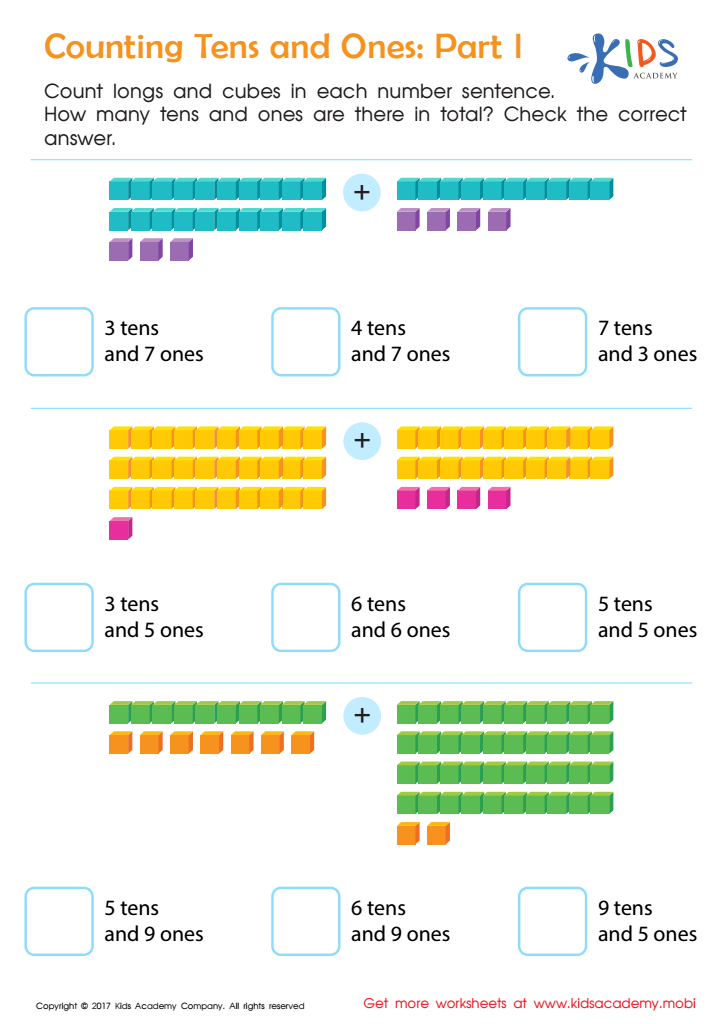
Counting Tens and Ones: Part 1 Worksheet
 Assign to My Students
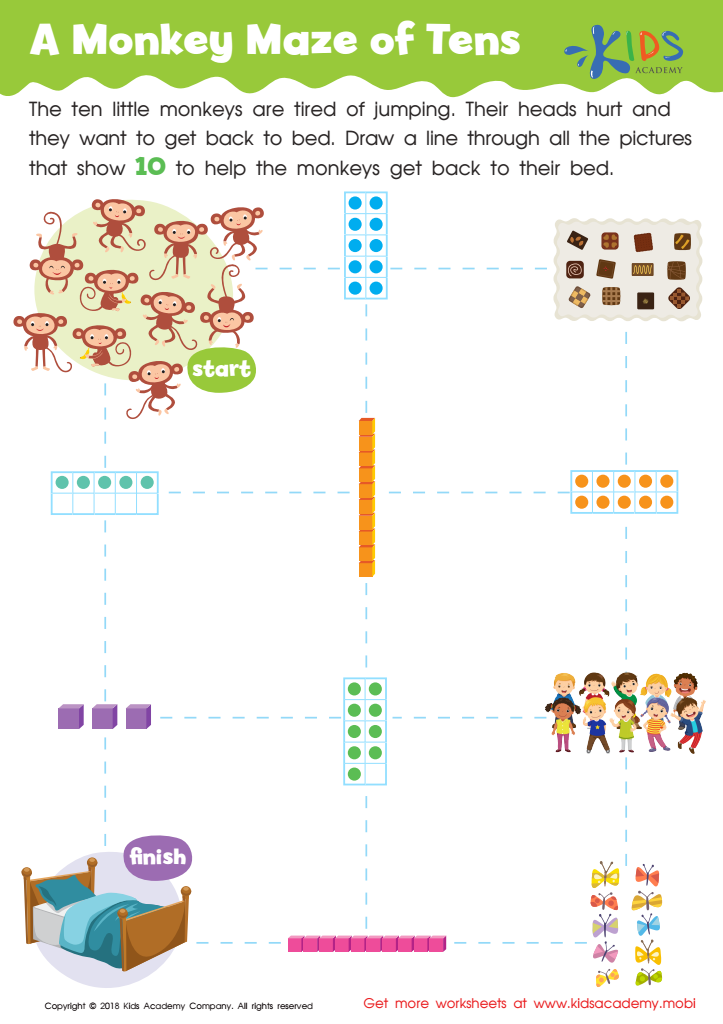
A Monkey Maze of Tens Worksheet
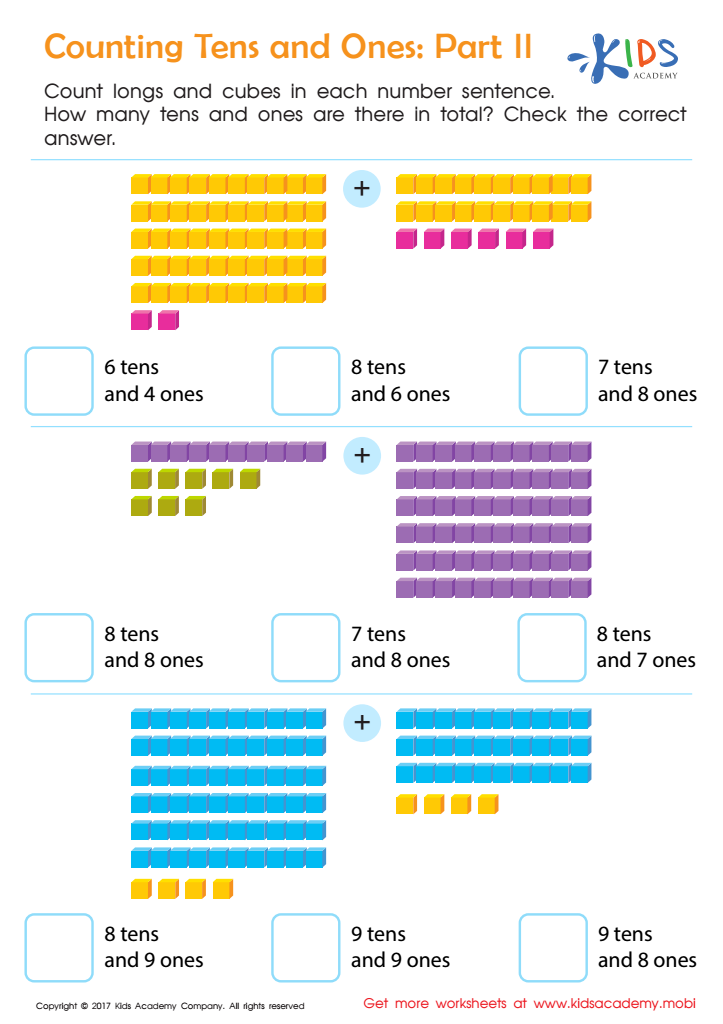
Counting Tens and Ones: Part 2 Worksheet
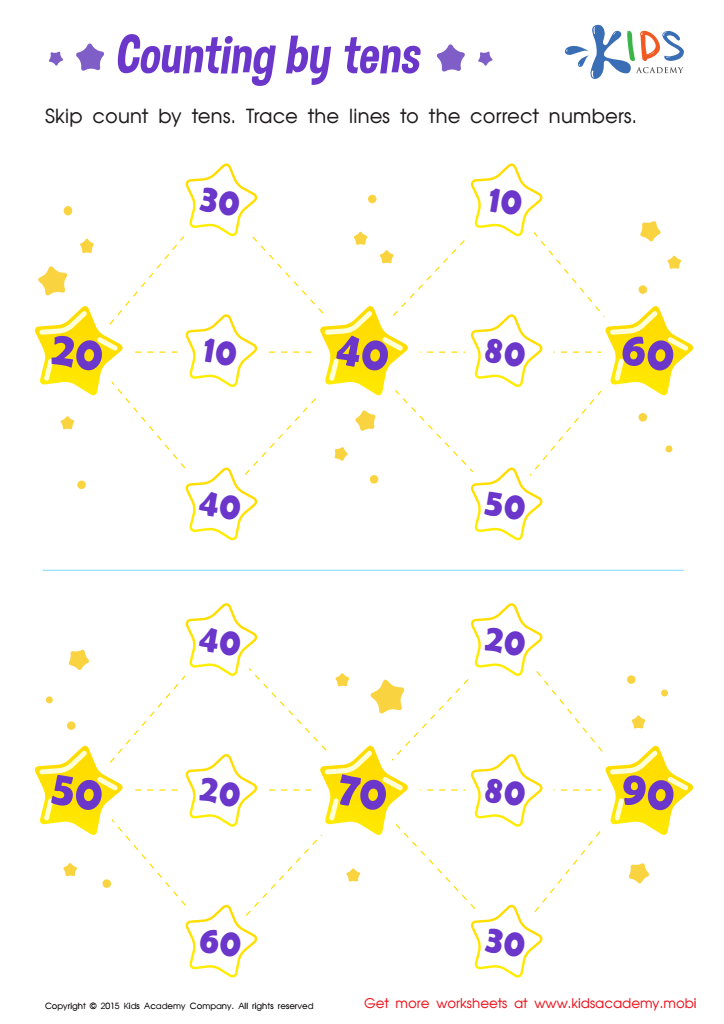
Learn Dozens: Counting by Tens Printable



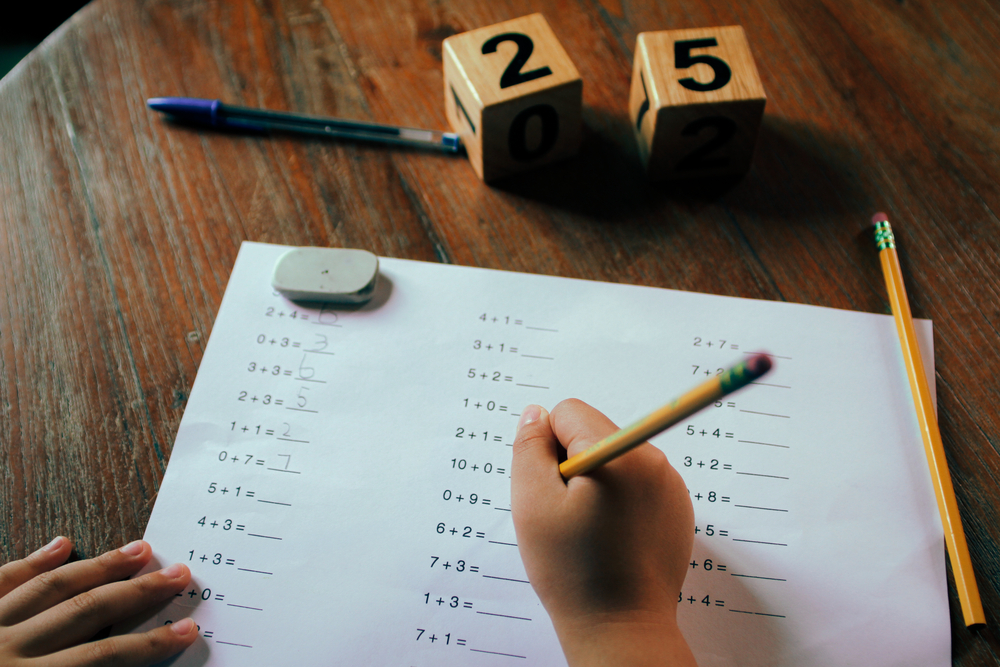




Understanding tens and number concepts is crucial for children aged 4-8 as it lays the foundation for their future mathematical skills. At this stage, children begin to transition from simple counting to more complex operations, and grasping the concept of tens is fundamental in this process. Recognizing that numbers are composed of tens and ones helps children develop a sense of place value, enabling them to understand larger numbers as they progress in their education.
Furthermore, grasping tens assists in mental math strategies and enhances problem-solving abilities. It encourages children to think in groups of ten, making addition and subtraction more manageable and efficient. This early number sense not only boosts confidence in mathematics but also fosters a positive attitude towards learning.
Parents and teachers should prioritize teaching tens because it promotes overall cognitive development. Engaging in activities that involve grouping, counting, and visualizing numbers can stimulate children's mathematical thinking. Ultimately, a strong foundation in number understanding will equip them with the skills necessary for advanced math concepts later on.
In conclusion, ensuring that children aged 4-8 understand tens is essential for their academic success, problem-solving skills, and developing a lifelong positive relationship with mathematics.








