Shape comparison Math Worksheets for Ages 4-8
4 filtered results
-
From - To
Discover our engaging Shape Comparison Math Worksheets designed specifically for children aged 4-8! These interactive activities help young learners develop essential skills in identifying and comparing shapes, all while fostering a fun and creative learning environment. Each worksheet features colorful illustrations and age-appropriate challenges that encourage kids to recognize differences in size, shape, and orientation. Perfect for both classroom and at-home activities, our worksheets aim to enhance critical thinking and boost confidence in early math skills. Begin your child's exciting journey into the world of shapes and comparisons with our easy-to-use, printable resources today!
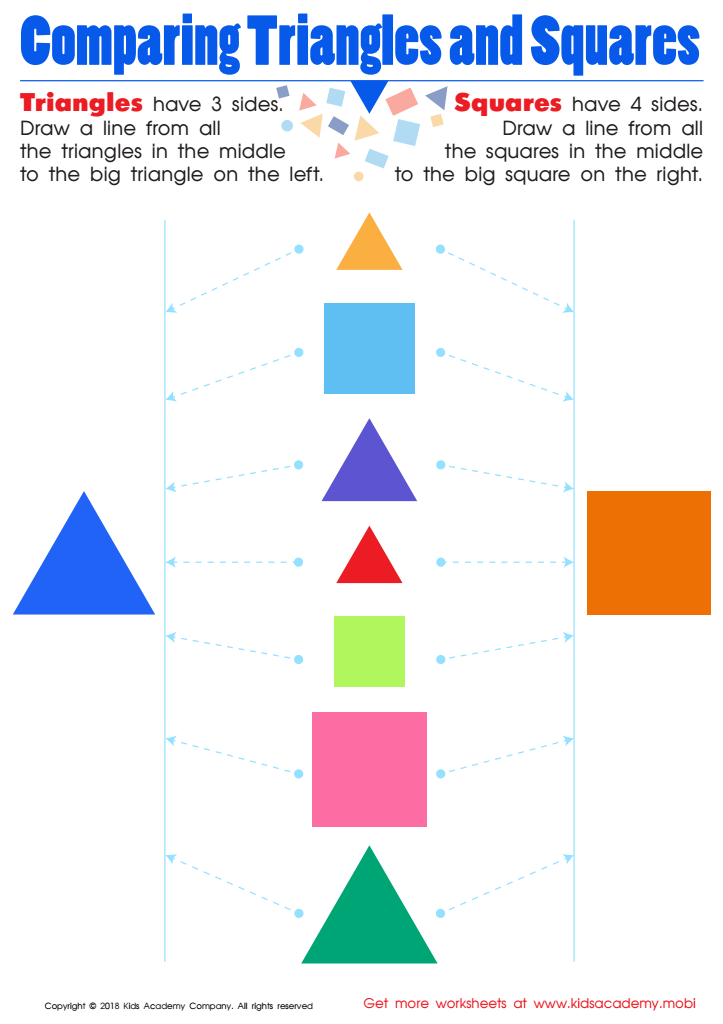
Comparing Triangles Squares Worksheet
 Assign to My Students
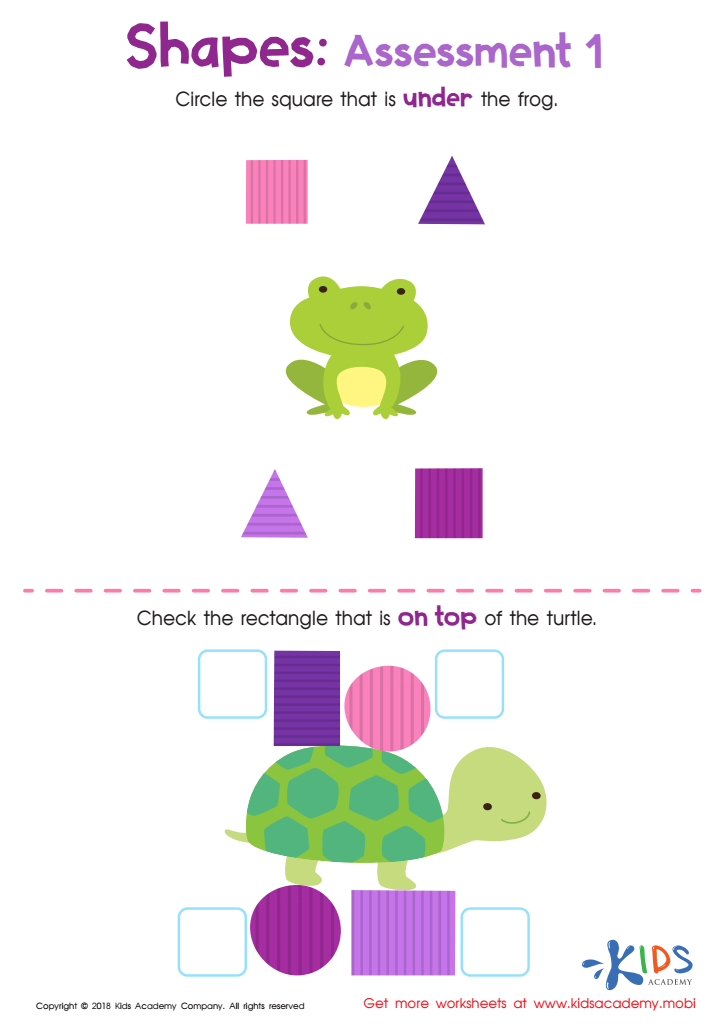
Geometry – Assessment 1 Worksheet
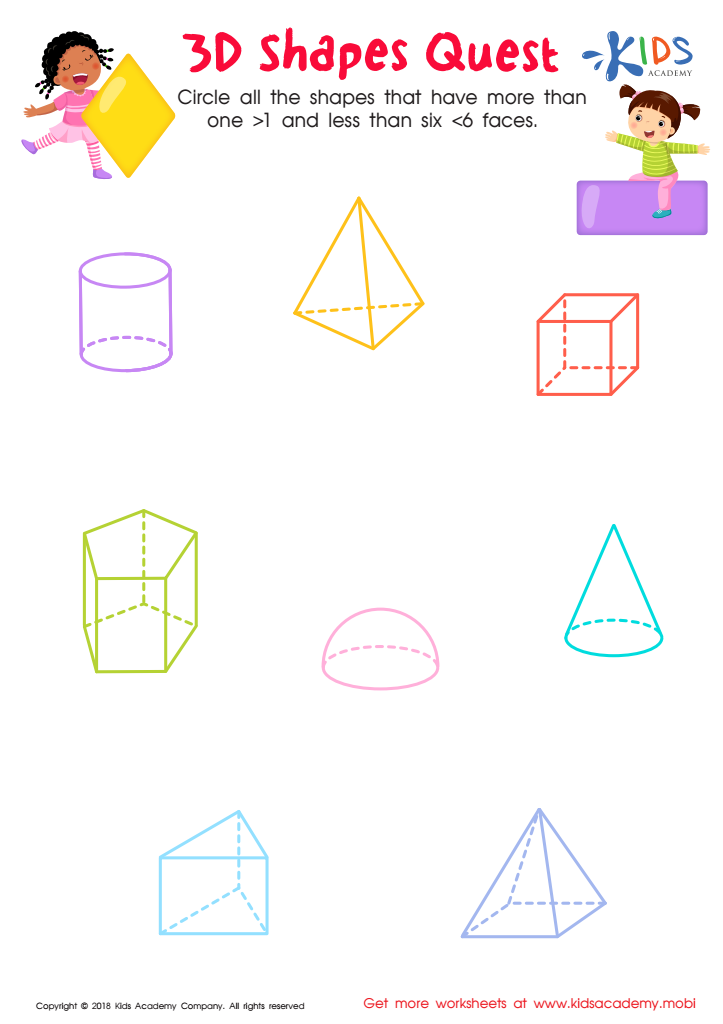
3D Shapes Quest Worksheet
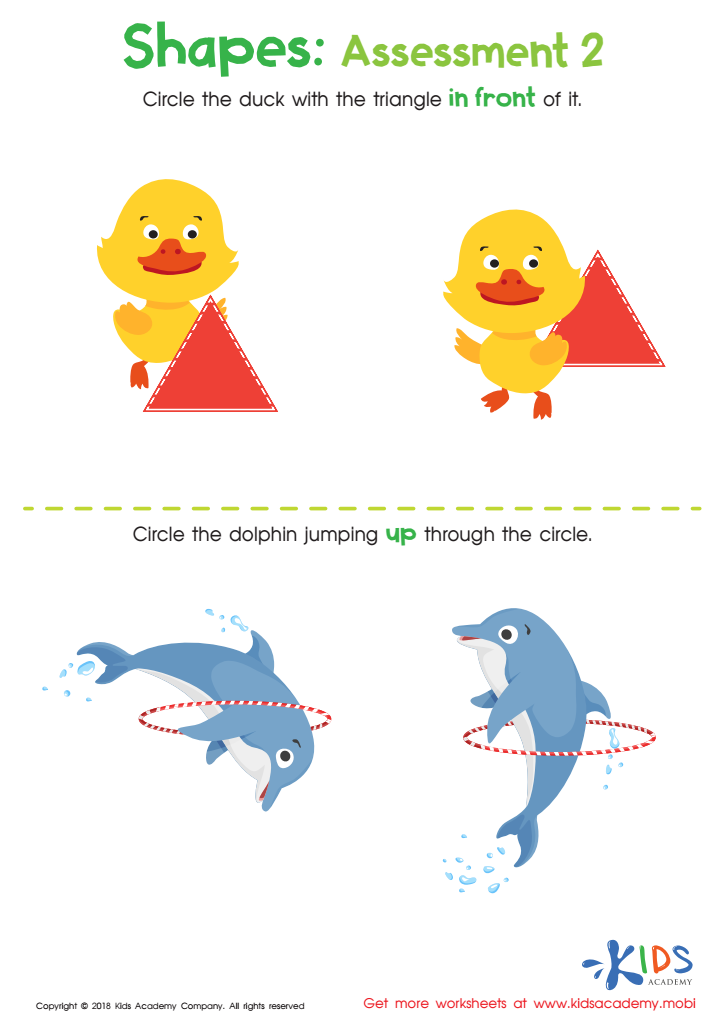
Geometry – Assessment 2 Worksheet







Shape comparison activities are essential for children aged 4-8 as they lay the foundation for crucial mathematical skills and cognitive development. During this stage of growth, children's brains are developing rapidly, and engaging with shapes helps enhance spatial awareness, critical thinking, and problem-solving abilities.
Understanding and comparing shapes encourages children to categorize and differentiate between various geometric forms, promoting their ability to recognize and describe patterns. These activities foster vocabulary development, as children learn terms like "bigger," "smaller," "taller," and "shorter." Furthermore, engaging in shape comparison activities strengthens fine motor skills as children manipulate shapes, whether through drawing, sorting, or creating with building blocks.
Shapes are everywhere in our environment, so discussing them in everyday contexts provides practical applications for their learning. Not only do these activities promote a strong foundation in mathematics, but they also facilitate creative thinking and expression, as kids explore how shapes can combine to form new structures or designs.
Ultimately, shape comparison is not just about mathematical proficiency; it's about equipping children with essential life skills, supporting their overall development and nurturing their innate curiosity about the world because a deep understanding of shapes translates into success in more complex math concepts in the future.








