Sorting Worksheets for Ages 4-8 - Page 2
27 filtered results
-
From - To
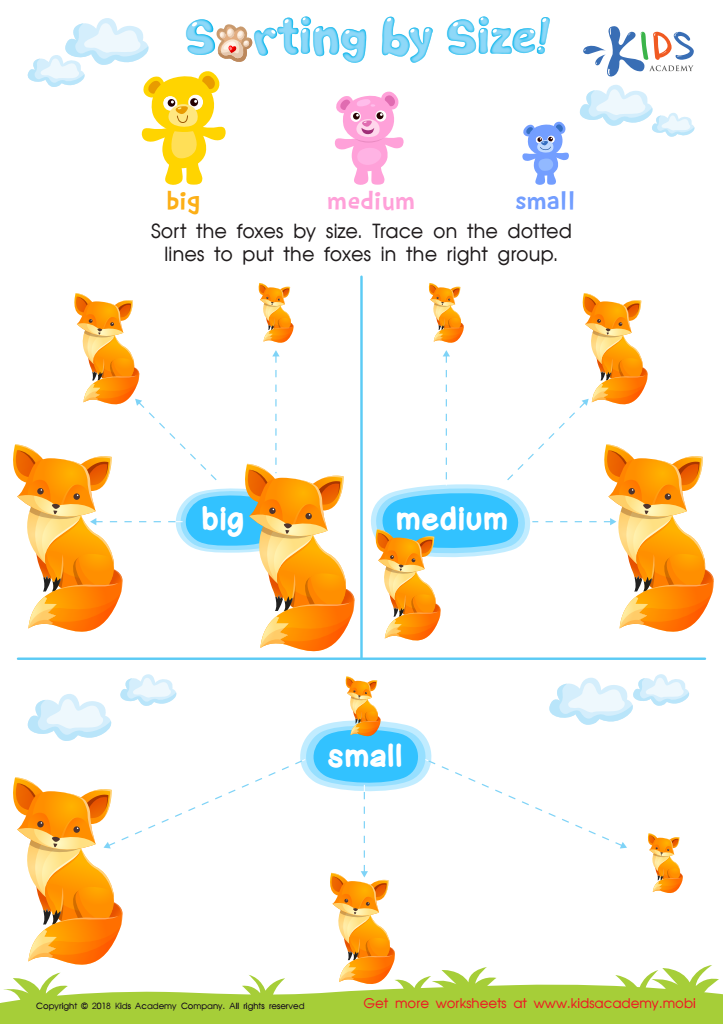
Sorting by Size Worksheet
 Assign to My Students
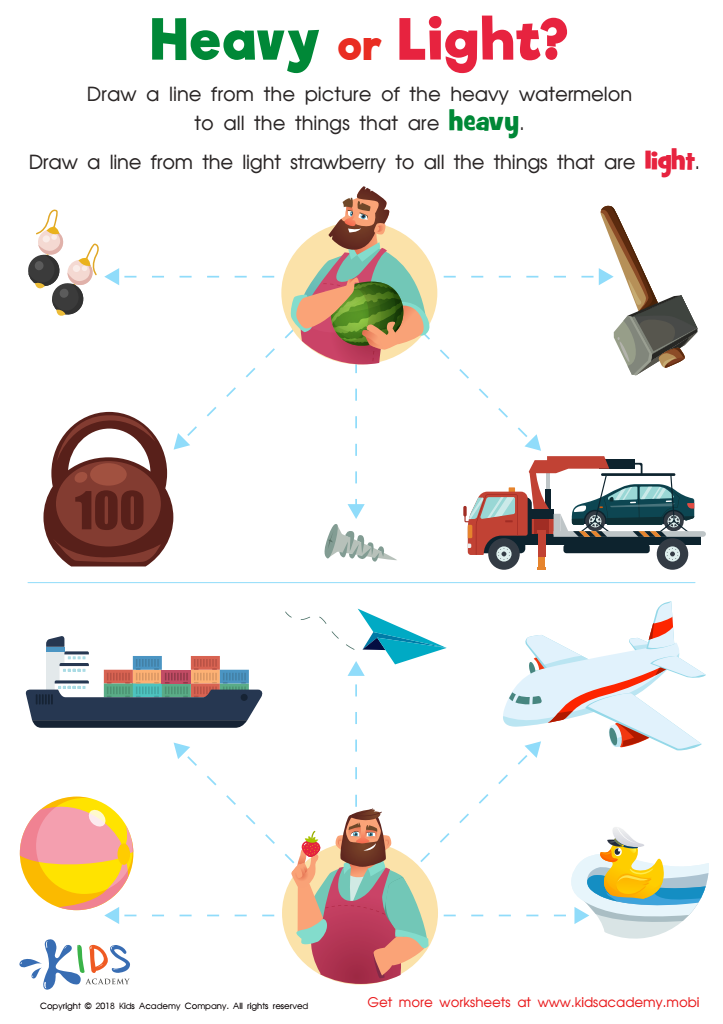
Heavy or Light? Worksheet
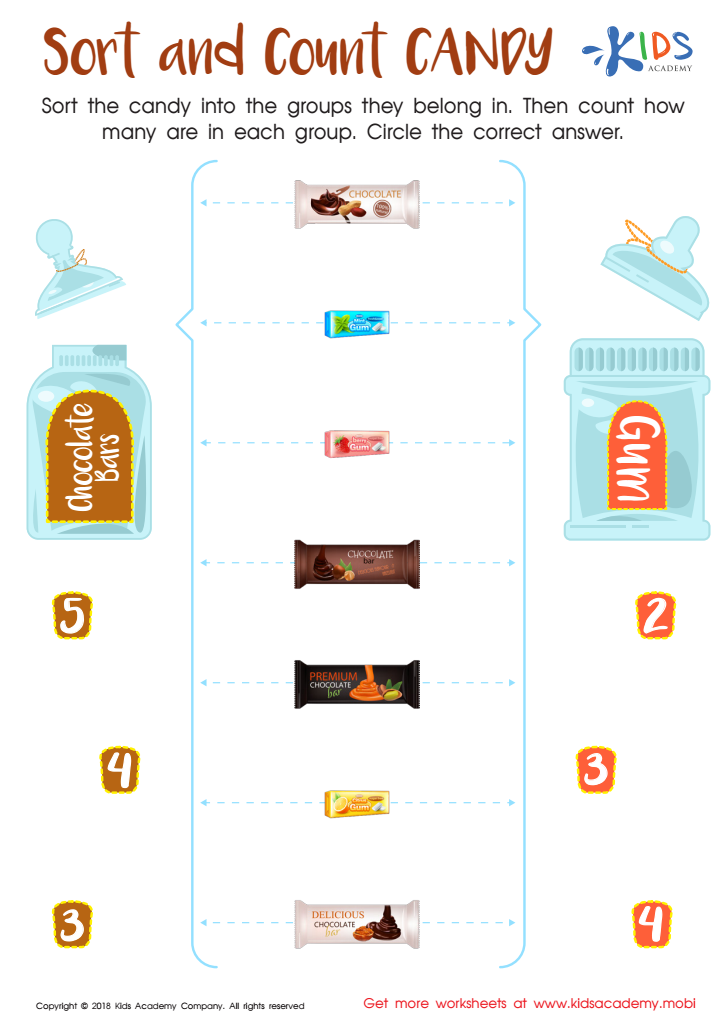
Sort and Count Candy Worksheet








Sorting objects is a foundational cognitive skill crucial for young children's development. For ages 4-8, engaging in sorting activities helps to enhance several core capabilities. Firstly, it sharpens cognitive skills by encouraging children to notice similarities and differences, make decisions, and establish categories. This supports mathematical thinking and problem-solving abilities, laying the groundwork for future concepts like grouping, counting, and organizing data.
Secondly, sorting involves motor skills development. By handling objects of various sizes and shapes, children improve their fine motor skills and hand-eye coordination, essential for writing, using tools, and personal care tasks.
Additionally, sorting contributes to language acquisition and cognitive flexibility. As children describe sorting criteria and verbalize decisions, they enrich their vocabulary and language comprehension. This verbal engagement also enhances their ability to follow instructions and communicate decisions clearly.
Engaging in sorting activities can boost social-emotional skills as well. Sorting games build patience, attention to detail, and persistence, fostering a sense of achievement and self-confidence when tasks are completed successfully. Sorting in groups can also teach teamwork and sharing.
Overall, the seemingly simple act of sorting objects profoundly impacts multiple developmental domains, making it an essential activity for young children's growth and learning.








