Subtraction Worksheets for Ages 4-8 - Page 5
97 filtered results
-
From - To
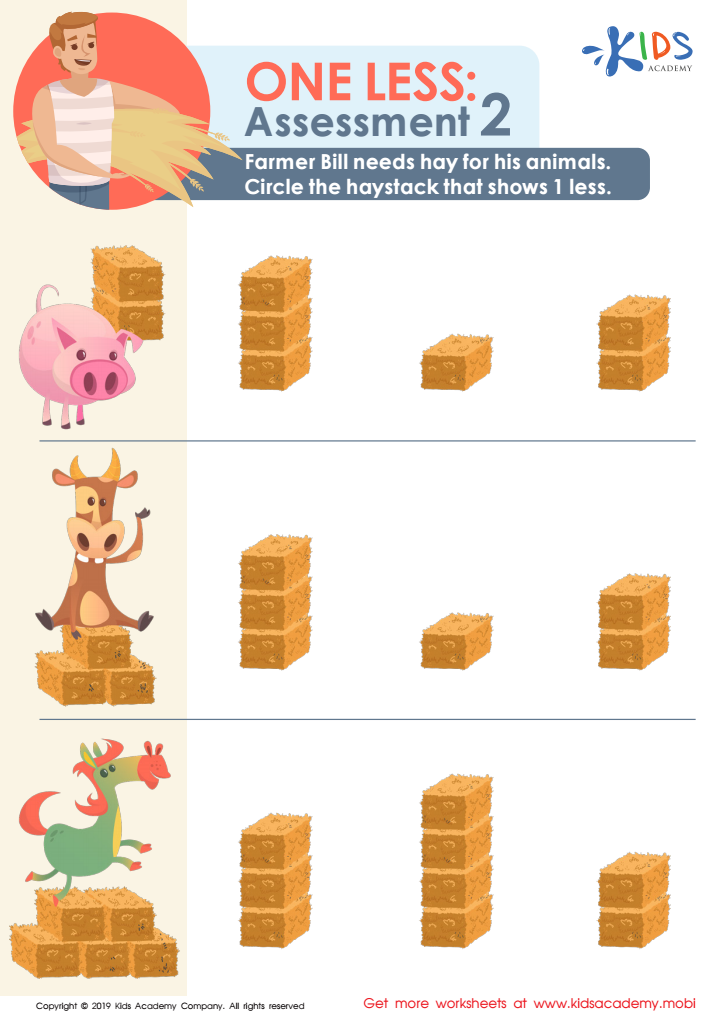
One Less: Assessment 2 Worksheet
 Assign to My Students








Subtraction is a fundamental mathematical operation that plays a crucial role in a child's cognitive development and future academic success, particularly for children aged 4-8. At this stage, children are developing essential problem-solving skills, and understanding subtraction provides a foundation for more complex mathematical concepts later on.
Learning subtraction enhances a child's ability to think critically. It exposes them to the concepts of quantity, difference, and relationship through hands-on experiences. When children practice subtraction, they learn how to compare numbers and understand the idea of “taking away,” a concept that is easily relatable to their everyday lives, such as sharing snacks or counting toys.
Additionally, mastering subtraction can boost a child's confidence and motivation in learning. When they grasp this concept, it reduces math-related anxiety and creates a solid platform for other math skills, such as addition, multiplication, and division. Furthermore, familiar activities or games can turn subtraction into a fun and engaging experience, fostering a positive attitude toward math.
Parents and teachers should care about subtraction because it not only helps children navigate the world around them quantitatively but also supports their overall intellectual growth and prepares them for future learning challenges.








