Mathematical reasoning Subtraction Worksheets for Ages 4-8
6 filtered results
-
From - To
Unlock the world of subtraction with our engaging Mathematical Reasoning Subtraction Worksheets, designed specifically for children aged 4-8. These interactive worksheets foster critical thinking and problem-solving skills while making subtraction fun and accessible. Tailored to various skill levels, each worksheet offers a variety of exercises that challenge students to deduce solutions through reasoning, promoting a deeper understanding of mathematical concepts. With colorful visuals and relatable scenarios, kids will explore subtraction in practical contexts, all while building confidence in their mathematical capabilities. Dive into our diverse collection today and watch your child's love for math blossom!
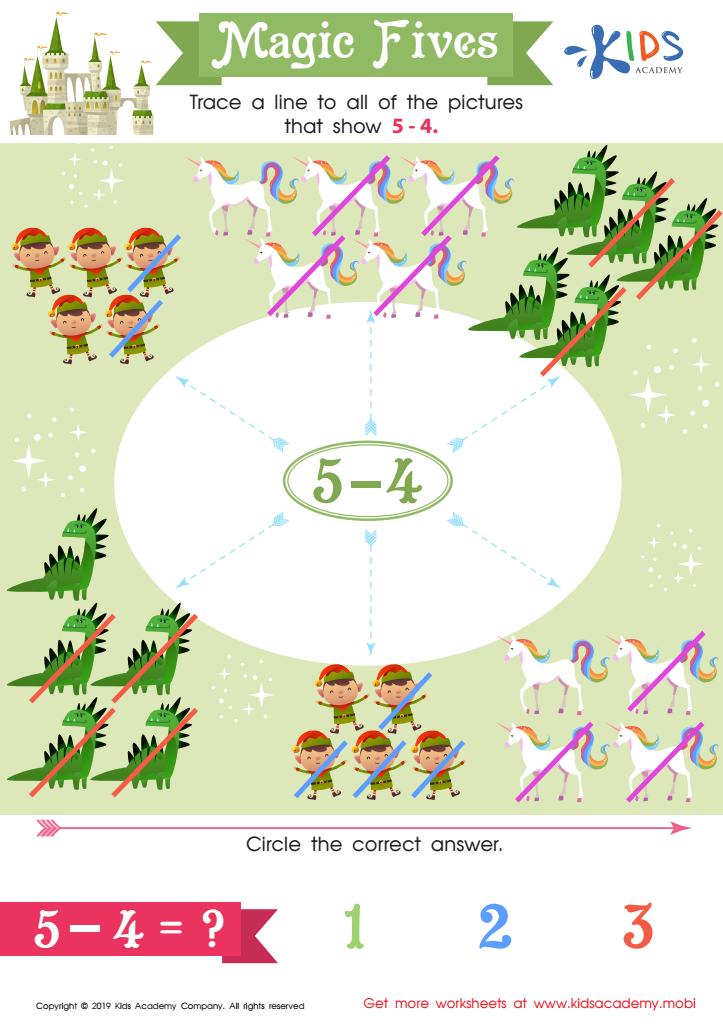
Magic Fives Worksheet
 Assign to My Students
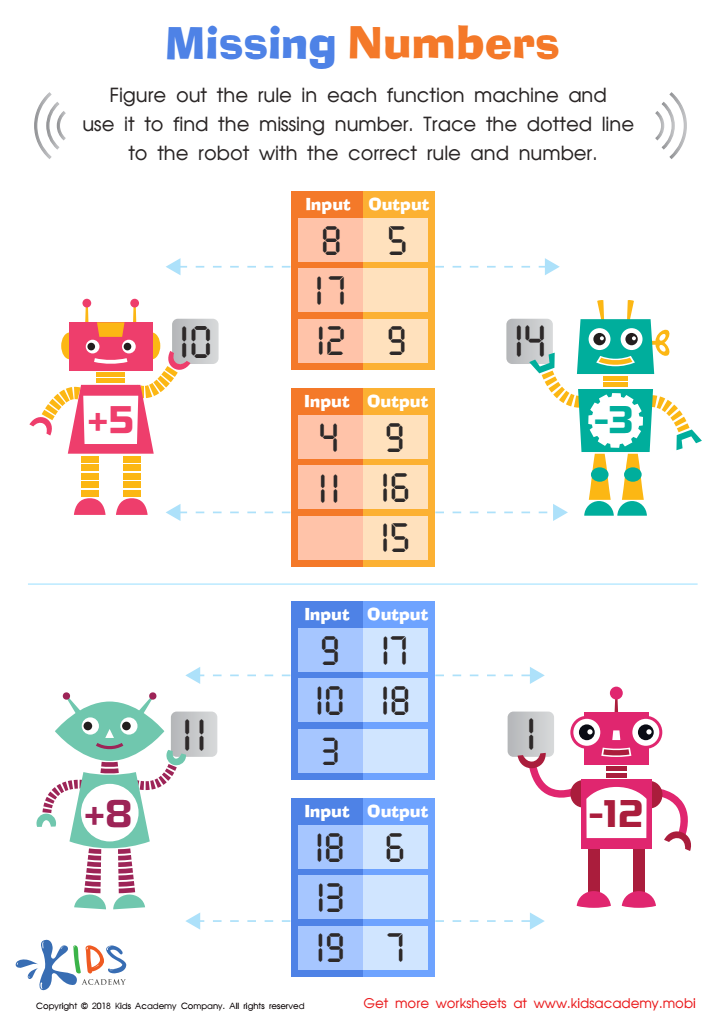
Missing Numbers Worksheet
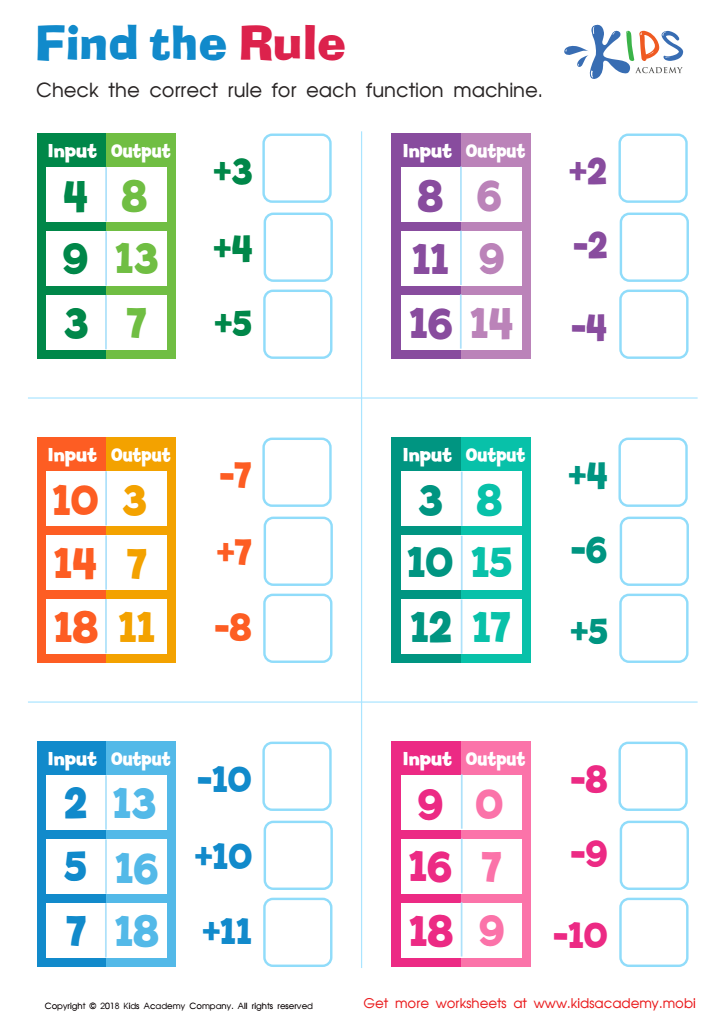
Find the Rule Worksheet
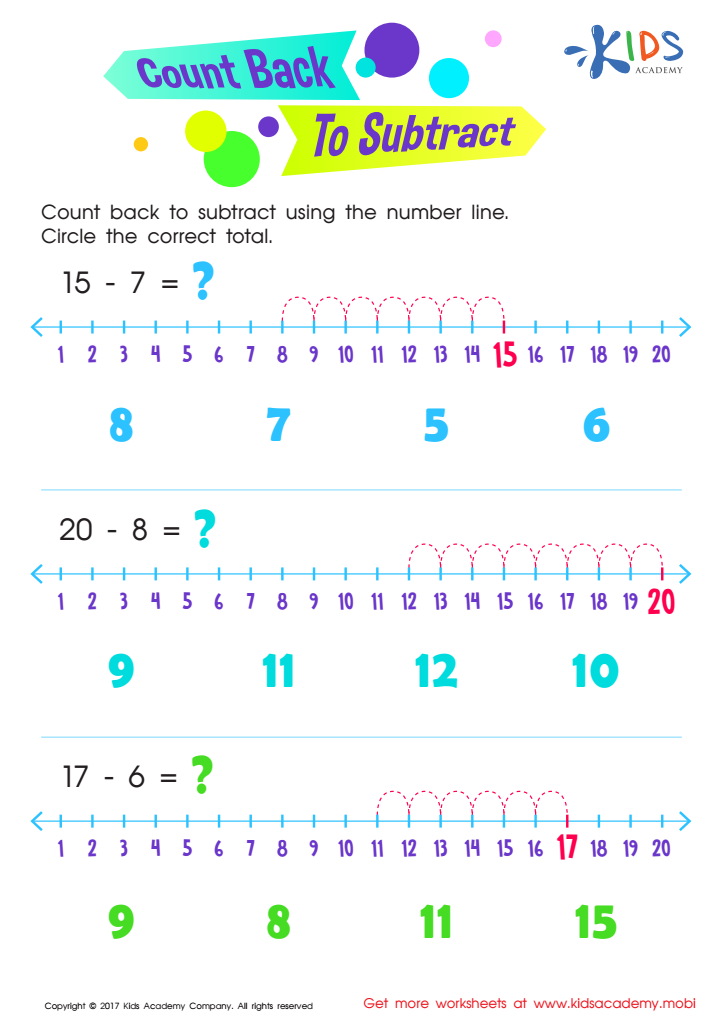
Count Back to Subtract Substraction Worksheet
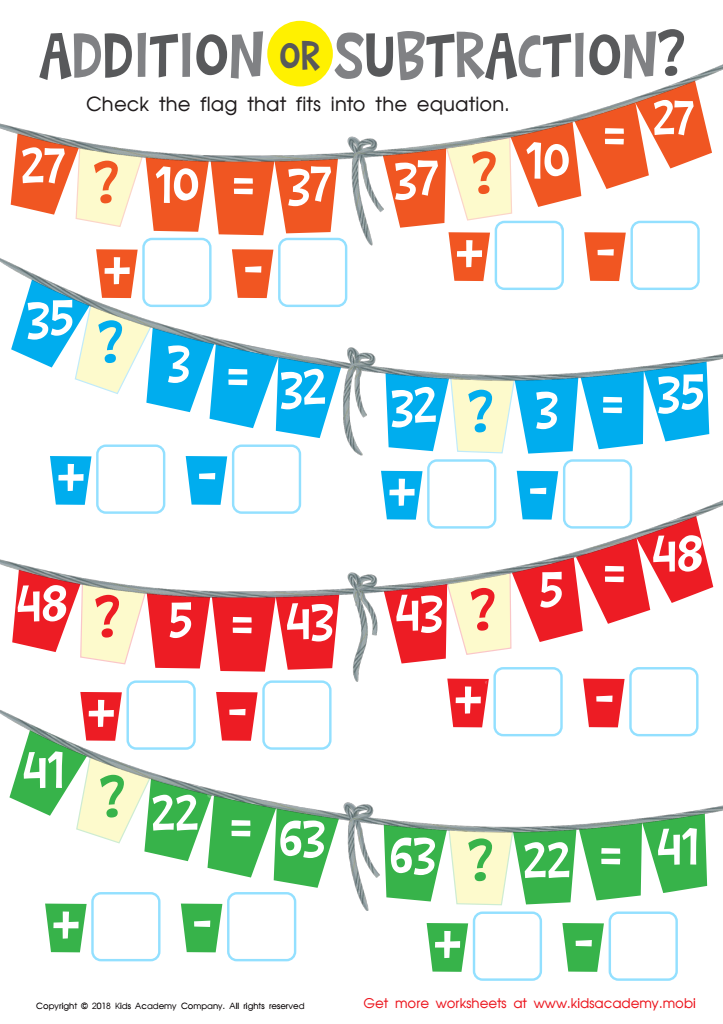
Addition or Subtraction? Worksheet
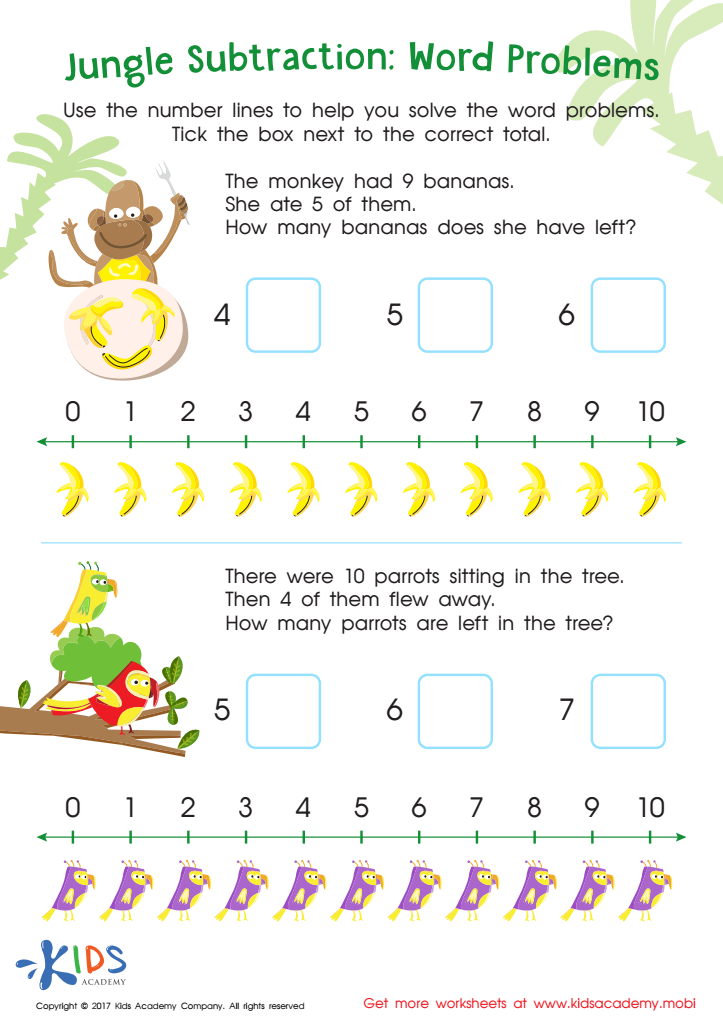
Jungle Subtraction Word Problems Substraction Worksheet








Mathematical reasoning in subtraction for children ages 4-8 is crucial for several reasons. First, it lays the foundation for overall numeracy skills and enhances critical thinking. As children learn to subtract, they not only grasp the concept of taking away but also begin to understand relationships between numbers, which is essential for problem-solving.
Second, this age group is particularly receptive to learning through hands-on activities and visual aids. Engaging with subtraction through concrete materials—like counters or drawings—helps young learners internalize concepts, making mathematics tangible and less abstract. This foundational understanding boosts their confidence with numbers, encouraging an earlier and more positive relationship with math.
Third, reasoning skills developed through subtraction impact later mathematical learning. Mastery of subtraction leads to deeper comprehension of more complex concepts, such as addition, multiplication, and even division, setting the stage for future academic success.
Moreover, involvement from parents and teachers fosters a supportive learning environment. Their engagement can propel children to explore and discuss mathematical ideas, promoting a growth mindset and a love for learning. By nurturing mathematical reasoning in subtraction, caregivers can ultimately equip children with vital skills that extend far beyond the classroom.








