Problem-Solving Skills Tracing Shapes Worksheets for Ages 4-8
4 filtered results
-
From - To
Unlock your child's potential with our Problem-Solving Skills Tracing Shapes Worksheets for Ages 4-8! Designed to sharpen analytical and critical thinking, these engaging worksheets blend fun and learning seamlessly. Kids will trace various shapes while honing essential math and problem-solving skills. Perfect for young learners, our worksheets build fine motor skills, boost shape recognition, and improve spatial awareness. With colorful, interactive activities, your child will develop confidence in solving problems independently. Ideal for both classroom and at-home learning, these worksheets set the foundation for lifelong academic success. Download now and watch your child thrive!
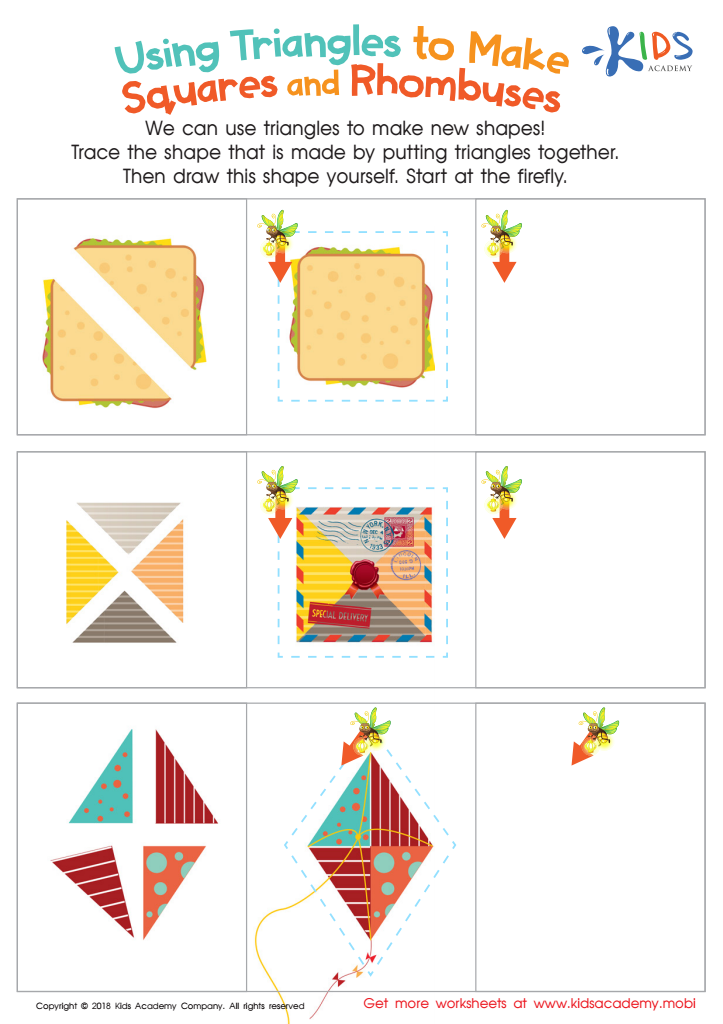
Using Triangles to Make Squares and Rhombuses Worksheet
 Assign to My Students
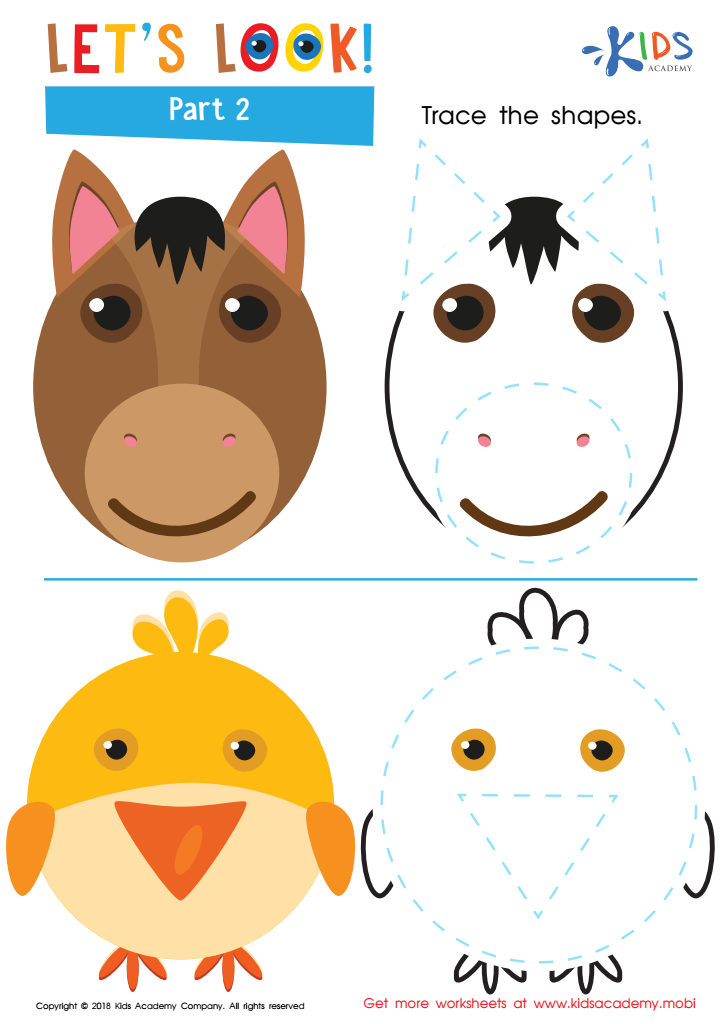
Let's Look! Part 2 Worksheet
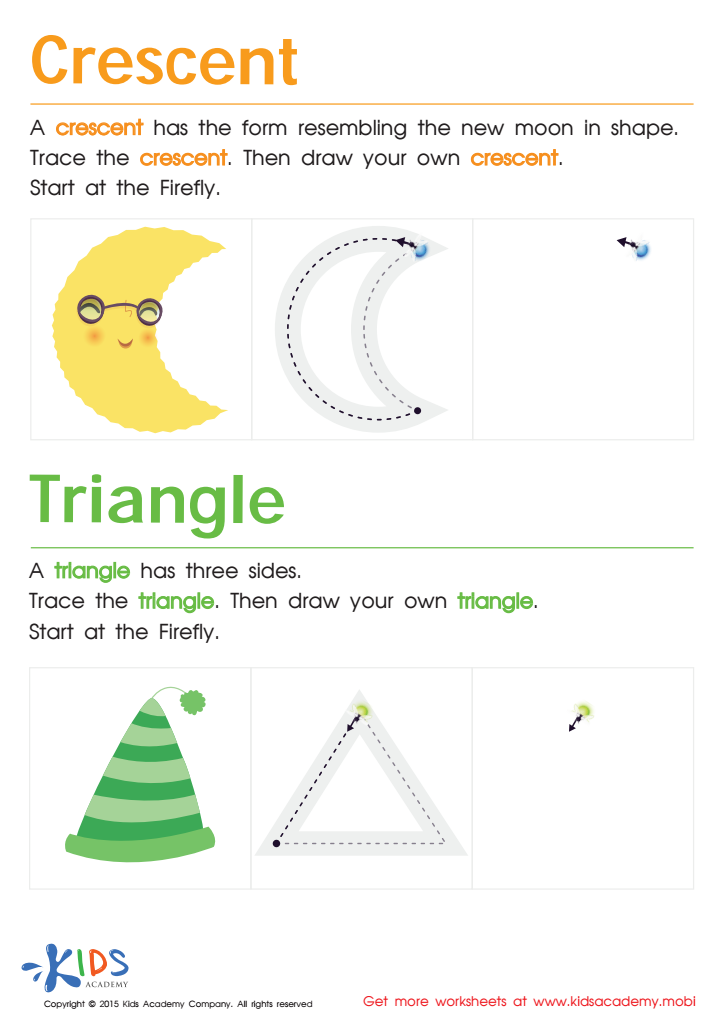
Learning to Draw Crescents And Triangles Worksheet
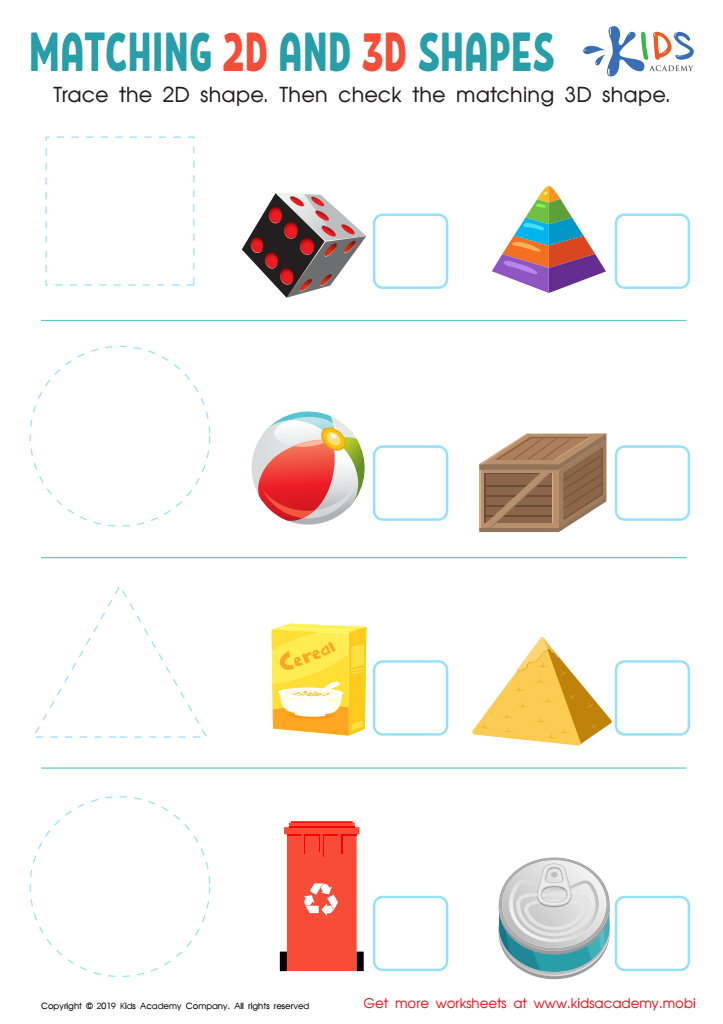
Matching 2D and 3D Shapes Worksheet








Problem-solving skills and tracing shapes exercises are foundational for children aged 4-8, laying essential groundwork for their cognitive, emotional, and motor development. For parents and teachers, fostering these skills early is crucial.
First, tracing shapes hones fine motor skills, essential for daily tasks such as writing, buttoning clothes, or using utensils. Precise finger movements in tracing help strengthen hand muscles, paving the way for these critical life skills.
Second, problem-solving tasks centered around shapes engage young minds in identifying patterns, navigating obstacles, and formulating strategies. This enhances cognitive abilities like attention to detail, memory, and logical reasoning. Children learn to analyze, predict outcomes, and make decisions—skills transferable to various subject areas including math, science, and language arts.
Furthermore, these activities build confidence and perseverance. As children encounter and overcome small challenges, they experience a sense of accomplishment. This positive reinforcement teaches them that effort leads to success, fostering a growth mindset and resilience.
Lastly, tracing shapes provides a structured way to introduce complex concepts such as symmetry, geometry, and spatial awareness. These foundational math concepts, grasped early, make it easier for children to understand more advanced topics later on.
In summary, incorporating tracing and problem-solving tasks into early education is a multifaceted approach that equips young learners with essential physical, cognitive, and emotional skills.