
Handwriting practice Reading Worksheets for Ages 4-8
8 filtered results
Difficulty Level
Grade
Age
-
From - To
Subject
Activity
Standards
Discover our engaging Handwriting Practice Reading Worksheets for ages 4-8, designed to enhance young learners' writing and reading skills. These fun, interactive worksheets combine letter formation practice with simple reading exercises, helping children to develop fine motor skills while boosting their literacy. Our expertly crafted, age-appropriate activities ensure that handwriting practice is enjoyable and effective. Ideal for both classroom use and homeschooling, these worksheets cater to early learners at various skill levels, fostering confidence and a love for learning. Download today to provide your child with the foundational skills they need for academic success.
Favorites
With answer key
Interactive
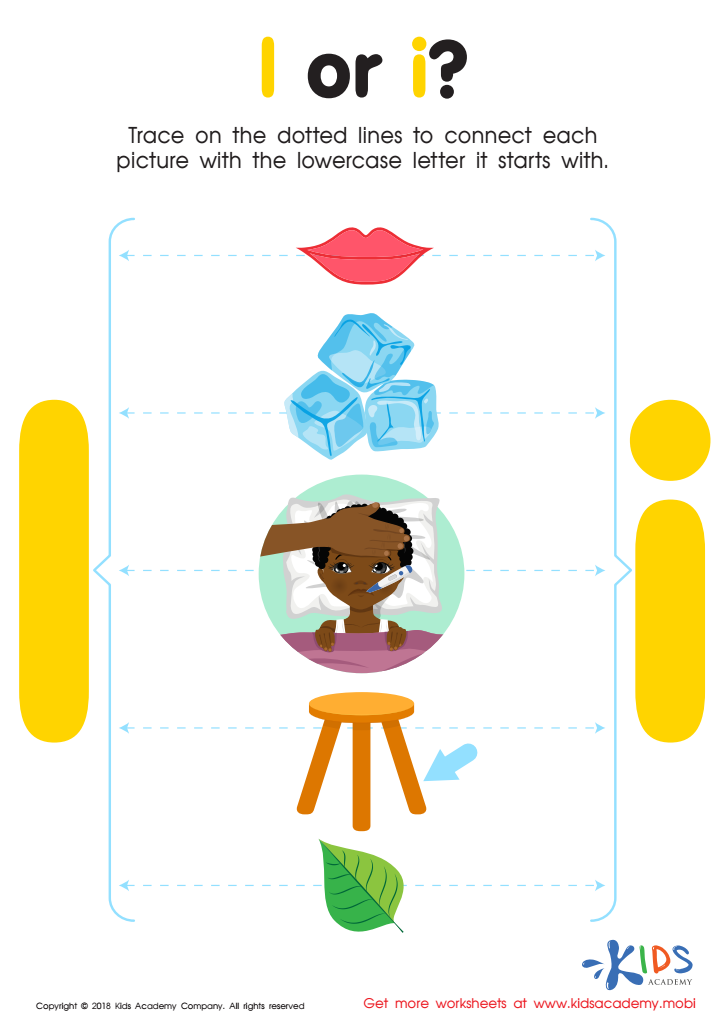
l or i? Worksheet
Trace the dotted lines on this worksheet to connect pictures with their lowercase letter. Ask your child what each picture is and the first letter of the word. Guide them to trace the letter with the dotted lines.
 Assign to My Students
l or i? Worksheet
Worksheet
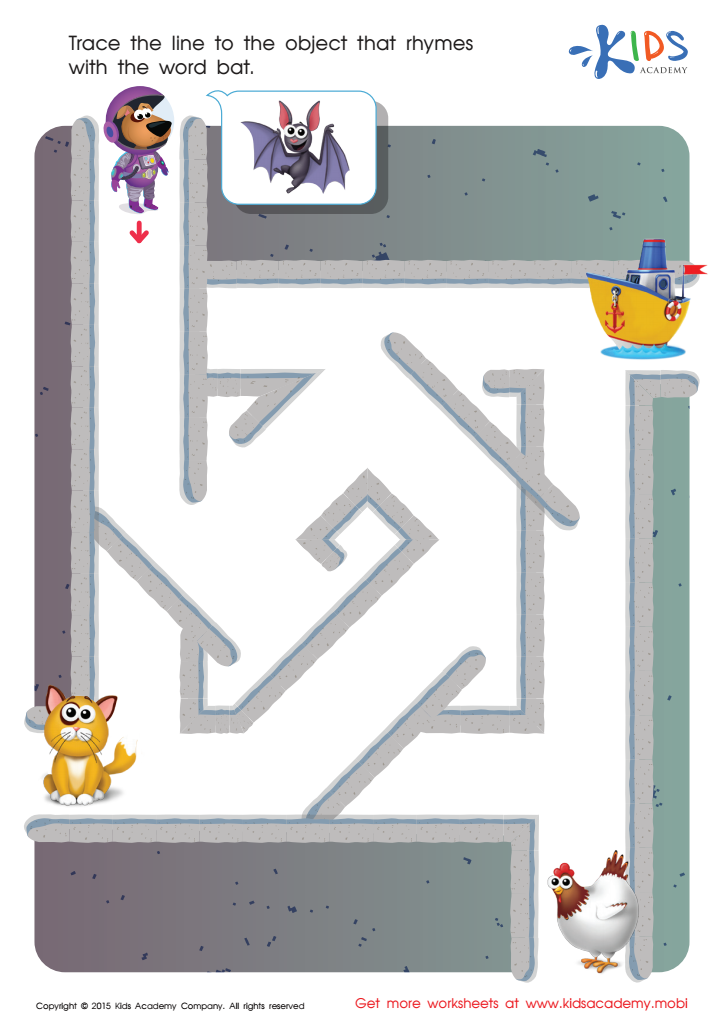
Bat Rhyming Words Worksheet
Get new reading and vocabulary worksheets to help make learning enjoyable for you and your kids. Join the dog and match the objects that rhyme. Have a blast!
Bat Rhyming Words Worksheet
Worksheet
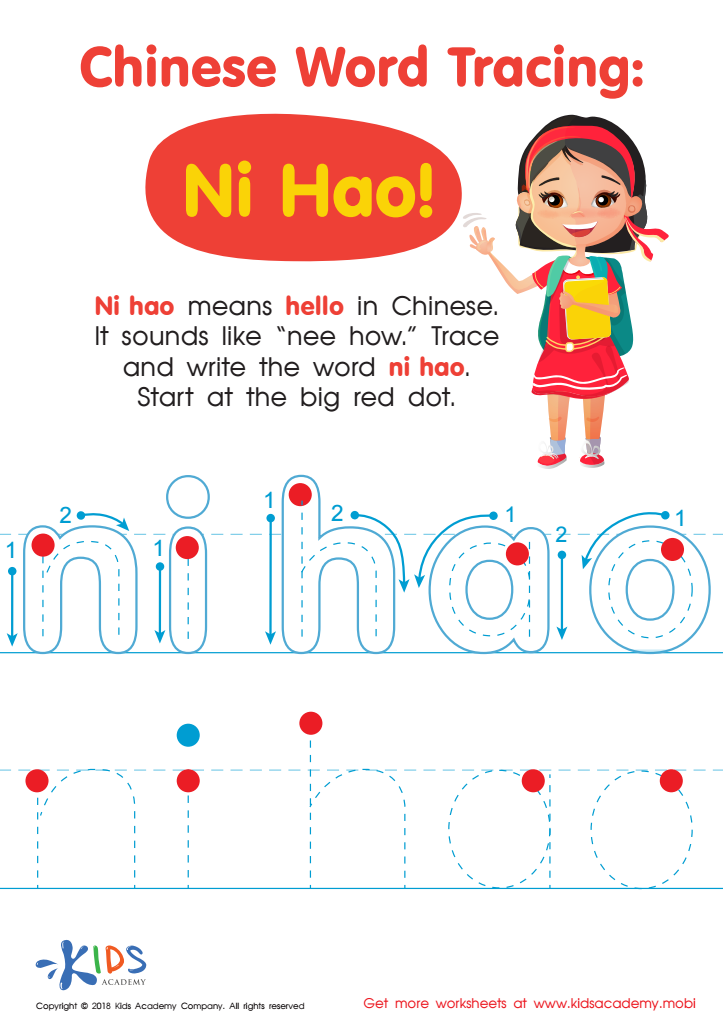
Chinese Word Tracing: Ni Hao Worksheet
Kids can learn to say "Ni hao" with this fun tracing worksheet. The free PDF helps kids write and say the Chinese greeting while also developing fine-motor, handwriting and reading skills. With red guide dots and traceable lines, kids will learn top-to-bottom and left-to-right patterning for fluent reading.
Chinese Word Tracing: Ni Hao Worksheet
Worksheet
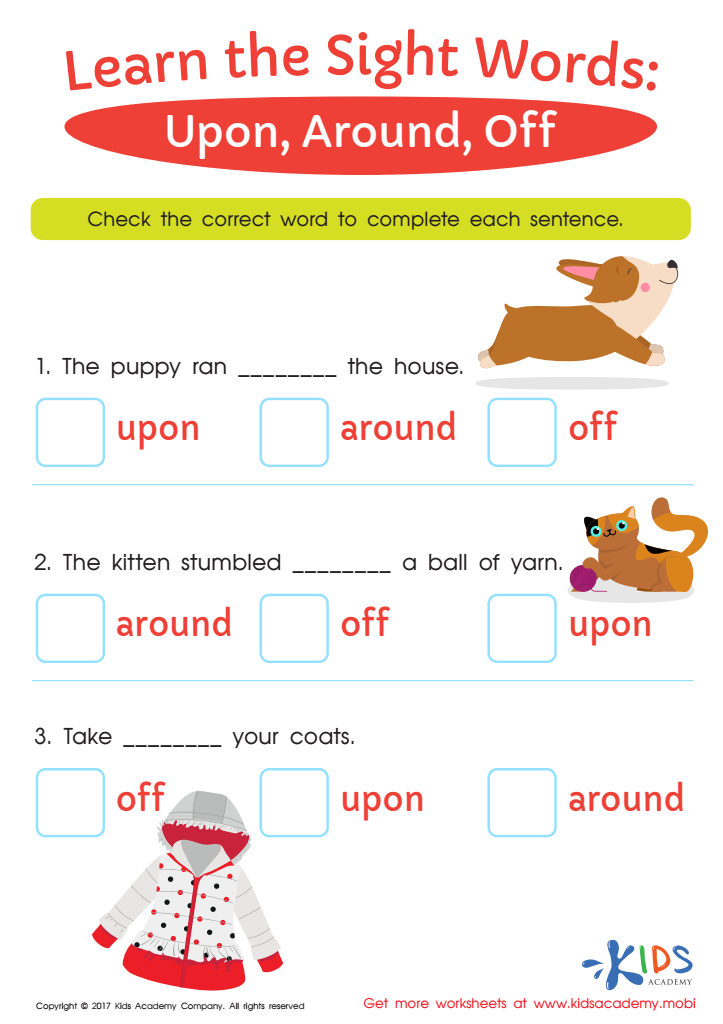
Upon, Around, Off Sight Words Worksheet
Assist your child in mastering prepositions by printing off this worksheet featuring three sight words: upon, around, off. Read the sentences aloud and use the illustrations to demonstrate the meaning of each. Your kid will soon master these words quickly.
Upon, Around, Off Sight Words Worksheet
Worksheet
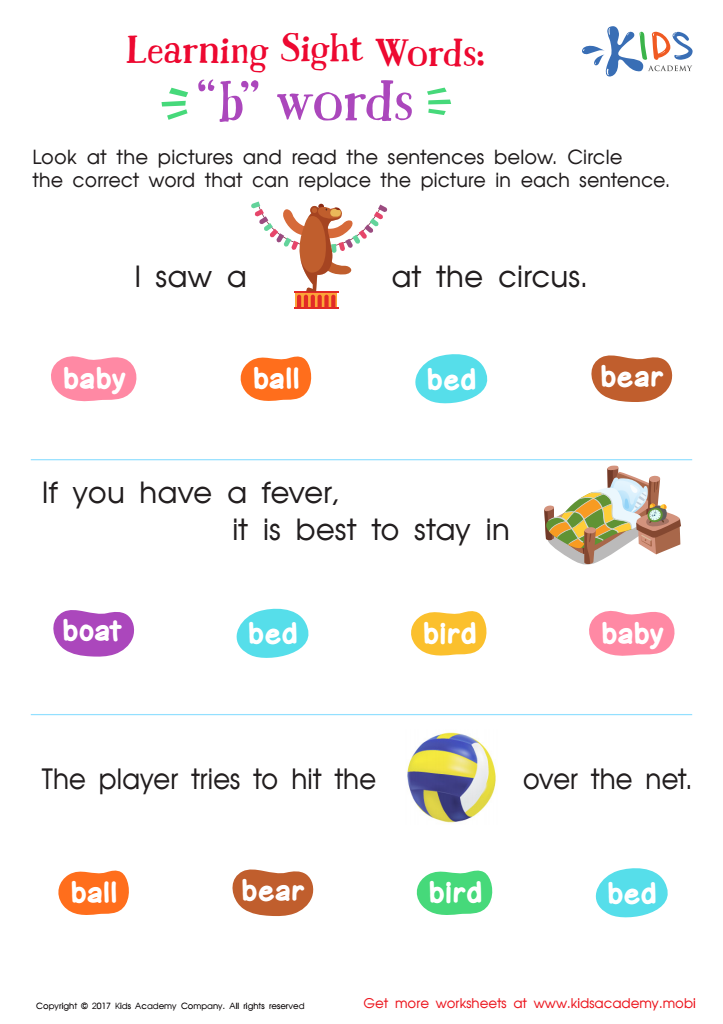
"B" Words Printable Sight Words Worksheet
Kids will learn sight words quickly with this fun worksheet! "B" Words offers guided practice with simple sentences and pictures. Build your child's reading confidence with this helpful worksheet and watch them become a master!
"B" Words Printable Sight Words Worksheet
Worksheet
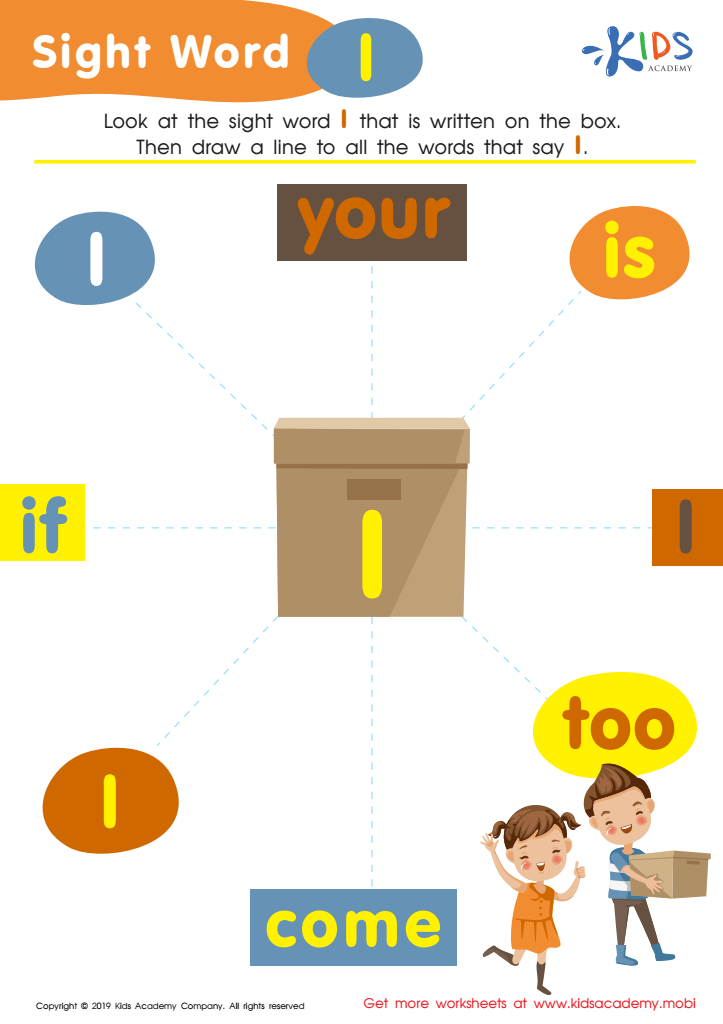
Sight Word I Worksheet
Recognizing the sight word 'I' is harder than it looks! When kids are learning to read, they understand 'I' by its sound, not as a word. This free worksheet gives them practice with 'I', letting them work on their fine motor skills too. They'll join 'I' to shapes containing the same letter. It's a great way to give kids confidence in their reading skills!
Sight Word I Worksheet
Worksheet
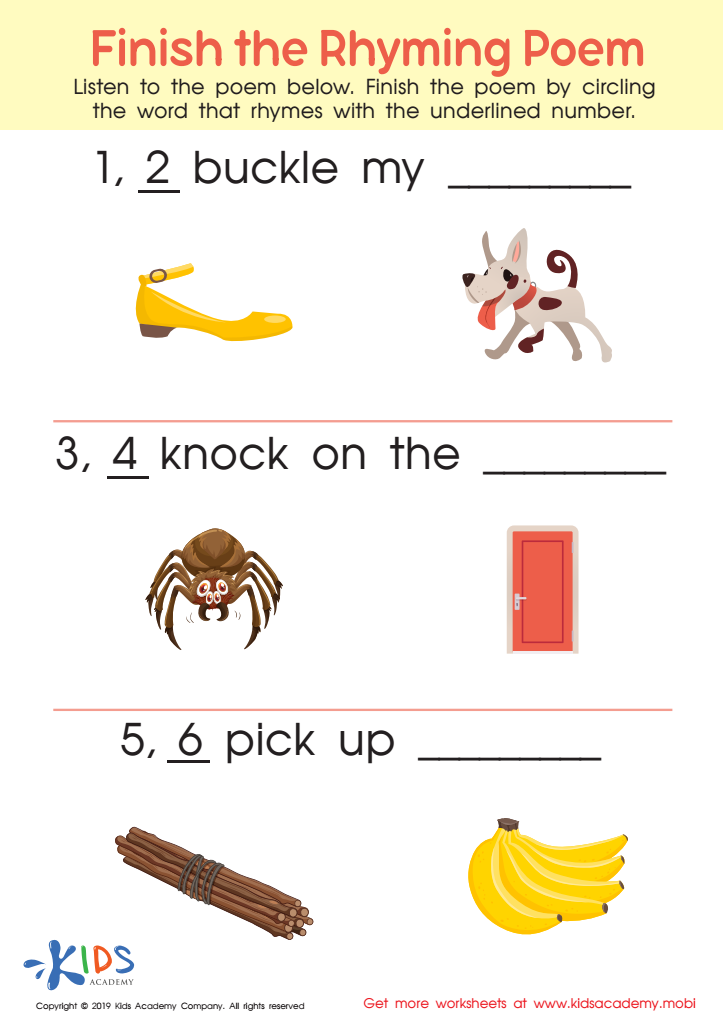
Finish Rhyming Poem Worksheet
Poems are a great way to express emotions and spark imagination. Does your child enjoy poetry and even have their own creations? If so, they'll love this worksheet. It's a great way to develop their rhyming skills. Challenge them to find and circle the words that rhyme with the ones underlined.
Finish Rhyming Poem Worksheet
Worksheet
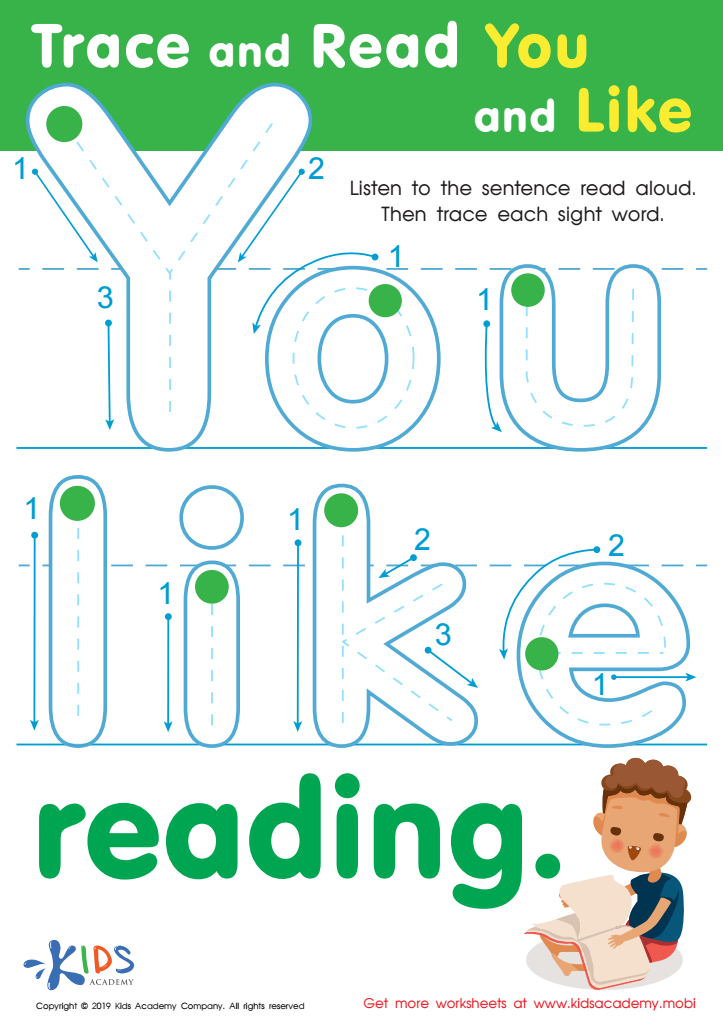
Trace Read You Like Worksheet
Sight words help children become confident and fluent readers. This free worksheet encourages success with basic 'you' and 'like' words. Writing them with traceable lines and green dots shows motion and builds sight word vocabulary. Help your child master the basics and boost their reading progress!
Trace Read You Like Worksheet
Worksheet
Join Kids Academy for Free
Who is primarily going to use this learning content?





Handwriting practice and reading are vital components in the developmental stages of children aged 4-8, forming the foundational pillars for academic success and overall cognitive growth. Engaging children in regular handwriting exercises not only hones their fine motor skills but also reinforces letter recognition, spelling, and idea organization. These activities instill a sense of discipline and patience, contributing to greater concentration and on-task behavior in classroom settings.
Simultaneously, reading aloud or independently helps in expanding children’s vocabulary, comprehension abilities, and nurturing a lifelong love for literature. It enhances critical thinking and sensitizes them to language nuances, ultimately boosting their communication prowess, both verbally and in writing. Interactive reading fosters bonding and emotional security, as parents or teachers share stories that stimulate curiosity and imagination. Furthermore, amalgamating handwriting activities with reading tasks encourages a comprehensive learning fluidity, where children seamlessly internalize knowledge and strategically synthesize new information.
Therefore, parents and teachers must prioritize these practices. Investing time in handwriting and reading activities lays down a sturdy, interwoven academic and emotional groundwork, empowering children with the essential tools to face future educational challenges with confidence and enthusiasm. Integrating these in early education ensures holistic development and sets children on a trajectory towards enriched intellectual and personal growth.








