
Synonym identification Reading Worksheets for Ages 4-8
3 filtered results
Difficulty Level
Grade
Age
-
From - To
Subject
Activity
Standards
Discover engaging Synonym Identification Reading Worksheets designed specifically for children ages 4-8. These interactive worksheets help young learners enhance their vocabulary and reading comprehension through fun activities that involve identifying and matching synonyms. By connecting familiar words with their meaning counterparts, children build essential language skills in an entertaining format. Perfect for parents and educators alike, these resources can be easily integrated into home or classroom settings. Foster a love of reading while developing critical thinking abilities, all while making learning enjoyable! Access our diverse collection of printable worksheets and watch your child's confidence grow as they explore the world of synonyms.
Favorites
With answer key
Interactive
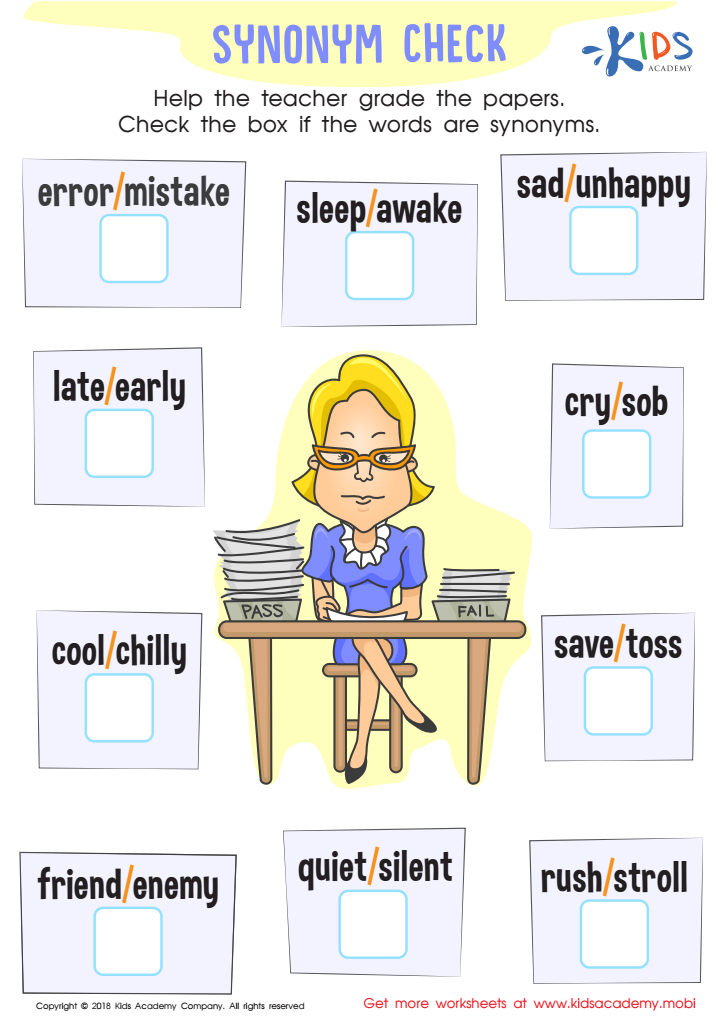
Synonym Check Worksheet
Ask your kids what a synonym is, and listen to their definitions. If needed, explain it's a word that has a similar meaning to another. Give examples, then ask them to do the same. For this worksheet, get them to help grade the papers. Have them check the boxes if the words are synonyms.
 Assign to My Students
Synonym Check Worksheet
Worksheet
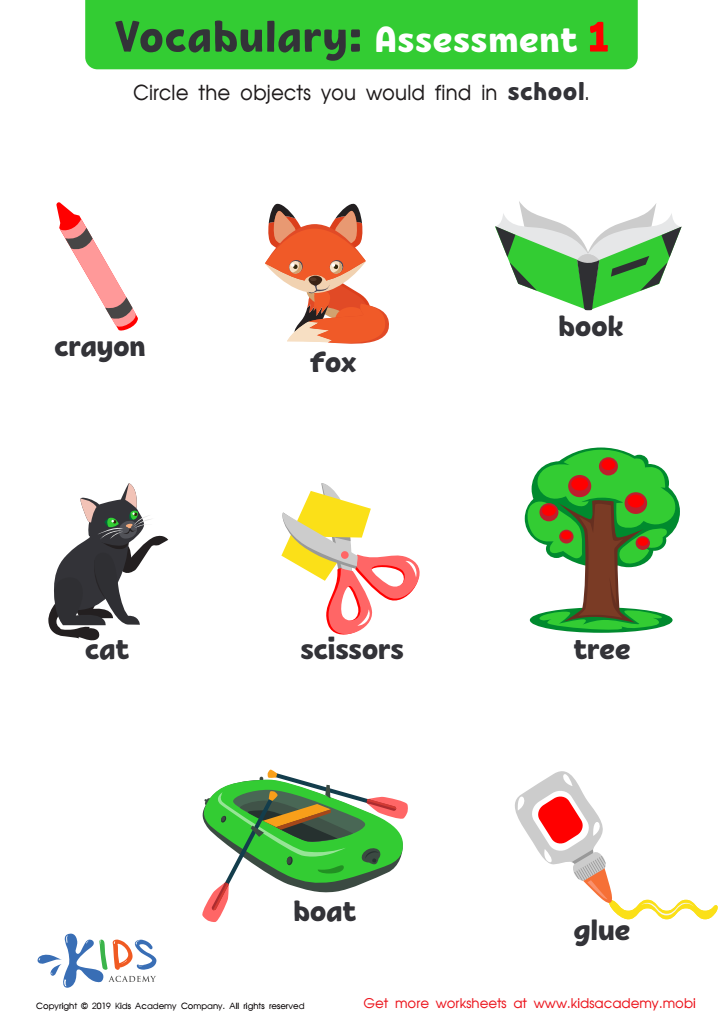
Vocabulary: Assessment 1 Worksheet
Want to check your child's vocabulary? This worksheet has kids identify objects from school through picture clues. It reinforces reading and fine motor skills, while providing an assessment of their reading growth and needs.
Vocabulary: Assessment 1 Worksheet
Worksheet
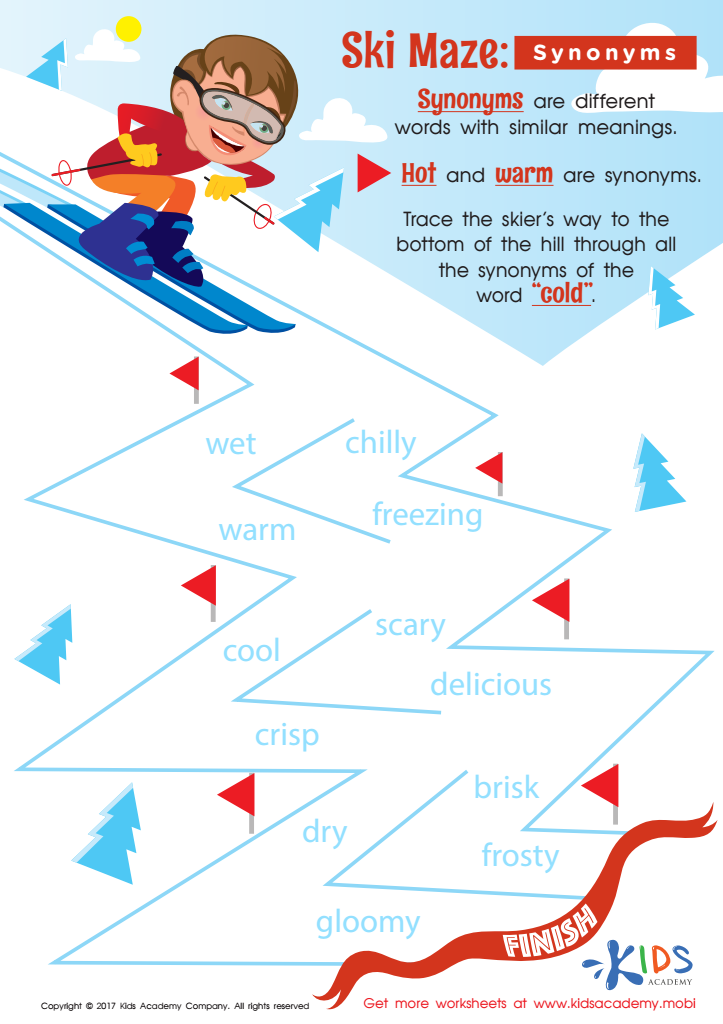
Free Printable Synonym Worksheet
Our free printable synonym worksheet for 2nd grade will help kids learn similar words to expand their vocabulary. Kids will have fun challenging themselves to find all the words that are synonyms for “cold”. Enhance their language and writing with this joyful worksheet!
Free Printable Synonym Worksheet
Worksheet
Join Kids Academy for Free
Who is primarily going to use this learning content?








Parents and teachers should prioritize synonym identification reading for children aged 4-8 for several essential reasons. Firstly, understanding synonyms enhances vocabulary development, enabling young learners to express themselves more precisely and creatively. When children grasp different words with similar meanings, they become more adept at finding the right words to convey their thoughts, fostering strong communication skills.
Furthermore, synonym identification supports reading comprehension. As children recognize that various words can share similar meanings, they can better understand context, making reading more enjoyable and enriching. This skill also makes it easier for them to engage with diverse texts, as they are equipped to navigate nuances in meaning.
Additionally, promoting synonym identification nurtures cognitive flexibility. Learning to identify synonyms encourages children to think critically about language, enhancing their overall analytical skills. This foundational skill has cross-curricular benefits, as improved vocabulary and comprehension lay the groundwork for success in other subjects, such as writing and social studies.
Lastly, fostering a love for words at a young age sparks curiosity and lifelong learning. When parents and teachers prioritize these skills, they ultimately help cultivate confident, articulate readers who are prepared for future academic challenges and meaningful communication in everyday life.








