Verb identification Reading Worksheets for Ages 4-8
3 filtered results
-
From - To
Enhance your child's reading skills with our engaging Verb Identification Worksheets designed for ages 4-8! These interactive worksheets are tailored to help young learners recognize and understand verbs in various contexts. By exploring fun activities and colorful illustrations, children will develop essential literacy skills while enjoying the learning process. Our worksheets promote vocabulary building and comprehension, making them ideal for both classroom and home use. Whether your child is just beginning their reading journey or looking to reinforce their knowledge, these worksheets provide a great way to master verb identification with confidence and creativity. Start nurturing a love for reading today!
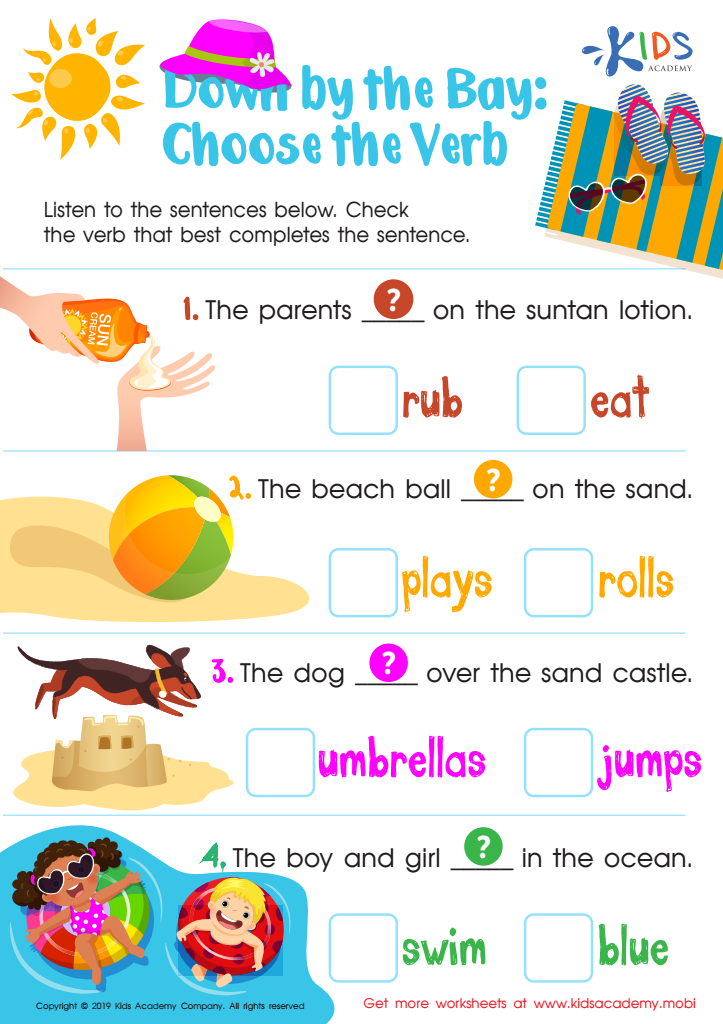
Down by the Bay: Choose the Verb Worksheet
 Assign to My Students
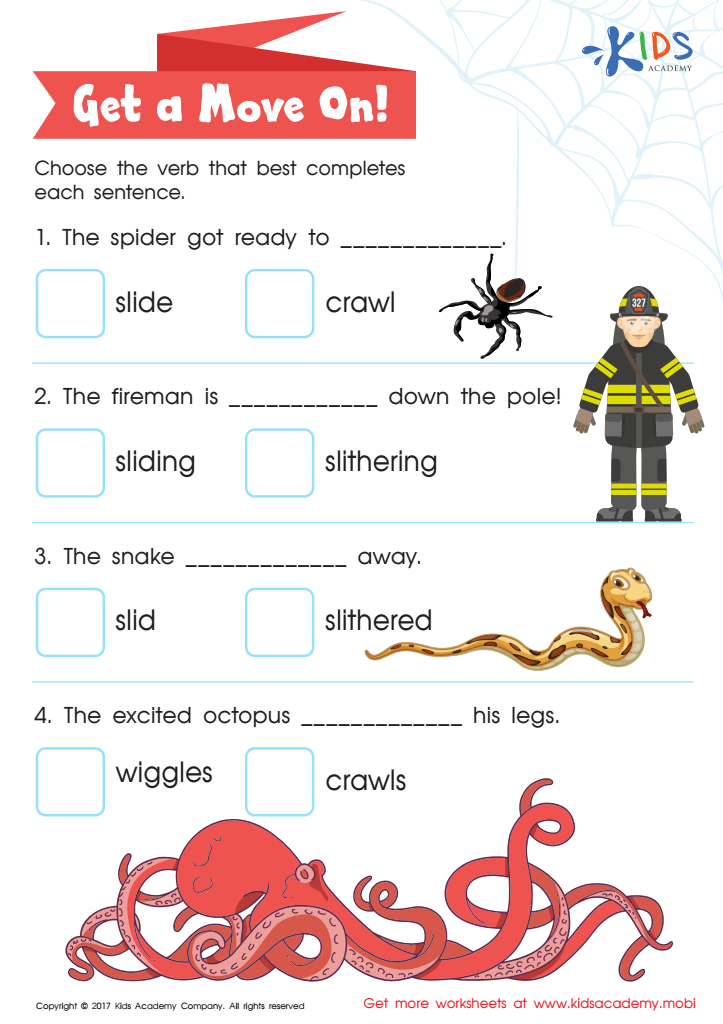
Verb Worksheet
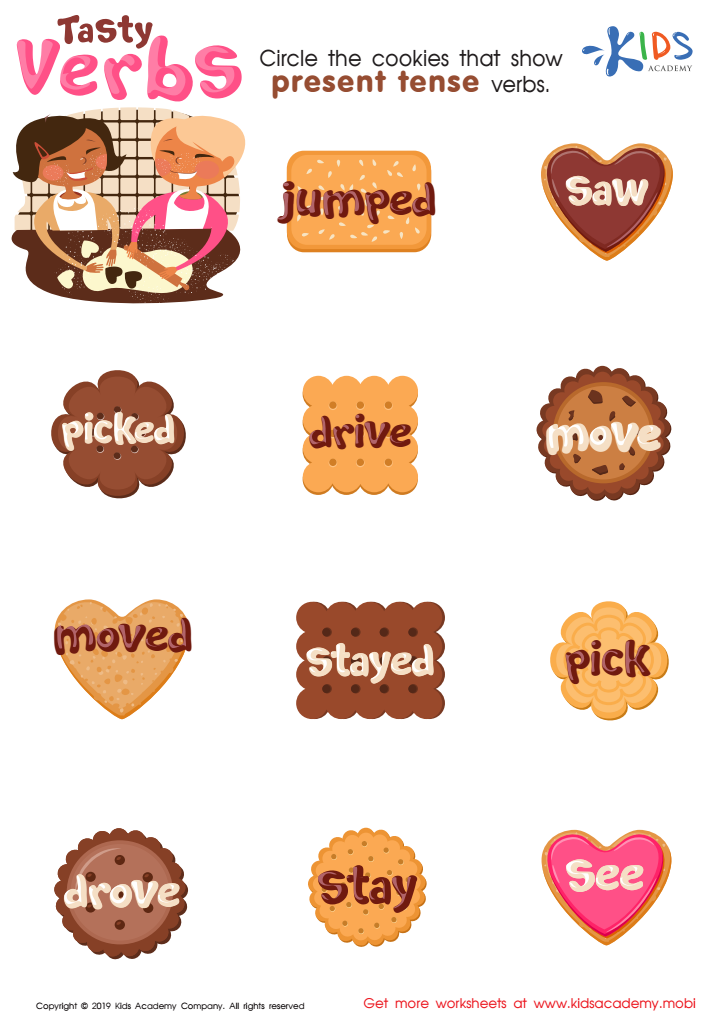
Tasty Verbs Worksheet





Verb identification is a crucial skill for children aged 4-8, as it lays the foundation for their reading and writing development. Understanding verbs helps children comprehend sentences, grasp action and context, and develop their vocabulary. When kids can identify verbs, they improve their reading fluency, making it easier to interpret stories and engage with text.
For parents and teachers, focusing on verb identification supports overall language development and enhances critical thinking skills. As children recognize actions in texts, they become more proficient at predicting outcomes and understanding character motivations in stories. This, in turn, fosters a love for reading, nurtures creativity, and encourages effective communication skills.
Moreover, early mastery of verbs aids in sentence construction, allowing children to express themselves more clearly and confidently in writing. Activities such as storytelling, reading picture books, and engaging in verb games can make the learning process enjoyable and interactive. By prioritizing verb identification, adults can help cultivate a strong literacy foundation, setting children up for success in their academic journeys and beyond. Investing time in this skill now will yield long-term benefits, empowering young learners to navigate language more effectively throughout their lives.








