Information retention Reading Comprehension Worksheets for Ages 4-8
4 filtered results
-
From - To
Enhance your child's reading skills with our Information Retention Reading Comprehension Worksheets designed for ages 4-8. These engaging and interactive worksheets help young learners improve their ability to understand and recall important details from texts. Tailored to develop critical thinking and comprehension skills, each worksheet offers age-appropriate activities that encourage children to practice retention strategies in a fun way. Our resources not only foster a love for reading but also build confidence in young readers. Perfect for home learning or classroom use, these worksheets support early literacy development and ensure foundational skills for future academic success. Start their reading journey today!
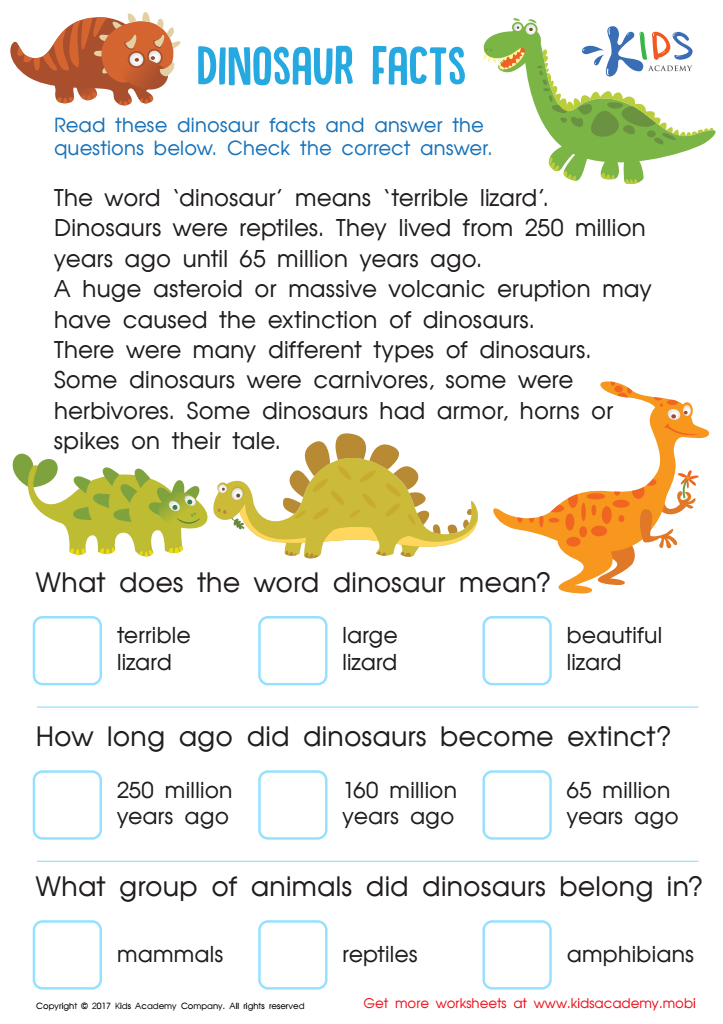
Dinosaur Facts Worksheet
 Assign to My Students
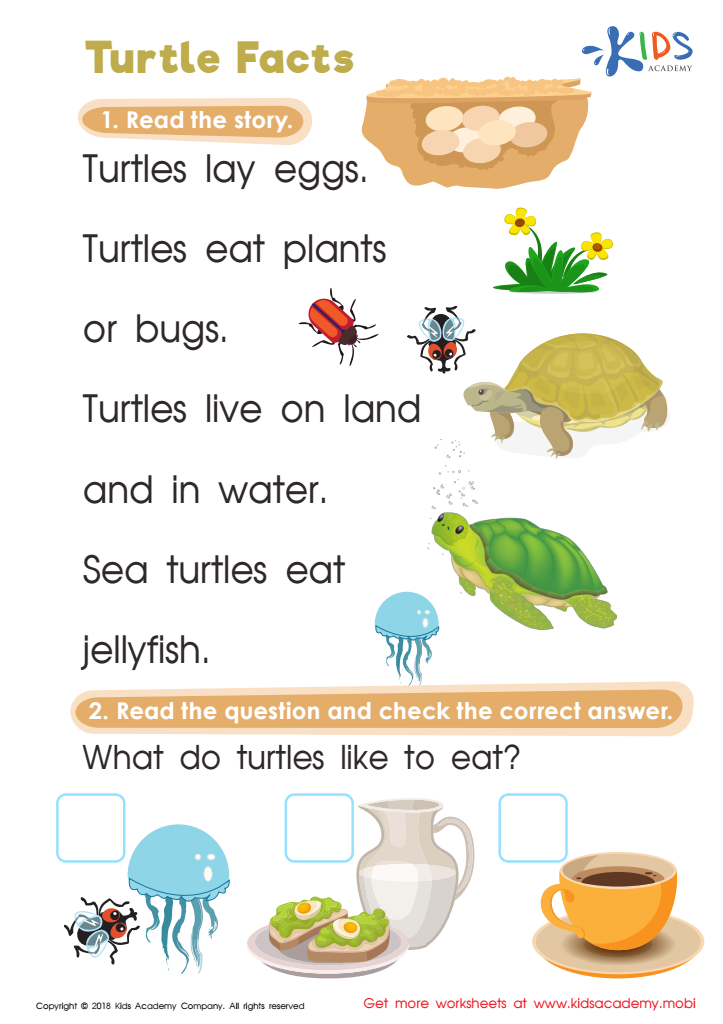
Turtle Facts Worksheet
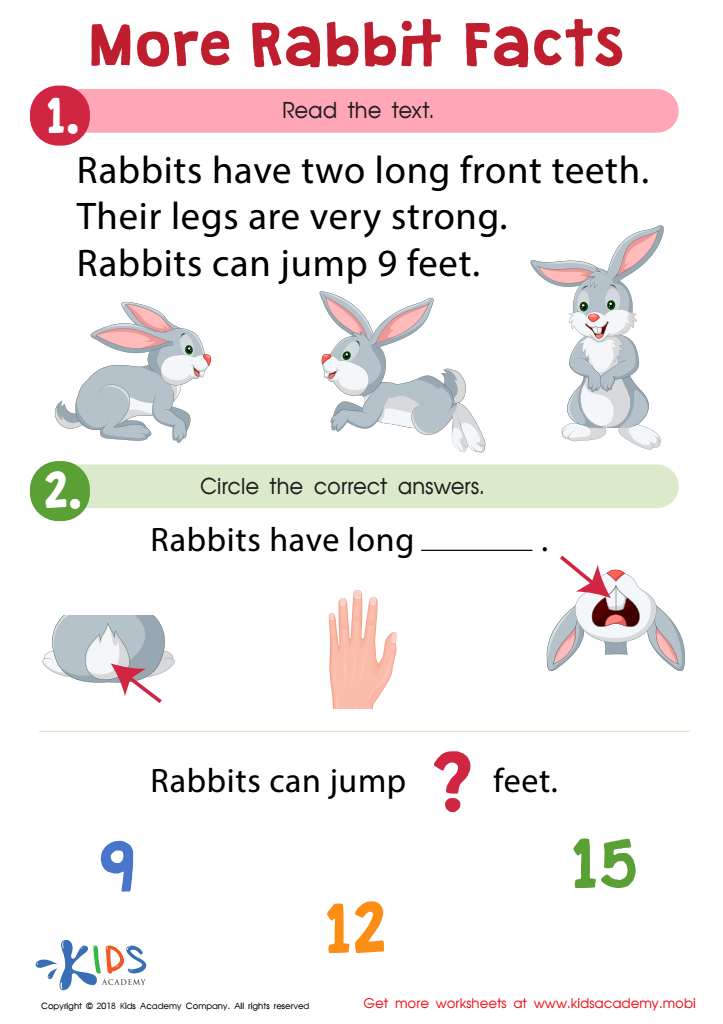
More Rabbit Facts Worksheet
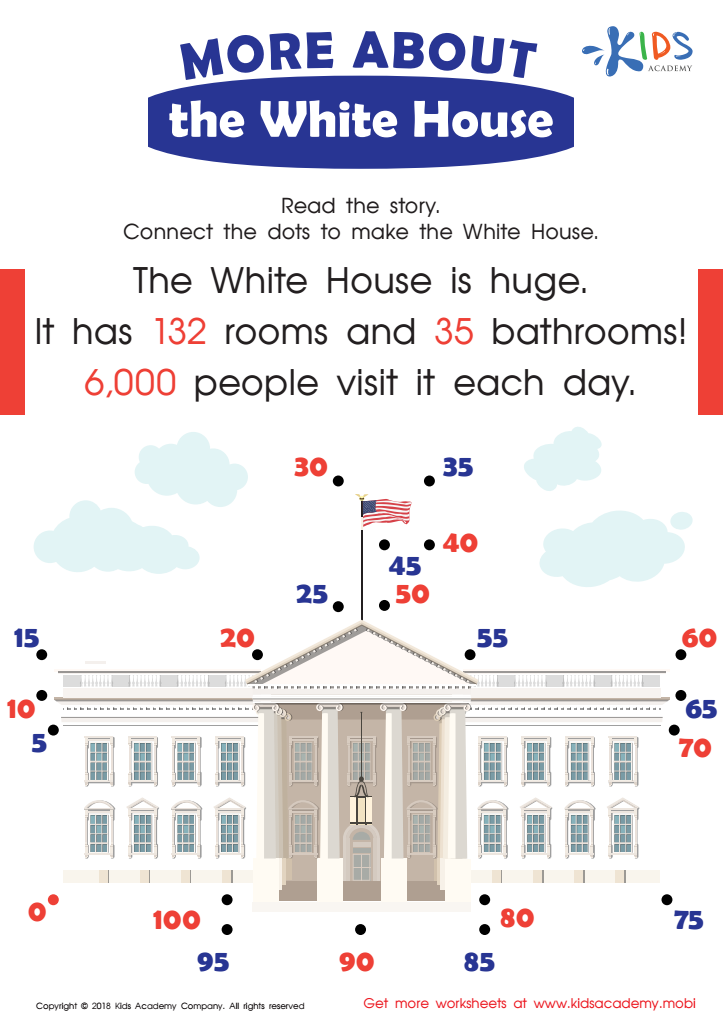
More About the White House Worksheet








Information retention and reading comprehension are crucial for children aged 4-8, forming the foundation of their academic success and lifelong learning. During these formative years, children's brains are like sponge, absorbing new knowledge and experiences. Effective reading comprehension skills enable children to understand, analyze, and retain information from text, which enhances critical thinking and problem-solving abilities.
Parents and teachers should prioritize these skills because strong reading comprehension fosters overall literacy, which is linked to improved performance across all subjects. Children who understand what they read are more likely to develop a love for reading, which can spark curiosity and motivation for learning in various subjects. Additionally, mastery of information retention helps children build confidence in their academic abilities, reducing anxiety and frustration.
Furthermore, social and emotional development is enhanced through reading, as stories help children recognize emotions and understand different perspectives. Encouraging reading comprehension through engaging activities, discussions, and questions allows parents and teachers to prepare children for future academic stages. Ultimately, focusing on these skills supports not just their educational growth, but also their social development, well-being, and lifelong love for learning, making it essential for both parents and educators to prioritize.








